

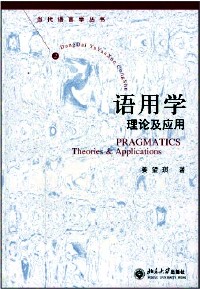
简介
语用不
――理论及应用
本书是国内第一部用英文撰写、高水平的语用学专著。
作者系统深入地阐述了语用学研究的各个方面,其中会话
含义是重点;特别是系统介绍了八九十年代提出的关联理
论、新格赖斯原则。本书语言准确流畅,代表了当前语用
学研究的新水平。
目录
序(胡壮麋)
自序.
1 introduction
1.1 an informal definition
1.2 the origin of pragmatics
1.2.1 the term "pragmatics"
1.2.2 semiotics
1.2.3 pragmatism
1.2.4 semiotic pragmatics
2 deixis
2.1 the egocentricity of deixis
2.2 different uses
2.2.1 gestural and symbolic uses
2.2.2 deictic and anaphoric uses
2.3 types of deixis
2.3.1 person deixis
2.3.2 time deixis
2.3.3 place deixis
2.3.4 discourse deixis
2.3.5 social deixis
.3 conversational implicature (i)
3.1 the gricean theory
3.1.1 the cooperative principle
3.1.2 violation of the maxims
3.2 elaborations on the theory
3.2.1 characteristics of conversational implicature
3.2.2 entailment
3.2.3 conventional implicature
3.2.4 distinctions within conversational implicature
3.3 formalization of implicature
3.3.1 scalar quantity implicature
3.3.2 clausal quantity implicature
4 conversational implicature (ii)
4.1 relevance theory
4.1.1 ostensive-inferential communication
4.1.2 relevance
4.1.3 differences between the gricean theory and relevance theory
4.2 the q- and r-principles
4.2.1 wherefore the principles
4.2.2 evidence for the principles..
4.3 the q-, i- and m-principles
4.3.1 a neoclassic interpretation
4.3.2 anaphoric reference
4.3.3 some alternative approaches
5 presupposition
5.1 the philosophical tradition
5.2 a semantic analysis
5.2.1 presupposition vs. focus
5.2.2 as a type of lexical information
5.2.3 factive and non-factive
5.2.4 presupposition-triggers
5.3 problems in the semantic approach
5.3.1 defeasibility
5.3.2 the projection problem
5.4 the pragmatic approach
5.4.1 holes, plugs and filters
5.4.2 potential and actual presuppositions
5.4.3 a principled account
6 speech acts
6.1 the performative-constative dichotomy
6.1.1 early development
6.1.2 felicity conditions
6.1.3 collapse of the diehotomy
6.2 the theory of illocutionary acts
6.2.1 three kinds of speech act
6.2.2 some counter-arguments
6.3 classes of illocutionary acts
6.3.1 austin's classification
6.3.2 searle's revision
6.4 a semanticist view
6.4.1 the performative hypothesis
6.4,2 a detailed examination
6.5 indirect speech acts
6.5.1 a pragmatic analysis
6.5.2 idiomatic, but not idioms
7 conversation analysis
7.1 turn-taking
7.1.1 rules for turn-taking
7.1.2 the significance of the rules
7.2 adjacency pairs
7.2.1 insertion sequences
7.2.2 three-turn structures
7.3 preference organization
7.3.1 preference in repair
7.3.2 preferred and dispreferred seconds
7.4 a neo-gricean interpretation
7.4.1 pre-sequences
7.4.2 minimization in conversation
7.5 searle on conversation
7.5.1 the structure of conversation
7.5.2 turn-taking "rules"
appendix: transcription conventions
bibliography...
自序.
1 introduction
1.1 an informal definition
1.2 the origin of pragmatics
1.2.1 the term "pragmatics"
1.2.2 semiotics
1.2.3 pragmatism
1.2.4 semiotic pragmatics
2 deixis
2.1 the egocentricity of deixis
2.2 different uses
2.2.1 gestural and symbolic uses
2.2.2 deictic and anaphoric uses
2.3 types of deixis
2.3.1 person deixis
2.3.2 time deixis
2.3.3 place deixis
2.3.4 discourse deixis
2.3.5 social deixis
.3 conversational implicature (i)
3.1 the gricean theory
3.1.1 the cooperative principle
3.1.2 violation of the maxims
3.2 elaborations on the theory
3.2.1 characteristics of conversational implicature
3.2.2 entailment
3.2.3 conventional implicature
3.2.4 distinctions within conversational implicature
3.3 formalization of implicature
3.3.1 scalar quantity implicature
3.3.2 clausal quantity implicature
4 conversational implicature (ii)
4.1 relevance theory
4.1.1 ostensive-inferential communication
4.1.2 relevance
4.1.3 differences between the gricean theory and relevance theory
4.2 the q- and r-principles
4.2.1 wherefore the principles
4.2.2 evidence for the principles..
4.3 the q-, i- and m-principles
4.3.1 a neoclassic interpretation
4.3.2 anaphoric reference
4.3.3 some alternative approaches
5 presupposition
5.1 the philosophical tradition
5.2 a semantic analysis
5.2.1 presupposition vs. focus
5.2.2 as a type of lexical information
5.2.3 factive and non-factive
5.2.4 presupposition-triggers
5.3 problems in the semantic approach
5.3.1 defeasibility
5.3.2 the projection problem
5.4 the pragmatic approach
5.4.1 holes, plugs and filters
5.4.2 potential and actual presuppositions
5.4.3 a principled account
6 speech acts
6.1 the performative-constative dichotomy
6.1.1 early development
6.1.2 felicity conditions
6.1.3 collapse of the diehotomy
6.2 the theory of illocutionary acts
6.2.1 three kinds of speech act
6.2.2 some counter-arguments
6.3 classes of illocutionary acts
6.3.1 austin's classification
6.3.2 searle's revision
6.4 a semanticist view
6.4.1 the performative hypothesis
6.4,2 a detailed examination
6.5 indirect speech acts
6.5.1 a pragmatic analysis
6.5.2 idiomatic, but not idioms
7 conversation analysis
7.1 turn-taking
7.1.1 rules for turn-taking
7.1.2 the significance of the rules
7.2 adjacency pairs
7.2.1 insertion sequences
7.2.2 three-turn structures
7.3 preference organization
7.3.1 preference in repair
7.3.2 preferred and dispreferred seconds
7.4 a neo-gricean interpretation
7.4.1 pre-sequences
7.4.2 minimization in conversation
7.5 searle on conversation
7.5.1 the structure of conversation
7.5.2 turn-taking "rules"
appendix: transcription conventions
bibliography...
- 名称
- 类型
- 大小
光盘服务联系方式: 020-38250260 客服QQ:4006604884
云图客服:
用户发送的提问,这种方式就需要有位在线客服来回答用户的问题,这种 就属于对话式的,问题是这种提问是否需要用户登录才能提问
Video Player
×
Audio Player
×
pdf Player
×
