

简介
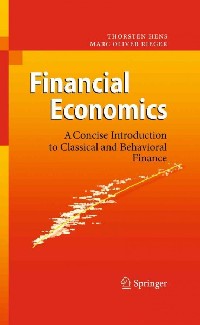
Financial economics is a fascinating topic where ideas from economics, mathematics and, most recently, psychology are combined to understand financial markets. This book gives a concise introduction into this field and includes for the first time recent results from behavioral finance that help to understand many puzzles in traditional finance. The book is tailor made for master and PhD students and includes tests and exercises that enable the students to keep track of their progress. Parts of the book can also be used on a bachelor level. Researchers will find it particularly useful as a source for recent results in behavioral finance and decision theory. "By mixing rigour and humour, Hens and Rieger make learning financial economics fun. The book is nicely organized into three logical parts. Most importantly, the discussion features a smooth transition from the classical approach to the behavioural approach, helping students fill in the metaphorical jig saw puzzle representing the corpus of finance theory." Hersh Shefrin, finance professor at the Santa Clara University, USA, and author of "Beyond Greed and Fear" and "A Behavioral Approach to Asset Pricing Theory This textbook provides a modern treatment of the theory of financial economics. It stands out by fully integrating the classical and the behavioral approach in a lucent, yet rigorous way. I highly recommend it! Markus K. Brunnermeier, Princeton University Behavioral economics, decision theory and the equilibrium analysis of financial markets have largely evolved as separate parts of the landscape of modern economics: in this ambitious book the authors present a common framework for uniting these separate subfields. 鈥淔inancial Economics鈥?by Hens and Rieger is a delight to read, striking for its clarity, for the breadth of topics covered and for the wealth of well-chosen examples that illustrate the key ideas. Michael Magill Martine Quinzii University of Southern California University of California, Davis
目录
Preface 5
Contents 7
Part I Foundations 12
1 Introduction 13
1.1 An Introduction to This Book 13
1.2 An Introduction to Financial Economics 15
1.2.1 Trade and Valuation in Financial Markets 15
1.2.2 No Arbitrage and No Excess Returns 17
1.2.3 Market Efficiency 18
1.2.4 Equilibrium 19
1.2.5 Aggregation and Comparative Statics 20
1.2.6 Time Scale of Investment Decisions 20
1.2.7 Behavioral Finance 21
1.3 An Introduction to the Research Methods 22
2 Decision Theory 24
2.1 Fundamental Concepts 25
2.2 Expected Utility Theory 29
2.2.1 Origins of Expected Utility Theory 29
2.2.2 Axiomatic Definition 37
2.2.3 Which Utility Functions are ``Suitable''? 45
2.2.4 Measuring the Utility Function 52
2.3 Mean-Variance Theory 56
2.3.1 Definition and Fundamental Properties 56
2.3.2 Success and Limitation 57
2.4 Prospect Theory 61
2.4.1 Origins of Behavioral Decision Theory 62
2.4.2 Original Prospect Theory 65
2.4.3 Cumulative Prospect Theory 69
2.4.4 Choice of Value and Weighting Function 76
2.4.5 Continuity in Decision Theories 80
2.4.6 Other Extensions of Prospect Theory 82
2.5 Connecting EUT, Mean-Variance Theory and PT 84
2.6 Ambiguity and Uncertainty 89
2.7 Time Discounting 91
2.8 Summary 94
2.9 Tests and Exercises 95
2.9.1 Tests 95
2.9.2 Exercises 98
Part II Financial Markets 101
3 Two-Period Model: Mean-Variance Approach 102
3.1 Geometric Intuition for the CAPM 103
3.1.1 Diversification 104
3.1.2 Efficient Frontier 106
3.1.3 Optimal Portfolio of Risky Assets with a Riskless Security 106
3.1.4 Mathematical Analysis of the Minimum-Variance Opportunity Set 107
3.1.5 Two-Fund Separation Theorem 112
3.1.6 Computing the Tangent Portfolio 113
3.2 Market Equilibrium 114
3.2.1 Capital Asset Pricing Model 114
3.2.2 Application: Market Neutral Strategies 115
3.2.3 Empirical Validity of the CAPM 116
3.3 Heterogeneous Beliefs and the Alpha 117
3.3.1 Definition of the Alpha 119
3.3.2 CAPM with Heterogeneous Beliefs 123
3.3.3 Zero Sum Game 127
3.3.4 Active or Passive? 131
3.4 Alternative Betas and Higher Moment Betas 133
3.4.1 Alternative Betas 134
3.4.2 Higher Moment Betas 135
3.4.3 Deriving a Behavioral CAPM 137
3.5 Summary 142
3.6 Tests and Exercises 143
3.6.1 Tests 143
3.6.2 Exercises 146
4 Two-Period Model: State-Preference Approach 148
4.1 Basic Two-Period Model 148
4.1.1 Asset Classes 149
4.1.2 Returns 150
4.1.3 Investors 152
4.1.4 Complete and Incomplete Markets 158
4.1.5 What Do Agents Trade? 159
4.2 No-Arbitrage Condition 159
4.2.1 Introduction 159
4.2.2 Fundamental Theorem of Asset Prices 161
4.2.3 Pricing of Derivatives 167
4.2.4 Limits to Arbitrage 169
3Com and Palm 170
Volkswagen and Porsche 170
Closed-End Funds 172
LTCM 173
No-Arbitrage with Short-Sales Constraints 174
4.3 Financial Markets Equilibria 174
4.3.1 General Risk-Return Tradeoff 175
4.3.2 Consumption Based CAPM 176
4.3.3 Definition of Financial Markets Equilibria 177
4.3.4 Intertemporal Trade 181
4.4 Special Cases: CAPM, APT and Behavioral CAPM 184
4.4.1 Deriving the CAPM by `Brutal Forceof Computations' 185
4.4.2 Deriving the CAPM from the LikelihoodRatio Process 187
4.4.3 Arbitrage Pricing Theory 189
4.4.4 Deriving the APT in the CAPMwith Background Risk 190
4.4.5 Behavioral CAPM 191
4.5 Pareto Efficiency 192
4.6 Aggregation 195
4.6.1 Anything Goes and the Limitations of Aggregation 195
4.6.2 A Model for Aggregation of Heterogeneous Beliefs, Risk- and Time Preferences 201
4.6.3 Empirical Properties of the Representative Agent 202
4.7 Dynamics and Stability of Equilibria 208
4.8 Summary 213
4.9 Tests and Exercises 214
4.9.1 Tests 214
4.9.2 Exercises 216
5 Multiple-Periods Model 228
5.1 The General Equilibrium Model 228
5.2 Complete and Incomplete Markets 233
5.3 Term Structure of Interest 235
5.3.1 Term Structure without Risk 236
5.3.2 Term Structure with Risk 239
5.4 Arbitrage in the Multi-Period Model 241
5.4.1 Fundamental Theorem of Asset Pricing 241
5.4.2 Consequences of No-Arbitrage 243
5.4.3 Applications to Option Pricing 243
5.4.4 Stock Prices as Discounted Expected Payoffs 245
5.4.5 Equivalent Formulations of the No-ArbitragePrinciple 246
5.4.6 Ponzi Schemes and Bubbles 247
5.5 Pareto Efficiency 251
5.5.1 First Welfare Theorem 251
5.5.2 Aggregation 252
5.6 Dynamics of Price Expectations 253
5.6.1 What is Momentum? 253
5.6.2 Dynamical Model of Chartists and Fundamentalists 254
5.7 Survival of the Fittest on Wall Street 259
5.7.1 Market Selection Hypothesis with RationalExpectations 259
5.7.2 Evolutionary Portfolio Theory 260
5.7.3 Evolutionary Portfolio Model 261
5.7.4 The Unique Survivor: 265
5.8 Summary 266
5.9 Tests and Exercises 266
5.9.1 Tests 266
5.9.2 Exercises 267
Part III Advanced Topics 271
6 Theory of the Firm 272
6.1 Basic Model 272
Households and Firms 272
Financial Market 273
Financial Economy with Production 275
Budget Restriction/Households' Decisions and Firms' Decisions 276
6.2 Modigliani-Miller Theorem 279
6.2.1 When Does the Modigliani-Miller TheoremNot Hold? 282
6.3 Firm's Decision Rules 283
6.3.1 Fisher Separation Theorem 283
6.3.2 The Theorem of Dr猫ze 287
6.4 Summary 290
7 Information Asymmetries on Financial Markets 291
7.1 Information Revealed by Prices 292
7.2 Information Revealed by Trade 294
7.3 Moral Hazard 296
7.4 Adverse Selection 297
7.5 Summary 299
8 Time-Continuous Model 300
8.1 A Rough Path to the Black-Scholes Formula 301
8.2 Brownian Motion and Ito Processes 304
8.3 A Rigorous Path to the Black-Scholes Formula 307
8.3.1 Derivation of the Black-Scholes Formulafor Call Options 307
8.3.2 Put-Call Parity 310
8.4 Exotic Options and the Monte Carlo Method 311
8.5 Connections to the Multi-Period Model 313
8.6 Time-Continuity and the Mutual Fund Theorem 318
8.7 Market Equilibria in Continuous Time 321
8.8 Limitations of the Black-Scholes Model and Extensions 324
8.8.1 Volatility Smile and Other Unfriendly Effects 324
8.8.2 Not Normal: Alternatives to Normally Distributed Returns 325
8.8.3 Jumping Up and Down: L茅vy Processes 330
8.8.4 Drifting Away: Heston and GARCH Models 332
8.9 Summary 335
Appendices 338
A Mathematics 338
A.1 Linear Algebra 338
A.2 Basic Notions of Statistics 341
A.3 Basics in Topology 344
A.4 How to Use Probability Measures 346
A.5 Calculus, Fourier Transformations and Partial Differential Equations 350
A.6 General Axioms for Expected Utility Theory 354
B Solutions to Tests and Exercises 357
References 359
Index 368
Contents 7
Part I Foundations 12
1 Introduction 13
1.1 An Introduction to This Book 13
1.2 An Introduction to Financial Economics 15
1.2.1 Trade and Valuation in Financial Markets 15
1.2.2 No Arbitrage and No Excess Returns 17
1.2.3 Market Efficiency 18
1.2.4 Equilibrium 19
1.2.5 Aggregation and Comparative Statics 20
1.2.6 Time Scale of Investment Decisions 20
1.2.7 Behavioral Finance 21
1.3 An Introduction to the Research Methods 22
2 Decision Theory 24
2.1 Fundamental Concepts 25
2.2 Expected Utility Theory 29
2.2.1 Origins of Expected Utility Theory 29
2.2.2 Axiomatic Definition 37
2.2.3 Which Utility Functions are ``Suitable''? 45
2.2.4 Measuring the Utility Function 52
2.3 Mean-Variance Theory 56
2.3.1 Definition and Fundamental Properties 56
2.3.2 Success and Limitation 57
2.4 Prospect Theory 61
2.4.1 Origins of Behavioral Decision Theory 62
2.4.2 Original Prospect Theory 65
2.4.3 Cumulative Prospect Theory 69
2.4.4 Choice of Value and Weighting Function 76
2.4.5 Continuity in Decision Theories 80
2.4.6 Other Extensions of Prospect Theory 82
2.5 Connecting EUT, Mean-Variance Theory and PT 84
2.6 Ambiguity and Uncertainty 89
2.7 Time Discounting 91
2.8 Summary 94
2.9 Tests and Exercises 95
2.9.1 Tests 95
2.9.2 Exercises 98
Part II Financial Markets 101
3 Two-Period Model: Mean-Variance Approach 102
3.1 Geometric Intuition for the CAPM 103
3.1.1 Diversification 104
3.1.2 Efficient Frontier 106
3.1.3 Optimal Portfolio of Risky Assets with a Riskless Security 106
3.1.4 Mathematical Analysis of the Minimum-Variance Opportunity Set 107
3.1.5 Two-Fund Separation Theorem 112
3.1.6 Computing the Tangent Portfolio 113
3.2 Market Equilibrium 114
3.2.1 Capital Asset Pricing Model 114
3.2.2 Application: Market Neutral Strategies 115
3.2.3 Empirical Validity of the CAPM 116
3.3 Heterogeneous Beliefs and the Alpha 117
3.3.1 Definition of the Alpha 119
3.3.2 CAPM with Heterogeneous Beliefs 123
3.3.3 Zero Sum Game 127
3.3.4 Active or Passive? 131
3.4 Alternative Betas and Higher Moment Betas 133
3.4.1 Alternative Betas 134
3.4.2 Higher Moment Betas 135
3.4.3 Deriving a Behavioral CAPM 137
3.5 Summary 142
3.6 Tests and Exercises 143
3.6.1 Tests 143
3.6.2 Exercises 146
4 Two-Period Model: State-Preference Approach 148
4.1 Basic Two-Period Model 148
4.1.1 Asset Classes 149
4.1.2 Returns 150
4.1.3 Investors 152
4.1.4 Complete and Incomplete Markets 158
4.1.5 What Do Agents Trade? 159
4.2 No-Arbitrage Condition 159
4.2.1 Introduction 159
4.2.2 Fundamental Theorem of Asset Prices 161
4.2.3 Pricing of Derivatives 167
4.2.4 Limits to Arbitrage 169
3Com and Palm 170
Volkswagen and Porsche 170
Closed-End Funds 172
LTCM 173
No-Arbitrage with Short-Sales Constraints 174
4.3 Financial Markets Equilibria 174
4.3.1 General Risk-Return Tradeoff 175
4.3.2 Consumption Based CAPM 176
4.3.3 Definition of Financial Markets Equilibria 177
4.3.4 Intertemporal Trade 181
4.4 Special Cases: CAPM, APT and Behavioral CAPM 184
4.4.1 Deriving the CAPM by `Brutal Forceof Computations' 185
4.4.2 Deriving the CAPM from the LikelihoodRatio Process 187
4.4.3 Arbitrage Pricing Theory 189
4.4.4 Deriving the APT in the CAPMwith Background Risk 190
4.4.5 Behavioral CAPM 191
4.5 Pareto Efficiency 192
4.6 Aggregation 195
4.6.1 Anything Goes and the Limitations of Aggregation 195
4.6.2 A Model for Aggregation of Heterogeneous Beliefs, Risk- and Time Preferences 201
4.6.3 Empirical Properties of the Representative Agent 202
4.7 Dynamics and Stability of Equilibria 208
4.8 Summary 213
4.9 Tests and Exercises 214
4.9.1 Tests 214
4.9.2 Exercises 216
5 Multiple-Periods Model 228
5.1 The General Equilibrium Model 228
5.2 Complete and Incomplete Markets 233
5.3 Term Structure of Interest 235
5.3.1 Term Structure without Risk 236
5.3.2 Term Structure with Risk 239
5.4 Arbitrage in the Multi-Period Model 241
5.4.1 Fundamental Theorem of Asset Pricing 241
5.4.2 Consequences of No-Arbitrage 243
5.4.3 Applications to Option Pricing 243
5.4.4 Stock Prices as Discounted Expected Payoffs 245
5.4.5 Equivalent Formulations of the No-ArbitragePrinciple 246
5.4.6 Ponzi Schemes and Bubbles 247
5.5 Pareto Efficiency 251
5.5.1 First Welfare Theorem 251
5.5.2 Aggregation 252
5.6 Dynamics of Price Expectations 253
5.6.1 What is Momentum? 253
5.6.2 Dynamical Model of Chartists and Fundamentalists 254
5.7 Survival of the Fittest on Wall Street 259
5.7.1 Market Selection Hypothesis with RationalExpectations 259
5.7.2 Evolutionary Portfolio Theory 260
5.7.3 Evolutionary Portfolio Model 261
5.7.4 The Unique Survivor: 265
5.8 Summary 266
5.9 Tests and Exercises 266
5.9.1 Tests 266
5.9.2 Exercises 267
Part III Advanced Topics 271
6 Theory of the Firm 272
6.1 Basic Model 272
Households and Firms 272
Financial Market 273
Financial Economy with Production 275
Budget Restriction/Households' Decisions and Firms' Decisions 276
6.2 Modigliani-Miller Theorem 279
6.2.1 When Does the Modigliani-Miller TheoremNot Hold? 282
6.3 Firm's Decision Rules 283
6.3.1 Fisher Separation Theorem 283
6.3.2 The Theorem of Dr猫ze 287
6.4 Summary 290
7 Information Asymmetries on Financial Markets 291
7.1 Information Revealed by Prices 292
7.2 Information Revealed by Trade 294
7.3 Moral Hazard 296
7.4 Adverse Selection 297
7.5 Summary 299
8 Time-Continuous Model 300
8.1 A Rough Path to the Black-Scholes Formula 301
8.2 Brownian Motion and Ito Processes 304
8.3 A Rigorous Path to the Black-Scholes Formula 307
8.3.1 Derivation of the Black-Scholes Formulafor Call Options 307
8.3.2 Put-Call Parity 310
8.4 Exotic Options and the Monte Carlo Method 311
8.5 Connections to the Multi-Period Model 313
8.6 Time-Continuity and the Mutual Fund Theorem 318
8.7 Market Equilibria in Continuous Time 321
8.8 Limitations of the Black-Scholes Model and Extensions 324
8.8.1 Volatility Smile and Other Unfriendly Effects 324
8.8.2 Not Normal: Alternatives to Normally Distributed Returns 325
8.8.3 Jumping Up and Down: L茅vy Processes 330
8.8.4 Drifting Away: Heston and GARCH Models 332
8.9 Summary 335
Appendices 338
A Mathematics 338
A.1 Linear Algebra 338
A.2 Basic Notions of Statistics 341
A.3 Basics in Topology 344
A.4 How to Use Probability Measures 346
A.5 Calculus, Fourier Transformations and Partial Differential Equations 350
A.6 General Axioms for Expected Utility Theory 354
B Solutions to Tests and Exercises 357
References 359
Index 368
- 名称
- 类型
- 大小
光盘服务联系方式: 020-38250260 客服QQ:4006604884
云图客服:
用户发送的提问,这种方式就需要有位在线客服来回答用户的问题,这种 就属于对话式的,问题是这种提问是否需要用户登录才能提问
Video Player
×
Audio Player
×
pdf Player
×
