

微信扫一扫,移动浏览光盘
简介
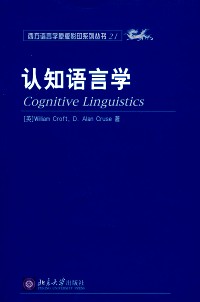
本书是有关认知语言学的基本概念、内容和方法的介绍,由曼彻斯特大学的WIIliam Croft和.A.an Cruse共同撰写。Croft主要从事语言类型学研究,并据此提出了激进构式语法理论(Rad
ical ConStrUCtion Grammar,2001)。CrlJse主要从事词汇语义学研究,曾出版过《词汇语义学》(Lexlcal Semantisc,1986)等具有影响的语义学著作。本书正是两人发挥各自的特长和优势、通力合作的结果。全书內容可分为三个部分,第一部分主要介绍认知语言学研究的重要概念和原则,第二部分是关于词汇语义学的认知研究,其指导思想是语义是动态识解的结果,第三部分是关于语法的认知研究,是以“语言知识来源于语言使用”的假设为指导思想的研究。
本书的结构条理清晰,各部分之间以及各章节之间论述的主题以层层递进的方式展开。王要內容是由两条主线贯穿的:(1)将语义研究和语用研究相结合,探讨意义在人脑中的构建过程。(2)句法和词法是不可分的,词素、词和句法构成象征系统的连续体。本书是有关认知语言学的基本概念、内容和方法的介绍,由曼彻斯特大学的WIIliam Croft和.A.an Cruse共同撰写。Croft主要从事语言类型学研究,并据此提出了激进构式语法理论(Rad
ical ConStrUCtion Grammar,2001)。CrlJse主要从事词汇语义学研究,曾出版过《词汇语义学》(Lexlcal Semantisc,1986)等具有影响的语义学著作。本书正是两人发挥各自的特长和优势、通力合作的结果。全书內容可分为三个部分,第一部分主要介绍认知语言学研究的重要概念和原则,第二部分是关于词汇语义学的认知研究,其指导思想是语义是动态识解的结果,第三部分是关于语法的认知研究,是以“语言知识来源于语言使用”的假设为指导思想的研究。
本书的结构条理清晰,各部分之间以及各章节之间论述的主题以层层递进的方式展开。王要內容是由两条主线贯穿的:(1)将语义研究和语用研究相结合,探讨意义在人脑中的构建过程。(2)句法和词法是不可分的,词素、词和句法构成象征系统的连续体。
目录
List offigures
List of tables
Preface
1 Introduction:what is cognitive linguistics?
Part Ⅰ A conceptual approach to linguistic analysis
2 Frames,domains,spaces:the organization of conceptual structure
2.1 Arguments for frame semantics
2.2 Concepts:profile.flame organization
2.3 Some consequences of the profile.frame/domain distinction
2.4 Extensions of the basic profile.frame~omain distinction
2.4.l Locational and configurational profiles
2.4.2 Scope of predication
2.4.3 Relationships between domains
2.5 Domains and idealized cognitive models
2.6 Mentalspaces
3 Conceptualization and construal operations
3.1 Introduction
3.2 Altention/sanenCe
3.2.1 Selection
3.2.2 Scope of attention(dominion)
3.2.3 Scalar adiustment
3.2.4 Dynamic attention
3.3 Judgement/comparison
3.3.1 Categorization
3.3.2 Metaphor
3.3.3 Figure.ground alignment
3.4 Perspective/situatedness
3.4.1 Viewpoint
3.4.2 Deixis
3.4.3 subiectivity
3.5 Constitution/Ge~qalt
3.5.1 Structural schematization
3.5.2 ForCc dynamics
3.5.3 Relationality(enfity/interconnection)
3.6 C''onclusion
4 Categories.concepts and meanings
4.1 Inlroduction
4.2 The classical model of category structure
4.3 the prototype model ef category structure
4.3.1 Graded centrality
4.3.2 Thc representation c f conceptual categories
4.3.3 Levels of categorization
4.3.4 Shortcomings of prototype theory
4.3.5 The frame--ba,,ed account of prototype effects
4.4 A dynamic construal approach 10 conceptual categories
4.4.1 Category boundaries
4.4.2 Frames
4.4.3 Levels c f categorization
4.5 Thc dynamic construal c f meaning
4.5.1 Contextualized interpretaion
4.5.2 Purport
4.5.3 Constraints
4.5.4 Cons[mal
4.6 Structural and logical aspecl s of meaning
4.7 Part I:Concluding remarks
Part Ⅱ:Cognitive approaches Io lexical semantics
5 Polysemy:the construal of sense boundark s
5.1 Introduction
5.2 Full sense boundaries
5.2.1 Homonymy and polysemy
5.2.2 Entrenchment
5.2.3 Bc undare ffec ts
5.2.4 Thc nalure of full sense units
5.3 Sub-sense units with Eear-sense properties
5.3.1 Rmets
5.3.2 Microsenses
5.3.3 Ways.of-seeing
5.3.4 Semantic components and lCW-autonomy actwe zones
……
6 A dynamic construal approach to sense relations Ⅰ:hyponymy and meronymy
7 A dynamic construal approach to sense relations Ⅱ:antonymy and complementarity
8 Metaphor
Part Ⅲ:Cognitive approaches to grammatical formList offigures
List of tables
Preface
1 Introduction:what is cognitive linguistics?
Part Ⅰ A conceptual approach to linguistic analysis
2 Frames,domains,spaces:the organization of conceptual structure
2.1 Arguments for frame semantics
2.2 Concepts:profile.flame organization
2.3 Some consequences of the profile.frame/domain distinction
2.4 Extensions of the basic profile.frame~omain distinction
2.4.l Locational and configurational profiles
2.4.2 Scope of predication
2.4.3 Relationships between domains
2.5 Domains and idealized cognitive models
2.6 Mentalspaces
3 Conceptualization and construal operations
3.1 Introduction
3.2 Altention/sanenCe
3.2.1 Selection
3.2.2 Scope of attention(dominion)
3.2.3 Scalar adiustment
3.2.4 Dynamic attention
3.3 Judgement/comparison
3.3.1 Categorization
3.3.2 Metaphor
3.3.3 Figure.ground alignment
3.4 Perspective/situatedness
3.4.1 Viewpoint
3.4.2 Deixis
3.4.3 subiectivity
3.5 Constitution/Ge~qalt
3.5.1 Structural schematization
3.5.2 ForCc dynamics
3.5.3 Relationality(enfity/interconnection)
3.6 C''onclusion
4 Categories.concepts and meanings
4.1 Inlroduction
4.2 The classical model of category structure
4.3 the prototype model ef category structure
4.3.1 Graded centrality
4.3.2 Thc representation c f conceptual categories
4.3.3 Levels of categorization
4.3.4 Shortcomings of prototype theory
4.3.5 The frame--ba,,ed account of prototype effects
4.4 A dynamic construal approach 10 conceptual categories
4.4.1 Category boundaries
4.4.2 Frames
4.4.3 Levels c f categorization
4.5 Thc dynamic construal c f meaning
4.5.1 Contextualized interpretaion
4.5.2 Purport
4.5.3 Constraints
4.5.4 Cons[mal
4.6 Structural and logical aspecl s of meaning
4.7 Part I:Concluding remarks
Part Ⅱ:Cognitive approaches Io lexical semantics
5 Polysemy:the construal of sense boundark s
5.1 Introduction
5.2 Full sense boundaries
5.2.1 Homonymy and polysemy
5.2.2 Entrenchment
5.2.3 Bc undare ffec ts
5.2.4 Thc nalure of full sense units
5.3 Sub-sense units with Eear-sense properties
5.3.1 Rmets
5.3.2 Microsenses
5.3.3 Ways.of-seeing
5.3.4 Semantic components and lCW-autonomy actwe zones
……
6 A dynamic construal approach to sense relations Ⅰ:hyponymy and meronymy
7 A dynamic construal approach to sense relations Ⅱ:antonymy and complementarity
8 Metaphor
Part Ⅲ:Cognitive approaches to grammatical form
List of tables
Preface
1 Introduction:what is cognitive linguistics?
Part Ⅰ A conceptual approach to linguistic analysis
2 Frames,domains,spaces:the organization of conceptual structure
2.1 Arguments for frame semantics
2.2 Concepts:profile.flame organization
2.3 Some consequences of the profile.frame/domain distinction
2.4 Extensions of the basic profile.frame~omain distinction
2.4.l Locational and configurational profiles
2.4.2 Scope of predication
2.4.3 Relationships between domains
2.5 Domains and idealized cognitive models
2.6 Mentalspaces
3 Conceptualization and construal operations
3.1 Introduction
3.2 Altention/sanenCe
3.2.1 Selection
3.2.2 Scope of attention(dominion)
3.2.3 Scalar adiustment
3.2.4 Dynamic attention
3.3 Judgement/comparison
3.3.1 Categorization
3.3.2 Metaphor
3.3.3 Figure.ground alignment
3.4 Perspective/situatedness
3.4.1 Viewpoint
3.4.2 Deixis
3.4.3 subiectivity
3.5 Constitution/Ge~qalt
3.5.1 Structural schematization
3.5.2 ForCc dynamics
3.5.3 Relationality(enfity/interconnection)
3.6 C''onclusion
4 Categories.concepts and meanings
4.1 Inlroduction
4.2 The classical model of category structure
4.3 the prototype model ef category structure
4.3.1 Graded centrality
4.3.2 Thc representation c f conceptual categories
4.3.3 Levels of categorization
4.3.4 Shortcomings of prototype theory
4.3.5 The frame--ba,,ed account of prototype effects
4.4 A dynamic construal approach 10 conceptual categories
4.4.1 Category boundaries
4.4.2 Frames
4.4.3 Levels c f categorization
4.5 Thc dynamic construal c f meaning
4.5.1 Contextualized interpretaion
4.5.2 Purport
4.5.3 Constraints
4.5.4 Cons[mal
4.6 Structural and logical aspecl s of meaning
4.7 Part I:Concluding remarks
Part Ⅱ:Cognitive approaches Io lexical semantics
5 Polysemy:the construal of sense boundark s
5.1 Introduction
5.2 Full sense boundaries
5.2.1 Homonymy and polysemy
5.2.2 Entrenchment
5.2.3 Bc undare ffec ts
5.2.4 Thc nalure of full sense units
5.3 Sub-sense units with Eear-sense properties
5.3.1 Rmets
5.3.2 Microsenses
5.3.3 Ways.of-seeing
5.3.4 Semantic components and lCW-autonomy actwe zones
……
6 A dynamic construal approach to sense relations Ⅰ:hyponymy and meronymy
7 A dynamic construal approach to sense relations Ⅱ:antonymy and complementarity
8 Metaphor
Part Ⅲ:Cognitive approaches to grammatical formList offigures
List of tables
Preface
1 Introduction:what is cognitive linguistics?
Part Ⅰ A conceptual approach to linguistic analysis
2 Frames,domains,spaces:the organization of conceptual structure
2.1 Arguments for frame semantics
2.2 Concepts:profile.flame organization
2.3 Some consequences of the profile.frame/domain distinction
2.4 Extensions of the basic profile.frame~omain distinction
2.4.l Locational and configurational profiles
2.4.2 Scope of predication
2.4.3 Relationships between domains
2.5 Domains and idealized cognitive models
2.6 Mentalspaces
3 Conceptualization and construal operations
3.1 Introduction
3.2 Altention/sanenCe
3.2.1 Selection
3.2.2 Scope of attention(dominion)
3.2.3 Scalar adiustment
3.2.4 Dynamic attention
3.3 Judgement/comparison
3.3.1 Categorization
3.3.2 Metaphor
3.3.3 Figure.ground alignment
3.4 Perspective/situatedness
3.4.1 Viewpoint
3.4.2 Deixis
3.4.3 subiectivity
3.5 Constitution/Ge~qalt
3.5.1 Structural schematization
3.5.2 ForCc dynamics
3.5.3 Relationality(enfity/interconnection)
3.6 C''onclusion
4 Categories.concepts and meanings
4.1 Inlroduction
4.2 The classical model of category structure
4.3 the prototype model ef category structure
4.3.1 Graded centrality
4.3.2 Thc representation c f conceptual categories
4.3.3 Levels of categorization
4.3.4 Shortcomings of prototype theory
4.3.5 The frame--ba,,ed account of prototype effects
4.4 A dynamic construal approach 10 conceptual categories
4.4.1 Category boundaries
4.4.2 Frames
4.4.3 Levels c f categorization
4.5 Thc dynamic construal c f meaning
4.5.1 Contextualized interpretaion
4.5.2 Purport
4.5.3 Constraints
4.5.4 Cons[mal
4.6 Structural and logical aspecl s of meaning
4.7 Part I:Concluding remarks
Part Ⅱ:Cognitive approaches Io lexical semantics
5 Polysemy:the construal of sense boundark s
5.1 Introduction
5.2 Full sense boundaries
5.2.1 Homonymy and polysemy
5.2.2 Entrenchment
5.2.3 Bc undare ffec ts
5.2.4 Thc nalure of full sense units
5.3 Sub-sense units with Eear-sense properties
5.3.1 Rmets
5.3.2 Microsenses
5.3.3 Ways.of-seeing
5.3.4 Semantic components and lCW-autonomy actwe zones
……
6 A dynamic construal approach to sense relations Ⅰ:hyponymy and meronymy
7 A dynamic construal approach to sense relations Ⅱ:antonymy and complementarity
8 Metaphor
Part Ⅲ:Cognitive approaches to grammatical form
Cognitive linguistics
- 名称
- 类型
- 大小
光盘服务联系方式: 020-38250260 客服QQ:4006604884
云图客服:
用户发送的提问,这种方式就需要有位在线客服来回答用户的问题,这种 就属于对话式的,问题是这种提问是否需要用户登录才能提问
Video Player
×
Audio Player
×
pdf Player
×
