

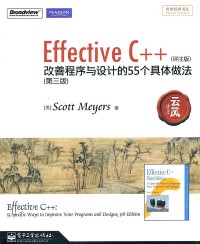
Effective C++:55 specific ways to improve your programs and designs
副标题:无
分类号:
ISBN:9787121133763
微信扫一扫,移动浏览光盘
简介
“C++程序员可以分成两类,读过Effective C++的和没读过的。”世
界顶级C++大师Scott Meyers 这部成名之作,与这句话一道在全球无数读
者间广为传颂。几乎所有C++书籍推荐名单上,Scott Meyers编著,云风译
注的《Effective C++:改善程序与设计的55个具体做法》都会位列三甲。
作者高超的技术把握力、独特的视角?诙谐轻松的写作风格?独具匠心的
内容组织,都受到极大的推崇和仿效。
对于国外技术图书,选择翻译版还是影印版,常让人陷入两难。本评
注版力邀国内资深专家执笔,在英文原著基础上增加中文点评与注释,旨
在融合二者之长,既保留经典的原创文字与味道,又以先行者的学研心得
与实践感悟,对读者阅读与学习加以点拨、指明捷径。经过评注的版本,
更值得反复阅读与体会。希望《Effective C++:改善程序与设计的55个具
体做法》这本书能够帮助您跨越C++的重重险阻,领略高处才有的壮美风光
,做一个成功而快乐的C++程序员。
经过评注的版本,更值得反复阅读与体会。希望这本书能够帮助您跨
越C++的重重险阻,领略高处才有的壮美风光,做一个成功而快乐的C++程
序员。
目录
Introduction(新增批注共2条)
Chapter 1: Accustoming Yourself to C++(新增批注共12条)
Item 1: View C++ as a federation of languages.
Item 2: Prefer consts, enums, and inlines to #defines.
Item 3: Use const whenever possible.
Item 4: Make sure that objects are initialized before they’re used.
Chapter 2: Constructors, Destructors, and AssignmentOperators(新增批注共9条)
Item 5: Know what functions C++ silently writes and calls.
Item 6: Explicitly disallow the use of compiler-generated functions you do not want.
Item 7: Declare destructors virtual in polymorphic base classes.
Item 8: Prevent exceptions from leaving destructors.
Item 9: Never call virtual functions during construction or destruction.
Item 10: Have assignment operators return a reference to *this.
Item 11: Handle assignment to self in operator=.
Item 12: Copy all parts of an object.
Chapter 3: Resource Management(新增批注共7条)
Item 13: Use objects to manage resources.
Item 14: Think carefully about copying behavior in resource-managing classes.
Item 15: Provide access to raw resources in resource-managing classes.
Item 16: Use the same form in corresponding uses of new and delete.
Item 17: Store newed objects in smart pointers in standalone statements.
Chapter 4: Designs and Declarations(新增批注共28条)
Item 18: Make interfaces easy to use correctly and hard to use incorrectly.
Item 19: Treat class design as type design.
Item 20: Prefer pass-by-reference-to-const to pass-by-value.
Item 21: Don’t try to return a reference when you must return an object.
Item 22: Declare data members private.
Item 23: Prefer non-member non-friend functions to member functions.
Item 24: Declare non-member functions when type conversions should apply to all parameters.
Item 25: Consider support for a non-throwing swap.
Chapter 5: Implementations(新增批注共42条)
Item 26: Postpone variable definitions as long as possible.
Item 27: Minimize casting.
Item 28: Avoid returning “handles” to object internals.
Item 29: Strive for exception-safe code.
Item 30: Understand the ins and outs of inlining.
Item 31: Minimize compilation dependencies between files.
Chapter 6: Inheritance and Object-Oriented Design(新增批注共39条)
Item 32: Make sure public inheritance models “is-a.”
Item 33: Avoid hiding inherited names.
Item 34: Differentiate between inheritance of interface and inheritance of implementation.
Item 35: Consider alternatives to virtual functions.
Item 36: Never redefine an inherited non-virtual function.
Item 37: Never redefine a function’s inherited default parameter value.
Item 38: Model “has-a” or is-implemented-in-terms-of” through composition.
Item 39: Use private inheritance judiciously.
Item 40: Use multiple inheritance judiciously.
Chapter 7: Templates and GenericProgramming(新增批注共28条)
Item 41: Understand implicit interfaces and compile-time polymorphism.
Item 42: Understand the two meanings of typename.
Item 43: Know how to access names in templatized base classes.
Item 44: Factor parameter-independent code out of templates.
Item 45: Use member function templates to accept “all compatible types.”
Item 46: Define non-member functions inside templates when type conversions are desired.
Item 47: Use traits classes for information about types.
Item 48: Be aware of template metaprogramming.
Chapter 8: Customizing new and delete(新增批注共17条)
Item 49: Understand the behavior of the new-handler.
Item 50: Understand when it makes sense to replace new and delete.
Item 51: Adhere to convention when writing new and delete.
Item 52: Write placement delete if you write placement new.
Chapter 9: Miscellany(新增批注共8条)
Item 53: Pay attention to compiler warnings.
Item 54: Familiarize yourself with the standard library, including TR1.
Item 55: Familiarize yourself with Boost.
Appendix A: Beyond Effective C++
Appendix B: Item Mappings Between Second and Third Editions
Index
Chapter 1: Accustoming Yourself to C++(新增批注共12条)
Item 1: View C++ as a federation of languages.
Item 2: Prefer consts, enums, and inlines to #defines.
Item 3: Use const whenever possible.
Item 4: Make sure that objects are initialized before they’re used.
Chapter 2: Constructors, Destructors, and AssignmentOperators(新增批注共9条)
Item 5: Know what functions C++ silently writes and calls.
Item 6: Explicitly disallow the use of compiler-generated functions you do not want.
Item 7: Declare destructors virtual in polymorphic base classes.
Item 8: Prevent exceptions from leaving destructors.
Item 9: Never call virtual functions during construction or destruction.
Item 10: Have assignment operators return a reference to *this.
Item 11: Handle assignment to self in operator=.
Item 12: Copy all parts of an object.
Chapter 3: Resource Management(新增批注共7条)
Item 13: Use objects to manage resources.
Item 14: Think carefully about copying behavior in resource-managing classes.
Item 15: Provide access to raw resources in resource-managing classes.
Item 16: Use the same form in corresponding uses of new and delete.
Item 17: Store newed objects in smart pointers in standalone statements.
Chapter 4: Designs and Declarations(新增批注共28条)
Item 18: Make interfaces easy to use correctly and hard to use incorrectly.
Item 19: Treat class design as type design.
Item 20: Prefer pass-by-reference-to-const to pass-by-value.
Item 21: Don’t try to return a reference when you must return an object.
Item 22: Declare data members private.
Item 23: Prefer non-member non-friend functions to member functions.
Item 24: Declare non-member functions when type conversions should apply to all parameters.
Item 25: Consider support for a non-throwing swap.
Chapter 5: Implementations(新增批注共42条)
Item 26: Postpone variable definitions as long as possible.
Item 27: Minimize casting.
Item 28: Avoid returning “handles” to object internals.
Item 29: Strive for exception-safe code.
Item 30: Understand the ins and outs of inlining.
Item 31: Minimize compilation dependencies between files.
Chapter 6: Inheritance and Object-Oriented Design(新增批注共39条)
Item 32: Make sure public inheritance models “is-a.”
Item 33: Avoid hiding inherited names.
Item 34: Differentiate between inheritance of interface and inheritance of implementation.
Item 35: Consider alternatives to virtual functions.
Item 36: Never redefine an inherited non-virtual function.
Item 37: Never redefine a function’s inherited default parameter value.
Item 38: Model “has-a” or is-implemented-in-terms-of” through composition.
Item 39: Use private inheritance judiciously.
Item 40: Use multiple inheritance judiciously.
Chapter 7: Templates and GenericProgramming(新增批注共28条)
Item 41: Understand implicit interfaces and compile-time polymorphism.
Item 42: Understand the two meanings of typename.
Item 43: Know how to access names in templatized base classes.
Item 44: Factor parameter-independent code out of templates.
Item 45: Use member function templates to accept “all compatible types.”
Item 46: Define non-member functions inside templates when type conversions are desired.
Item 47: Use traits classes for information about types.
Item 48: Be aware of template metaprogramming.
Chapter 8: Customizing new and delete(新增批注共17条)
Item 49: Understand the behavior of the new-handler.
Item 50: Understand when it makes sense to replace new and delete.
Item 51: Adhere to convention when writing new and delete.
Item 52: Write placement delete if you write placement new.
Chapter 9: Miscellany(新增批注共8条)
Item 53: Pay attention to compiler warnings.
Item 54: Familiarize yourself with the standard library, including TR1.
Item 55: Familiarize yourself with Boost.
Appendix A: Beyond Effective C++
Appendix B: Item Mappings Between Second and Third Editions
Index
Effective C++:55 specific ways to improve your programs and designs
- 名称
- 类型
- 大小
光盘服务联系方式: 020-38250260 客服QQ:4006604884
云图客服:
用户发送的提问,这种方式就需要有位在线客服来回答用户的问题,这种 就属于对话式的,问题是这种提问是否需要用户登录才能提问
Video Player
×
Audio Player
×
pdf Player
×
