

简介
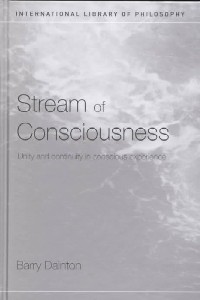
"Although there has been a massive upsurge of interest recently in consciousness, most of this has been focused on the relationship between consciousness and the brain. This has meant that important and intriguing questions concerning the fundamental characteristics of consciousness itself have not received the attention they deserve. Stream of Consciousness is devoted to these questions, presenting a systematic, phenomenological inquiry into the most general features of conscious life: the nature of awareness, introspection, phenomenal space and time-consciousness." "Barry Dainton shows us that a stream of consciousness is not a mosaic of discrete fragments of experience, but rather an interconnected flowing whole. This is due to a single primitive experiential relationship which he calls 'co-consciousness', a relationship which holds between those experiences that are had together both at a time and over time.".
"Stream of Consciousness will interest anyone concerned with the current debates on consciousness in philosophy, psychology and neuroscience."--BOOK JACKET.
目录
Table Of Contents:
List of figures xi
Preface xii
Introduction 1(27)
The phenomenal 1(4)
The phenomenal and the physical 5(5)
Understanding 10(4)
Perception and projection 14(4)
Phenomenology 18(3)
Reality, appearance and phenomenal truths 21(2)
Questions of demarcation and individuation 23(2)
A look ahead 25(3)
Unity, introspection and awareness 28(32)
Awareness 28(1)
The phenomenal background 29(5)
Unity and introspection 34(7)
Pure awareness 41(3)
The A-thesis and common sense 44(4)
Variations on a theme 48(9)
Simplicity 57(3)
Phenomenal space 60(28)
Consciousness, co-consciousness and space 60(3)
Non-spatial consciousness? 63(2)
Dis-integration 65(7)
Phenomenal spaces 72(6)
The S-thesis reconsidered 78(2)
V-spaces: further issues 80(4)
Co-consciousness 84(4)
Transitivity 88(25)
Co-consciousness as a relation 88(2)
Streams and their parts 90(5)
Unity and transitivity 95(2)
Transitivity: The case against 97(6)
Transitivity: The case for 103(6)
A question of interpretation 109(4)
Phenomenal time: problems and principles 113(23)
Time in experience 113(4)
Continuity in question 117(3)
Experience, the present, and presence 120(3)
Memory and the experience of time 123(5)
Pulses and binding 128(3)
A conflict of principles 131(5)
Broad and Husserl 136(26)
A curious tale 136(1)
Broad: The early account 137(5)
Broad: The later account 142(3)
Connectedness and presentedness 145(5)
Husserl on the `consciousness of internal time' 150(4)
New words, old problems 154(5)
Husserl's change of view 159(3)
The overlap model 162(21)
Foster on the time within experience 162(5)
Innocent curiosities 167(2)
Durations and thresholds 169(4)
Symmetry, flow and mode 173(4)
Passage within a four-dimensional world 177(2)
Time, awareness and simultaneity 179(4)
Phenomenal interdependence 183(31)
Bundles and bonds 183(2)
Wholes and parts 185(2)
Mereological essentialism 187(3)
Phenomenal interdependence 190(5)
Interdependence and its limits: sensory wholes 195(6)
Strong Impingement 201(6)
Interdependence and its limits: meaning 207(7)
The ramifications of co-consciousness 214(26)
Co-conscious wholes 214(4)
Global character: type holism and token holism 218(6)
Space and character 224(3)
C-holism and succession 227(2)
C-holism and temporal modes of presentation 229(3)
Transitivity revisited 232(3)
Conclusion 235(5)
Notes 240(6)
Bibliography 246(3)
Index 249
List of figures xi
Preface xii
Introduction 1(27)
The phenomenal 1(4)
The phenomenal and the physical 5(5)
Understanding 10(4)
Perception and projection 14(4)
Phenomenology 18(3)
Reality, appearance and phenomenal truths 21(2)
Questions of demarcation and individuation 23(2)
A look ahead 25(3)
Unity, introspection and awareness 28(32)
Awareness 28(1)
The phenomenal background 29(5)
Unity and introspection 34(7)
Pure awareness 41(3)
The A-thesis and common sense 44(4)
Variations on a theme 48(9)
Simplicity 57(3)
Phenomenal space 60(28)
Consciousness, co-consciousness and space 60(3)
Non-spatial consciousness? 63(2)
Dis-integration 65(7)
Phenomenal spaces 72(6)
The S-thesis reconsidered 78(2)
V-spaces: further issues 80(4)
Co-consciousness 84(4)
Transitivity 88(25)
Co-consciousness as a relation 88(2)
Streams and their parts 90(5)
Unity and transitivity 95(2)
Transitivity: The case against 97(6)
Transitivity: The case for 103(6)
A question of interpretation 109(4)
Phenomenal time: problems and principles 113(23)
Time in experience 113(4)
Continuity in question 117(3)
Experience, the present, and presence 120(3)
Memory and the experience of time 123(5)
Pulses and binding 128(3)
A conflict of principles 131(5)
Broad and Husserl 136(26)
A curious tale 136(1)
Broad: The early account 137(5)
Broad: The later account 142(3)
Connectedness and presentedness 145(5)
Husserl on the `consciousness of internal time' 150(4)
New words, old problems 154(5)
Husserl's change of view 159(3)
The overlap model 162(21)
Foster on the time within experience 162(5)
Innocent curiosities 167(2)
Durations and thresholds 169(4)
Symmetry, flow and mode 173(4)
Passage within a four-dimensional world 177(2)
Time, awareness and simultaneity 179(4)
Phenomenal interdependence 183(31)
Bundles and bonds 183(2)
Wholes and parts 185(2)
Mereological essentialism 187(3)
Phenomenal interdependence 190(5)
Interdependence and its limits: sensory wholes 195(6)
Strong Impingement 201(6)
Interdependence and its limits: meaning 207(7)
The ramifications of co-consciousness 214(26)
Co-conscious wholes 214(4)
Global character: type holism and token holism 218(6)
Space and character 224(3)
C-holism and succession 227(2)
C-holism and temporal modes of presentation 229(3)
Transitivity revisited 232(3)
Conclusion 235(5)
Notes 240(6)
Bibliography 246(3)
Index 249
- 名称
- 类型
- 大小
光盘服务联系方式: 020-38250260 客服QQ:4006604884
云图客服:
用户发送的提问,这种方式就需要有位在线客服来回答用户的问题,这种 就属于对话式的,问题是这种提问是否需要用户登录才能提问
Video Player
×
Audio Player
×
pdf Player
×
