

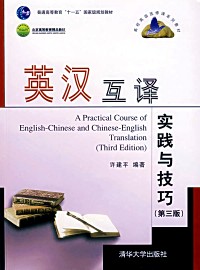
Practical course of English-Chinese and Chinese-English translation
副标题:无
作 者:许建平编著
分类号:H315.9
ISBN:9787302146728
微信扫一扫,移动浏览光盘
简介
本书是为非英语专业的大学生及研究生编写的英汉互译教程。其主要内容包括:翻译基本知识与原则;常用翻译方法与技巧;实用英汉互译训练和指导;以及各类文体英汉互译独立练习。所有练习均附有参考译文,便于自学。
本书亦可供有志于提高翻译技能并具有中等以上英语水平的自学者使用。
目录
Unit 1 Introduction:Translation and Translation Techniques 绪论:翻译与翻译技巧
Highlights of the Unit 单元要点概述
Practical Translation Training 实用翻译训练
I.Important Role of Translation 翻译的重要作用
II.Nature and Scope of Translation 翻译的性质和范围
III.Principles or Criteria of Translation 翻译的原则标准
IV.Literal Translation and Free Translation 直译与意译
V.Translation Techniques 翻译技巧种种
Reflections and Practice 思考与练习
Unit 2 Diction遣词用字
Highlights of the Unit 单元要点概述
Practical Translation Training 实用翻译训练
I.Equivalence between English and Chinese at Word Level 英汉词字层次上的对等关系
1.Word for Word Equivalence 词字对等
2.One Word with Multiple Equivalents of the Same Meaning 多词同义
3.One Word with Several Equivalents of Different Meanings 一词多义
4.Equivalents Interwoven with One Another 词义交织
5.Words without Corresponding Equivalents 无相应对等词语
II.Methods of Discriminating the Original Meaning of aGiven Word 英语词义辨析法
1.According to Word Formation 根据构词法确定词义
2.According to the References 根据指代关系确定词义
3.According to the Context and Collocation 根据上下文或词的搭配确定词义
4.According to Different Branches of Learning and Specialties 根据不同学科或专业门类确定词义
III.Techniques of Translating a Given English Word 英语词语翻译技巧
1.Deduction 推演法
2.Transplant 移植法
3.Extension 引申法
4.Substitution 替代法
5.Explanation 释义法
6.Combination 合并法
7.Transliteration 音译法
8.Pictographic Translation 图形法
IV.Diction in Chinese English Translation 汉译英的选词用字
Reflections and Practice 思考与练习
Uuit 3 Conversion 转换
Highlights of the Unit 单元要点概述
Practical Translation Training 实用翻译训练
I.Conversion in English Chinese Translation 英译汉的词类转换
1.Converting into Verbs 转换成动词
2.Converting into Nouns 转换成名词
3.Converting into Adjectives 转换成形容词
4.Converting into Adverbs 转换成副词
5.The Conversion of Sentence Elements 句子成分的转换
II.Conversions in Chinese English Translation 汉译英的词类转换
1.Converting Verbs into Other Parts of Speech 汉语动词转换成其他词类
2.Conversions between Different Parts of Speech 各种词类之间的相互转换
Reflections and Practice 思考与练习
Unit 4 Amplification 增词法
Highlights of the Unit 单元要点概述
Practical Translation Training 实用翻译训练
I.Amplification in English Chinese Translation 增词法在英汉翻译中的运用
1.Putting in Words Omitted in the Original 加入原文所省略的词语
2.Putting in Necessary Connectives 加入必要的连接词语
3.Putting in Words to Convey the Concept of Plurality 增词以表达复数概念
4.Putting in Words to Indicate Different Tenses or Sequences 表现不同的时态或先后顺序
5.Amplification by Logical Analysis 逻辑性增词
6.Amplification for the Purpose of Rhetoric or Coherence 从修辞连贯角度考虑增词
7.Amplification by Repetition 重复性增词
II.Amplification in Chinese English Translation 增词法在汉英翻译中的运用
1.Adding Necessary Pronouns 增添必要的代词
2.Adding Necessary Articles 增添必要的冠词
3.Adding Necessary Connectives 增添必要的连接词语
4.Adding Necessary Prepositions 增添必要的介词
5.Adding Necessary Background Words 增添必要的背景词语
Reflections and Practice 思考与练习
Unit 5 Omission 省略法
Highlights of the Unit 单元要点概述
Practical Translation Training 实用翻译训练
I.Omission in English Chinese Translation 省略法在英汉翻译中的运用
1.Omitting the Pronoun 代词的省略
2.Omitting the Article 冠词的省略
3.Omitting the Preposition 介词的省略
4.Omitting the Conjunction 连词的省略
5.Omitting the Verb 动词的省略
6.Omitting the Impersonal Pronoun“it” 非人称代词“it”的省略
II.Omission in Chinese English Translation 省略法在汉英翻译中的运用
1.Omitting Redundant Words 省略冗词赘语
2.Omitting Words of Conceptual Category 省略概念范畴类词语
3.Omitting Meticulous Descriptions 省略过详的细节描述
Reflections and Practice 思考与练习
Unit 6 Restructuring 结构调整
Highlights of the Unit 单元要点概述
Practical Translation Training 实用翻译训练
I.Different Word Orders in English and Chinese 英汉语言的词序差异
1.Different Modes of Thinking 不同的思维模式
2.Different Inversion Structures 不同的倒装结构
II.Restructuring in English Chinese Translation 英汉翻译的结构调整
1.Keeping the Original Sequence 保持原文顺序
2.Reversing the Original Sequence 颠倒原文顺序
3.According to Time Sequence 按时间顺序
4.According to Logical Sequence 按逻辑顺序
III.Restructuring in Chinese English Translation 汉英翻译的结构调整
1.Different Sequences in Customary Word Combinations 不同的词语习惯表达顺序
2.Restructuring in Chinese English Translation 汉英翻译中的结构调整
Reflections and Practice 思考与练习
Unit 7 Affirmative vs. Negative 肯定与否定
Highlights of the Unit 单元要点概述
Practical Translation Training 实用翻译训练
I.Negation in English Chinese Translation 英译汉的正反交替
1.Affirmative in English,but Negative in Chinese 英语为肯定,汉语译作否定
2.Negative in English,but Affirmative in Chinese 英语为否定,汉语译作肯定
3.Same English Word,Either Affirmative or Negative Equivalents in Chinese 译作肯定否定均可
4.Double Negative for Emphasis 强调性双重否定
5.Roundabout Affirmative 迂回式肯定
6.Some Traps in Negative Structures 否定的陷阱
II.Negation in Chinese English Translation 汉译英的正反交替
1.Negation According to English Usage 根据英语习惯用法译作肯定或否定
2.Negation for Emphasis or Rhetorical Effect 从强调或修辞角度考虑肯定或否定
3.Negation to Convey Exactly the Original Meaning 用正反交替传达原文的确切意思
Reflections and Practice 思考与练习
Unit 8 The Passive Voice 被动语态
Highlights of the Unit 单元要点概述
Practical Translation Training 实用翻译训练
I.The Passive Voice in English Chinese Translation 英汉翻译的被动语态
1.Converting the Passive Voice into the Active 被动语态转为主动语态
2.Converting the Passive Voice into a Subjectless Sentence 被动语态转为无主句
3.Keeping the Passive Structure Unchanged 被动语态保持不变
4.Replacing the Passive Voice with Other Means 被动语态用其他手段代替
II.The Passive Structures in Chinese English Translation 汉英翻译的被动结构
1.Chinese Sentences with Passive Labels 带有被动标签的汉语句子
2.Chinese Sentences without Passive Labels 不带被动标签的汉语句子
3.Converting“Active”Structures into the Passive Voice 将主动结构转换为被动
4.The Translation of Some Idiomatic Chinese Expressions 一些汉语习惯表达的译法
Reflections and Practice 思考与练习
Unit 9 Nominal Clauses 名词性从句
Highlights of the Unit 单元要点概述
Practical Translation Training 实用翻译训练
I.The Translation of English Nominal Clauses 英语名词性从句的翻译
1.Subject Clauses 主语从句
2.Object Clauses 宾语从句
3.Predicative Clauses 表语从句
4.Appositive Clauses 同位语从句
II.The Translation of Chinese Complex Sentences 汉语复句的翻译
1.Sentence Combination 句子的合并
2.Sentence Sequence 句序
Reflections and Practice 思考与练习
Unit 10 Attributive Clauses 定语从句
Highlights of the Unit 单元要点概述
Practical Translation Training 实用翻译训练
I.A Comparative Study of English and Chinese Attributive Structures 英汉定语结构的对比
II.Restrictive Attributive Clauses 限制性定语从句
1.Combination 合并法
2.Division 分译法
3.Mixture 混合法
III.Non Restrictive Attributive Clauses 非限制性定语从句
1.Division 分译法
2.Combination 合并法
IV.Attributive Clauses Functioning as Adverbials 兼有状语功能的定语从句
1.Translating into Adverbial Clauses of Cause 译作原因句
2.Translating into Adverbial Clauses of Result 译作结果句
3.Translating into Adverbial Clauses of Concession 译作让步句
4.Translating into Adverbial Clauses of Condition 译作条件句
5.Translating into Adverbial Clauses of Purpose 译作目的句
Reflections and Practice 思考与练习
Unit 11 Adverbial Clauses 状语从句
Highlights of the Unit 单元要点概述
Practical Translation Training 实用翻译训练
I.The Translation of English Adverbial Clauses 英语状语从句的翻译
1.Adverbial Clauses of Time 时间状语从句
2.Adverbial Clauses of Place 地点状语从句
3.Adverbial Clauses of Cause 原因状语从句
4.Adverbial Clauses of Condition 条件状语从句
5.Adverbial Clauses of Concession 让步状语从句
6.Adverbial Clauses of Purpose 目的状语从句
II.Adverbial Clauses in Chinese Complex Sentences 汉语复句中的状语分句
1.Discerning Subordination 分清主从
2.Using Inanimate Subjects 使用无灵主语
Reflections and Practice 思考与练习
Unit 12 Long Sentences 长句的翻译
Highlights of the Unit 单元要点概述
Practical Translation Training 实用翻译训练
I.Long Sentences in English Chinese Translation 英汉翻译的长句处理
1.Two Stages and Five Steps 长句翻译的两个阶段和五个步骤
2.Sample Analysis 实例分析
II.Methods of Translating Long English Sentences 英译汉长句的翻译方法
1.Embedding 内嵌法
2.Dividing 切分法
3.Splitting 拆分法
4.Inserting 插入法
5.Recasting 重组法
III.Long Sentences in Chinese English Translation 汉译英的长句处理
Reflections and Practice 思考与练习
Unit 13 English for Science and Technology 科技英语的翻译
Highlights of the Unit 单元要点概述
Practical Translation Training 实用翻译训练
I.Formation of English Technical Terms 英语技术词语的构成
1.Affixation 缀合法
2.Compounding 复合法
3.Blending 缩合法
4.Acronyms 首字母缩略
5.Proper Nouns 专有名词
II.Characteristic Syntax of EST 科技英语的句法特点
1盡ore Long and Complicated Sentences 大量使用长句
2.More Nominalization 大量使用名词化结构
3.Extensive Use of the Passive Voice 广泛使用被动语态
4.More Non Finite Forms of the Verb 大量使用非限定动词
5.Different Uses of the Tense 时态的不同用法
6.The Post Position of the Attributive 定语的后置
III.Methods of Translating EST 科技英语的翻译方法
1.Expanding the Noun Phrase into a Separate Clause 将名词性短语扩展成汉语分句
2.Converting the Noun Phrase into a Verb object Structure 将名词性短语转换成动宾结构
3.Converting Attributive Elements into Independent Sentences,Adverbial Clauses,etc将定语成分转换成独立句、状语分句等
4.Converting the Passive into the Active 将被动转换成主动
5.Supplementing Necessary Words to Indicate Different Tenses 增词以表示不同的时态
Reflections and Practice 思考与练习
Unit 14 The Translation of Documentation 文献的翻译
Highlights of the Unit 单元要点概述
Practical Translation Training 实用翻译训练
I.The Translation of Contracts and Agreements 合同与协议的翻译
II.The Translation of Proposals,Reports and Reviews 建议、报告与评论的翻译
III.The Translation of Patents and Trademarks 专利与商标的翻译
IV.The Translation of Copyright Documents 版权文献的翻译
V.The Translation of Bid Documents 招标文献的翻译
VI.The Translation of Abstracts,Indexes and Bibliographies 摘要、索引与文献目录的翻译
Reflections and Practice 思考与练习
Unit 15 Application Documents for Studying Abroad 出国留学申请翻译
Highlights of the Unit 单元要点概述
Practical Translation Training 实用翻译训练
I.Asking for Application Forms for Admission 索要入学申请表
II.Graduation Certification 毕业证明的翻译
III.Résumé and the Covering Letter 个人简历及附信的翻译
IV盠etters of Recommendation 推荐信的翻译
V.Personal Statement 自我陈述的翻译
Reflections and Practice 思考与练习
Unit 16 Comprehensive Abilities through Comparative Studies 通过比较研究培养翻译综合能力
Highlights of the Unit 单元要点概述
I.Comparative Studies of English and Chinese Languages from a Macroscopic View Point 英汉语言宏观对比
1.Synthetic vs Analytic 综合性与分析性
2.Compact vs Diffusive 紧凑与松散
3.Hypotactic vs Paratactic 形合与意合
4.Complex vs Simplex 繁复与简单
5.Impersonal vs Personal 物称与人称
6.Passive vs Active 被动与主动
7.Static vs Dynamic 静态与动态
8.Abstract vs Concrete 抽象与具体
9.Roundabout vs Straightforward 间接与直接
10.Substitutive vs Repetitive 替换与重复
II.Practical Abilities Attained from Translation Studies and Practice 通过比较研究和实践提高翻译应用能力
1.Language Sensibility 语感能力
2.Contextual Analysis 语境分析能力
3.Logical Thinking 逻辑思维能力
Reflections and Practice 思考与练习
Appendix A Translation Exercises for Independent Work 英汉互译独立作业练习
Appendix B Keys to Practical Translation Trainingand Exercises 实用翻译训练及练习参考答案
Appendix C Keys to Translation Exercises for Independent Work 英汉互译独立作业练习参考译文
Bibliography 参考书目
Highlights of the Unit 单元要点概述
Practical Translation Training 实用翻译训练
I.Important Role of Translation 翻译的重要作用
II.Nature and Scope of Translation 翻译的性质和范围
III.Principles or Criteria of Translation 翻译的原则标准
IV.Literal Translation and Free Translation 直译与意译
V.Translation Techniques 翻译技巧种种
Reflections and Practice 思考与练习
Unit 2 Diction遣词用字
Highlights of the Unit 单元要点概述
Practical Translation Training 实用翻译训练
I.Equivalence between English and Chinese at Word Level 英汉词字层次上的对等关系
1.Word for Word Equivalence 词字对等
2.One Word with Multiple Equivalents of the Same Meaning 多词同义
3.One Word with Several Equivalents of Different Meanings 一词多义
4.Equivalents Interwoven with One Another 词义交织
5.Words without Corresponding Equivalents 无相应对等词语
II.Methods of Discriminating the Original Meaning of aGiven Word 英语词义辨析法
1.According to Word Formation 根据构词法确定词义
2.According to the References 根据指代关系确定词义
3.According to the Context and Collocation 根据上下文或词的搭配确定词义
4.According to Different Branches of Learning and Specialties 根据不同学科或专业门类确定词义
III.Techniques of Translating a Given English Word 英语词语翻译技巧
1.Deduction 推演法
2.Transplant 移植法
3.Extension 引申法
4.Substitution 替代法
5.Explanation 释义法
6.Combination 合并法
7.Transliteration 音译法
8.Pictographic Translation 图形法
IV.Diction in Chinese English Translation 汉译英的选词用字
Reflections and Practice 思考与练习
Uuit 3 Conversion 转换
Highlights of the Unit 单元要点概述
Practical Translation Training 实用翻译训练
I.Conversion in English Chinese Translation 英译汉的词类转换
1.Converting into Verbs 转换成动词
2.Converting into Nouns 转换成名词
3.Converting into Adjectives 转换成形容词
4.Converting into Adverbs 转换成副词
5.The Conversion of Sentence Elements 句子成分的转换
II.Conversions in Chinese English Translation 汉译英的词类转换
1.Converting Verbs into Other Parts of Speech 汉语动词转换成其他词类
2.Conversions between Different Parts of Speech 各种词类之间的相互转换
Reflections and Practice 思考与练习
Unit 4 Amplification 增词法
Highlights of the Unit 单元要点概述
Practical Translation Training 实用翻译训练
I.Amplification in English Chinese Translation 增词法在英汉翻译中的运用
1.Putting in Words Omitted in the Original 加入原文所省略的词语
2.Putting in Necessary Connectives 加入必要的连接词语
3.Putting in Words to Convey the Concept of Plurality 增词以表达复数概念
4.Putting in Words to Indicate Different Tenses or Sequences 表现不同的时态或先后顺序
5.Amplification by Logical Analysis 逻辑性增词
6.Amplification for the Purpose of Rhetoric or Coherence 从修辞连贯角度考虑增词
7.Amplification by Repetition 重复性增词
II.Amplification in Chinese English Translation 增词法在汉英翻译中的运用
1.Adding Necessary Pronouns 增添必要的代词
2.Adding Necessary Articles 增添必要的冠词
3.Adding Necessary Connectives 增添必要的连接词语
4.Adding Necessary Prepositions 增添必要的介词
5.Adding Necessary Background Words 增添必要的背景词语
Reflections and Practice 思考与练习
Unit 5 Omission 省略法
Highlights of the Unit 单元要点概述
Practical Translation Training 实用翻译训练
I.Omission in English Chinese Translation 省略法在英汉翻译中的运用
1.Omitting the Pronoun 代词的省略
2.Omitting the Article 冠词的省略
3.Omitting the Preposition 介词的省略
4.Omitting the Conjunction 连词的省略
5.Omitting the Verb 动词的省略
6.Omitting the Impersonal Pronoun“it” 非人称代词“it”的省略
II.Omission in Chinese English Translation 省略法在汉英翻译中的运用
1.Omitting Redundant Words 省略冗词赘语
2.Omitting Words of Conceptual Category 省略概念范畴类词语
3.Omitting Meticulous Descriptions 省略过详的细节描述
Reflections and Practice 思考与练习
Unit 6 Restructuring 结构调整
Highlights of the Unit 单元要点概述
Practical Translation Training 实用翻译训练
I.Different Word Orders in English and Chinese 英汉语言的词序差异
1.Different Modes of Thinking 不同的思维模式
2.Different Inversion Structures 不同的倒装结构
II.Restructuring in English Chinese Translation 英汉翻译的结构调整
1.Keeping the Original Sequence 保持原文顺序
2.Reversing the Original Sequence 颠倒原文顺序
3.According to Time Sequence 按时间顺序
4.According to Logical Sequence 按逻辑顺序
III.Restructuring in Chinese English Translation 汉英翻译的结构调整
1.Different Sequences in Customary Word Combinations 不同的词语习惯表达顺序
2.Restructuring in Chinese English Translation 汉英翻译中的结构调整
Reflections and Practice 思考与练习
Unit 7 Affirmative vs. Negative 肯定与否定
Highlights of the Unit 单元要点概述
Practical Translation Training 实用翻译训练
I.Negation in English Chinese Translation 英译汉的正反交替
1.Affirmative in English,but Negative in Chinese 英语为肯定,汉语译作否定
2.Negative in English,but Affirmative in Chinese 英语为否定,汉语译作肯定
3.Same English Word,Either Affirmative or Negative Equivalents in Chinese 译作肯定否定均可
4.Double Negative for Emphasis 强调性双重否定
5.Roundabout Affirmative 迂回式肯定
6.Some Traps in Negative Structures 否定的陷阱
II.Negation in Chinese English Translation 汉译英的正反交替
1.Negation According to English Usage 根据英语习惯用法译作肯定或否定
2.Negation for Emphasis or Rhetorical Effect 从强调或修辞角度考虑肯定或否定
3.Negation to Convey Exactly the Original Meaning 用正反交替传达原文的确切意思
Reflections and Practice 思考与练习
Unit 8 The Passive Voice 被动语态
Highlights of the Unit 单元要点概述
Practical Translation Training 实用翻译训练
I.The Passive Voice in English Chinese Translation 英汉翻译的被动语态
1.Converting the Passive Voice into the Active 被动语态转为主动语态
2.Converting the Passive Voice into a Subjectless Sentence 被动语态转为无主句
3.Keeping the Passive Structure Unchanged 被动语态保持不变
4.Replacing the Passive Voice with Other Means 被动语态用其他手段代替
II.The Passive Structures in Chinese English Translation 汉英翻译的被动结构
1.Chinese Sentences with Passive Labels 带有被动标签的汉语句子
2.Chinese Sentences without Passive Labels 不带被动标签的汉语句子
3.Converting“Active”Structures into the Passive Voice 将主动结构转换为被动
4.The Translation of Some Idiomatic Chinese Expressions 一些汉语习惯表达的译法
Reflections and Practice 思考与练习
Unit 9 Nominal Clauses 名词性从句
Highlights of the Unit 单元要点概述
Practical Translation Training 实用翻译训练
I.The Translation of English Nominal Clauses 英语名词性从句的翻译
1.Subject Clauses 主语从句
2.Object Clauses 宾语从句
3.Predicative Clauses 表语从句
4.Appositive Clauses 同位语从句
II.The Translation of Chinese Complex Sentences 汉语复句的翻译
1.Sentence Combination 句子的合并
2.Sentence Sequence 句序
Reflections and Practice 思考与练习
Unit 10 Attributive Clauses 定语从句
Highlights of the Unit 单元要点概述
Practical Translation Training 实用翻译训练
I.A Comparative Study of English and Chinese Attributive Structures 英汉定语结构的对比
II.Restrictive Attributive Clauses 限制性定语从句
1.Combination 合并法
2.Division 分译法
3.Mixture 混合法
III.Non Restrictive Attributive Clauses 非限制性定语从句
1.Division 分译法
2.Combination 合并法
IV.Attributive Clauses Functioning as Adverbials 兼有状语功能的定语从句
1.Translating into Adverbial Clauses of Cause 译作原因句
2.Translating into Adverbial Clauses of Result 译作结果句
3.Translating into Adverbial Clauses of Concession 译作让步句
4.Translating into Adverbial Clauses of Condition 译作条件句
5.Translating into Adverbial Clauses of Purpose 译作目的句
Reflections and Practice 思考与练习
Unit 11 Adverbial Clauses 状语从句
Highlights of the Unit 单元要点概述
Practical Translation Training 实用翻译训练
I.The Translation of English Adverbial Clauses 英语状语从句的翻译
1.Adverbial Clauses of Time 时间状语从句
2.Adverbial Clauses of Place 地点状语从句
3.Adverbial Clauses of Cause 原因状语从句
4.Adverbial Clauses of Condition 条件状语从句
5.Adverbial Clauses of Concession 让步状语从句
6.Adverbial Clauses of Purpose 目的状语从句
II.Adverbial Clauses in Chinese Complex Sentences 汉语复句中的状语分句
1.Discerning Subordination 分清主从
2.Using Inanimate Subjects 使用无灵主语
Reflections and Practice 思考与练习
Unit 12 Long Sentences 长句的翻译
Highlights of the Unit 单元要点概述
Practical Translation Training 实用翻译训练
I.Long Sentences in English Chinese Translation 英汉翻译的长句处理
1.Two Stages and Five Steps 长句翻译的两个阶段和五个步骤
2.Sample Analysis 实例分析
II.Methods of Translating Long English Sentences 英译汉长句的翻译方法
1.Embedding 内嵌法
2.Dividing 切分法
3.Splitting 拆分法
4.Inserting 插入法
5.Recasting 重组法
III.Long Sentences in Chinese English Translation 汉译英的长句处理
Reflections and Practice 思考与练习
Unit 13 English for Science and Technology 科技英语的翻译
Highlights of the Unit 单元要点概述
Practical Translation Training 实用翻译训练
I.Formation of English Technical Terms 英语技术词语的构成
1.Affixation 缀合法
2.Compounding 复合法
3.Blending 缩合法
4.Acronyms 首字母缩略
5.Proper Nouns 专有名词
II.Characteristic Syntax of EST 科技英语的句法特点
1盡ore Long and Complicated Sentences 大量使用长句
2.More Nominalization 大量使用名词化结构
3.Extensive Use of the Passive Voice 广泛使用被动语态
4.More Non Finite Forms of the Verb 大量使用非限定动词
5.Different Uses of the Tense 时态的不同用法
6.The Post Position of the Attributive 定语的后置
III.Methods of Translating EST 科技英语的翻译方法
1.Expanding the Noun Phrase into a Separate Clause 将名词性短语扩展成汉语分句
2.Converting the Noun Phrase into a Verb object Structure 将名词性短语转换成动宾结构
3.Converting Attributive Elements into Independent Sentences,Adverbial Clauses,etc将定语成分转换成独立句、状语分句等
4.Converting the Passive into the Active 将被动转换成主动
5.Supplementing Necessary Words to Indicate Different Tenses 增词以表示不同的时态
Reflections and Practice 思考与练习
Unit 14 The Translation of Documentation 文献的翻译
Highlights of the Unit 单元要点概述
Practical Translation Training 实用翻译训练
I.The Translation of Contracts and Agreements 合同与协议的翻译
II.The Translation of Proposals,Reports and Reviews 建议、报告与评论的翻译
III.The Translation of Patents and Trademarks 专利与商标的翻译
IV.The Translation of Copyright Documents 版权文献的翻译
V.The Translation of Bid Documents 招标文献的翻译
VI.The Translation of Abstracts,Indexes and Bibliographies 摘要、索引与文献目录的翻译
Reflections and Practice 思考与练习
Unit 15 Application Documents for Studying Abroad 出国留学申请翻译
Highlights of the Unit 单元要点概述
Practical Translation Training 实用翻译训练
I.Asking for Application Forms for Admission 索要入学申请表
II.Graduation Certification 毕业证明的翻译
III.Résumé and the Covering Letter 个人简历及附信的翻译
IV盠etters of Recommendation 推荐信的翻译
V.Personal Statement 自我陈述的翻译
Reflections and Practice 思考与练习
Unit 16 Comprehensive Abilities through Comparative Studies 通过比较研究培养翻译综合能力
Highlights of the Unit 单元要点概述
I.Comparative Studies of English and Chinese Languages from a Macroscopic View Point 英汉语言宏观对比
1.Synthetic vs Analytic 综合性与分析性
2.Compact vs Diffusive 紧凑与松散
3.Hypotactic vs Paratactic 形合与意合
4.Complex vs Simplex 繁复与简单
5.Impersonal vs Personal 物称与人称
6.Passive vs Active 被动与主动
7.Static vs Dynamic 静态与动态
8.Abstract vs Concrete 抽象与具体
9.Roundabout vs Straightforward 间接与直接
10.Substitutive vs Repetitive 替换与重复
II.Practical Abilities Attained from Translation Studies and Practice 通过比较研究和实践提高翻译应用能力
1.Language Sensibility 语感能力
2.Contextual Analysis 语境分析能力
3.Logical Thinking 逻辑思维能力
Reflections and Practice 思考与练习
Appendix A Translation Exercises for Independent Work 英汉互译独立作业练习
Appendix B Keys to Practical Translation Trainingand Exercises 实用翻译训练及练习参考答案
Appendix C Keys to Translation Exercises for Independent Work 英汉互译独立作业练习参考译文
Bibliography 参考书目
Practical course of English-Chinese and Chinese-English translation
- 名称
- 类型
- 大小
光盘服务联系方式: 020-38250260 客服QQ:4006604884
云图客服:
用户发送的提问,这种方式就需要有位在线客服来回答用户的问题,这种 就属于对话式的,问题是这种提问是否需要用户登录才能提问
Video Player
×
Audio Player
×
pdf Player
×
