

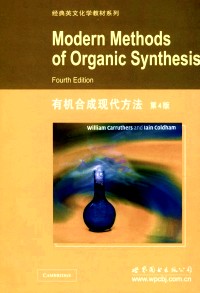
Modern methods of organic synthesis = 有机合成现代方法 / 4th ed.
副标题:无
作 者:W. Carruthers, Iain Coldham.
分类号:
ISBN:9787506292702
微信扫一扫,移动浏览光盘
简介
the fourth edition of this well-known textbook discusses the key methods used in
organic synthesis, showing the value and scope of these methods and how they are
used in the synthesis of complex molecules. all the text from the third edition has
been revised, to produce a modem account of traditional methods and an up-to-date
description of recent advancements in synthetic chemistry. the textbook maintains
a traditional and logical approach in detailing carbon--carbon bond formations,
followed by a new chapter on the functionalization of alkenes and concluding with
oxidation and reduction reactions. reference style has been improved to include
footnotes, allowing easy and rapid access to the primary literature. in addition, a
selection of problems has been added at the end of each chapter, with answers
at the end of the book. the book will be of significant interest to chemistry and
biochemistry students at advanced undergraduate and graduate level, as well as
to researchers in academia and industry who wish to familiarize themselves with
modem synthetic methods.
目录
Preface to the first edition
Preface to the fourth edition
1 Formation of carbon-carbon single bonds
1.1 Main-group chemistry
1.1.1 Alkylation of enolates and enamines
1.1.2 Conjugate addition reactions of enolates and enamines
1.1.3 The aldol reaction
1.1.4 Asymmetric methodology with enolates and enamines
1.1.5 0rganolithium reagents
1.1.6 0rganomagnesium reagents
1.1.7 Organozinc reagents
1.1.8 Allylic organometallics of boron, silicon and tin
1.2 Transition-metal chemistry
Problems
1.2.1 Organocopper reagents
1.2.2 Organochromium chemistry
1.2.3 Organocobalt chemistry
1.2.4 0rganopalladium chemistry
2 Formation of carbon-carbon double bonds
2.1 [3-Elimination reactions
2.2 Pyrolytic syn eliminations
2.3 Fragmentation reactions
2.4 Alkenes from hydrazones
2.5 Alkenes from 1,2-diols
2.6 Alkenes from alkynes
2.7 The Wittig and related reactions
2.8 Alkenes from sulfones
2.9 Alkenes using titanium or chromium reagents
2.10 Alkene metathesis reactions
Problems
3 Pericyclic reactions
3.1 The Diels-Alder cycloaddition reaction
3.1.1 The dienophile
3.1.2 The diene
3.1.3 Regiochemistry of the Diels-Alder reaction
3.1.4 Stereochemistry of the Diels-Alder reaction
3.1.5 Intramolecular Diels-Alder reactions
3.1.6 The retro Diels-Alder reaction
3.1.7 Asymmetric Diels-Alder reactions
3.2 [2+2] Cycloaddition reactions
3.3 Cycloaddition reactions with allyl cations and allyl anions
3.4 1,3-Dipolar cycloaddition reactions
3.5 The ene reaction
3.6 [3,3]-Sigmatropic rearrangements
3.6.1 The Cope rearrangement
3.6.2 The Claisen rearrangement
3.7 [2,3]-Sigmatropic rearrangements
3.8 Electrocyclic reactions
Problems
4 Radical and carbene chemistry
4.1 Radicals
4.1.1 Radical abstraction reactions
4.1.2 Radical addition reactions
4.2 Carbenes
Problems
Functionalization of alkenes
5.1 Hydroboration
5.1.1 Reactions of organoboranes
5.2 Epoxidation and aziridination
5.2.1 Epoxidation
5.2.2 Asymmetric epoxidation
5.2.3 Aziridination
5.3 Dihydroxylation
5.3.1 Dihydroxylation with osmium tetroxide
5.3.2 Other methods of dihydroxylation
5.3.3 Amino-hydroxylation
5.4 Oxidative cleavage
5.5 Palladium-catalysed oxidation of aikenes
Problems
6 Oxidation
6.1 Oxidation of hydrocarbons
6.1.1 Alkanes
6.1.2 Aromatic hydrocarbons
6.1.3 Alkenes
6.2 Oxidation of alcohols
6.2.1 Chromium reagents
6.2.2 Oxidation via alkoxysulfonium salts
6.2.3 Manganese reagents
6.2.4 Other metal-based oxidants
6.2.5 Other non-metal-based oxidants
6.2.6 oxidation to carboxylic acids or esters
6.3 Oxidation of ketones
6.3.1 a,~~3-Unsaturated ketones
6.3.2 a-Hydroxy-ketones
6.3.3 Baeyer-Villiger oxidation of ketones
Problems
7 Reduction
7.1 Catalytic hydrogenation
7.2 Reduction by dissolving metals
7.3 Reduction by hydride-transfer reagents
7.3.3 Derivatives of lithium aluminium hydride and sodium
borohydride
7.3.4 Mixed lithium aluminium hydride-aluminium chloride
reagents
7.3.5 Diisobutylaluminium hydride (DIBAL-H)
7.3.6 Sodium cyanoborohydride and sodium
triacetoxyborohydride
7.3.7 Borane and derivatives
7.4 Other methods of reduction
7.4.1 Enzyme catalysed
7.4.2 Wolff-Kishner reduction
7.4.3 Reductions with diimide
7.4.4 Reductions with trialkylsilanes
Problems
Answers to problems
Index
Preface to the fourth edition
1 Formation of carbon-carbon single bonds
1.1 Main-group chemistry
1.1.1 Alkylation of enolates and enamines
1.1.2 Conjugate addition reactions of enolates and enamines
1.1.3 The aldol reaction
1.1.4 Asymmetric methodology with enolates and enamines
1.1.5 0rganolithium reagents
1.1.6 0rganomagnesium reagents
1.1.7 Organozinc reagents
1.1.8 Allylic organometallics of boron, silicon and tin
1.2 Transition-metal chemistry
Problems
1.2.1 Organocopper reagents
1.2.2 Organochromium chemistry
1.2.3 Organocobalt chemistry
1.2.4 0rganopalladium chemistry
2 Formation of carbon-carbon double bonds
2.1 [3-Elimination reactions
2.2 Pyrolytic syn eliminations
2.3 Fragmentation reactions
2.4 Alkenes from hydrazones
2.5 Alkenes from 1,2-diols
2.6 Alkenes from alkynes
2.7 The Wittig and related reactions
2.8 Alkenes from sulfones
2.9 Alkenes using titanium or chromium reagents
2.10 Alkene metathesis reactions
Problems
3 Pericyclic reactions
3.1 The Diels-Alder cycloaddition reaction
3.1.1 The dienophile
3.1.2 The diene
3.1.3 Regiochemistry of the Diels-Alder reaction
3.1.4 Stereochemistry of the Diels-Alder reaction
3.1.5 Intramolecular Diels-Alder reactions
3.1.6 The retro Diels-Alder reaction
3.1.7 Asymmetric Diels-Alder reactions
3.2 [2+2] Cycloaddition reactions
3.3 Cycloaddition reactions with allyl cations and allyl anions
3.4 1,3-Dipolar cycloaddition reactions
3.5 The ene reaction
3.6 [3,3]-Sigmatropic rearrangements
3.6.1 The Cope rearrangement
3.6.2 The Claisen rearrangement
3.7 [2,3]-Sigmatropic rearrangements
3.8 Electrocyclic reactions
Problems
4 Radical and carbene chemistry
4.1 Radicals
4.1.1 Radical abstraction reactions
4.1.2 Radical addition reactions
4.2 Carbenes
Problems
Functionalization of alkenes
5.1 Hydroboration
5.1.1 Reactions of organoboranes
5.2 Epoxidation and aziridination
5.2.1 Epoxidation
5.2.2 Asymmetric epoxidation
5.2.3 Aziridination
5.3 Dihydroxylation
5.3.1 Dihydroxylation with osmium tetroxide
5.3.2 Other methods of dihydroxylation
5.3.3 Amino-hydroxylation
5.4 Oxidative cleavage
5.5 Palladium-catalysed oxidation of aikenes
Problems
6 Oxidation
6.1 Oxidation of hydrocarbons
6.1.1 Alkanes
6.1.2 Aromatic hydrocarbons
6.1.3 Alkenes
6.2 Oxidation of alcohols
6.2.1 Chromium reagents
6.2.2 Oxidation via alkoxysulfonium salts
6.2.3 Manganese reagents
6.2.4 Other metal-based oxidants
6.2.5 Other non-metal-based oxidants
6.2.6 oxidation to carboxylic acids or esters
6.3 Oxidation of ketones
6.3.1 a,~~3-Unsaturated ketones
6.3.2 a-Hydroxy-ketones
6.3.3 Baeyer-Villiger oxidation of ketones
Problems
7 Reduction
7.1 Catalytic hydrogenation
7.2 Reduction by dissolving metals
7.3 Reduction by hydride-transfer reagents
7.3.3 Derivatives of lithium aluminium hydride and sodium
borohydride
7.3.4 Mixed lithium aluminium hydride-aluminium chloride
reagents
7.3.5 Diisobutylaluminium hydride (DIBAL-H)
7.3.6 Sodium cyanoborohydride and sodium
triacetoxyborohydride
7.3.7 Borane and derivatives
7.4 Other methods of reduction
7.4.1 Enzyme catalysed
7.4.2 Wolff-Kishner reduction
7.4.3 Reductions with diimide
7.4.4 Reductions with trialkylsilanes
Problems
Answers to problems
Index
Modern methods of organic synthesis = 有机合成现代方法 / 4th ed.
- 名称
- 类型
- 大小
光盘服务联系方式: 020-38250260 客服QQ:4006604884
云图客服:
用户发送的提问,这种方式就需要有位在线客服来回答用户的问题,这种 就属于对话式的,问题是这种提问是否需要用户登录才能提问
Video Player
×
Audio Player
×
pdf Player
×
