

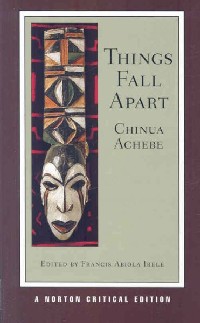
简介
"Things Fall Apart is one of the most widely read African novels ever published. It is written by one of Nigeria s leading novelists, Chinua Achebe. Set in the Ibo village of Umuofia, Things Fall Apart recounts a stunning moment in African history - its colonization by Britain. The novel, first published in 1958, has by today sold over 8 million copies, been translated into at least forty-five languages, and earned Achebe the somewhat misleading and patronizing title of "the man who invented African literature." It carefully re-creates tribal life before the arrival of Europeans in Africa, and then details the jarring changes brought on by the advent of colonialism and Christianity.
The book is a parable that examines the colonial experience from an African perspective, through Okonkwo, who was "a strong individual and an Igbo hero struggling to maintain the cultural integrity of his people against the overwhelming power of colonial rule." Okonkwo is banished from the community for accidentally killing a clansman and is forced to live seven years in exile. He returns to his home village, only to witness its disintegration as it abandons tradition for European ways. The book describes the simultaneous disintegration of Okonkwo and his village, as his pleas to his people not to exchange their culture for that of the English fall on deaf ears.
The brilliance of Things Fall Apart is that it addresses the imposition of colonization and the crisis in African culture caused by the collapse of colonial rule. Achebe prophetically argued that colonial domination and the culture it left in Africa had such a stranglehold on African peoples that its consequences would haunt African society long after colonizers had left the continent.
A Chronology of Achebe's life and work and a Selected Bibliography are also included."--Pub. desc.
目录
Table Of Contents:
Preface vii
Introduction ix
The Text of Things Fall Apart 1(118)
Contexts and Criticism 119(468)
Chinua Achebe---interviews 121(38)
Donatus Nwoga, Dennis Duerden, and Robert Serumaga • Interview with Chinua Achebe 121(14)
Lewis Nkosi
Literature and Conscientization: Interview with Chinua Achebe 135(13)
Biodun Jeyifo
Working with Chinua Achebe: In Conversation with Kirsten Holst Petersen 148(11)
James Currey
Alan Hill
Keith Sambrook
Essays and Responses 159(62)
Chinua Achebe • Chi in Igbo Cosmology 159(10)
An Image of Africa: Racism in Conrad's Heart of Darkness 169(13)
Teaching the Politics of Heart of Darkness 182(7)
Gerald Graff
Criticising the Critic: Achebe on Conrad 189
Olusegun Adekoya
Was Joseph Conrad Really a Racist? 200(209)
Caryl Phillips
Africa's Tarnished Image 209(12)
Chinua Achebe
The Igbo-African Background 221(38)
Abiku 221(1)
J. P. Clark
Map: Nigeria, showing the Igbo area 222(1)
Map: Igboland, showing the major places in Things Fall Apart 223(1)
Wole Soyinka Abiku 224(1)
Victor C. Uchendu The Igbo World 225(11)
Don C. Ohadike Igbo Culture and History 236(23)
General Essays on Chinua Achebe 259(100)
Yeats and Achebe 259(6)
A. G. Stock
European Pedigrees/African Contagions: Nationality, Narrative, and Communality in Tutuola, Achebe, and Reed 265(17)
James Snead
The African Novel in Transition: Chinua Achebe 282(15)
James Olney
Chinua Achebe and the Invention of African Literature 297(6)
Simon Gikandi
Achebe and Christianity 303(20)
Augustine C. Okere
Chinua Achebe and the Question of Modern African Tragedy 323(20)
Neil ten Kortenaar
Chinua Achebe and the ``African Experience'': A Socio-Literary Perspective 343(16)
Mala Pandurang
Essays on Things Fall Apart 359(196)
Things Fall Apart 359(11)
Oladele Taiwo
Narrative Techniques in Things Fall Apart 370(15)
Solomon O. Iyasere
Things Fall Apart 385(25)
David Carroll
Character and Society in Achebe's Things Fall Apart 410(12)
Eustace Palmer
Rhythm and Narrative Method in Achebe's Things Fall Apart 422(15)
B. Eugene McCarthy
``A Less Superficial Picture'': Things Fall Apart 437(16)
C. L. Innes
The Crisis of Cultural Memory in Chinua Achebe's Things Fall Apart 453(39)
F. Abiola Irele
For Chinua Achebe: The Resilience and the Predicament of Obierika 492(18)
Biodun Jeyifo
Problems of Gender and History in the Teaching of Things Fall Apart 510(11)
Rhonda Cobham
Following the Author in Things Fall Apart 521(7)
Emmanuel Obiechina
Things Fall Apart in Its Time and Place 528(7)
Robert M. Wren
Realism, Criticism, and the Disguises of Both: A Reading of Chinua Achebe's Things Fall Apart with an Evaluation of the Criticism Relating to It 535(20)
Ato Quayson
Style and Language 555(32)
The Palm-oil with Which Achebe's Words Are Eaten 555(16)
Bernth Lindfors
Sophisticated Primitivism: The Syncretism of Oral and Literate Modes in Achebe's Things Fall Apart 571(16)
Abdul JanMohamed
Chinua Achebe: A Chronology 587(4)
Selected Bibliography 591
Preface vii
Introduction ix
The Text of Things Fall Apart 1(118)
Contexts and Criticism 119(468)
Chinua Achebe---interviews 121(38)
Donatus Nwoga, Dennis Duerden, and Robert Serumaga • Interview with Chinua Achebe 121(14)
Lewis Nkosi
Literature and Conscientization: Interview with Chinua Achebe 135(13)
Biodun Jeyifo
Working with Chinua Achebe: In Conversation with Kirsten Holst Petersen 148(11)
James Currey
Alan Hill
Keith Sambrook
Essays and Responses 159(62)
Chinua Achebe • Chi in Igbo Cosmology 159(10)
An Image of Africa: Racism in Conrad's Heart of Darkness 169(13)
Teaching the Politics of Heart of Darkness 182(7)
Gerald Graff
Criticising the Critic: Achebe on Conrad 189
Olusegun Adekoya
Was Joseph Conrad Really a Racist? 200(209)
Caryl Phillips
Africa's Tarnished Image 209(12)
Chinua Achebe
The Igbo-African Background 221(38)
Abiku 221(1)
J. P. Clark
Map: Nigeria, showing the Igbo area 222(1)
Map: Igboland, showing the major places in Things Fall Apart 223(1)
Wole Soyinka Abiku 224(1)
Victor C. Uchendu The Igbo World 225(11)
Don C. Ohadike Igbo Culture and History 236(23)
General Essays on Chinua Achebe 259(100)
Yeats and Achebe 259(6)
A. G. Stock
European Pedigrees/African Contagions: Nationality, Narrative, and Communality in Tutuola, Achebe, and Reed 265(17)
James Snead
The African Novel in Transition: Chinua Achebe 282(15)
James Olney
Chinua Achebe and the Invention of African Literature 297(6)
Simon Gikandi
Achebe and Christianity 303(20)
Augustine C. Okere
Chinua Achebe and the Question of Modern African Tragedy 323(20)
Neil ten Kortenaar
Chinua Achebe and the ``African Experience'': A Socio-Literary Perspective 343(16)
Mala Pandurang
Essays on Things Fall Apart 359(196)
Things Fall Apart 359(11)
Oladele Taiwo
Narrative Techniques in Things Fall Apart 370(15)
Solomon O. Iyasere
Things Fall Apart 385(25)
David Carroll
Character and Society in Achebe's Things Fall Apart 410(12)
Eustace Palmer
Rhythm and Narrative Method in Achebe's Things Fall Apart 422(15)
B. Eugene McCarthy
``A Less Superficial Picture'': Things Fall Apart 437(16)
C. L. Innes
The Crisis of Cultural Memory in Chinua Achebe's Things Fall Apart 453(39)
F. Abiola Irele
For Chinua Achebe: The Resilience and the Predicament of Obierika 492(18)
Biodun Jeyifo
Problems of Gender and History in the Teaching of Things Fall Apart 510(11)
Rhonda Cobham
Following the Author in Things Fall Apart 521(7)
Emmanuel Obiechina
Things Fall Apart in Its Time and Place 528(7)
Robert M. Wren
Realism, Criticism, and the Disguises of Both: A Reading of Chinua Achebe's Things Fall Apart with an Evaluation of the Criticism Relating to It 535(20)
Ato Quayson
Style and Language 555(32)
The Palm-oil with Which Achebe's Words Are Eaten 555(16)
Bernth Lindfors
Sophisticated Primitivism: The Syncretism of Oral and Literate Modes in Achebe's Things Fall Apart 571(16)
Abdul JanMohamed
Chinua Achebe: A Chronology 587(4)
Selected Bibliography 591
- 名称
- 类型
- 大小
光盘服务联系方式: 020-38250260 客服QQ:4006604884
云图客服:
用户发送的提问,这种方式就需要有位在线客服来回答用户的问题,这种 就属于对话式的,问题是这种提问是否需要用户登录才能提问
Video Player
×
Audio Player
×
pdf Player
×
