

简介
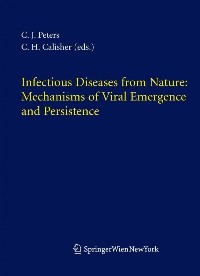
Significant zoonotic diseases have appeared with increasing frequency in recent years. At a symposium held in Galveston, Texas, in March 2004, many outstanding virologists and others presented papers under the broad theme of "emergence". The intent was to elucidate the diseases themselves, the mechanisms by which they have emerged, the publication perception and response to the diseases, and the possibility of prevention or prediction. The papers in this book summarize the talks of this meeting. Among the many timely papers are those by Nobel Prize winner Peter Doherty, influenza epidemiologists Robert Webster and Jeffery Taubenberger, and important contributions by Neal Nathanson, Esteban Domingo, Barry Beaty, David Walker, James Hughes, and others of world expertise.
目录
Front matter 1-2
Comments on the life and contributions of Robert E. Shope 3-15
Virus perpetuation in populations: biological variables that determine persistence or eradication 17-32
The virus-immunity ecosystem 33-44
Host range, amplification and arboviral disease emergence 45-57
Regulation of Rodent-Borne viruses in the natural host: implications for human disease 59-71
Population dynamics of RNA viruses: the essential contribution of mutant spectra 73-88
Control of arbovirus diseases: is the vector the weak link? 89-100
Pathogenesis of Rift Valley fever virus in mosquitoes 鈥?tracheal conduits & the basal lamina as an extra-cellular barrier 101-115
The virulence of the 1918 pandemic influenza virus: unraveling the enigma 117-129
The spread of the H5N1 bird flu epidemic in Asia in 2004 131-145
Transient or occult HIV infections may occur more frequently than progressive infections: changing the paradigm about HIV persistence 147-156
Ehrlichiaunder our noses and no one notices 157-177
The role of reverse genetics systems in determining filovirus pathogenicity 179-185
Structural biology of old world and new world alphaviruses 187-202
Species barriers in prion diseases 鈥?brief review 203-206
Academic science and the business of vaccines 207-213
Emerging infectious diseases: the public鈥檚 view of the problem and what should be expected from the public health community Emerging infectious diseases: the public鈥檚 view of the problem and what should be expected from the public health community
Comments on the life and contributions of Robert E. Shope 3-15
Virus perpetuation in populations: biological variables that determine persistence or eradication 17-32
The virus-immunity ecosystem 33-44
Host range, amplification and arboviral disease emergence 45-57
Regulation of Rodent-Borne viruses in the natural host: implications for human disease 59-71
Population dynamics of RNA viruses: the essential contribution of mutant spectra 73-88
Control of arbovirus diseases: is the vector the weak link? 89-100
Pathogenesis of Rift Valley fever virus in mosquitoes 鈥?tracheal conduits & the basal lamina as an extra-cellular barrier 101-115
The virulence of the 1918 pandemic influenza virus: unraveling the enigma 117-129
The spread of the H5N1 bird flu epidemic in Asia in 2004 131-145
Transient or occult HIV infections may occur more frequently than progressive infections: changing the paradigm about HIV persistence 147-156
Ehrlichiaunder our noses and no one notices 157-177
The role of reverse genetics systems in determining filovirus pathogenicity 179-185
Structural biology of old world and new world alphaviruses 187-202
Species barriers in prion diseases 鈥?brief review 203-206
Academic science and the business of vaccines 207-213
Emerging infectious diseases: the public鈥檚 view of the problem and what should be expected from the public health community Emerging infectious diseases: the public鈥檚 view of the problem and what should be expected from the public health community
- 名称
- 类型
- 大小
光盘服务联系方式: 020-38250260 客服QQ:4006604884
云图客服:
用户发送的提问,这种方式就需要有位在线客服来回答用户的问题,这种 就属于对话式的,问题是这种提问是否需要用户登录才能提问
Video Player
×
Audio Player
×
pdf Player
×
