

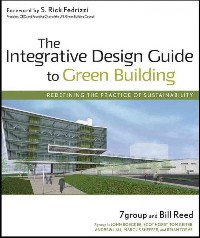
The integrative design guide to green building : redefining the practice of sustainability /
副标题:无
作 者:7group (John Boecker, Scot Horst, Tom Keiter, Andrew Lau, Marcus Sheffer, and Brian Toevs) and Bi...
分类号:
ISBN:9780470181102
微信扫一扫,移动浏览光盘
简介
The integrative design process offers a new path to making better green building decisions and addressing complex issues that threaten living systems. In The Integrative Design Guide to Green Building: Redefining the Practice of Sustainability, 7group's principals and integrative design pioneer Bill Reed introduce design and construction professionals to the concepts of whole building design and whole systems. With integrative thinking that reframes what sustainability means, they provide a how-to guide for architects, designers, engineers, developers, builders, and other professionals on incorporating integrative design into every phase of a project.
目录
Contents 7
Acknowledgments 11
Foreword 13
Introduction 15
Chapter 1: Many Minds 18
From Master Builder to the Twenty-First Century: Where we are and How we got Here 18
The Master Builder 18
The Siena Duomo 22
The Age of Specialization 25
Stop And Reflect: our Current Process 26
Siloed Optimization 26
The Abyss between Design and Construction Professionals 27
Doing Less Damage by Adding Technologies 28
The Call Before us 30
Chapter 2: Building as an Organism 32
A Shift In Thinking: No Part or System in Isolation 32
Buildings as Organisms 40
Tunneling through the Cost Barrier 41
Lessons Learned from High-Performance Windows 42
Project Teams as Organisms 46
Fostering an Interdisciplinary Process: \u201cA Deer in the Headlights\u201d 49
A Team of Colearners and the Learning Wheel 52
The Composite Master Builder 56
Chapter 3: Reframing Sustainability 58
What is Sustainability? 58
The Trajectory of Sustainability Practice 61
The Technical Story of the Willow School 64
A More Compelling and Vital Story of Place 64
Re-Membering Our Role in Nature 65
Reciprocal Relationships within the Larger System 68
The Role of the Mental Model: From Products to a New Mind-Set 69
Nested Subsystems 71
Solving for Pattern 75
Chapter 4: Aligning Values, Purpose, and Process 78
Introduction to the Discovery Phase 78
The Four Es 79
Questioning Assumptions 80
Creating Alignment 81
Aligning the Team 81
Aligning with the Client 83
Fostering an Iterative Process 85
Integrating Intentions with Purpose 85
The Four Key Subsystems 87
Aligning Dollars and Resources 97
The \u201cTouchstones\u201d Exercise 99
Aligning with Values 104
Redefining Success 115
Chapter 5: The Discovery Phase 116
This is not a Cookbook 116
Here\u2019s Where we are 118
Stop and Reflect 118
What\u2019s Working? 119
What\u2019s Not Working? 119
How Can We Do (and Think about) This Differently? 120
Integrative Process Overview 120
Three-Part Structure 124
Part A: Discovery 125
Part B: Design and Construction 125
Part C: Occupancy, Operations, and Performance Feedback 125
Part A: Discovery 126
Stage A.1\u2014Research and Analysis: Preparation 127
Stage A.2\u2014Workshop No. 1: Alignment of Purpose and Goal-Setting 144
Stage A.3\u2014Research and Analysis: Evaluating Possible Strategies 162
Stage A.4\u2014Workshop No. 2: Conceptual Design Exploration 174
Stage A.5\u2014Research and Analysis: Testing Conceptual Design Ideas 186
Chapter 6: Schematic Design 214
Entering Part B\u2014Design and Construction 214
Here\u2019s Where we are 219
Stop And Reflect 220
What\u2019s Working? 220
What\u2019s Not Working? 220
How Can We Do (and Think about) This Differently? 222
Questioning Assumptions 222
Engaging an Interdisciplinary Process 223
Creating Alignment 226
Mental Model Shift 231
Life Cycle Assessment (LCA) Tools and Environmental Benefits 231
Energy-Modeling Tools and Costs Benefits 235
Revisiting Nested Subsystems 236
Part B: Design and Construction 237
Stage B.1\u2014Workshop No. 3: Schematic Design Kickoff\u2014Bringing It All Together (without committing to building form) 238
Stage B.2\u2014Research and Analysis: Schematic Design\u2014Bringing It All Together (and now committing to building form) 254
Chapter 7: Design Development and Documentation 276
Here\u2019s Where we are 277
Stop and Reflect 279
What\u2019s Working? 279
What\u2019s Not Working? 279
How Can We Do (and Think about) This Differently? 280
Stage B.3\u2014Workshop No. 4: Design Development Kickoff\u2014It Is Brought Together; Does It Work? 284
Stage B.4\u2014Research and Analysis: Design Development\u2014Optimization 295
Stage B.5\u2014Workshop No. 5: Construction Documents Kickoff\u2014Perfomance Verification and Quality Control 316
Stage B.6 \u2013 Construction Documents\u2014No More Designing 321
Chapter 8: Construction, Operations, and Feedback 326
The Evolving Commissioning Process 327
Learning From Feedback 329
Here\u2019s Where we are 331
Stop and Reflect 332
What\u2019s Working? 332
What\u2019s Not Working? 333
How Can We Do (and Think about) This Differently? 339
Stage B.7\u2014Bidding and Construction\u2014Aligning with the Builder: Becoming a Team 347
Part C\u2014Occupancy, Operations, and Performance Feedback 363
Stage C.1\u2014Occupancy: Feedback from All Systems 364
The Call for Performance Feedback 364
Epilogue\u2014Evolving the Field 392
A Transformational Process 393
Shifting the Paradigm 394
The Fifth System 402
Index 404
Acknowledgments 11
Foreword 13
Introduction 15
Chapter 1: Many Minds 18
From Master Builder to the Twenty-First Century: Where we are and How we got Here 18
The Master Builder 18
The Siena Duomo 22
The Age of Specialization 25
Stop And Reflect: our Current Process 26
Siloed Optimization 26
The Abyss between Design and Construction Professionals 27
Doing Less Damage by Adding Technologies 28
The Call Before us 30
Chapter 2: Building as an Organism 32
A Shift In Thinking: No Part or System in Isolation 32
Buildings as Organisms 40
Tunneling through the Cost Barrier 41
Lessons Learned from High-Performance Windows 42
Project Teams as Organisms 46
Fostering an Interdisciplinary Process: \u201cA Deer in the Headlights\u201d 49
A Team of Colearners and the Learning Wheel 52
The Composite Master Builder 56
Chapter 3: Reframing Sustainability 58
What is Sustainability? 58
The Trajectory of Sustainability Practice 61
The Technical Story of the Willow School 64
A More Compelling and Vital Story of Place 64
Re-Membering Our Role in Nature 65
Reciprocal Relationships within the Larger System 68
The Role of the Mental Model: From Products to a New Mind-Set 69
Nested Subsystems 71
Solving for Pattern 75
Chapter 4: Aligning Values, Purpose, and Process 78
Introduction to the Discovery Phase 78
The Four Es 79
Questioning Assumptions 80
Creating Alignment 81
Aligning the Team 81
Aligning with the Client 83
Fostering an Iterative Process 85
Integrating Intentions with Purpose 85
The Four Key Subsystems 87
Aligning Dollars and Resources 97
The \u201cTouchstones\u201d Exercise 99
Aligning with Values 104
Redefining Success 115
Chapter 5: The Discovery Phase 116
This is not a Cookbook 116
Here\u2019s Where we are 118
Stop and Reflect 118
What\u2019s Working? 119
What\u2019s Not Working? 119
How Can We Do (and Think about) This Differently? 120
Integrative Process Overview 120
Three-Part Structure 124
Part A: Discovery 125
Part B: Design and Construction 125
Part C: Occupancy, Operations, and Performance Feedback 125
Part A: Discovery 126
Stage A.1\u2014Research and Analysis: Preparation 127
Stage A.2\u2014Workshop No. 1: Alignment of Purpose and Goal-Setting 144
Stage A.3\u2014Research and Analysis: Evaluating Possible Strategies 162
Stage A.4\u2014Workshop No. 2: Conceptual Design Exploration 174
Stage A.5\u2014Research and Analysis: Testing Conceptual Design Ideas 186
Chapter 6: Schematic Design 214
Entering Part B\u2014Design and Construction 214
Here\u2019s Where we are 219
Stop And Reflect 220
What\u2019s Working? 220
What\u2019s Not Working? 220
How Can We Do (and Think about) This Differently? 222
Questioning Assumptions 222
Engaging an Interdisciplinary Process 223
Creating Alignment 226
Mental Model Shift 231
Life Cycle Assessment (LCA) Tools and Environmental Benefits 231
Energy-Modeling Tools and Costs Benefits 235
Revisiting Nested Subsystems 236
Part B: Design and Construction 237
Stage B.1\u2014Workshop No. 3: Schematic Design Kickoff\u2014Bringing It All Together (without committing to building form) 238
Stage B.2\u2014Research and Analysis: Schematic Design\u2014Bringing It All Together (and now committing to building form) 254
Chapter 7: Design Development and Documentation 276
Here\u2019s Where we are 277
Stop and Reflect 279
What\u2019s Working? 279
What\u2019s Not Working? 279
How Can We Do (and Think about) This Differently? 280
Stage B.3\u2014Workshop No. 4: Design Development Kickoff\u2014It Is Brought Together; Does It Work? 284
Stage B.4\u2014Research and Analysis: Design Development\u2014Optimization 295
Stage B.5\u2014Workshop No. 5: Construction Documents Kickoff\u2014Perfomance Verification and Quality Control 316
Stage B.6 \u2013 Construction Documents\u2014No More Designing 321
Chapter 8: Construction, Operations, and Feedback 326
The Evolving Commissioning Process 327
Learning From Feedback 329
Here\u2019s Where we are 331
Stop and Reflect 332
What\u2019s Working? 332
What\u2019s Not Working? 333
How Can We Do (and Think about) This Differently? 339
Stage B.7\u2014Bidding and Construction\u2014Aligning with the Builder: Becoming a Team 347
Part C\u2014Occupancy, Operations, and Performance Feedback 363
Stage C.1\u2014Occupancy: Feedback from All Systems 364
The Call for Performance Feedback 364
Epilogue\u2014Evolving the Field 392
A Transformational Process 393
Shifting the Paradigm 394
The Fifth System 402
Index 404
The integrative design guide to green building : redefining the practice of sustainability /
- 名称
- 类型
- 大小
光盘服务联系方式: 020-38250260 客服QQ:4006604884
云图客服:
用户发送的提问,这种方式就需要有位在线客服来回答用户的问题,这种 就属于对话式的,问题是这种提问是否需要用户登录才能提问
Video Player
×
Audio Player
×
pdf Player
×
