

简介
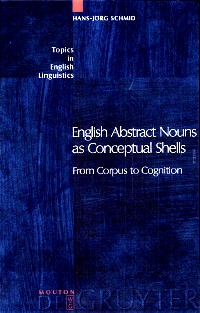
Schmid's study is concerned with a class of abstract nouns and their linguistic environments. Among the most typical and frequent examples are the words , words called "shell nouns" that Schmid arranges into the following classes: factual ( ), linguistic ( ), mental ( ), modal ( ), eventive ( ), and circumstantial ( ). These nouns are classified as "shell" not because they are immutably shell-like but because they have the potential for being used as conceptual shells for complex, proposition-like pieces of information. In this dissertation-like study, Schmid attempts to lend some specificity to one of the vaguer classes of English words by exploring the uses and functions of some 670 examples. No information on the author is provided. Annotation c. Book News, Inc., Portland, OR (booknews.com)
目录
Foundations: Theory, terminology and methodology p. 1
Introduction p. 3
Approaching shell nouns p. 10
The term shell noun p. 10
Defining shell nouns and shell-content complexes in functional terms p. 13
A brief note on the theoretical stance p. 20
The links between shell nouns and contents p. 21
Triggering co-interpretation p. 21
Lexico-grammatical patterns of shell-noun uses p. 21
From identity of reference to experiential identity p. 27
The semantic contributions of different types of complements: a survey of the evidence from verbal complementation p. 31
Basic functions of shell-noun typical patterns p. 36
The systematic investigation of shell nouns p. 38
The From-Corpus-to-Cognition Principle p. 38
Data retrieval p. 40
Cleaning up the data p. 48
Systematic misses of the corpus inquiry p. 51
A survey of the results of the corpus inquiry p. 53
Semantic prerequisites p. 63
Abstractness p. 63
Extensional abstractness and classes of abstract entities p. 63
Stylistic abstractness and grammatical metaphor p. 70
Unspecificity and structure-inherent semantic gaps p. 73
Summary of Part I p. 80
The use of shell nouns p. 83
Describing shell-noun uses p. 85
Degrees of typicality p. 85
Explaining the meanings of shell-noun uses: features and frames p. 87
Factual uses p. 92
Introduction p. 92
Neutral uses p. 93
Causal uses p. 101
Evidential uses p. 110
Comparative uses p. 113
Partitive uses p. 116
Attitudinal factual uses p. 120
Linguistic uses p. 131
Introduction p. 131
Propositional uses p. 139
Illocutionary uses p. 147
Assertive uses p. 153
Rogative uses p. 166
Directive uses p. 170
Commissive uses p. 176
Expressive uses p. 181
Mental uses p. 184
Introduction p. 184
Conceptual uses p. 188
Psychological-state uses p. 195
Creditive uses p. 195
Dubitative uses p. 208
Volitional uses p. 209
Emotive uses p. 226
Modal uses p. 231
Introduction p. 231
Epistemic uses p. 235
Deontic uses p. 244
Dynamic uses p. 251
Eventive uses p. 261
Introduction p. 261
General eventive uses p. 262
Specific eventive uses p. 266
Attitudinal eventive uses p. 270
Circumstantial uses p. 275
Introduction p. 275
General circumstantial uses p. 277
Specific circumstantial uses p. 279
Summary of Part II p. 292
Functions of shell nouns p. 301
Introduction to Part III p. 303
Semantic functions p. 308
The characterizing potential inherent in shell nouns p. 308
Characterization expressed by premodifiers p. 317
Pragmatic, rhetorical and textual functions p. 329
Focusing and topicalizing p. 329
Linking p. 339
Signposting p. 349
Cognitive functions p. 360
Conceptual partitioning p. 360
Reifying and hypostatizing p. 363
Integrating p. 370
Conclusion and outlook p. 377
Appendix p. 381
Notes p. 409
References p. 421
Index of shell nouns p. 443
Index of subjects p. 453
Introduction p. 3
Approaching shell nouns p. 10
The term shell noun p. 10
Defining shell nouns and shell-content complexes in functional terms p. 13
A brief note on the theoretical stance p. 20
The links between shell nouns and contents p. 21
Triggering co-interpretation p. 21
Lexico-grammatical patterns of shell-noun uses p. 21
From identity of reference to experiential identity p. 27
The semantic contributions of different types of complements: a survey of the evidence from verbal complementation p. 31
Basic functions of shell-noun typical patterns p. 36
The systematic investigation of shell nouns p. 38
The From-Corpus-to-Cognition Principle p. 38
Data retrieval p. 40
Cleaning up the data p. 48
Systematic misses of the corpus inquiry p. 51
A survey of the results of the corpus inquiry p. 53
Semantic prerequisites p. 63
Abstractness p. 63
Extensional abstractness and classes of abstract entities p. 63
Stylistic abstractness and grammatical metaphor p. 70
Unspecificity and structure-inherent semantic gaps p. 73
Summary of Part I p. 80
The use of shell nouns p. 83
Describing shell-noun uses p. 85
Degrees of typicality p. 85
Explaining the meanings of shell-noun uses: features and frames p. 87
Factual uses p. 92
Introduction p. 92
Neutral uses p. 93
Causal uses p. 101
Evidential uses p. 110
Comparative uses p. 113
Partitive uses p. 116
Attitudinal factual uses p. 120
Linguistic uses p. 131
Introduction p. 131
Propositional uses p. 139
Illocutionary uses p. 147
Assertive uses p. 153
Rogative uses p. 166
Directive uses p. 170
Commissive uses p. 176
Expressive uses p. 181
Mental uses p. 184
Introduction p. 184
Conceptual uses p. 188
Psychological-state uses p. 195
Creditive uses p. 195
Dubitative uses p. 208
Volitional uses p. 209
Emotive uses p. 226
Modal uses p. 231
Introduction p. 231
Epistemic uses p. 235
Deontic uses p. 244
Dynamic uses p. 251
Eventive uses p. 261
Introduction p. 261
General eventive uses p. 262
Specific eventive uses p. 266
Attitudinal eventive uses p. 270
Circumstantial uses p. 275
Introduction p. 275
General circumstantial uses p. 277
Specific circumstantial uses p. 279
Summary of Part II p. 292
Functions of shell nouns p. 301
Introduction to Part III p. 303
Semantic functions p. 308
The characterizing potential inherent in shell nouns p. 308
Characterization expressed by premodifiers p. 317
Pragmatic, rhetorical and textual functions p. 329
Focusing and topicalizing p. 329
Linking p. 339
Signposting p. 349
Cognitive functions p. 360
Conceptual partitioning p. 360
Reifying and hypostatizing p. 363
Integrating p. 370
Conclusion and outlook p. 377
Appendix p. 381
Notes p. 409
References p. 421
Index of shell nouns p. 443
Index of subjects p. 453
- 名称
- 类型
- 大小
光盘服务联系方式: 020-38250260 客服QQ:4006604884
云图客服:
用户发送的提问,这种方式就需要有位在线客服来回答用户的问题,这种 就属于对话式的,问题是这种提问是否需要用户登录才能提问
Video Player
×
Audio Player
×
pdf Player
×
