

简介
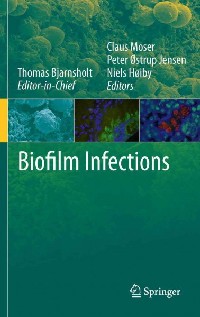
There has been an increasing interest and emphasis on the sessile bacterial lifestyle biofilms since it was discovered that the vast majority of the total microbial biomass exists as biofilms. Leeuwenhoek first described the aggregation of bacteria in 1677, but it was only recently recognized as being important in chronic infection. In 1993, the American Society for Microbiology (ASM) recognized that the biofilm mode of growth was relevant to microbiology. This book covers both the evidence for biofilms in many chronic bacterial infections as well as the problems facing these infections such as diagnostics, pathogenesis, treatment regimes, and in vitro and in vivo models for studying biofilms. This is the first scientific book on biofilm infections, with chapters written by world- renowned scientists and clinicians. The intended audience of this book includes scientists, teachers at the university level, as well as clinicians. About the Editors: Thomas Bjarnsholt, Ph.D., Technical University of Denmark, Lyngby, Denmark Peter Oestrup Jensen, Dept. of Clinical Microbiology, Rigshospitalet, Copenhagen, Denmark Claus Moser, Ph.D., Dept. of Clinical Microbiology, Rigshospitalet, Copenhagen, Denmark Niels Hoeby, Dept. of Clinical Microbiology, Rigshospitalet, Copenhagen, Denmark
目录
Preface 4
Contents 7
Contributors 9
1 Introduction to Biofilms 13
1.1 Introduction 13
1.2 The Development of the Biofilm Era 13
1.3 What Is a Biofilm 14
1.4 How Biofilms Are Formed 16
1.5 Who Forms Biofilm and Where Are They Found 19
1.6 What Is the Implication of Biofilms 19
References 19
2 Chronic Wound Colonization, Infection, and Biofilms 22
2.1 Introduction 22
2.2 Types of Chronic Wounds 23
2.2.1 Venous Leg Ulcers 23
2.2.2 Pressure Ulcers 24
2.2.3 Diabetic Ulcers 25
2.2.4 Neuropathic Ulcers 25
2.2.5 Traumatic Ulcers 25
2.2.6 Arterial Ulcers 25
2.3 Wound Treatment 25
2.3.1 Local Wound Treatment 26
2.3.2 Debridement 27
2.4 Bacteria and Wounds 28
2.5 Immune Response to Biofilms 30
2.6 Biofilm Formation in Acute Wounds: In Vivo Models 30
2.7 Evidence of Biofilms in Human Wounds 31
2.8 Clinical Implications of Chronic Wound Biofilm 31
2.9 Future Aspects 32
References 33
3 The Relation of Biofilms to Chronic Otitis MediaINTbreak; and Other Ear-Related Chronic Infections 36
3.1 Introduction 36
3.2 Otitis Media 37
3.2.1 Experimental Studies 37
3.2.2 Clinical Studies 38
3.3 Tonsils and Adenoids 40
3.3.1 Experimental Studies 40
3.3.2 Clinical Studies 41
3.4 Medical Devices in Otorhinolaryngology 41
3.5 Other Biofilm Findings in Otolaryngologic Diseases 42
3.6 Future Implications 43
References 43
4 Human Oral Bacterial Biofilms: Composition, Dynamics,INTbreak; and Pathogenesis 46
4.1 Introduction 46
4.2 Composition of Oral Biofilms 47
4.3 Spatiotemporal Development of Oral Biofilms 49
4.4 Signaling Between Bacteria Within Biofilms 54
4.5 Dental Caries 56
4.5.1 Current Concepts of Caries 56
4.5.2 Caries Lesion Dynamics 58
4.5.3 From Specific Infection to Ecological Imbalance 60
4.6 Periodontal Diseases 62
4.6.1 Mechanisms of Bacterial Pathogenesis 64
4.6.2 Clinical Parameters of Periodontal Diseases 64
4.6.3 Epidemiology of Periodontal Diseases 65
4.6.4 Periodontal Therapy 65
4.6.5 Refractory Periodontitis 67
4.7 A Role for Oral Biofilms in Systemic Infection? 68
4.8 Immunobiology of Biofilm/Tissue Interaction 69
4.9 Conclusion 72
References 72
5 Implant-Associated Infection 80
5.1 Introduction 80
5.1.1 Epidemiology of Implant-Associated Infection 80
5.1.2 Overview of Selected Permanent Implants Used in Medicine 80
5.1.2.1 Intravascular Devices 81
5.1.2.2 Intracorporeal Extravascular Devices 81
5.1.2.3 Intracorporeal Devices with Direct Extra-corporeal Connection 82
5.1.2.4 Extracorporeal Devices 83
5.2 Pathogenesis 83
5.2.1 Route of Infection 83
5.2.2 Mechanisms of Persistence 83
5.2.2.1 Microbiology of Implant-Associated Infections 83
5.2.2.2 Intracellular Persistence 84
5.2.2.3 Microbial Biofilms on Implants 84
5.2.3 Host Defense Around Implants 85
5.3 Selected Implant-Associated Infections 86
5.3.1 Prosthetic Joint Associated 86
5.3.2 Mammary Implants 89
5.3.3 Cardiac Pacemakers and Cardioverter-Defibrillators (ICD) 89
5.3.4 Vascular Prostheses 90
5.3.5 Dental Implants 92
5.3.6 Peritoneal Dialysis Catheters 92
5.4 Prevention 93
5.4.1 Perioperative Antimicrobial Prophylaxis 93
5.4.2 Prophylaxis of Late Hematogenous Infections in Patients with Orthopedic Devices 94
5.5 General Principles of Antimicrobial Therapy 94
5.6 Outlook 96
References 96
6 The Role of Bacterial Biofilms in Infections of Catheters and Shunts 102
6.1 Catheters and Biofilm 102
6.1.1 What Are Catheters and Why Are They Used? 102
6.1.2 Catheter Infection 103
6.1.3 Clinical Evidence for Infections Associated with Catheters 105
6.1.4 Involvement of Biofilms in Catheter Infections 107
6.1.5 Biofilm and Microbial Diversity in Catheters 108
6.1.6 New Potentials in Diagnosis 109
6.1.7 Prevention and Treatment 113
6.2 Conclusion 115
References 116
7 Osteomyelitis 121
7.1 Introduction 121
7.1.1 Anatomy and Function of Bone 121
7.2 Types and Pathogenesis of Osteomyelitis 124
7.2.1 Hematogenous Osteomyelitis 124
7.2.2 Contiguous Focus Osteomyelitis 126
7.3 Etiology of Bacterial Osteomyelitis 126
7.3.1 Staphylococcus spp. 128
7.3.1.1 Virulence 128
7.3.1.2 Adherence 129
7.3.1.3 Staphylococcal Biofilm 131
7.4 Properties of the Host Immune Response in the Development of Osteomyelitis 136
7.5 Diagnosis, Treatment and Prevention of Osteomyelitis 138
7.5.1 Diagnosis 138
7.5.2 Antimicrobial Chemotherapy 139
7.5.3 Novel Treatments 139
7.5.4 Prevention 140
7.6 Conclusion 142
References 142
8 The Importance of Biofilms in Chronic Rhinosinusitis 148
8.1 Introduction 148
8.1.1 Background 148
8.1.2 Biofilms Defined 149
8.1.3 Biofilms and Disease 150
8.1.4 Head and Neck Biofilm-Related Diseases 151
8.1.5 Factors Contributing to Biofilm Antibiotic Resistance 152
8.1.5.1 Antibiotic Resistance 152
8.2 Biofilms and Chronic Rhinosinusitis: What Is the Evidence? 154
8.3 Etiology of CRS 156
8.4 Evidence that Chronic Rhinosinusitis Is a Polymicrobial Disease 157
8.5 Biofilms and CRS Making the Case for a Paradigm Shift 158
8.6 Other Factors Contributing to Development of Biofilm on Rhinosinus Mucosa 161
8.7 Pathophysiology of the Biofilm Communities 162
8.8 Current Paradigms in the Medical and Surgical Management of CRS 162
8.9 Treatments 163
8.10 Scientific Challenge/Importance of CRS Challenge to an Existing Paradigm 165
8.11 Conclusions 165
References 166
9 Helicobacter pylori and Biofilm Formation 170
9.1 Introduction 170
9.2 Biofilm Formation by H. pylori 171
9.2.1 Environmental 171
9.2.2 Dental Plaque 171
9.2.3 Gastric Mucosa 172
9.3 Discussion 173
References 174
10 Pseudomonas aeruginosa Biofilms in the Lungs of Cystic Fibrosis Patients 176
10.1 Cystic Fibrosis 176
10.2 Survival of P. aeruginosa by Adaptation to the Inflammatory Defense System The Fundamental Biofilm Strategy 177
10.3 The Conductive and the Respiratory Zones of the Lungs 178
10.3.1 Survival of P. aeruginosa by Adaptation to the Respiratory Zone of the Lungs 180
10.3.2 Survival of P. aeruginosa by Adaptation to the Conductive Zone of the Lungs 183
10.4 Survival of P. aeruginosa Biofilms by Adaptation to the Antibiotic Therapy 184
10.5 Evolutionary Implications of the Adaptability of P. aeeruginosa 186
10.6 Clinical Consequences of P. aeruginosa Biofilms in CF Lungs 186
10.7 Prophylaxis and Treatment of P. aeruginosa Biofilms in CF Lungs 187
References 188
11 Innate Immune Response to Infectious Biofilms 194
11.1 Introduction 194
11.2 Definition 195
11.3 Recognition of Biofilms 195
11.3.1 Secreted PRRs 195
11.3.2 Complement Receptors 196
11.3.3 Membrane Bound Receptors 197
11.3.4 Toll-Like Receptors (TLRs) 197
11.4 The Innate Response to Biofilms 200
11.5 Conclusion
Significance of the Innate Immune Response for Biofilm Formation 203
References 204
12 Adaptive Immune Responses and Biofilm Infections 210
12.1 Introduction 210
12.2 Components of the Adaptive Immune Response 211
12.3 Activation of the Adaptive Immune Response the Dendritic Cells 212
12.4 Activation of the Adaptive Immune Response Diagnostic Tool 213
12.5 Antibody Responses and Biofilm Infections 214
12.6 Marker for Appropriate Treatment 216
12.7 Types of Adaptive Immune Response 216
12.8 Adaptive Immune Response and CF 218
12.9 Conclusion 221
References 221
13 Antibiotic Tolerance and Resistance in Biofilms 224
13.1 Introduction 224
13.2 Antibiotic Tolerance in Biofilms 224
13.2.1 Restricted Penetration of Antimicrobials 225
13.2.2 Differential Physiological Activity 225
13.2.3 Persisters and Phenotypic Variants 227
13.2.4 Specific Tolerance Mechanisms Connected to the Biofilm Mode of Growth 228
13.2.5 Specific Tolerance Mechanisms Not Connected to the Biofilm Mode of Growth 229
13.3 Antibiotic Resistance in Biofilms 231
13.4 Prevention of Tolerance and Resistance in Biofilms in Clinical Settings 233
13.5 Conclusions 234
References 234
14 Novel and Future Treatment Strategies 239
14.1 Introduction 239
14.2 Prevention of Biofilm Formation 241
14.2.1 Antibodies 241
14.2.2 Pilicides 241
14.3 Removal/Killing of Biofilm 242
14.3.1 Silver 242
14.3.2 Enzymes 243
14.3.2.1 Dispersin B 243
14.3.2.2 DNase 243
14.3.3 Bacteriophages 244
14.3.4 Electrical Currents 244
14.3.5 Dispersal Signals 244
14.4 Weakening of Biofilm 245
14.4.1 Quorum-Sensing Inhibitors 245
14.4.2 Inhibition of Type III Secretion 248
14.4.3 C-Di-GMP 248
14.5 Surface Coatings 249
14.6 Future Perspectives 251
References 251
15 Different Methods for Culturing Biofilms In Vitro 258
15.1 Introduction 258
15.2 Static Microtiter Plate Assays 258
15.2.1 Basic Microtiter Dish Biofilm Assay Protocol 259
15.3 Flow Cells 260
15.3.1 Basic Flow Cell Protocol 262
15.3.2 Sample Protocol 262
15.4 Tube Biofilms 263
15.4.1 Basic Protocol for Growing Tube Biofilms 263
15.5 Colony Biofilms 264
15.5.1 Colony Biofilm Preparation Protocol 265
15.6 Biofilm Growth on Peg Lids 266
15.6.1 Basic Protocol 268
15.7 Rotating Disk and Concentric Cylinder Reactors 268
15.7.1 The Basic Protocol for the RDR (The Protocol for the CCR Is Well Described in Willcock et al. 2000 ) 270
15.8 Summary 271
References 271
16 In Vivo Models of Biofilm Infection 274
16.1 Introduction Diversity of In Vivo Biofilm Models 274
16.2 In Vivo Biofilm Models 279
16.2.1 Periodontal Biofilm Models 279
16.2.2 Foreign-Body Models of Biofilm Infection 280
16.2.2.1 Urinary Tract Infection Models 280
16.2.2.2 Other Foreign Body Models 281
16.2.2.3 Osteomyelitis Models 281
16.2.3 In Vivo Models of Biofilms Adhered to Host Mucosa or Soft-Tissue 282
16.2.3.1 Lung Infection Models 282
16.2.3.2 Endocarditis Models 283
16.2.3.3 Keratitis Models 283
16.2.3.4 In Vivo Models of Otitis Media and Sinusitis 284
16.2.3.5 Wound Models 284
16.3 In Vivo Biofilm Detection Methods 285
16.3.1 Microscopic Methods for Imaging Biofilms Formed In Vivo 287
16.3.1.1 Light Microscopy of Stained Specimens 287
16.3.1.2 High Resolution of Biofilm/Host Interactions with Electron Microscopy 289
16.3.1.3 Using Fluorescent Signals to Image Bacteria and Hydrated EPS with Epifluorescence and Confocal Laser Scanning Microscopy 289
16.3.1.4 Additional Fluorescence-Based Detection Methods 290
16.3.2 Non-microscopic Methods of Detection 291
16.3.2.1 Enumeration of Bacteria by Determining Colony Forming Units 291
16.3.2.2 Whole-Animal Imaging 292
16.3.2.3 Detection of Biofilms by Biofilm-Specific Antibodies 292
16.4 Concluding Remarks 292
References 293
17 Summary and Perspectives 298
17.1 Summary 298
17.1.1 Diagnostic Problems 299
17.1.2 Treatment Problems 300
17.1.3 Prevention 300
17.1.4 Experimental 301
Index 302
Contents 7
Contributors 9
1 Introduction to Biofilms 13
1.1 Introduction 13
1.2 The Development of the Biofilm Era 13
1.3 What Is a Biofilm 14
1.4 How Biofilms Are Formed 16
1.5 Who Forms Biofilm and Where Are They Found 19
1.6 What Is the Implication of Biofilms 19
References 19
2 Chronic Wound Colonization, Infection, and Biofilms 22
2.1 Introduction 22
2.2 Types of Chronic Wounds 23
2.2.1 Venous Leg Ulcers 23
2.2.2 Pressure Ulcers 24
2.2.3 Diabetic Ulcers 25
2.2.4 Neuropathic Ulcers 25
2.2.5 Traumatic Ulcers 25
2.2.6 Arterial Ulcers 25
2.3 Wound Treatment 25
2.3.1 Local Wound Treatment 26
2.3.2 Debridement 27
2.4 Bacteria and Wounds 28
2.5 Immune Response to Biofilms 30
2.6 Biofilm Formation in Acute Wounds: In Vivo Models 30
2.7 Evidence of Biofilms in Human Wounds 31
2.8 Clinical Implications of Chronic Wound Biofilm 31
2.9 Future Aspects 32
References 33
3 The Relation of Biofilms to Chronic Otitis MediaINTbreak; and Other Ear-Related Chronic Infections 36
3.1 Introduction 36
3.2 Otitis Media 37
3.2.1 Experimental Studies 37
3.2.2 Clinical Studies 38
3.3 Tonsils and Adenoids 40
3.3.1 Experimental Studies 40
3.3.2 Clinical Studies 41
3.4 Medical Devices in Otorhinolaryngology 41
3.5 Other Biofilm Findings in Otolaryngologic Diseases 42
3.6 Future Implications 43
References 43
4 Human Oral Bacterial Biofilms: Composition, Dynamics,INTbreak; and Pathogenesis 46
4.1 Introduction 46
4.2 Composition of Oral Biofilms 47
4.3 Spatiotemporal Development of Oral Biofilms 49
4.4 Signaling Between Bacteria Within Biofilms 54
4.5 Dental Caries 56
4.5.1 Current Concepts of Caries 56
4.5.2 Caries Lesion Dynamics 58
4.5.3 From Specific Infection to Ecological Imbalance 60
4.6 Periodontal Diseases 62
4.6.1 Mechanisms of Bacterial Pathogenesis 64
4.6.2 Clinical Parameters of Periodontal Diseases 64
4.6.3 Epidemiology of Periodontal Diseases 65
4.6.4 Periodontal Therapy 65
4.6.5 Refractory Periodontitis 67
4.7 A Role for Oral Biofilms in Systemic Infection? 68
4.8 Immunobiology of Biofilm/Tissue Interaction 69
4.9 Conclusion 72
References 72
5 Implant-Associated Infection 80
5.1 Introduction 80
5.1.1 Epidemiology of Implant-Associated Infection 80
5.1.2 Overview of Selected Permanent Implants Used in Medicine 80
5.1.2.1 Intravascular Devices 81
5.1.2.2 Intracorporeal Extravascular Devices 81
5.1.2.3 Intracorporeal Devices with Direct Extra-corporeal Connection 82
5.1.2.4 Extracorporeal Devices 83
5.2 Pathogenesis 83
5.2.1 Route of Infection 83
5.2.2 Mechanisms of Persistence 83
5.2.2.1 Microbiology of Implant-Associated Infections 83
5.2.2.2 Intracellular Persistence 84
5.2.2.3 Microbial Biofilms on Implants 84
5.2.3 Host Defense Around Implants 85
5.3 Selected Implant-Associated Infections 86
5.3.1 Prosthetic Joint Associated 86
5.3.2 Mammary Implants 89
5.3.3 Cardiac Pacemakers and Cardioverter-Defibrillators (ICD) 89
5.3.4 Vascular Prostheses 90
5.3.5 Dental Implants 92
5.3.6 Peritoneal Dialysis Catheters 92
5.4 Prevention 93
5.4.1 Perioperative Antimicrobial Prophylaxis 93
5.4.2 Prophylaxis of Late Hematogenous Infections in Patients with Orthopedic Devices 94
5.5 General Principles of Antimicrobial Therapy 94
5.6 Outlook 96
References 96
6 The Role of Bacterial Biofilms in Infections of Catheters and Shunts 102
6.1 Catheters and Biofilm 102
6.1.1 What Are Catheters and Why Are They Used? 102
6.1.2 Catheter Infection 103
6.1.3 Clinical Evidence for Infections Associated with Catheters 105
6.1.4 Involvement of Biofilms in Catheter Infections 107
6.1.5 Biofilm and Microbial Diversity in Catheters 108
6.1.6 New Potentials in Diagnosis 109
6.1.7 Prevention and Treatment 113
6.2 Conclusion 115
References 116
7 Osteomyelitis 121
7.1 Introduction 121
7.1.1 Anatomy and Function of Bone 121
7.2 Types and Pathogenesis of Osteomyelitis 124
7.2.1 Hematogenous Osteomyelitis 124
7.2.2 Contiguous Focus Osteomyelitis 126
7.3 Etiology of Bacterial Osteomyelitis 126
7.3.1 Staphylococcus spp. 128
7.3.1.1 Virulence 128
7.3.1.2 Adherence 129
7.3.1.3 Staphylococcal Biofilm 131
7.4 Properties of the Host Immune Response in the Development of Osteomyelitis 136
7.5 Diagnosis, Treatment and Prevention of Osteomyelitis 138
7.5.1 Diagnosis 138
7.5.2 Antimicrobial Chemotherapy 139
7.5.3 Novel Treatments 139
7.5.4 Prevention 140
7.6 Conclusion 142
References 142
8 The Importance of Biofilms in Chronic Rhinosinusitis 148
8.1 Introduction 148
8.1.1 Background 148
8.1.2 Biofilms Defined 149
8.1.3 Biofilms and Disease 150
8.1.4 Head and Neck Biofilm-Related Diseases 151
8.1.5 Factors Contributing to Biofilm Antibiotic Resistance 152
8.1.5.1 Antibiotic Resistance 152
8.2 Biofilms and Chronic Rhinosinusitis: What Is the Evidence? 154
8.3 Etiology of CRS 156
8.4 Evidence that Chronic Rhinosinusitis Is a Polymicrobial Disease 157
8.5 Biofilms and CRS Making the Case for a Paradigm Shift 158
8.6 Other Factors Contributing to Development of Biofilm on Rhinosinus Mucosa 161
8.7 Pathophysiology of the Biofilm Communities 162
8.8 Current Paradigms in the Medical and Surgical Management of CRS 162
8.9 Treatments 163
8.10 Scientific Challenge/Importance of CRS Challenge to an Existing Paradigm 165
8.11 Conclusions 165
References 166
9 Helicobacter pylori and Biofilm Formation 170
9.1 Introduction 170
9.2 Biofilm Formation by H. pylori 171
9.2.1 Environmental 171
9.2.2 Dental Plaque 171
9.2.3 Gastric Mucosa 172
9.3 Discussion 173
References 174
10 Pseudomonas aeruginosa Biofilms in the Lungs of Cystic Fibrosis Patients 176
10.1 Cystic Fibrosis 176
10.2 Survival of P. aeruginosa by Adaptation to the Inflammatory Defense System The Fundamental Biofilm Strategy 177
10.3 The Conductive and the Respiratory Zones of the Lungs 178
10.3.1 Survival of P. aeruginosa by Adaptation to the Respiratory Zone of the Lungs 180
10.3.2 Survival of P. aeruginosa by Adaptation to the Conductive Zone of the Lungs 183
10.4 Survival of P. aeruginosa Biofilms by Adaptation to the Antibiotic Therapy 184
10.5 Evolutionary Implications of the Adaptability of P. aeeruginosa 186
10.6 Clinical Consequences of P. aeruginosa Biofilms in CF Lungs 186
10.7 Prophylaxis and Treatment of P. aeruginosa Biofilms in CF Lungs 187
References 188
11 Innate Immune Response to Infectious Biofilms 194
11.1 Introduction 194
11.2 Definition 195
11.3 Recognition of Biofilms 195
11.3.1 Secreted PRRs 195
11.3.2 Complement Receptors 196
11.3.3 Membrane Bound Receptors 197
11.3.4 Toll-Like Receptors (TLRs) 197
11.4 The Innate Response to Biofilms 200
11.5 Conclusion
Significance of the Innate Immune Response for Biofilm Formation 203
References 204
12 Adaptive Immune Responses and Biofilm Infections 210
12.1 Introduction 210
12.2 Components of the Adaptive Immune Response 211
12.3 Activation of the Adaptive Immune Response the Dendritic Cells 212
12.4 Activation of the Adaptive Immune Response Diagnostic Tool 213
12.5 Antibody Responses and Biofilm Infections 214
12.6 Marker for Appropriate Treatment 216
12.7 Types of Adaptive Immune Response 216
12.8 Adaptive Immune Response and CF 218
12.9 Conclusion 221
References 221
13 Antibiotic Tolerance and Resistance in Biofilms 224
13.1 Introduction 224
13.2 Antibiotic Tolerance in Biofilms 224
13.2.1 Restricted Penetration of Antimicrobials 225
13.2.2 Differential Physiological Activity 225
13.2.3 Persisters and Phenotypic Variants 227
13.2.4 Specific Tolerance Mechanisms Connected to the Biofilm Mode of Growth 228
13.2.5 Specific Tolerance Mechanisms Not Connected to the Biofilm Mode of Growth 229
13.3 Antibiotic Resistance in Biofilms 231
13.4 Prevention of Tolerance and Resistance in Biofilms in Clinical Settings 233
13.5 Conclusions 234
References 234
14 Novel and Future Treatment Strategies 239
14.1 Introduction 239
14.2 Prevention of Biofilm Formation 241
14.2.1 Antibodies 241
14.2.2 Pilicides 241
14.3 Removal/Killing of Biofilm 242
14.3.1 Silver 242
14.3.2 Enzymes 243
14.3.2.1 Dispersin B 243
14.3.2.2 DNase 243
14.3.3 Bacteriophages 244
14.3.4 Electrical Currents 244
14.3.5 Dispersal Signals 244
14.4 Weakening of Biofilm 245
14.4.1 Quorum-Sensing Inhibitors 245
14.4.2 Inhibition of Type III Secretion 248
14.4.3 C-Di-GMP 248
14.5 Surface Coatings 249
14.6 Future Perspectives 251
References 251
15 Different Methods for Culturing Biofilms In Vitro 258
15.1 Introduction 258
15.2 Static Microtiter Plate Assays 258
15.2.1 Basic Microtiter Dish Biofilm Assay Protocol 259
15.3 Flow Cells 260
15.3.1 Basic Flow Cell Protocol 262
15.3.2 Sample Protocol 262
15.4 Tube Biofilms 263
15.4.1 Basic Protocol for Growing Tube Biofilms 263
15.5 Colony Biofilms 264
15.5.1 Colony Biofilm Preparation Protocol 265
15.6 Biofilm Growth on Peg Lids 266
15.6.1 Basic Protocol 268
15.7 Rotating Disk and Concentric Cylinder Reactors 268
15.7.1 The Basic Protocol for the RDR (The Protocol for the CCR Is Well Described in Willcock et al. 2000 ) 270
15.8 Summary 271
References 271
16 In Vivo Models of Biofilm Infection 274
16.1 Introduction Diversity of In Vivo Biofilm Models 274
16.2 In Vivo Biofilm Models 279
16.2.1 Periodontal Biofilm Models 279
16.2.2 Foreign-Body Models of Biofilm Infection 280
16.2.2.1 Urinary Tract Infection Models 280
16.2.2.2 Other Foreign Body Models 281
16.2.2.3 Osteomyelitis Models 281
16.2.3 In Vivo Models of Biofilms Adhered to Host Mucosa or Soft-Tissue 282
16.2.3.1 Lung Infection Models 282
16.2.3.2 Endocarditis Models 283
16.2.3.3 Keratitis Models 283
16.2.3.4 In Vivo Models of Otitis Media and Sinusitis 284
16.2.3.5 Wound Models 284
16.3 In Vivo Biofilm Detection Methods 285
16.3.1 Microscopic Methods for Imaging Biofilms Formed In Vivo 287
16.3.1.1 Light Microscopy of Stained Specimens 287
16.3.1.2 High Resolution of Biofilm/Host Interactions with Electron Microscopy 289
16.3.1.3 Using Fluorescent Signals to Image Bacteria and Hydrated EPS with Epifluorescence and Confocal Laser Scanning Microscopy 289
16.3.1.4 Additional Fluorescence-Based Detection Methods 290
16.3.2 Non-microscopic Methods of Detection 291
16.3.2.1 Enumeration of Bacteria by Determining Colony Forming Units 291
16.3.2.2 Whole-Animal Imaging 292
16.3.2.3 Detection of Biofilms by Biofilm-Specific Antibodies 292
16.4 Concluding Remarks 292
References 293
17 Summary and Perspectives 298
17.1 Summary 298
17.1.1 Diagnostic Problems 299
17.1.2 Treatment Problems 300
17.1.3 Prevention 300
17.1.4 Experimental 301
Index 302
- 名称
- 类型
- 大小
光盘服务联系方式: 020-38250260 客服QQ:4006604884
云图客服:
用户发送的提问,这种方式就需要有位在线客服来回答用户的问题,这种 就属于对话式的,问题是这种提问是否需要用户登录才能提问
Video Player
×
Audio Player
×
pdf Player
×
