

微信扫一扫,移动浏览光盘
简介
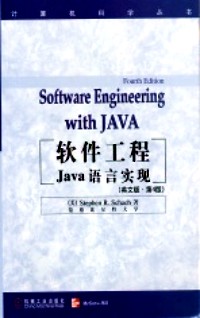
Stephen R. Schach: Software Engineering with JAVA.
Copyright ?1998 by The McGraw-Hill Companies, Inc. All rights reserved. Jointlypublished by China Machine Press/McGraw-Hill. This edition may be sold in the People Republic of China only. This book cannot be re-exported and is not for sale outside the People Republic of China.
目录
contents
prologue 1
part i
introduction to the
software process 3
chaptir i
scope of software engineering 5
1.1 historical aspects 6
1.2 economic aspects 9
1.3 maintenance aspects 10
1.4 specification and design aspects 14
1.5 team programming aspects 16
1.6 the object-oriented paradigm 17
1.7 terminology 22
chapter review 24
for further reading 25
problems 26
references 27
chapter 2
the software process and
.its problems 30
2.1 client, developer, and user 32
2.2 requirements phase 33
2.2.1 requirements phase testing 34
2.3 specification phase 35
2.3.1 specification phase testing 36
2.4 planning phase 36
2.4.1 planning phase testing 37
2.5 design phase 38
2.5.1 design phase testing 39
2.6 implementation phase 39
2.6.1 implementation phase testing 39
2.7 integration phase 40
2.7.1 integration phase testing 40
2.8 maintenance phase 41
2.8.1 maintenance phase testing 42
2.9 retirement 42
2.10 problems with software production:
essence and accidents 43
2.10.1 complexity 44
2.10.2 conformity 46
2.10.3 changeability 47
2.10.4 invisibility 48
2.10.5 no silver bullet? 49
chapter review 50
for further reading 50
problems 51
references 52
chapter 3
software life-cycle models 53
3.1 build-and-fix model 53
3.2 waterfall model 54
3.2.1 analysis of the waterfall model 57
3.3 rapid prototyping model 59
3.3.1 integrating the waterfall and rapidprototyping models 61
3.4 incremental model 61
3.4.1 analysis of the incrementalmodel 63
3.5 spiral model 66
3.5.1 analysis of the spiral model 70
3.6 comparison of life-cycle models 71
3.7 capability maturity model 71
3.8 iso 9000 75
chapter review 76
for further reading 77
problems 78
references 78
chapter 4
stepwise refinement, case, and
other tools of the trade 82
4.1 stepwise refinement 82
4.1.1 stepwise refinement example 83
4.2 cost-benefit analysis 89
4.3 case (computer-aided software
engineering) 90
4.3.1 taxonomy of case 90
4.4 scope of case 92
4.5 software versions 96
4.5.1 revisions 96
4.5.2 variations 97
4.6 configuration control 98
4.6.1 configuration control during product
maintenance 100
4.6.2 baselines 101
4.6.3 configuration control during product
development 10 1
4.7 build tools 102
4.8 productivity gains with case
technology 103
4.9 software metrics 103
chapter review 105
for further reading 105
problems 106
references 108
chapter 5
testing principles 110
5.1 quality issues iii
5.1.1 software quality assurance i 11
5.1.2 managerial independence 112
5.2 nonexecution-based testing 113
5.2.1 walkthroughs 113
5.2.2 managing walkthroughs 114
5.2.3 inspections 115
5.2.4 comparison of inspections and
walkthroughs 117
5.2.5 metrics for inspections 118
5.3 execution-based testing 118
5.4 what should be tested? 119
5.4.1 utility 120
5.4.2 reliability 120
5.4.3 robustness 121
5.4.4 performance 121
5.4.5 correctness 122
5.5 testing versus correctness proofs 124
5.5.1 example of a correctness proof 124
5.5.2 correctness proof case study 128
5.5.3 correctness proofs and software
engineering 129
5.6 who should perform execution-based
testing? 131
5.7 when testing stops 133
chapter review 134
for further reading 134
problems 135
references 137
chapter 6
introduction to objects 140
6.1 what is a module? 140
6.2 cohesion 144
6.2.1 coincidental cohesion 145
6.2.2 logical cohesion 145
6.2.3 temporal cohesion 146
6.2.4 procedural cohesion 147
6.2.5 communicational cohesion 148
6.2.6 informational cohesion 148
6.2.7 functional cohesion 149
6.2.8 cohesion example 150
6.3 coupling 151
6.3.1 content coupling 151
6.3.2 common coupling 151
6.3.3 control coupling 154
6.3.4 stamp coupling 154
6.3.5 data coupling 155
6.3.6 coupling example 156
.6.4 data encapsulation 157
6.4.1 data encapsulation and product
development 161
6.4.2 data encapsulation and product
maintenance 163
6.5 abstract data types 166
6.6 information hiding 168
6.7 objects 171
6.8 polymorphism and dynamic binding 175
6.9 cohesion and coupling of objects 177
6.10 reuse 178
6.10.1 impediments to reuse 179
6.11 reuse case studies 180
6.11.1 raytheon missile systems
division 180
6.11.2 toshiba software factory182
6.11.3 nasa software 183
6.11.4 gte data services 184
6.11.5 hewlett-packard 184
6.12 reuse and maintenance 185
6.13 objects and productivity 186
chapter review 188
for further reading 188
problems 189
references 191
part 2
the phases of the
software process 195
chapter 7
requirements phase 197
7.1 requirements analysis techniques 198
7.2 rapid prototyping 199
7.3 human factors 201
7.4 rapid prototyping as a specification
technique 203
7.5 reusing the rapid prototype 205
7.6 other uses of rapid prototyping 207
7.7 management implications of the rapid
prototyping model 208
7.8 experiences with rapid prototyping 209
7.9 joint application design 211
7.10 comparison of requirements analysis
techniques 211
7.11 testing during the requirements phase 212
7.12 case tools for the requirements
phase 212
7.13 metrics for the requirements phase 213
7.14 msg case study: requirements phase 214
7.15 msg case study: rapid prototype 216
chapter review 217
for further reading 218
problems 219
references 220
chapter 8
specification phase 222
8.1 the specification document 222
8.2 informal specifications 224
8.2.1 case study: text processing 225
8.3 structured systems analysis 226
8.3.1 sally’s software shop 226
8.4 other semiformal techniques 234
8.5 entity-relationship modeling 235
8.6 finite state machines 237
8.6.1 elevator problem: finite state
machines 239
8.7 petri nets 244
8.7.1 elevator problem: petri nets 247
8.8 z 250
8.8.1 elevator problem: z 251
8.8.2 analysis of z 253
8.9 other formal techniques 255
8.10 comparison of specification
techniques 256
8.11 testing during the specification phase 256
8.12 case tools for the specification
phase 257
8.13 metrics for the specification phase 258
8.14 msg case study: structured systems
analysis 258
chapter review 260
for further reading 261
problems 262
references 264
chapter 9
object-oriented
analysis phase 268
9.1 object-oriented versus structured
paradigm 268
9.2 object-oriented analysis 270
9.3 elevator problem: object-oriented
analysis 272
9.3.1 class modeling 272
9.3.2 dynamic modeling 275
9.3.3 functional modeling 278
9.4 object-oriented life-cycle models 280
9.5 case tools for the object-oriented
analysis phase 282
9.6 msg case study: object-oriented
analysis 283
chapter review 286
for further reading 286
problems 288
references 289
chapter 10
planning phase 291
10.1 estimating duration and cost 291
10.1.1 metrics for the size of a
product 293
10.1.2 techniques of cost estimation 297
10.1.3 intermediate cocomo 299
10.1.4 tracking duration and cost
estimates 303
10.2 components of a software project
management plan 303
10.3 software project management plan
framework 305
10.4 ieee software project management
plan 305
10.5 planning of testing 308
10.6 planning of object-oriented projects 310
10.7 training requirements 310
10.8 documentation standards 311
10.9 case tools for the planning phase 312
10.10 testing during the planning phase 315
10.11 msg case study: planning phase 315
chapter review 315
for further reading 316
problems 317
references 318
c hapte r i i
design phase 322
11.1 design and abstraction 322
11.2 action-ofiented design 324
11.3 data flow analysis 324
11.3.1 data flow analysis example 325
11.3.2 extensions 329
11.4 transaction analysis 329
11.5 data-oriented design 332
11.6 jackson system development 333
11.6.1 overview of jackson system
development 333
11. 6.2 why jackson system development
is presented in this chapter 335
11.6.3 elevator problem: jackson syst em
development 336
11.6.4 analysis of jackson system
development 344
11.7 techniques of jackson, warnier, and
orr 345
11.8 object-oriented design 346
11.8.1 elevator problem: object-oriented
design 347
11.9 detailed design 350
11.10 comparison of action-, data-, and
object-oriented design 352
11.11 difficulties associated with real-time
systems 353
11.12 real-time design techniques 354
11.13 testing during the design phase 355
11.14 case tools for the design phase 356
11.15 metrics for the design phase 357
11.16 msg case study: object-oriented
design 358
chapter review 359
for further reading 361
problems 363
references 364
chapter 12
implementation phase 368
12.1 choice of programming language 368
12.2 fourth generation languages 372
12.3 structured programming 375
12.3.1 history of structured
programming 375
12.3.2 why the goto statement is
considered harmful 377
12.4 good programming practice 378
12.5 coding standards 383
12.6 team organization 385
12.7 democratic team approach 387
12.7.1 analysis of the democratic team
approach 388
12.8 classical chief programmer team
approach 388
12.8.1 the new york times project 390
12.8.2 impracticality of the classical chief
programmer team approach 391
12.9 beyond chief programmer and
democratic teams 392
12.10 portability 396
12.10.1 hardware incompatibilities 396
12.10.2 operating system
incompatibilities 398
12.10.3 numerical software
incompatibilities 398
12.10.4 compiler incompatibilities 399
12.11 why portability? 402
12.12 techniques for achieving portability 404
12.12.1 portable system software 404
12.12.2 portable application software 405
12.12.3 portable data 406
12.13 module reuse 407
12.14 module test case selection 407
12.14.1 testing to specifications versus
testing to code 408
12.14.2 feasibility of testing to
specifications 408
12.14.3 feasibility of testing to code 409
12.15 black-box module-testing
techniques 411
12.15.1 equivalence testing and boundary
value analysis 411
12.15.2 functional testing 413
12.16 glass-box module-testing
techniques 414
12.16.1 structural testing: statement,
branch, and path coverage 414
12.16.2 complexity metrics 415
12.17 code walkthroughs and inspections 418
12.18 comparison of module-testing
techniques 418
12.19 cleanroom 419
12.20 testing objects 420
12.21 management aspects of module-testing 423
12.21.1 when to rewrite rather than
debug a module 424
12.22 testing distributed software 425
12.23 testing real-time software 427
12.24 case tools for the implementation
phase 429
12.25 msg case study: black-box test
cases 429
chapter review 431
for further reading 431
problems 433
references 435
chapter 13
implementation and
integration phase 441
13.1 implementation and integration 441
13.1.1 top-down implementation and
integration 442
13.1.2 bottom-up implementation and
integration 444
13.1.3 sandwich implementation and
integration 445
13.1.4 implementation and integration of
object-oriented products 446
13.1.5 management issues during the implementation and integration phase 446
13.2 testing during the implementation and
integration phase 447
13.3 integration testing of graphical user
interfaces 447
13.4 product testing 448
13.5 acceptance testing 449
13.6 case tools for the implementation and
integration phase 450
13.7 case tools for the complete software
process 451
13.8 language-centered environments 451
13.9 structure-oriented environments 452
13.10 toolkit environments 452
13.11 integrated environments 452
13.11.1 process integration 453
13.11.2 tool integration 454
13.11.3 other forms of integration 456
13.12 environments for business
applications 456
13.13 public tool infrastructures 457
13.14 comparison of environment types 458
13.15 metrics for the implementation and
integration phase 458
13.16 msg case study: implementation and
integration phase 459
chapter review 460
for further reading 460
problems 461
references 462
chapter 14
maintenance phase 465
14.1 why maintenance is necessary 465
14.2 what is required of maintenance
programmers 466
14.3 maintenance case study 468
14.4 management of maintenance 470
14.4.1 fault reports 470
14.4.2 authorizing changes to the
product 471
14.4.3 ensuring maintainability 472
14.4.4 problem of repeated
maintenance 472
14.5 maintenance of object-oniented
software 473
14.6 maintenance skills versus development
skills 476
14.7 reverse engineering 476
14.8 testing during the maintenance
phase 477
14.9 case tools for the maintenance
phase 478
14.10 metrics for the maintenance phase 479
chapter review 479
for further reading 480
problems 480
references 481
epilogue 483
appendices
appendix a
osbert oglesby-art dealer 491
appendix b
software
engineering resources 494
appendix c
msg case study:
rapid prototype 496
appendix d
msg case study: structured
systems analysis 509
appendix e
msg case study:
object-oriented analysis 513
appendix f
msg case study: software project
management plan 514
appendix g
msg case study: design 519
appendix h
msg case study: black-box
test cases 539
appendix i
msg case study: source
code 542
bibliography 581
author index 605
subject index 608
prologue 1
part i
introduction to the
software process 3
chaptir i
scope of software engineering 5
1.1 historical aspects 6
1.2 economic aspects 9
1.3 maintenance aspects 10
1.4 specification and design aspects 14
1.5 team programming aspects 16
1.6 the object-oriented paradigm 17
1.7 terminology 22
chapter review 24
for further reading 25
problems 26
references 27
chapter 2
the software process and
.its problems 30
2.1 client, developer, and user 32
2.2 requirements phase 33
2.2.1 requirements phase testing 34
2.3 specification phase 35
2.3.1 specification phase testing 36
2.4 planning phase 36
2.4.1 planning phase testing 37
2.5 design phase 38
2.5.1 design phase testing 39
2.6 implementation phase 39
2.6.1 implementation phase testing 39
2.7 integration phase 40
2.7.1 integration phase testing 40
2.8 maintenance phase 41
2.8.1 maintenance phase testing 42
2.9 retirement 42
2.10 problems with software production:
essence and accidents 43
2.10.1 complexity 44
2.10.2 conformity 46
2.10.3 changeability 47
2.10.4 invisibility 48
2.10.5 no silver bullet? 49
chapter review 50
for further reading 50
problems 51
references 52
chapter 3
software life-cycle models 53
3.1 build-and-fix model 53
3.2 waterfall model 54
3.2.1 analysis of the waterfall model 57
3.3 rapid prototyping model 59
3.3.1 integrating the waterfall and rapidprototyping models 61
3.4 incremental model 61
3.4.1 analysis of the incrementalmodel 63
3.5 spiral model 66
3.5.1 analysis of the spiral model 70
3.6 comparison of life-cycle models 71
3.7 capability maturity model 71
3.8 iso 9000 75
chapter review 76
for further reading 77
problems 78
references 78
chapter 4
stepwise refinement, case, and
other tools of the trade 82
4.1 stepwise refinement 82
4.1.1 stepwise refinement example 83
4.2 cost-benefit analysis 89
4.3 case (computer-aided software
engineering) 90
4.3.1 taxonomy of case 90
4.4 scope of case 92
4.5 software versions 96
4.5.1 revisions 96
4.5.2 variations 97
4.6 configuration control 98
4.6.1 configuration control during product
maintenance 100
4.6.2 baselines 101
4.6.3 configuration control during product
development 10 1
4.7 build tools 102
4.8 productivity gains with case
technology 103
4.9 software metrics 103
chapter review 105
for further reading 105
problems 106
references 108
chapter 5
testing principles 110
5.1 quality issues iii
5.1.1 software quality assurance i 11
5.1.2 managerial independence 112
5.2 nonexecution-based testing 113
5.2.1 walkthroughs 113
5.2.2 managing walkthroughs 114
5.2.3 inspections 115
5.2.4 comparison of inspections and
walkthroughs 117
5.2.5 metrics for inspections 118
5.3 execution-based testing 118
5.4 what should be tested? 119
5.4.1 utility 120
5.4.2 reliability 120
5.4.3 robustness 121
5.4.4 performance 121
5.4.5 correctness 122
5.5 testing versus correctness proofs 124
5.5.1 example of a correctness proof 124
5.5.2 correctness proof case study 128
5.5.3 correctness proofs and software
engineering 129
5.6 who should perform execution-based
testing? 131
5.7 when testing stops 133
chapter review 134
for further reading 134
problems 135
references 137
chapter 6
introduction to objects 140
6.1 what is a module? 140
6.2 cohesion 144
6.2.1 coincidental cohesion 145
6.2.2 logical cohesion 145
6.2.3 temporal cohesion 146
6.2.4 procedural cohesion 147
6.2.5 communicational cohesion 148
6.2.6 informational cohesion 148
6.2.7 functional cohesion 149
6.2.8 cohesion example 150
6.3 coupling 151
6.3.1 content coupling 151
6.3.2 common coupling 151
6.3.3 control coupling 154
6.3.4 stamp coupling 154
6.3.5 data coupling 155
6.3.6 coupling example 156
.6.4 data encapsulation 157
6.4.1 data encapsulation and product
development 161
6.4.2 data encapsulation and product
maintenance 163
6.5 abstract data types 166
6.6 information hiding 168
6.7 objects 171
6.8 polymorphism and dynamic binding 175
6.9 cohesion and coupling of objects 177
6.10 reuse 178
6.10.1 impediments to reuse 179
6.11 reuse case studies 180
6.11.1 raytheon missile systems
division 180
6.11.2 toshiba software factory182
6.11.3 nasa software 183
6.11.4 gte data services 184
6.11.5 hewlett-packard 184
6.12 reuse and maintenance 185
6.13 objects and productivity 186
chapter review 188
for further reading 188
problems 189
references 191
part 2
the phases of the
software process 195
chapter 7
requirements phase 197
7.1 requirements analysis techniques 198
7.2 rapid prototyping 199
7.3 human factors 201
7.4 rapid prototyping as a specification
technique 203
7.5 reusing the rapid prototype 205
7.6 other uses of rapid prototyping 207
7.7 management implications of the rapid
prototyping model 208
7.8 experiences with rapid prototyping 209
7.9 joint application design 211
7.10 comparison of requirements analysis
techniques 211
7.11 testing during the requirements phase 212
7.12 case tools for the requirements
phase 212
7.13 metrics for the requirements phase 213
7.14 msg case study: requirements phase 214
7.15 msg case study: rapid prototype 216
chapter review 217
for further reading 218
problems 219
references 220
chapter 8
specification phase 222
8.1 the specification document 222
8.2 informal specifications 224
8.2.1 case study: text processing 225
8.3 structured systems analysis 226
8.3.1 sally’s software shop 226
8.4 other semiformal techniques 234
8.5 entity-relationship modeling 235
8.6 finite state machines 237
8.6.1 elevator problem: finite state
machines 239
8.7 petri nets 244
8.7.1 elevator problem: petri nets 247
8.8 z 250
8.8.1 elevator problem: z 251
8.8.2 analysis of z 253
8.9 other formal techniques 255
8.10 comparison of specification
techniques 256
8.11 testing during the specification phase 256
8.12 case tools for the specification
phase 257
8.13 metrics for the specification phase 258
8.14 msg case study: structured systems
analysis 258
chapter review 260
for further reading 261
problems 262
references 264
chapter 9
object-oriented
analysis phase 268
9.1 object-oriented versus structured
paradigm 268
9.2 object-oriented analysis 270
9.3 elevator problem: object-oriented
analysis 272
9.3.1 class modeling 272
9.3.2 dynamic modeling 275
9.3.3 functional modeling 278
9.4 object-oriented life-cycle models 280
9.5 case tools for the object-oriented
analysis phase 282
9.6 msg case study: object-oriented
analysis 283
chapter review 286
for further reading 286
problems 288
references 289
chapter 10
planning phase 291
10.1 estimating duration and cost 291
10.1.1 metrics for the size of a
product 293
10.1.2 techniques of cost estimation 297
10.1.3 intermediate cocomo 299
10.1.4 tracking duration and cost
estimates 303
10.2 components of a software project
management plan 303
10.3 software project management plan
framework 305
10.4 ieee software project management
plan 305
10.5 planning of testing 308
10.6 planning of object-oriented projects 310
10.7 training requirements 310
10.8 documentation standards 311
10.9 case tools for the planning phase 312
10.10 testing during the planning phase 315
10.11 msg case study: planning phase 315
chapter review 315
for further reading 316
problems 317
references 318
c hapte r i i
design phase 322
11.1 design and abstraction 322
11.2 action-ofiented design 324
11.3 data flow analysis 324
11.3.1 data flow analysis example 325
11.3.2 extensions 329
11.4 transaction analysis 329
11.5 data-oriented design 332
11.6 jackson system development 333
11.6.1 overview of jackson system
development 333
11. 6.2 why jackson system development
is presented in this chapter 335
11.6.3 elevator problem: jackson syst em
development 336
11.6.4 analysis of jackson system
development 344
11.7 techniques of jackson, warnier, and
orr 345
11.8 object-oriented design 346
11.8.1 elevator problem: object-oriented
design 347
11.9 detailed design 350
11.10 comparison of action-, data-, and
object-oriented design 352
11.11 difficulties associated with real-time
systems 353
11.12 real-time design techniques 354
11.13 testing during the design phase 355
11.14 case tools for the design phase 356
11.15 metrics for the design phase 357
11.16 msg case study: object-oriented
design 358
chapter review 359
for further reading 361
problems 363
references 364
chapter 12
implementation phase 368
12.1 choice of programming language 368
12.2 fourth generation languages 372
12.3 structured programming 375
12.3.1 history of structured
programming 375
12.3.2 why the goto statement is
considered harmful 377
12.4 good programming practice 378
12.5 coding standards 383
12.6 team organization 385
12.7 democratic team approach 387
12.7.1 analysis of the democratic team
approach 388
12.8 classical chief programmer team
approach 388
12.8.1 the new york times project 390
12.8.2 impracticality of the classical chief
programmer team approach 391
12.9 beyond chief programmer and
democratic teams 392
12.10 portability 396
12.10.1 hardware incompatibilities 396
12.10.2 operating system
incompatibilities 398
12.10.3 numerical software
incompatibilities 398
12.10.4 compiler incompatibilities 399
12.11 why portability? 402
12.12 techniques for achieving portability 404
12.12.1 portable system software 404
12.12.2 portable application software 405
12.12.3 portable data 406
12.13 module reuse 407
12.14 module test case selection 407
12.14.1 testing to specifications versus
testing to code 408
12.14.2 feasibility of testing to
specifications 408
12.14.3 feasibility of testing to code 409
12.15 black-box module-testing
techniques 411
12.15.1 equivalence testing and boundary
value analysis 411
12.15.2 functional testing 413
12.16 glass-box module-testing
techniques 414
12.16.1 structural testing: statement,
branch, and path coverage 414
12.16.2 complexity metrics 415
12.17 code walkthroughs and inspections 418
12.18 comparison of module-testing
techniques 418
12.19 cleanroom 419
12.20 testing objects 420
12.21 management aspects of module-testing 423
12.21.1 when to rewrite rather than
debug a module 424
12.22 testing distributed software 425
12.23 testing real-time software 427
12.24 case tools for the implementation
phase 429
12.25 msg case study: black-box test
cases 429
chapter review 431
for further reading 431
problems 433
references 435
chapter 13
implementation and
integration phase 441
13.1 implementation and integration 441
13.1.1 top-down implementation and
integration 442
13.1.2 bottom-up implementation and
integration 444
13.1.3 sandwich implementation and
integration 445
13.1.4 implementation and integration of
object-oriented products 446
13.1.5 management issues during the implementation and integration phase 446
13.2 testing during the implementation and
integration phase 447
13.3 integration testing of graphical user
interfaces 447
13.4 product testing 448
13.5 acceptance testing 449
13.6 case tools for the implementation and
integration phase 450
13.7 case tools for the complete software
process 451
13.8 language-centered environments 451
13.9 structure-oriented environments 452
13.10 toolkit environments 452
13.11 integrated environments 452
13.11.1 process integration 453
13.11.2 tool integration 454
13.11.3 other forms of integration 456
13.12 environments for business
applications 456
13.13 public tool infrastructures 457
13.14 comparison of environment types 458
13.15 metrics for the implementation and
integration phase 458
13.16 msg case study: implementation and
integration phase 459
chapter review 460
for further reading 460
problems 461
references 462
chapter 14
maintenance phase 465
14.1 why maintenance is necessary 465
14.2 what is required of maintenance
programmers 466
14.3 maintenance case study 468
14.4 management of maintenance 470
14.4.1 fault reports 470
14.4.2 authorizing changes to the
product 471
14.4.3 ensuring maintainability 472
14.4.4 problem of repeated
maintenance 472
14.5 maintenance of object-oniented
software 473
14.6 maintenance skills versus development
skills 476
14.7 reverse engineering 476
14.8 testing during the maintenance
phase 477
14.9 case tools for the maintenance
phase 478
14.10 metrics for the maintenance phase 479
chapter review 479
for further reading 480
problems 480
references 481
epilogue 483
appendices
appendix a
osbert oglesby-art dealer 491
appendix b
software
engineering resources 494
appendix c
msg case study:
rapid prototype 496
appendix d
msg case study: structured
systems analysis 509
appendix e
msg case study:
object-oriented analysis 513
appendix f
msg case study: software project
management plan 514
appendix g
msg case study: design 519
appendix h
msg case study: black-box
test cases 539
appendix i
msg case study: source
code 542
bibliography 581
author index 605
subject index 608
Software engineering with Java
- 名称
- 类型
- 大小
光盘服务联系方式: 020-38250260 客服QQ:4006604884
云图客服:
用户发送的提问,这种方式就需要有位在线客服来回答用户的问题,这种 就属于对话式的,问题是这种提问是否需要用户登录才能提问
Video Player
×
Audio Player
×
pdf Player
×
