

简介
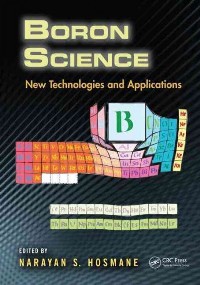
"Boron has made a significant impact in our lives through its quiet use in fertilizers, fungicides, soaps, detergents, and heat-resistant glassware. Boron Science: New Technologies and Applications addresses the applications of boron in chemistry, industry, medicine, and pharmacology by explaining its role in problems such as catalysis and hydroboration as well as its use in superconductors, materials, magnetic/nonmagnetic nanoparticles, and medical applications including cancer therapy.Illustrating the practical versatility of boron, the 29 chapters are divided into seven major sections:Boron for Living: MedicineBoron for Living: Health and NutritionBoron for Living: RadioisotopeBoron for Living: Boron Neutron Capture TherapyBoron for Electronics: OptoelectronicsBoron for Energy: Energy Storage, Space, and Other ApplicationsBoron for Chemistry and Catalysis: Catalysis and Organic TransformationsMore than just an updated compilation of progress in the applied science of boron, this book is a tribute to the legions of workers who have spent years conducting groundbreaking studies. The book celebrates these scientists and their prot漏鈾璯漏鈾璼, who together transformed boron science into the exciting and growing area it is today. "--
"Preface What is boron? The question itself may not seem very significant to many people, their introduction to the word "boron" could come as the butt of a joke; Conan O鈥橞rien made jokes about boron (http:// www.wired.com/wiredscience/2009/02/conanchemistry/) by calling it either "Boring Boron" or "Boron Moron." Many people may connect boron to borax, which is one of its natural sources. Some of us with longer memories might recall a popular television show called "Death Valley Days," aired in the 1950s, narrated by a young Ronald Reagan and sponsored by the 20 Mule Team Borax. Although boron is one of the closest neighbors to carbon in the periodic table, it has neither gained the importance nor the popularity of carbon. But boron is not just about borax. How many of us know that a regular intake of boron can lessen the chance of prostate cancer? How many of us know that boron plays a direct and critical role in combating cancer through a treatment called boron neutron capture therapy (BNCT)? If you were among those fortunate attendees of Professor M. Frederick Hawthorne鈥檚 lecture at UCLA, titled "From Mummies to Rockets and on to Cancer Therapy," you had the opportunity to explore the power of boron chemistry. Boron has made a significant impact in our lives through its use in fertilizers, fungicides, soaps, and detergents as well as many household glassware utensils; thus boron is silently present everywhere. Those involved in boron chemistry are beginning to realize that this silence needs to be broken. This book, titled Boron Science: New Technologies and Applications, attempts to do just that"--
目录
Table Of Contents:
Foreword xi
Preface xiii
Editor xv
Contributors xvii
Part 1 Boron for living: Medicine
1 New Opportunities in Boron Chemistry for Medical Applications
Zbigniew J. Lesnikowski
1.1 Introduction 3(1)
1.2 Some Properties of Boron Clusters Important for Medical Applications 4(1)
1.3 Structural Features 5(1)
1.4 Boron Contents 6(1)
1.5 Hydrophobicity 6(3)
1.6 Medical Applications of Boron Clusters 9(6)
1.6.1 Retinoid Receptor Ligands Having a Dicarba-closo-Dodecaborane as a Hydrophobic Moiety 9(1)
1.6.2 Steroid Analogs Bearing Boron Cluster Modification 9(1)
1.6.2.1 Estrogen Analogs Having a Dicarba-closo-Dodecaborane as a Hydrophobic Moiety 10(1)
1.6.2.2 Androgen Analogs Based on Boron Cluster Structure 11(1)
1.6,2.3 Boron Cluster Bearing Cholesterol Mimics 11(2)
1.6.3 Transthyretin Amyloidosis Inhibitors Containing-Carborane Pharmacophores 13(1)
1.6.4 α-Human Thrombin Inhibitor Containing a Carborane Pharmacophore 14(1)
1.6.5 Adenosine Modified with Boron Cluster Pharmacophores as a New Human Blood Platelet Function Inhibitor 14(1)
1.7 Summary 15(2)
References 17(4)
2 Bioconjugates of Carbaboranyl Phosphonates
Sven Stadlbauer
Evamarie Hey-Hawkins
2.1 Introduction 21(2)
2.2 Carbaboranyl Monophosphonates with Anticholinesterase Activity 23(5)
2.2.1 Synthesis of C- and B-Substituted Carbaboranyl Phosphonates and Phosphonothioates 23(3)
2.2.2 Biological Activity 26(2)
2.3 Carhorane- and Dodecaborate-Substituted Mono- and Bisphosphonates as Phosphate Mimetics for Use in BNCT 28(1)
2.4 Nucleotide Conjugates of Carbaboranylmono- and Bisphosphonates for Use as Agents in Antiscnse Strategy and in BNCT 29(1)
2.5 Glycosyl Conjugates of Carbaboranyl Bisphosphonates 30(5)
2.6 Glycosyl Conjugates of Biscarbaboranyl Bisphosphonates 35(2)
2.7 Summary 37(1)
References 37(4)
3 Medicinal Application of Carboranes Inhibition of HIV Protease
Pavlina Rez谩cov谩
Petr Cigler
Pavel Matejicek
Martin Lep拧ik
Jana Pokorn谩
Bohumir Gr眉ner
Jan Konvalinka
3.1 Introduction 41(1)
3.2 Role of HIV Protease in the Viral Life Cycle 42(1)
3.3 Clinically Used HIV Protease Inhibitors 43(2)
3.4 From Pseudomimetics to Nonpeptidic HIV Protease Inhibitors 45(1)
3.5 Carborane Clusters as HIV PIs 46(1)
3.6 Structure-Activity Analysis of Selected Carboranes: Single-Cluster Compounds 46(10)
3.7 Structure-Activity Analysis of Selected Metallacarborane: Double (Triple)-Cluster Compounds 56(2)
3.8 Antiviral Activity and Inhibition of Resistant HIV PR Species 58(1)
3.9 Structural Studies of HIV PR-Metallacarborane Binding 59(3)
3.10 Noncovalent Interactions of Heteroboranes with Biomolecules: Theoretical Considerations 62(2)
3.11 Aggregation of Metallacarboranes in Aqueous Media 64(2)
3.12 Summary 66(1)
Acknowledgments 66(1)
References 66(8)
Part II Boron for Living: Health and Nutrition
4 The Role of Boron in Human Nutrition and Metabolism
Samir Samman
Meika Foster
Duncan Hunter
4.1 Introduction 74(1)
4.2 Boron in the Food Supply 74(4)
4.2.1 Boron Content of Food 74(1)
4.2.2 Intake of Boron in Humans 74(2)
4.2.3 Variations in the Intake of Boron 76(1)
4.2.3.1 Regional Differences 77(1)
4.2.3.2 Methods of Food Production: Organic and Conventional Agriculture 77(1)
4.2.4 Recommended Intake Levels of Boron 78(1)
4.2.5 Conclusion 78(1)
4.3 Absorption and Metabolism of Boron 78(1)
4.3.1 Metabolic Balance Studies 78(1)
4.3.2 Supplementation Trials 78(1)
4.3.3 Boron Homeostasis 79(1)
4.3.4 Conclusion 79(1)
4.4 Boron and Steroid Hormones 79(1)
4.4.1 Controlled Intervention Studies in Humans 79(1)
4.4.2 Boron Supplementation in Men 80(1)
4.4.3 Boron and Steroid Hormones in Rats 80(1)
4.4.4 Conclusion 80(1)
4.5 Effects of Boron in Health and Disease 80(4)
4.5.1 Reproductive Health 80(1)
4.5.2 Longevity 81(1)
4.5.3 Brain Function 81(1)
4.5.4 Wound Healing 81(1)
4.5.5 Cancer 82(1)
4.5.5.1 Prostate Cancer 82(1)
4.5.5.2 Breast Cancer 82(1)
4.5.5.3 Cervical Cancer 82(1)
4.5.5.4 Lung Cancer 83(1)
4.5.5.5 In Vitro Studies 83(1)
4.5.5.6 Conclusion 83(1)
4.5.6 Cardiovascular Disease 83(1)
4.6 Summary 84(1)
References 84(7)
Part III Boron for Living: Radioisotope
5 Isotope Incorporation Using Organoboranes
George W. Kabalka
5.1 Introduction 91(2)
5.2 Carbon 93(4)
5.3 Nitrogen 97(1)
5.4 Oxygen 97(1)
5.5 Iodine and the Halogens 98(2)
5.6 Conclusion 100(1)
References 101(6)
6 Boron Cluster (Radio) Halogenation in Biomedical Research
Hitesh K. Agarwal
Sherifa Hasabelnaby
Rohit Tiwari
Werner Tjarks
6.1 Introduction 107(2)
6.2 Cold Boron Cluster Halogenation 109(14)
6.2.1 Neutral Boron Clusters 109(1)
6.2.1.1 1,2-Dicarbadodecaborane (o-Carborane) 109(1)
6.2.1.2 1,7-Dicarbadodecaborane (m-Carborane) 113(1)
6.2.1.3 1,12-Dicarbadoclecaborane (p-Carborane) 115(1)
6.2.1.4 Preparation of Halogenated Carboranes by Halogen Exchange 115(3)
6.2.2 Anionic Boron Clusters 118(1)
6.2.2.1 7,8-Dicarbaundecaborate (1-) (nido-o-Carborane Anion) 118(1)
6.2.2.2 1-Carbadodecaborate (1-) 119(1)
6.2.3 Dodecahydro-closo-Dodecaborate (2-) and Decahydro-closo-Decaborate (2-) 120(3)
6.3 Radiohalogenation of Boron Clusters 123(16)
6.3.1 Radiohalogenation by Oxidative Agents 123(1)
6.3.1.1 Radioiodination 123(1)
6.3.1.2 Radioastanation 129(1)
6.3.1.3 Radiobromination 136(1)
6.3.2 Radiohalogenation by Catalytic Halogen Exchange 136(1)
6.3.2.1 Radiohalogenation of Simple Carboranyl Structures 137(1)
6.3.2.2 Radioiodination of 3-Carboranyl Thymidine Analogs (3CTAs) through Isotope Exchange 138(1)
Acknowledgment 139(1)
References 139(8)
Part IV Boron for Living: Boron Neutron Capture Therapy
7 Recent Developments in Boron Neutron Capture Therapy Driven by Nanotechnology
Zhu Yinghuai
John A. Maguire
Narayan S. Hosmane
7.1 Introduction: BNCT Background 147(2)
7.2 Nanoscale BNCT Agents 149(10)
7.2.1 Nanoscaled Material-Based Drug Delivery 149(1)
7.2.2 Liposomes-Based BNCT Agents 149(2)
7.2.3 Dentritic Polymer-Based BNCT Agents 151(1)
7.2.4 Magnetic Nanoparticle-Based BNCT Agents 152(3)
7.2.5 Nanotube-Based BNCT Agents 155(1)
7.2.5.1 Carbon Nanotubes 155(1)
7.2.5.2 Boron Nanotubes 157(1)
7.2.5.3 Boron Nitride Nanotubes 157(2)
7.3 Summary 159(1)
References 159(6)
8 Liposomal Boron Delivery System for Neutron Capture Therapy of Cancer
Hiroyuki Nakamura
8.1 Introduction 165(1)
8.2 Boron Compound-Encapsulated Liposome Approach 166(3)
8.2.1 Carcinoembryonic Antigen-Targeted Liposomes 166(1)
8.2.2 Various Boron Compound-Encapsulated PEG Liposomes 166(1)
8.2.3 Folate Receptor-Targeted Liposomes 167(1)
8.2.4 Epidermal Growth Factor Receptor-Targeted Liposomes 168(1)
8.2.5 Transferrin Receptor-Targeted Liposomes 168(1)
8.3 Boron Lipid-Liposome Approach 169(7)
8.3.1 nido-Carborane Amphiphile 169(1)
8.3.2 nido-Carborane Lipids 170(2)
8.3.3 closo-Dodecaborate Lipids 172(4)
8.4 Boron Cholesterol-Liposome Approach 176(1)
8.5 Summary 177(1)
References 177(4)
9 Polyhedral Boron Compounds for BNCT
Vladimir I. Bregadze
Igor B. Sivaev
9.1 Introduction 181(1)
9.2 Main Types of Polyhedral Boron Hydrides 182(1)
9.3 Main Principles and Requirements for Boron Neutron Capture Therapy 183(2)
9.4 Main Types of Boron Carriers 185(11)
9.4.1 Amino Acids 186(1)
9.4.2 Nucleotides and Nucleosides 186(1)
9.4.3 Boron-Containing Peptides and Antibodies 187(3)
9.4.4 Lipoproteins and Liposomes 190(3)
9.4.5 Porphyrins and Phthalocyanines 193(2)
9.4.6 Carbohydrates 195(1)
9.4.7 Other Boron Carriers 196(1)
Acknowledgments 196(2)
References 198(11)
10 Boron Tumor Delivery for BNCT Recent Developments and Perspectives
Martha Sibrian-Vazquez
Maria da Gra莽a H. Vicente
10.1 Introduction 209(2)
10.1.1 The Neutron-Capture Reaction 209(1)
10.1.2 General Requirements and Strategies 210(1)
10.2 Boron Delivery Agents 211(21)
10.2.1 Derivatives of BSH and Other Boron Clusters 211(4)
10.2.2 Amino Acids and Peptides 215(1)
10.2.3 Nucleosides 216(3)
10.2.4 Porphyrin Derivatives 219(7)
10.2.5 Other DNA Binders 226(2)
10.2.6 Antibodies 228(2)
10.2.7 Liposomes 230(2)
10.3 Summary 232(1)
Acknowledgments 232(1)
References 232(11)
11 Future Applications of Boron and Gadolinium Neutron Capture Therapy
Masao Takagaki
Nobutaka Tomaru
John A. Maguire
Narayan S. Hosmane
11.1 Boron Neutron Capture Therapy and Its Limitations 243(7)
11.2 Use of GdNCT for Brain 'Tumor Therapy 250(16)
11.2.1 Principles and Concepts of GdNCT 250(1)
11.2.1.1 The 151Gd(n,r's8Gd Reaction 250(1)
11.2.1.2 Peri-Tumoral Radiation Effect of GdNCT 255(1)
11.2.2 In Vitro GdNCT 256(1)
11.2.2.1 Tumor Cell Killing Effect 256(1)
11.2.2.2 In Vitro Survival 257(1)
11.2.3 In Vivo GdNCT 258(1)
11.2.3.1 Brain Tumor 258(1)
11.2.3.2 Cutaneous Melanomas 263(1)
11.2.3.3 Pharmacokinetic Study of GdDTPA for Human Brain Tumors 264(2)
11.3 From Progress to Advancement 266(7)
11.3.1 Brain Tumors 266(1)
11.3.1.1 Limitations of BNCT 268(1)
11.3.1.2 Complex Gd-B Compounds Required for Future NCT Applications 270(1)
11.3.1.3 Hybrid NCT: GdNCT-Fast Neutron Therapy 270(1)
11.3.2 Vascular Lesions 271(1)
11.3.2.1 GdNCT to Prevent Restenosis after Carotid/Coronary Stenosis 271(2)
Acknowledgments 273(1)
References 273(4)
Part V Boron for Electronics: Optoelectronics
12 Design and Development of Polyhedral Borane Anions for Liposomal Delivery
Debra A. Feakes
12.1 Introduction 277(1)
12.2 Polyhedral Borane Anion Building Block, the [B10H10]虏- Ion 278(1)
12.3 The [B20H18]虏- Ion 279(1)
12.4 Derivatives of the [B2鈥濰,8]2- Ion 280(6)
12.4.1 The [B20H19]鲁- Ion 280(1)
12.4.2 The [B20H17OH]4- Ion 281(1)
12.4.3 The [B20H17NH3]鲁- Ion 282(1)
12.4.4 The [B20H17SH]4- Ion 283(3)
12.5 Evaluation of the Potential of Liposomal Encapsulation for Application in BNCT 286(1)
12.6 Conclusions 287(1)
Acknowledgments 288(1)
References 288(7)
13 Boron Derivatives for Application in Nonlinear Optics
Andrea V枚ge
Detlef Gabel
13.1 Overview: Boron in NLO 295(1)
13.2 Introduction 296(2)
13.2.1 What is NLO? 296(1)
13.2.2 Materials for NLO 296(2)
13.3 Principles of NLO 298(3)
13.3.1 Nonlinear Optical Effects on Molecular Level 298(1)
13.3.2 Nonlinear Optical Effects in Macroscopic Materials 298(1)
13.3.3 Second-Order Nonlinear Optical Effects 299(1)
13.3.3.1 Second-Harmonic Generation 299(1)
13.3.3.2 Improvement of the Hyperpolarizability 300(1)
13.3.4 Third-Order Nonlinear Optical Effects 301(1)
13.3.5 Methods for Measuring Nonlinear Optical Properties 301(1)
13.4 Boron Derivatives for NLO 301(12)
13.4.1 Polyhedral Boron Cluster Derivatives for NLO 301(1)
13.4.1.1 Results of Quantum Mechanical Calculations for Boron Clusters 302(1)
13.4.1.2 Prepared Boron Cluster Compounds for NLO 303(5)
13.4.2 Tri- and Tetracoordinate Boron in NLO 308(1)
13.4.2.1 Tricoordinate Boron 308(1)
13.4.2.2 Tetracoordinate Boron 311(2)
13.5 Summary 313(1)
References 314(5)
14 closo-Boranes as Structural Elements for Liquid Crystals
Piotr Kaszynski
14.1 Introduction 319(2)
14.2 closo-Boranes 321(5)
14.3 Liquid Crystalline Derivatives of closo-Boranes 326(5)
14.4 Structural Effects on Thermal Properties 331(9)
14.4.1 Derivatives of p-Carboranes 332(1)
14.4.1.1 Homologous Series 332(1)
14.4.1.2 Linking Group L 333(1)
14.4.1.3 Terminal Connector C 334(1)
14.4.1.4 Lateral Substituent 7 335(1)
14.4.1.5 Terminal Chain Fluorination X = RF 336(1)
14.4.2 Derivatives of m-Carboranes 337(1)
14.4.3 Derivatives of closo-Monocarbaborates 338(1)
14.4.3.1 Polar Derivatives 338(1)
14.4.3.2 Ionic Liquid Crystals 339(1)
14.4.4 Derivatives of closo-Decaborate 339(1)
14.4.5 Derivatives of Bis(tricarbollide)Fe(II) 340(1)
14.5 Dielectric and Optical Properties of Pure Materials 340(1)
14.6 Mesogenic Mixtures Containing closo-Borane Additives 341(8)
14.6.1 Phase Diagrams of Mesogenic Mixtures 342(2)
14.6.2 Dielectric Studies of Nematic Solutions 344(2)
14.6.3 Optical Studies of Nematic Solutions 346(1)
14.6.4 Effect on Viscosity of Carborane Additives 346(1)
14.6.5 Additives to an Orthoconic Antiferroelectric Host 347(1)
14.6.6 Additives to a Ferroelectric Mixture 347(1)
14.6.7 Chirality Transfer 348(1)
14.7 Summary 349(1)
Acknowledgment 350(1)
References 350(5)
Part VI Boron for Energy: Energy Storage, Space, and Other Applications
15 Photoluminescence from Boron-Based Polyhedral Clusters
Paul A. Jelliss
15.1 Introduction: Why Study Photoluminescence in Boranes, Carboranes, and Metallacarboranes? 355(1)
15.2 Boranes 356(2)
15.3 Carboranes 358(7)
15.4 Metallacarboranes 365(15)
15.4.1 Metallacarboranes with Exopolyhedral Metal-Ligand Fragments 365(6)
15.4.2 Metallacarboranes with Endopolyhedral Metal-Ligand Fragments 371(9)
15.5 Summary 380(1)
References 380(5)
16 Boron Chemistry for Hydrogen Storage
David M. Schubert
16.1 Introduction 385(1)
16.2 Why Hydrogen Storage? 386(1)
16.3 Chemical Hydrides 387(1)
16.4 Metal Tetrahydroborates 388(10)
16.4.1 Sodium Borohydride 389(4)
16.4.2 Lithium Borohydride 393(2)
16.4.3 Magnesium Borohydride 395(1)
16.4.4 Calcium Borohydride 396(1)
16.4.5 Mixed Metal Borohydrides 397(1)
16.5 Boron-Nitrogen Systems 398(10)
16.5.1 Ammonium Borohydride 398(1)
16.5.2 Ammonia Borane 398(1)
16.5.2.1 Structure 399(1)
16.5.2.2 Synthesis 399(1)
16.5.2.3 Hydrogen Release 401(1)
16.5.2.4 Regeneration 404(1)
16.5.3 Metal Amidoboranes 405(1)
16.5.4 Guanidinium Borohydrides 406(1)
16.5.5 B-N Sorhent Materials 406(1)
16.5.6 Organoboron Compounds 407(1)
16.6 Boron Resources 408(1)
16.7 Summary 409(1)
References 409(8)
17 Oilfield Technology and Applications involving Borates
Michael I. Greenhill-Hooper
17.1 Introduction 417(8)
17.1.1 Background on Oilfield Operations 418(1)
17.1.1.1 Drilling and Well-Construction Activities 418(1)
17.1.1.2 Well- and Reservoir-Logging 418(1)
17.1.1.3 Oil and Gas Production 419(1)
17.1.1.4 Reservoir Stimulation 420(1)
17.1.1.5 Enhanced Oil Recovery 420(1)
17.1.2 Background on Borate Compounds, Chemistry, and Solution Behavior 420(1)
17.1.2.1 Boron and Boron-Oxygen Chemistry 420(1)
17.1.2.2 Boric Oxide and Boric Acid 421(1)
17.1.2.3 Alkali Metal and Ammonium Borates 421(1)
17.1.2.4 Borate Solution Chemistry and Behavior 423(1)
17.1.2.5 Borate Ester Formation 424(1)
17.1.2.6 Perborate 424(1)
17.1.2.7 Sparingly Soluble Borates 425(1)
17.2 Major Existing Oilfield Chemical Applications for Borates 425(14)
17.2.1 Hydraulic Fracturing Fluids 426(1)
17.2.1.1 Fluid Gelation 426(1)
17.2.1.2 Fluid Cleanup (Fluid Breaker) 433(1)
17.2.2 Lost Circulation Treatments 434(1)
17.2.3 Completion and Workover Fluids 435(1)
17.2.4 Oil Well-Cementing 435(2)
17.2.5 Reservoir-Logging 437(2)
17.3 Potential New Oilfield Chemical Applications for Borates 439(8)
17.3.1 Drilling Fluids 439(2)
17.3.2 Enhanced Oil Recovery 441(5)
17.3.3 Water Flooding: Profile Control 446(1)
17.4 Summary 447(1)
References 447(6)
18 Inhibition of Molten Aluminum Oxidation with Boron
Amitabha Mitra
David A. Atwood
18.1 Introduction 453(1)
18.2 Oxidation Acceleration with Additives 454(1)
18.3 Oxidation Inhibition by Beryllium and Boron 455(1)
18.4 Solid Alloy Oxidation Inhibition with Boron 455(1)
18.5 Compound Formation between Boron and MgO 456(2)
18.6 Boron Migration and MgO Lattice 458(1)
18.7 Conclusions 459(1)
References 459(4)
19 Recent Progress in Extraction Agents Based on Cobalt Bis(Dicarbollides) for Partitioning of Radionuclides from High-Level Nuclear Waste
Bohumir Gr眉ner
Jiri Rais
Pavel Seluck媒
Maria Lucanikov谩
19.1 Introduction 463(3)
19.2 Synergists and CCD 466(6)
19.2.1 General 466(1)
19.2.2 Systems Involving Separations of Cs+, Sr虏+ (and Other Nuclides), Modifications of the UNEX Process 466(2)
19.2.3 Molecular Dynamics Study of Dicarbollides 468(1)
19.2.4 Systems Focused on Extraction Separation of Ln/MA at pH > or = to 1 469(1)
19.2.5 Systems Enabling Ln/An Extractions at High Nitric Acid Concentrations 470(1)
19.2.6 Prospective Synergetic Systems for Ln/MA Separations at High Nitric Acid Concentrations 471(1)
19.3 Cobalt bis(dicarbollide) Extractants with Covalently Attached Selective Groups 472(14)
19.3.1 General 472(1)
19.3.2 CMPO Derivatives 473(1)
19.3.2.1 Synthesis and Structures 473(1)
19.3.2.2 Extraction Properties of CMPO Derivatives, Series I-IV 477(4)
19.3.3 Calix[4]arene with Covalently Bonded CD- Anions and CMPO Groups 481(2)
19.3.4 Ionic Analogs of the Organic TODGA Extractant 483(2)
19.3.5 Conclusions and Outlook on Covalently Bonded Compounds 485(1)
19.4 Epilogue 486(1)
Acknowledgments 486(1)
References 486(5)
20 Boron-Based Nanomaterials Technologies and Applications
Amartya Chakrabarti
Lauren M. Kuta
Kate J. Krise
John A. Maguire
Narayan S. Hosmane
20.1 Introduction 491(1)
20.2 Synthesis of Boron and Boron-Based Nanomaterials 492(15)
20.2.1 Boron Nanowires 492(3)
20.2.2 Boron Nanotubes 495(1)
20.2.3 Boron Nanobelts 496(2)
20.2.4 Boron Nanoribbons 498(1)
20.2.5 Boron Nanorods 498(1)
20.2.6 Boron Nitride Nanotubes 499(4)
20.2.7 Boron Nitride Nanorods 503(1)
20.2.8 Boron Nitride Nanocages 503(1)
20.2.9 Boron Nitride Nanosheets 504(1)
20.2.10 Boron Carbide Nanowires 505(1)
20.2.11 Boron Carbide Nanorods and Nanofibers 506(1)
20.3 Properties and Applications of Boron and Boron-Based Nanomaterials 507(3)
20.3.1 Boron Nanostructures 507(1)
20.3.2 Boron Nitride Nanostructures 508(1)
20.3.3 Boron Carbide Nanostructures 509(1)
20.4 Summary and Future Outlook 510(1)
Acknowledgments 510(1)
References 510(7)
Part VII Boron for Chemistry and Catalysis: Catalysis and Organic Tranformations
21 Constrained-Geometry Titanacarborane Monoamides From Synthesis and Reactivity to Catalytic Applications
Hao Shen
Zuowei Xie
21.1 Introduction 517(1)
21.2 Synthesis 518(1)
21.3 Reactivity 519(1)
21.4 Catalytic Applications 520(5)
21.5 Summary and Perspective 525(1)
Acknowledgment 526(1)
References 526(3)
22 Phosphorus-Substituted Carboranes in Catalysis
Sebastian Bauer
Evamarie Hey-Hawkins
22.1 Introduction 529(2)
22.2 Structure and Properties of Carboranes and Synthesis of the Ligands 531(3)
22.3 Catalysis 534(37)
22.3.1 Hydrogenation 534(13)
22.3.2 Hydroformylation 547(2)
22.3.3 Hydrosilylation 549(4)
22.3.4 Carbonylation 553(3)
22.3.5 Amination 556(1)
22.3.6 Alkylation and Sulfonylation 557(2)
22.3.7 Kharasch Reaction 559(3)
22.3.8 Polymerization 562(2)
22.3.9 Ring-Opening Metathesis Polymerization 564(1)
22.3.10 Cyclopropanation 565(2)
22.3.11 Cross-Coupling with Grignard Reagents 567(2)
22.3.12 Sonogashira Coupling with Hydride Transfer 569(2)
22.4 Conclusions and Future Challenges 571(1)
Acknowledgment 571(1)
Annex 571(1)
References 572(7)
23 Organic Synthesis Using Boron and Organoboron Halides
Min-Liang Yao
George W. Kabalka
23.1 Introduction 579(1)
23.2 Boron Trihalides in Organic Syntheses 580(12)
23.2.1 BX3-Promoted Carbon-Oxygen Bond Cleavage in Ethers, Acetals, and Esters 580(4)
23.2.2 Application in the Preparation of Organoboron Halides 584(2)
23.2.3 Reaction of Aldehydes with Boron Trichloride 586(1)
23.2.4 Boron Halide-Mediated Coupling of Aromatic Aldehydes with Styrene Derivatives 586(2)
23.2.5 Boron Halide-Mediated Coupling of Aromatic Aldehydes with Alkynes 588(2)
23.2.6 Boron Halide-Mediated Coupling of Aromatic Aldehydes with Allylmetals 590(1)
23.2.7 Miscellaneous Reactions Mediated by Boron Trihalides 591(1)
23.3 Organoboron Halides in Organic Syntheses 592(19)
23.3.1 Applications in the Preparation of Stereo-Defined Alkene Derivatives 595(3)
23.3.2 Reaction of Organoboron Halide with Aromatic Aldehydes 598(1)
23.3.2.1 Reaction of Aromatic Aldehydes with Organoboron Dihalides 599(1)
23.3.2.2 Reaction of Aromatic Aldehydes with Diorganoboron Halides 601(1)
23.3.2.3 Organoboron Halide-Mediated Coupling of Aromatic Aldehydes with Styrene Derivatives 605(2)
23.3.3 Coupling Reaction of Alkoxides with Organoboron Halides 607(4)
23.4 Conclusion 611(1)
References 611(12)
24 Cyclic Oxonium Derivatives as an Efficient Synthetic Tool for the Modification of Polyhedral Boron Hydrides
Igor B. Sivaev
Vladimir I. Bregadze
24.1 Introduction 623(1)
24.2 Synthesis and Features of Cyclic Oxonium Derivatives 624(1)
24.3 Modification of Polyhedral Boron Hydrides Using Cyclic Oxonium Derivatives 624(9)
24.3.1 Synthesis of Boron-Containing Building Blocks 624(5)
24.3.2 Direct Boronation of Organic/Bioorganic Molecules 629(4)
Acknowledgments 633(1)
References 633(7)
25 Asymmetric Allylation of Carbonyl Compounds via Organoboranes
Suhash C. Ionnalagackia
J. Sravan Kumar
Anthony Cirri
Venkatram R. Mereddy
25.1 Introduction 640(1)
25.2 (B)Allyldiisopinocampheylborane 641(2)
25.3 (B3)-(Z)-γ-Methylallyldiisopinocampheylborane 643(1)
25.4 (B)-β-Methylallyldiisopinocampheylborane 643(1)
25.5 (B)-γγ-Dirnethylallyldiisopinocampheylborane 644(1)
25.6 (B)-Isoprenyldiisopinocampheyiborane 644(1)
25.7 (B)-(Z)-γ-(Methoxyally]diisopinocampheylhorane 644(3)
25.7.1 Applications of (B1-(Z)-γ-[Methoxyallyl]diisopinocampheylborane 647(1)
25.8 (B)-(Z)-γ[Alkoxyallyl]diisopinocampheylborane 647(7)
25.8.1 (B)-(Z)-γ[(Methoxymethoxy)allyl]diisopinocampheylborane 649(1)
25.8.2 (B)-(Z)-γ[(2-Melhoxyethoxymethoxy)allyl]diisopinocampheyiborane 650(3)
25.8.3 (B)-(Z)-γ[(2-Trimethylsilylethoxymethoxpallylidi isopinocampheylborane 653(1)
25.8.4 Applications of (B)-(Z)-γ[(4-Methoxyphenoxy)allyl]diisopinocampheylborane 653(1)
25.8.5 (B)-(Z)-γ[(2-Tetrahydropyranylox)allyl]diisopinocampheylborane 654(1)
25.9 (B)-(E)-γ-Methoxyallyldiisopinocampheylborane 654(1)
25.10 (B)-(γ-Trimethylsilyl)propargyldiisopinocampheylborane 654(1)
25.11 (B)-(Z)-γ-Chloroallyldiisopinocampheylborane 655(2)
25.12 (B)-(E)-γ-(1,3,2-Dioxaborinanyl)allydiisopinocampheylborane 657(1)
25.13 (B)-(E)-γ-(N,N-diphenylamino)allydiisopinocampheylborane 657(1)
25.14 (B)-(E)-γ(Diphenylmethyleneamino)allyldiisopinocampbeylborane 658(1)
25.15 (B)-(E)-γ(N,N-Diisopropylamino)dimethylsilyl)allyldiisopinocampheylborane 659(1)
25.16 (B)-β-Alkyldimethylsilyl)allyldiisopinocampheylborane 659(1)
25.17 γ-Alkyl-γ-silyl Disubstituted Allylhoranes 659(1)
25.18 Other Asymmetric A llylboranes 660(1)
25.19 Maamune's Al lylborane 661(1)
25.20 Soderquist's A Ilylhorane 662(4)
25.20.1 Higher-Order A lylborations with Soderquist "Allyl" borane 664(2)
25.21 Conclusion 666(1)
References 666(9)
26 Carborane Clusters Versatile Synthetic Building Blocks for Dendritic, Nanostructured, and Polymeric Materials
Barada Prasanna Dash
Rashmirekha Satapathy
John A. Maguire
Narayan S. Hosmane
26.1 Introduction 675(1)
26.2 Dendritic Macromolecules 676(5)
26.3 Nanostructured Materials 681(8)
26.3.1 Nanomachines 681(2)
26.3.2 Rods, Chains, Boxes, and Macrocycles 683(6)
26.4 Polymeric Materials 689(6)
26.4.1 Thermally Stable Polymers 689(1)
26.4.2 Light-Emitting Polymers 690(2)
26.4.3 Conducting Polymers 692(1)
26.4.4 Coordination Polymers 693(2)
26.5 Conclusions 695(1)
Acknowledgment 695(1)
References 695(6)
27 Large Molecules Containing Icosahedral Boron Clusters Designed for Potential Applications
Clara Vi帽as
Rosario N煤帽ez
Francesc Teixidor
27.1 Introduction 701(2)
27.2 Icosahedral Carhoranes as a Part of Macrocycles or Dendrimer Platforms 703(11)
27.2.1 Novel Icosahedral Carhorane-Based Macrocycles 703(1)
27.2.1.1 Arene-Coupled Macrocyclic Systems Incorporating closo-Carboranes 703(1)
27.2.1.2 Mereuracarhorands 704(2)
27.2.2 Icosahedral Borane and o-Carhorane as a Core of Dendrimers through the Boron or the Carbon Vertices 706(1)
27.2.2.1 Dianionic closo-[B12H1]虏- Boranes 707(1)
27.2.2.2 Neutral closo-C2B10H12 Carboranes as Core through the Carbon Vertices 708(3)
27.2.3 Icosahedral Carboranes Inside Dendrimeric Scaffolds 711(3)
27.3 Icosahedral Carhoranes and Metallacarboranes Decorating the Periphery of Macromolecules 714(16)
27.3.1 Star-Shaped Molecules Decorated with Boron Clusters 714(1)
27.3.1.1 Carbosilanes as Core Molecules 714(1)
27.3.1.2 Benzene as Core Molecules 715(1)
27.3.1.3 Other Cores 720(1)
27.3.2 Dendrimers Functionalized with Peripheral Boranes, Carboranes, and Metallacarboranes 721(1)
27.3.2.1 PAMAM, Poly-L-Lysine and Pentaerythritol-Based Dendrimers 721(1)
27.3.2.2 Carbosilane, Carbosiloxane, and Silsesquioxane-Based Dendrimers 723(1)
27.3.2.3 Poly(aryl ether) Dendrimers with 1,3,5-Triphenylbenzene as the Core 725(2)
27.3.3 Macrocycles Funetionalized with Boron Clusters 727(1)
27.3.3.1 Porphyrins and Phthalocyanines Functionalized with Boron Clusters 727(1)
27.3.3.2 Calixarenes Functionalized with Boron Clusters 730(1)
27.4 Summary 730(1)
Acknowledgments 731(1)
References 731(11)
28 Synthetic Applications of Suzuki-Miyaura Cross-Coupling Reaction
Subash C. Jonnalagadda
Michael A. Corsello
Brandon R. Hetzell
Venkatram R. Mereddy
28.1 Introduction 742(1)
28.2 Synthesis of Organoboranes 742(8)
28.2.1 Hydroboration 743(1)
28.2.1.1 Hydroboration with 9-Borabicyclo[3,3,1]nonane 743(1)
28.2.1.2 Hydroboration with Diisopinocampheylborane and Dibromoborane 744(1)
28.2.1.3 Asymmetric Hydroboration with Mono and Diisopinocampheylboranes 745(1)
28.2.1.4 Catalytic Hydroboration with Pinacol/Catecholboranes 746(1)
28.2.1.5 Catalytic Asymmetric Hydroboration with Pinacol/Catecholboranes 747(1)
28.2.2 Reaction of Organolithiums and Grignard Reagents 747(1)
28.2.3 Haloboration of Alkynes 748(1)
28.2.4 Borylation 749(1)
28.2.5 Synthesis of Alkyl/Aryl Trifluoroborates Using KHF2 749(1)
28.3 Mechanism of Suzuki-Miyaura Cross-Coupling Reaction 750(1)
28.4 Catalysts and Ligands in the Suzuki-Miyaura Cross Coupling Reaction 750(1)
28.5 Cross-Coupling Reaction of Organoboranes 751(9)
28.5.1 Coupling with Vinyl Halides 751(1)
28.5.1.1 Coupling of Vinyl Halides and Vinyl Boranes 751(1)
28.5.1.2 Coupling of Vinyl Halides and Aryl Boranes 752(1)
28.5.1.3 Coupling of Vinyl Halides and Alkyl Boranes 753(2)
28.5.2 Coupling with Aryl Halides 755(1)
28.5.2.1 Coupling of Aryl Halides and Vinyl/Aryl Boranes 755(1)
28.5.2.2 Coupling of Aryl Halides and Alkyl Boranes 755(2)
28.5.3 Coupling with Alkyl Halides 757(1)
28.5.4 Intramolecular Cross-Coupling 758(1)
28.5.5 Cross-Coupling Using Organotrifluoroborates 759(1)
28.6 Applications of Cross-Coupling Reaction for Organic Synthesis 760(34)
28.6.1 Applications of Cross-Coupling between Vinyl Halides and Vinyl Boranes 760(8)
28.6.2 Applications of Cross-Coupling between Vinyl Halides and Aryl Boranes 768(3)
28.6.3 Applications of Cross-Coupling between Vinyl Halides and Alkyl Boranes 771(7)
28.6.4 Applications of Cross-Coupling between Aryl Halides and Vinyl Boranes 778(1)
28.6.5 Applications of Cross-Coupling between Aryl Halides and Aryl Boranes 779(9)
28.6.6 Applications of Cross-Coupling beiween Aryl Halides and Alkyl Boranes 788(1)
28.6.7 Applications of Cross-Coupling with Aryl Triflaies 789(5)
28.7 Conclusions 794(1)
Acknowledgments 794(1)
References 794(13)
29 Boron in Weakly Coordinating Anions and Ionic Liquids
Andrea V枚ge
Detlef Gabel
29.1 Introduction 807(4)
29.1.1 The Choice of Cations and Anions for Ionic Liquids (ILs) 808(1)
29.1.1.1 Investigations of ILs Containing Imidazolium or Ammonium Cations 810(1)
29.2 Boron in ILs 811(10)
29.2.1 Tetrahedral Boron in ILs 811(1)
29.2.2 Weakly Coordinating Boron Clusters as Anions in ILs 812(1)
29.2.2.1 Weakly Coordinating Boron Clusters 812(1)
29.2.2.2 Boron Clusters as Anions in ILs 815(6)
29.3 Summary 821(1)
References 821(6)
Index 827
Foreword xi
Preface xiii
Editor xv
Contributors xvii
Part 1 Boron for living: Medicine
1 New Opportunities in Boron Chemistry for Medical Applications
Zbigniew J. Lesnikowski
1.1 Introduction 3(1)
1.2 Some Properties of Boron Clusters Important for Medical Applications 4(1)
1.3 Structural Features 5(1)
1.4 Boron Contents 6(1)
1.5 Hydrophobicity 6(3)
1.6 Medical Applications of Boron Clusters 9(6)
1.6.1 Retinoid Receptor Ligands Having a Dicarba-closo-Dodecaborane as a Hydrophobic Moiety 9(1)
1.6.2 Steroid Analogs Bearing Boron Cluster Modification 9(1)
1.6.2.1 Estrogen Analogs Having a Dicarba-closo-Dodecaborane as a Hydrophobic Moiety 10(1)
1.6.2.2 Androgen Analogs Based on Boron Cluster Structure 11(1)
1.6,2.3 Boron Cluster Bearing Cholesterol Mimics 11(2)
1.6.3 Transthyretin Amyloidosis Inhibitors Containing-Carborane Pharmacophores 13(1)
1.6.4 α-Human Thrombin Inhibitor Containing a Carborane Pharmacophore 14(1)
1.6.5 Adenosine Modified with Boron Cluster Pharmacophores as a New Human Blood Platelet Function Inhibitor 14(1)
1.7 Summary 15(2)
References 17(4)
2 Bioconjugates of Carbaboranyl Phosphonates
Sven Stadlbauer
Evamarie Hey-Hawkins
2.1 Introduction 21(2)
2.2 Carbaboranyl Monophosphonates with Anticholinesterase Activity 23(5)
2.2.1 Synthesis of C- and B-Substituted Carbaboranyl Phosphonates and Phosphonothioates 23(3)
2.2.2 Biological Activity 26(2)
2.3 Carhorane- and Dodecaborate-Substituted Mono- and Bisphosphonates as Phosphate Mimetics for Use in BNCT 28(1)
2.4 Nucleotide Conjugates of Carbaboranylmono- and Bisphosphonates for Use as Agents in Antiscnse Strategy and in BNCT 29(1)
2.5 Glycosyl Conjugates of Carbaboranyl Bisphosphonates 30(5)
2.6 Glycosyl Conjugates of Biscarbaboranyl Bisphosphonates 35(2)
2.7 Summary 37(1)
References 37(4)
3 Medicinal Application of Carboranes Inhibition of HIV Protease
Pavlina Rez谩cov谩
Petr Cigler
Pavel Matejicek
Martin Lep拧ik
Jana Pokorn谩
Bohumir Gr眉ner
Jan Konvalinka
3.1 Introduction 41(1)
3.2 Role of HIV Protease in the Viral Life Cycle 42(1)
3.3 Clinically Used HIV Protease Inhibitors 43(2)
3.4 From Pseudomimetics to Nonpeptidic HIV Protease Inhibitors 45(1)
3.5 Carborane Clusters as HIV PIs 46(1)
3.6 Structure-Activity Analysis of Selected Carboranes: Single-Cluster Compounds 46(10)
3.7 Structure-Activity Analysis of Selected Metallacarborane: Double (Triple)-Cluster Compounds 56(2)
3.8 Antiviral Activity and Inhibition of Resistant HIV PR Species 58(1)
3.9 Structural Studies of HIV PR-Metallacarborane Binding 59(3)
3.10 Noncovalent Interactions of Heteroboranes with Biomolecules: Theoretical Considerations 62(2)
3.11 Aggregation of Metallacarboranes in Aqueous Media 64(2)
3.12 Summary 66(1)
Acknowledgments 66(1)
References 66(8)
Part II Boron for Living: Health and Nutrition
4 The Role of Boron in Human Nutrition and Metabolism
Samir Samman
Meika Foster
Duncan Hunter
4.1 Introduction 74(1)
4.2 Boron in the Food Supply 74(4)
4.2.1 Boron Content of Food 74(1)
4.2.2 Intake of Boron in Humans 74(2)
4.2.3 Variations in the Intake of Boron 76(1)
4.2.3.1 Regional Differences 77(1)
4.2.3.2 Methods of Food Production: Organic and Conventional Agriculture 77(1)
4.2.4 Recommended Intake Levels of Boron 78(1)
4.2.5 Conclusion 78(1)
4.3 Absorption and Metabolism of Boron 78(1)
4.3.1 Metabolic Balance Studies 78(1)
4.3.2 Supplementation Trials 78(1)
4.3.3 Boron Homeostasis 79(1)
4.3.4 Conclusion 79(1)
4.4 Boron and Steroid Hormones 79(1)
4.4.1 Controlled Intervention Studies in Humans 79(1)
4.4.2 Boron Supplementation in Men 80(1)
4.4.3 Boron and Steroid Hormones in Rats 80(1)
4.4.4 Conclusion 80(1)
4.5 Effects of Boron in Health and Disease 80(4)
4.5.1 Reproductive Health 80(1)
4.5.2 Longevity 81(1)
4.5.3 Brain Function 81(1)
4.5.4 Wound Healing 81(1)
4.5.5 Cancer 82(1)
4.5.5.1 Prostate Cancer 82(1)
4.5.5.2 Breast Cancer 82(1)
4.5.5.3 Cervical Cancer 82(1)
4.5.5.4 Lung Cancer 83(1)
4.5.5.5 In Vitro Studies 83(1)
4.5.5.6 Conclusion 83(1)
4.5.6 Cardiovascular Disease 83(1)
4.6 Summary 84(1)
References 84(7)
Part III Boron for Living: Radioisotope
5 Isotope Incorporation Using Organoboranes
George W. Kabalka
5.1 Introduction 91(2)
5.2 Carbon 93(4)
5.3 Nitrogen 97(1)
5.4 Oxygen 97(1)
5.5 Iodine and the Halogens 98(2)
5.6 Conclusion 100(1)
References 101(6)
6 Boron Cluster (Radio) Halogenation in Biomedical Research
Hitesh K. Agarwal
Sherifa Hasabelnaby
Rohit Tiwari
Werner Tjarks
6.1 Introduction 107(2)
6.2 Cold Boron Cluster Halogenation 109(14)
6.2.1 Neutral Boron Clusters 109(1)
6.2.1.1 1,2-Dicarbadodecaborane (o-Carborane) 109(1)
6.2.1.2 1,7-Dicarbadodecaborane (m-Carborane) 113(1)
6.2.1.3 1,12-Dicarbadoclecaborane (p-Carborane) 115(1)
6.2.1.4 Preparation of Halogenated Carboranes by Halogen Exchange 115(3)
6.2.2 Anionic Boron Clusters 118(1)
6.2.2.1 7,8-Dicarbaundecaborate (1-) (nido-o-Carborane Anion) 118(1)
6.2.2.2 1-Carbadodecaborate (1-) 119(1)
6.2.3 Dodecahydro-closo-Dodecaborate (2-) and Decahydro-closo-Decaborate (2-) 120(3)
6.3 Radiohalogenation of Boron Clusters 123(16)
6.3.1 Radiohalogenation by Oxidative Agents 123(1)
6.3.1.1 Radioiodination 123(1)
6.3.1.2 Radioastanation 129(1)
6.3.1.3 Radiobromination 136(1)
6.3.2 Radiohalogenation by Catalytic Halogen Exchange 136(1)
6.3.2.1 Radiohalogenation of Simple Carboranyl Structures 137(1)
6.3.2.2 Radioiodination of 3-Carboranyl Thymidine Analogs (3CTAs) through Isotope Exchange 138(1)
Acknowledgment 139(1)
References 139(8)
Part IV Boron for Living: Boron Neutron Capture Therapy
7 Recent Developments in Boron Neutron Capture Therapy Driven by Nanotechnology
Zhu Yinghuai
John A. Maguire
Narayan S. Hosmane
7.1 Introduction: BNCT Background 147(2)
7.2 Nanoscale BNCT Agents 149(10)
7.2.1 Nanoscaled Material-Based Drug Delivery 149(1)
7.2.2 Liposomes-Based BNCT Agents 149(2)
7.2.3 Dentritic Polymer-Based BNCT Agents 151(1)
7.2.4 Magnetic Nanoparticle-Based BNCT Agents 152(3)
7.2.5 Nanotube-Based BNCT Agents 155(1)
7.2.5.1 Carbon Nanotubes 155(1)
7.2.5.2 Boron Nanotubes 157(1)
7.2.5.3 Boron Nitride Nanotubes 157(2)
7.3 Summary 159(1)
References 159(6)
8 Liposomal Boron Delivery System for Neutron Capture Therapy of Cancer
Hiroyuki Nakamura
8.1 Introduction 165(1)
8.2 Boron Compound-Encapsulated Liposome Approach 166(3)
8.2.1 Carcinoembryonic Antigen-Targeted Liposomes 166(1)
8.2.2 Various Boron Compound-Encapsulated PEG Liposomes 166(1)
8.2.3 Folate Receptor-Targeted Liposomes 167(1)
8.2.4 Epidermal Growth Factor Receptor-Targeted Liposomes 168(1)
8.2.5 Transferrin Receptor-Targeted Liposomes 168(1)
8.3 Boron Lipid-Liposome Approach 169(7)
8.3.1 nido-Carborane Amphiphile 169(1)
8.3.2 nido-Carborane Lipids 170(2)
8.3.3 closo-Dodecaborate Lipids 172(4)
8.4 Boron Cholesterol-Liposome Approach 176(1)
8.5 Summary 177(1)
References 177(4)
9 Polyhedral Boron Compounds for BNCT
Vladimir I. Bregadze
Igor B. Sivaev
9.1 Introduction 181(1)
9.2 Main Types of Polyhedral Boron Hydrides 182(1)
9.3 Main Principles and Requirements for Boron Neutron Capture Therapy 183(2)
9.4 Main Types of Boron Carriers 185(11)
9.4.1 Amino Acids 186(1)
9.4.2 Nucleotides and Nucleosides 186(1)
9.4.3 Boron-Containing Peptides and Antibodies 187(3)
9.4.4 Lipoproteins and Liposomes 190(3)
9.4.5 Porphyrins and Phthalocyanines 193(2)
9.4.6 Carbohydrates 195(1)
9.4.7 Other Boron Carriers 196(1)
Acknowledgments 196(2)
References 198(11)
10 Boron Tumor Delivery for BNCT Recent Developments and Perspectives
Martha Sibrian-Vazquez
Maria da Gra莽a H. Vicente
10.1 Introduction 209(2)
10.1.1 The Neutron-Capture Reaction 209(1)
10.1.2 General Requirements and Strategies 210(1)
10.2 Boron Delivery Agents 211(21)
10.2.1 Derivatives of BSH and Other Boron Clusters 211(4)
10.2.2 Amino Acids and Peptides 215(1)
10.2.3 Nucleosides 216(3)
10.2.4 Porphyrin Derivatives 219(7)
10.2.5 Other DNA Binders 226(2)
10.2.6 Antibodies 228(2)
10.2.7 Liposomes 230(2)
10.3 Summary 232(1)
Acknowledgments 232(1)
References 232(11)
11 Future Applications of Boron and Gadolinium Neutron Capture Therapy
Masao Takagaki
Nobutaka Tomaru
John A. Maguire
Narayan S. Hosmane
11.1 Boron Neutron Capture Therapy and Its Limitations 243(7)
11.2 Use of GdNCT for Brain 'Tumor Therapy 250(16)
11.2.1 Principles and Concepts of GdNCT 250(1)
11.2.1.1 The 151Gd(n,r's8Gd Reaction 250(1)
11.2.1.2 Peri-Tumoral Radiation Effect of GdNCT 255(1)
11.2.2 In Vitro GdNCT 256(1)
11.2.2.1 Tumor Cell Killing Effect 256(1)
11.2.2.2 In Vitro Survival 257(1)
11.2.3 In Vivo GdNCT 258(1)
11.2.3.1 Brain Tumor 258(1)
11.2.3.2 Cutaneous Melanomas 263(1)
11.2.3.3 Pharmacokinetic Study of GdDTPA for Human Brain Tumors 264(2)
11.3 From Progress to Advancement 266(7)
11.3.1 Brain Tumors 266(1)
11.3.1.1 Limitations of BNCT 268(1)
11.3.1.2 Complex Gd-B Compounds Required for Future NCT Applications 270(1)
11.3.1.3 Hybrid NCT: GdNCT-Fast Neutron Therapy 270(1)
11.3.2 Vascular Lesions 271(1)
11.3.2.1 GdNCT to Prevent Restenosis after Carotid/Coronary Stenosis 271(2)
Acknowledgments 273(1)
References 273(4)
Part V Boron for Electronics: Optoelectronics
12 Design and Development of Polyhedral Borane Anions for Liposomal Delivery
Debra A. Feakes
12.1 Introduction 277(1)
12.2 Polyhedral Borane Anion Building Block, the [B10H10]虏- Ion 278(1)
12.3 The [B20H18]虏- Ion 279(1)
12.4 Derivatives of the [B2鈥濰,8]2- Ion 280(6)
12.4.1 The [B20H19]鲁- Ion 280(1)
12.4.2 The [B20H17OH]4- Ion 281(1)
12.4.3 The [B20H17NH3]鲁- Ion 282(1)
12.4.4 The [B20H17SH]4- Ion 283(3)
12.5 Evaluation of the Potential of Liposomal Encapsulation for Application in BNCT 286(1)
12.6 Conclusions 287(1)
Acknowledgments 288(1)
References 288(7)
13 Boron Derivatives for Application in Nonlinear Optics
Andrea V枚ge
Detlef Gabel
13.1 Overview: Boron in NLO 295(1)
13.2 Introduction 296(2)
13.2.1 What is NLO? 296(1)
13.2.2 Materials for NLO 296(2)
13.3 Principles of NLO 298(3)
13.3.1 Nonlinear Optical Effects on Molecular Level 298(1)
13.3.2 Nonlinear Optical Effects in Macroscopic Materials 298(1)
13.3.3 Second-Order Nonlinear Optical Effects 299(1)
13.3.3.1 Second-Harmonic Generation 299(1)
13.3.3.2 Improvement of the Hyperpolarizability 300(1)
13.3.4 Third-Order Nonlinear Optical Effects 301(1)
13.3.5 Methods for Measuring Nonlinear Optical Properties 301(1)
13.4 Boron Derivatives for NLO 301(12)
13.4.1 Polyhedral Boron Cluster Derivatives for NLO 301(1)
13.4.1.1 Results of Quantum Mechanical Calculations for Boron Clusters 302(1)
13.4.1.2 Prepared Boron Cluster Compounds for NLO 303(5)
13.4.2 Tri- and Tetracoordinate Boron in NLO 308(1)
13.4.2.1 Tricoordinate Boron 308(1)
13.4.2.2 Tetracoordinate Boron 311(2)
13.5 Summary 313(1)
References 314(5)
14 closo-Boranes as Structural Elements for Liquid Crystals
Piotr Kaszynski
14.1 Introduction 319(2)
14.2 closo-Boranes 321(5)
14.3 Liquid Crystalline Derivatives of closo-Boranes 326(5)
14.4 Structural Effects on Thermal Properties 331(9)
14.4.1 Derivatives of p-Carboranes 332(1)
14.4.1.1 Homologous Series 332(1)
14.4.1.2 Linking Group L 333(1)
14.4.1.3 Terminal Connector C 334(1)
14.4.1.4 Lateral Substituent 7 335(1)
14.4.1.5 Terminal Chain Fluorination X = RF 336(1)
14.4.2 Derivatives of m-Carboranes 337(1)
14.4.3 Derivatives of closo-Monocarbaborates 338(1)
14.4.3.1 Polar Derivatives 338(1)
14.4.3.2 Ionic Liquid Crystals 339(1)
14.4.4 Derivatives of closo-Decaborate 339(1)
14.4.5 Derivatives of Bis(tricarbollide)Fe(II) 340(1)
14.5 Dielectric and Optical Properties of Pure Materials 340(1)
14.6 Mesogenic Mixtures Containing closo-Borane Additives 341(8)
14.6.1 Phase Diagrams of Mesogenic Mixtures 342(2)
14.6.2 Dielectric Studies of Nematic Solutions 344(2)
14.6.3 Optical Studies of Nematic Solutions 346(1)
14.6.4 Effect on Viscosity of Carborane Additives 346(1)
14.6.5 Additives to an Orthoconic Antiferroelectric Host 347(1)
14.6.6 Additives to a Ferroelectric Mixture 347(1)
14.6.7 Chirality Transfer 348(1)
14.7 Summary 349(1)
Acknowledgment 350(1)
References 350(5)
Part VI Boron for Energy: Energy Storage, Space, and Other Applications
15 Photoluminescence from Boron-Based Polyhedral Clusters
Paul A. Jelliss
15.1 Introduction: Why Study Photoluminescence in Boranes, Carboranes, and Metallacarboranes? 355(1)
15.2 Boranes 356(2)
15.3 Carboranes 358(7)
15.4 Metallacarboranes 365(15)
15.4.1 Metallacarboranes with Exopolyhedral Metal-Ligand Fragments 365(6)
15.4.2 Metallacarboranes with Endopolyhedral Metal-Ligand Fragments 371(9)
15.5 Summary 380(1)
References 380(5)
16 Boron Chemistry for Hydrogen Storage
David M. Schubert
16.1 Introduction 385(1)
16.2 Why Hydrogen Storage? 386(1)
16.3 Chemical Hydrides 387(1)
16.4 Metal Tetrahydroborates 388(10)
16.4.1 Sodium Borohydride 389(4)
16.4.2 Lithium Borohydride 393(2)
16.4.3 Magnesium Borohydride 395(1)
16.4.4 Calcium Borohydride 396(1)
16.4.5 Mixed Metal Borohydrides 397(1)
16.5 Boron-Nitrogen Systems 398(10)
16.5.1 Ammonium Borohydride 398(1)
16.5.2 Ammonia Borane 398(1)
16.5.2.1 Structure 399(1)
16.5.2.2 Synthesis 399(1)
16.5.2.3 Hydrogen Release 401(1)
16.5.2.4 Regeneration 404(1)
16.5.3 Metal Amidoboranes 405(1)
16.5.4 Guanidinium Borohydrides 406(1)
16.5.5 B-N Sorhent Materials 406(1)
16.5.6 Organoboron Compounds 407(1)
16.6 Boron Resources 408(1)
16.7 Summary 409(1)
References 409(8)
17 Oilfield Technology and Applications involving Borates
Michael I. Greenhill-Hooper
17.1 Introduction 417(8)
17.1.1 Background on Oilfield Operations 418(1)
17.1.1.1 Drilling and Well-Construction Activities 418(1)
17.1.1.2 Well- and Reservoir-Logging 418(1)
17.1.1.3 Oil and Gas Production 419(1)
17.1.1.4 Reservoir Stimulation 420(1)
17.1.1.5 Enhanced Oil Recovery 420(1)
17.1.2 Background on Borate Compounds, Chemistry, and Solution Behavior 420(1)
17.1.2.1 Boron and Boron-Oxygen Chemistry 420(1)
17.1.2.2 Boric Oxide and Boric Acid 421(1)
17.1.2.3 Alkali Metal and Ammonium Borates 421(1)
17.1.2.4 Borate Solution Chemistry and Behavior 423(1)
17.1.2.5 Borate Ester Formation 424(1)
17.1.2.6 Perborate 424(1)
17.1.2.7 Sparingly Soluble Borates 425(1)
17.2 Major Existing Oilfield Chemical Applications for Borates 425(14)
17.2.1 Hydraulic Fracturing Fluids 426(1)
17.2.1.1 Fluid Gelation 426(1)
17.2.1.2 Fluid Cleanup (Fluid Breaker) 433(1)
17.2.2 Lost Circulation Treatments 434(1)
17.2.3 Completion and Workover Fluids 435(1)
17.2.4 Oil Well-Cementing 435(2)
17.2.5 Reservoir-Logging 437(2)
17.3 Potential New Oilfield Chemical Applications for Borates 439(8)
17.3.1 Drilling Fluids 439(2)
17.3.2 Enhanced Oil Recovery 441(5)
17.3.3 Water Flooding: Profile Control 446(1)
17.4 Summary 447(1)
References 447(6)
18 Inhibition of Molten Aluminum Oxidation with Boron
Amitabha Mitra
David A. Atwood
18.1 Introduction 453(1)
18.2 Oxidation Acceleration with Additives 454(1)
18.3 Oxidation Inhibition by Beryllium and Boron 455(1)
18.4 Solid Alloy Oxidation Inhibition with Boron 455(1)
18.5 Compound Formation between Boron and MgO 456(2)
18.6 Boron Migration and MgO Lattice 458(1)
18.7 Conclusions 459(1)
References 459(4)
19 Recent Progress in Extraction Agents Based on Cobalt Bis(Dicarbollides) for Partitioning of Radionuclides from High-Level Nuclear Waste
Bohumir Gr眉ner
Jiri Rais
Pavel Seluck媒
Maria Lucanikov谩
19.1 Introduction 463(3)
19.2 Synergists and CCD 466(6)
19.2.1 General 466(1)
19.2.2 Systems Involving Separations of Cs+, Sr虏+ (and Other Nuclides), Modifications of the UNEX Process 466(2)
19.2.3 Molecular Dynamics Study of Dicarbollides 468(1)
19.2.4 Systems Focused on Extraction Separation of Ln/MA at pH > or = to 1 469(1)
19.2.5 Systems Enabling Ln/An Extractions at High Nitric Acid Concentrations 470(1)
19.2.6 Prospective Synergetic Systems for Ln/MA Separations at High Nitric Acid Concentrations 471(1)
19.3 Cobalt bis(dicarbollide) Extractants with Covalently Attached Selective Groups 472(14)
19.3.1 General 472(1)
19.3.2 CMPO Derivatives 473(1)
19.3.2.1 Synthesis and Structures 473(1)
19.3.2.2 Extraction Properties of CMPO Derivatives, Series I-IV 477(4)
19.3.3 Calix[4]arene with Covalently Bonded CD- Anions and CMPO Groups 481(2)
19.3.4 Ionic Analogs of the Organic TODGA Extractant 483(2)
19.3.5 Conclusions and Outlook on Covalently Bonded Compounds 485(1)
19.4 Epilogue 486(1)
Acknowledgments 486(1)
References 486(5)
20 Boron-Based Nanomaterials Technologies and Applications
Amartya Chakrabarti
Lauren M. Kuta
Kate J. Krise
John A. Maguire
Narayan S. Hosmane
20.1 Introduction 491(1)
20.2 Synthesis of Boron and Boron-Based Nanomaterials 492(15)
20.2.1 Boron Nanowires 492(3)
20.2.2 Boron Nanotubes 495(1)
20.2.3 Boron Nanobelts 496(2)
20.2.4 Boron Nanoribbons 498(1)
20.2.5 Boron Nanorods 498(1)
20.2.6 Boron Nitride Nanotubes 499(4)
20.2.7 Boron Nitride Nanorods 503(1)
20.2.8 Boron Nitride Nanocages 503(1)
20.2.9 Boron Nitride Nanosheets 504(1)
20.2.10 Boron Carbide Nanowires 505(1)
20.2.11 Boron Carbide Nanorods and Nanofibers 506(1)
20.3 Properties and Applications of Boron and Boron-Based Nanomaterials 507(3)
20.3.1 Boron Nanostructures 507(1)
20.3.2 Boron Nitride Nanostructures 508(1)
20.3.3 Boron Carbide Nanostructures 509(1)
20.4 Summary and Future Outlook 510(1)
Acknowledgments 510(1)
References 510(7)
Part VII Boron for Chemistry and Catalysis: Catalysis and Organic Tranformations
21 Constrained-Geometry Titanacarborane Monoamides From Synthesis and Reactivity to Catalytic Applications
Hao Shen
Zuowei Xie
21.1 Introduction 517(1)
21.2 Synthesis 518(1)
21.3 Reactivity 519(1)
21.4 Catalytic Applications 520(5)
21.5 Summary and Perspective 525(1)
Acknowledgment 526(1)
References 526(3)
22 Phosphorus-Substituted Carboranes in Catalysis
Sebastian Bauer
Evamarie Hey-Hawkins
22.1 Introduction 529(2)
22.2 Structure and Properties of Carboranes and Synthesis of the Ligands 531(3)
22.3 Catalysis 534(37)
22.3.1 Hydrogenation 534(13)
22.3.2 Hydroformylation 547(2)
22.3.3 Hydrosilylation 549(4)
22.3.4 Carbonylation 553(3)
22.3.5 Amination 556(1)
22.3.6 Alkylation and Sulfonylation 557(2)
22.3.7 Kharasch Reaction 559(3)
22.3.8 Polymerization 562(2)
22.3.9 Ring-Opening Metathesis Polymerization 564(1)
22.3.10 Cyclopropanation 565(2)
22.3.11 Cross-Coupling with Grignard Reagents 567(2)
22.3.12 Sonogashira Coupling with Hydride Transfer 569(2)
22.4 Conclusions and Future Challenges 571(1)
Acknowledgment 571(1)
Annex 571(1)
References 572(7)
23 Organic Synthesis Using Boron and Organoboron Halides
Min-Liang Yao
George W. Kabalka
23.1 Introduction 579(1)
23.2 Boron Trihalides in Organic Syntheses 580(12)
23.2.1 BX3-Promoted Carbon-Oxygen Bond Cleavage in Ethers, Acetals, and Esters 580(4)
23.2.2 Application in the Preparation of Organoboron Halides 584(2)
23.2.3 Reaction of Aldehydes with Boron Trichloride 586(1)
23.2.4 Boron Halide-Mediated Coupling of Aromatic Aldehydes with Styrene Derivatives 586(2)
23.2.5 Boron Halide-Mediated Coupling of Aromatic Aldehydes with Alkynes 588(2)
23.2.6 Boron Halide-Mediated Coupling of Aromatic Aldehydes with Allylmetals 590(1)
23.2.7 Miscellaneous Reactions Mediated by Boron Trihalides 591(1)
23.3 Organoboron Halides in Organic Syntheses 592(19)
23.3.1 Applications in the Preparation of Stereo-Defined Alkene Derivatives 595(3)
23.3.2 Reaction of Organoboron Halide with Aromatic Aldehydes 598(1)
23.3.2.1 Reaction of Aromatic Aldehydes with Organoboron Dihalides 599(1)
23.3.2.2 Reaction of Aromatic Aldehydes with Diorganoboron Halides 601(1)
23.3.2.3 Organoboron Halide-Mediated Coupling of Aromatic Aldehydes with Styrene Derivatives 605(2)
23.3.3 Coupling Reaction of Alkoxides with Organoboron Halides 607(4)
23.4 Conclusion 611(1)
References 611(12)
24 Cyclic Oxonium Derivatives as an Efficient Synthetic Tool for the Modification of Polyhedral Boron Hydrides
Igor B. Sivaev
Vladimir I. Bregadze
24.1 Introduction 623(1)
24.2 Synthesis and Features of Cyclic Oxonium Derivatives 624(1)
24.3 Modification of Polyhedral Boron Hydrides Using Cyclic Oxonium Derivatives 624(9)
24.3.1 Synthesis of Boron-Containing Building Blocks 624(5)
24.3.2 Direct Boronation of Organic/Bioorganic Molecules 629(4)
Acknowledgments 633(1)
References 633(7)
25 Asymmetric Allylation of Carbonyl Compounds via Organoboranes
Suhash C. Ionnalagackia
J. Sravan Kumar
Anthony Cirri
Venkatram R. Mereddy
25.1 Introduction 640(1)
25.2 (B)Allyldiisopinocampheylborane 641(2)
25.3 (B3)-(Z)-γ-Methylallyldiisopinocampheylborane 643(1)
25.4 (B)-β-Methylallyldiisopinocampheylborane 643(1)
25.5 (B)-γγ-Dirnethylallyldiisopinocampheylborane 644(1)
25.6 (B)-Isoprenyldiisopinocampheyiborane 644(1)
25.7 (B)-(Z)-γ-(Methoxyally]diisopinocampheylhorane 644(3)
25.7.1 Applications of (B1-(Z)-γ-[Methoxyallyl]diisopinocampheylborane 647(1)
25.8 (B)-(Z)-γ[Alkoxyallyl]diisopinocampheylborane 647(7)
25.8.1 (B)-(Z)-γ[(Methoxymethoxy)allyl]diisopinocampheylborane 649(1)
25.8.2 (B)-(Z)-γ[(2-Melhoxyethoxymethoxy)allyl]diisopinocampheyiborane 650(3)
25.8.3 (B)-(Z)-γ[(2-Trimethylsilylethoxymethoxpallylidi isopinocampheylborane 653(1)
25.8.4 Applications of (B)-(Z)-γ[(4-Methoxyphenoxy)allyl]diisopinocampheylborane 653(1)
25.8.5 (B)-(Z)-γ[(2-Tetrahydropyranylox)allyl]diisopinocampheylborane 654(1)
25.9 (B)-(E)-γ-Methoxyallyldiisopinocampheylborane 654(1)
25.10 (B)-(γ-Trimethylsilyl)propargyldiisopinocampheylborane 654(1)
25.11 (B)-(Z)-γ-Chloroallyldiisopinocampheylborane 655(2)
25.12 (B)-(E)-γ-(1,3,2-Dioxaborinanyl)allydiisopinocampheylborane 657(1)
25.13 (B)-(E)-γ-(N,N-diphenylamino)allydiisopinocampheylborane 657(1)
25.14 (B)-(E)-γ(Diphenylmethyleneamino)allyldiisopinocampbeylborane 658(1)
25.15 (B)-(E)-γ(N,N-Diisopropylamino)dimethylsilyl)allyldiisopinocampheylborane 659(1)
25.16 (B)-β-Alkyldimethylsilyl)allyldiisopinocampheylborane 659(1)
25.17 γ-Alkyl-γ-silyl Disubstituted Allylhoranes 659(1)
25.18 Other Asymmetric A llylboranes 660(1)
25.19 Maamune's Al lylborane 661(1)
25.20 Soderquist's A Ilylhorane 662(4)
25.20.1 Higher-Order A lylborations with Soderquist "Allyl" borane 664(2)
25.21 Conclusion 666(1)
References 666(9)
26 Carborane Clusters Versatile Synthetic Building Blocks for Dendritic, Nanostructured, and Polymeric Materials
Barada Prasanna Dash
Rashmirekha Satapathy
John A. Maguire
Narayan S. Hosmane
26.1 Introduction 675(1)
26.2 Dendritic Macromolecules 676(5)
26.3 Nanostructured Materials 681(8)
26.3.1 Nanomachines 681(2)
26.3.2 Rods, Chains, Boxes, and Macrocycles 683(6)
26.4 Polymeric Materials 689(6)
26.4.1 Thermally Stable Polymers 689(1)
26.4.2 Light-Emitting Polymers 690(2)
26.4.3 Conducting Polymers 692(1)
26.4.4 Coordination Polymers 693(2)
26.5 Conclusions 695(1)
Acknowledgment 695(1)
References 695(6)
27 Large Molecules Containing Icosahedral Boron Clusters Designed for Potential Applications
Clara Vi帽as
Rosario N煤帽ez
Francesc Teixidor
27.1 Introduction 701(2)
27.2 Icosahedral Carhoranes as a Part of Macrocycles or Dendrimer Platforms 703(11)
27.2.1 Novel Icosahedral Carhorane-Based Macrocycles 703(1)
27.2.1.1 Arene-Coupled Macrocyclic Systems Incorporating closo-Carboranes 703(1)
27.2.1.2 Mereuracarhorands 704(2)
27.2.2 Icosahedral Borane and o-Carhorane as a Core of Dendrimers through the Boron or the Carbon Vertices 706(1)
27.2.2.1 Dianionic closo-[B12H1]虏- Boranes 707(1)
27.2.2.2 Neutral closo-C2B10H12 Carboranes as Core through the Carbon Vertices 708(3)
27.2.3 Icosahedral Carboranes Inside Dendrimeric Scaffolds 711(3)
27.3 Icosahedral Carhoranes and Metallacarboranes Decorating the Periphery of Macromolecules 714(16)
27.3.1 Star-Shaped Molecules Decorated with Boron Clusters 714(1)
27.3.1.1 Carbosilanes as Core Molecules 714(1)
27.3.1.2 Benzene as Core Molecules 715(1)
27.3.1.3 Other Cores 720(1)
27.3.2 Dendrimers Functionalized with Peripheral Boranes, Carboranes, and Metallacarboranes 721(1)
27.3.2.1 PAMAM, Poly-L-Lysine and Pentaerythritol-Based Dendrimers 721(1)
27.3.2.2 Carbosilane, Carbosiloxane, and Silsesquioxane-Based Dendrimers 723(1)
27.3.2.3 Poly(aryl ether) Dendrimers with 1,3,5-Triphenylbenzene as the Core 725(2)
27.3.3 Macrocycles Funetionalized with Boron Clusters 727(1)
27.3.3.1 Porphyrins and Phthalocyanines Functionalized with Boron Clusters 727(1)
27.3.3.2 Calixarenes Functionalized with Boron Clusters 730(1)
27.4 Summary 730(1)
Acknowledgments 731(1)
References 731(11)
28 Synthetic Applications of Suzuki-Miyaura Cross-Coupling Reaction
Subash C. Jonnalagadda
Michael A. Corsello
Brandon R. Hetzell
Venkatram R. Mereddy
28.1 Introduction 742(1)
28.2 Synthesis of Organoboranes 742(8)
28.2.1 Hydroboration 743(1)
28.2.1.1 Hydroboration with 9-Borabicyclo[3,3,1]nonane 743(1)
28.2.1.2 Hydroboration with Diisopinocampheylborane and Dibromoborane 744(1)
28.2.1.3 Asymmetric Hydroboration with Mono and Diisopinocampheylboranes 745(1)
28.2.1.4 Catalytic Hydroboration with Pinacol/Catecholboranes 746(1)
28.2.1.5 Catalytic Asymmetric Hydroboration with Pinacol/Catecholboranes 747(1)
28.2.2 Reaction of Organolithiums and Grignard Reagents 747(1)
28.2.3 Haloboration of Alkynes 748(1)
28.2.4 Borylation 749(1)
28.2.5 Synthesis of Alkyl/Aryl Trifluoroborates Using KHF2 749(1)
28.3 Mechanism of Suzuki-Miyaura Cross-Coupling Reaction 750(1)
28.4 Catalysts and Ligands in the Suzuki-Miyaura Cross Coupling Reaction 750(1)
28.5 Cross-Coupling Reaction of Organoboranes 751(9)
28.5.1 Coupling with Vinyl Halides 751(1)
28.5.1.1 Coupling of Vinyl Halides and Vinyl Boranes 751(1)
28.5.1.2 Coupling of Vinyl Halides and Aryl Boranes 752(1)
28.5.1.3 Coupling of Vinyl Halides and Alkyl Boranes 753(2)
28.5.2 Coupling with Aryl Halides 755(1)
28.5.2.1 Coupling of Aryl Halides and Vinyl/Aryl Boranes 755(1)
28.5.2.2 Coupling of Aryl Halides and Alkyl Boranes 755(2)
28.5.3 Coupling with Alkyl Halides 757(1)
28.5.4 Intramolecular Cross-Coupling 758(1)
28.5.5 Cross-Coupling Using Organotrifluoroborates 759(1)
28.6 Applications of Cross-Coupling Reaction for Organic Synthesis 760(34)
28.6.1 Applications of Cross-Coupling between Vinyl Halides and Vinyl Boranes 760(8)
28.6.2 Applications of Cross-Coupling between Vinyl Halides and Aryl Boranes 768(3)
28.6.3 Applications of Cross-Coupling between Vinyl Halides and Alkyl Boranes 771(7)
28.6.4 Applications of Cross-Coupling between Aryl Halides and Vinyl Boranes 778(1)
28.6.5 Applications of Cross-Coupling between Aryl Halides and Aryl Boranes 779(9)
28.6.6 Applications of Cross-Coupling beiween Aryl Halides and Alkyl Boranes 788(1)
28.6.7 Applications of Cross-Coupling with Aryl Triflaies 789(5)
28.7 Conclusions 794(1)
Acknowledgments 794(1)
References 794(13)
29 Boron in Weakly Coordinating Anions and Ionic Liquids
Andrea V枚ge
Detlef Gabel
29.1 Introduction 807(4)
29.1.1 The Choice of Cations and Anions for Ionic Liquids (ILs) 808(1)
29.1.1.1 Investigations of ILs Containing Imidazolium or Ammonium Cations 810(1)
29.2 Boron in ILs 811(10)
29.2.1 Tetrahedral Boron in ILs 811(1)
29.2.2 Weakly Coordinating Boron Clusters as Anions in ILs 812(1)
29.2.2.1 Weakly Coordinating Boron Clusters 812(1)
29.2.2.2 Boron Clusters as Anions in ILs 815(6)
29.3 Summary 821(1)
References 821(6)
Index 827
- 名称
- 类型
- 大小
光盘服务联系方式: 020-38250260 客服QQ:4006604884
云图客服:
用户发送的提问,这种方式就需要有位在线客服来回答用户的问题,这种 就属于对话式的,问题是这种提问是否需要用户登录才能提问
Video Player
×
Audio Player
×
pdf Player
×
