

简介
Summary:
Publisher Summary 1
Uses close readings of selected Renaissance poems and passages to distinguish two aspects of the pastoral ideal. Finds that the Arcadian pastoral locates the unspoiled paradise in space, apart from the complexities of city and courts, and is accessible for limited periods of recuperation and reorientation. Contrasts the Gold Age mode, which locates the ideal pastoral life in time gone by, always already lost as soon as it is apprehended as paradise. Also notes how individuation, sexual desire, and the internalization of unidirectional time and universal death transformed pastoral landscapes into wastelands. Annotation c. by Book News, Inc., Portland, Or.
Publisher Summary 2
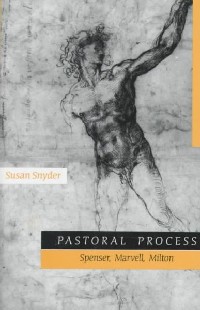
Pastoral Processdraws a basic distinction between two aspects of the pastoral ideal: the Arcadian pastoral, which locates the unspoiled paradise in space, apart from the complexities of city and court, and finds it accessible for limited periods of recuperation and reorientation; and the Golden Age mode, which locates the ideal pastoral life in time gone by, always already lost as soon as it is apprehended as paradise.
The author’s central aim is an archaeology of the nostalgia-based pastoral of the vanished Golden Age. On the surface level, her close readings of certain Renaissance poems and sequences—Spenser’s Shepheardes Calender,Marvell’s Mower poems, and Milton’s Lycidas—clarify “pastoral process”: the dislocating transition from innocence to experience, from secure centeredness in a comfortable, self-mirroring world to a new condition of division, displacement, and alienation. The advent of individuation and sexual desire, and the internalization of undirectional time and universal death, transform the pastoral paradise into a wasteland or leave the newly self-conscious protagonist outside his former idyll, looking in.
Excavation beneath these initial readings uncovers the master myth of Eden that informs them, as well as parallel narratives of loss such as the various accounts of the Golden Age or the tale in Plato’s Symposiumof beings fallen from original wholeness into fragmentation and lack. Ramifications of the master myth include Christian and Jewish commentaries that helped shape traditional understandings of the story, and especially the subversive tradition that persisted, against the strong tide of orthodox interpretation, in reading the Fall of Man in terms of childhood wholeness breaking down in the wake of sexual knowledge and the burden of full, separated consciousness.
Below the poetic utterances and the shaping myths lies the deeper archaeological stratum of the unconscious and the mechanisms that construct, always retrospectively and often counterfactually, a blissful childhood. Beyond Freud’s own theories, later offshoots and reworkings of his psychology are invoked to explore psychological experiences and needs that inform both myths and poems: Jung, the developmental psychologists, and especially Lacan. The study concludes by returning to the surface to consider the pastoral impulse in historical terms, as a defining moment in the careers of Spenser, Marvell, and Milton and as a special urgency in the early modern times they inhabited.
目录
A Note on Textual Conventions
Introduction: Pastoral and Pastoral Process p. 1
Manifest Content: Pastoral Process in The Shepheardes Calender, the Mower Poems, and Lycidas p. 19
Cultural "Day's Residue": The Level of Myth p. 76
Latent Conflict: Resisting Difference p. 113
"As time her taught": Biographical and Historical Speculations p. 147
Afterword: Green and Dying p. 176
Notes p. 185
Works Cited p. 215
Index p. 235
Introduction: Pastoral and Pastoral Process p. 1
Manifest Content: Pastoral Process in The Shepheardes Calender, the Mower Poems, and Lycidas p. 19
Cultural "Day's Residue": The Level of Myth p. 76
Latent Conflict: Resisting Difference p. 113
"As time her taught": Biographical and Historical Speculations p. 147
Afterword: Green and Dying p. 176
Notes p. 185
Works Cited p. 215
Index p. 235
- 名称
- 类型
- 大小
光盘服务联系方式: 020-38250260 客服QQ:4006604884
云图客服:
用户发送的提问,这种方式就需要有位在线客服来回答用户的问题,这种 就属于对话式的,问题是这种提问是否需要用户登录才能提问
Video Player
×
Audio Player
×
pdf Player
×
