

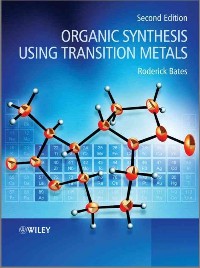
Organic synthesis using transition metals / 2nd ed.
副标题:无
作 者:Roderick Bates.
分类号:
ISBN:9781119978947
微信扫一扫,移动浏览光盘
简介
Transition metals open up new opportunities for synthesis, because their means of bonding and their reaction mechanisms differ from those of the elements of the s and p blocks. In the last two decades the subject has mushroomed - established reactions are seeing both technical improvements and increasing numbers of applications, and new reactions are being developed. The practicality of the subject is demonstrated by the large number of publications coming from the process development laboratories of pharmaceutical companies, and its importance is underlined by the fact that three Nobel prizes have been awarded for discoveries in this field in the 21st Century already. Organic Synthesis Using Transition Metals, 2nd Edition considers the ways in which transition metals, as catalysts and reagents, can be used in organic synthesis, both for pharmaceutical compounds and for natural products. It concentrates on the bond-forming reactions that set transition metal chemistry apart from "classical" organic chemistry. Each chapter is extensively referenced and provides a convenient point of entry to the research literature. Topics covered include: * introduction to transition metals in organic synthesis* coupling reactions* C-H activation* carbonylative coupling reactions* alkene and alkyne insertion reactions* electrophilic alkene and alkyne complexes* reactions of alkyne complexes* carbene complexes*h3- or p-allyl -allyl complexes* diene, dienyl and arene complexes* cycloaddition and cycloisomerisation reactions For this second edition the text has been extensively revised and expanded to reflect the significant improvements and advances in the field since the first edition, as well as the large number of new transition metal-catalysed processes that have come to prominence in the last 10 years -- for example the extraordinary progress in coupling reactions using “designer" ligands, catalysis using gold complexes, new opportunities arising from metathesis chemistry, and C-H activation -- without neglecting the well established chemistry of metals such as palladium. Organic Synthesis Using Transition Metals, 2nd Edition will find a place on the bookshelves of advanced undergraduates and postgraduates working in organic synthesis, catalysis, medicinal chemistry and drug discovery. It is also useful for practising researchers who want to refresh and enhance their knowledge of the field.
目录
1 Introduction 1 1.1 The Basics 2 1.2 The Basic Structural Types 2 1.2.1 Phosphines 5 1.2.2 Phosphites 8 1.2.3 N-Heterocyclic Carbenes 9 1.2.4 Other Ligands 10 1.2.5 Quantifying Ligand Effects 10 1.2.6 Heterogeneous Catalysis 10 1.3 Just how many Ligands Can Fit around a Metal Atom? 10 1.4 Method 1: Covalent 11 1.5 Method 2: Ionic 12 1.5.1 Examples 13 1.6 Mechanism and the Basic Reaction Steps 13 1.6.1 Coordination and Dissociation 14 1.6.2 Oxidative Addition and Reductive Elimination 15 1.6.3 Transmetallation 15 1.6.4 Alkene and Alkyne Insertion 15 1.6.5 CO insertion 16 1.6.6 -Hydride Elimination 16 1.6.7 Oxidative Cyclization 17 1.7 Catalysis 18 References 19 2 Coupling Reactions 21 2.1 Carbon-Carbon Bond Formation 21 2.1.1 The Main-Group Metal, M 22 2.1.2 Limitation 23 2.1.3 Reactivity of the Leaving Group 23 2.1.4 Selectivity 25 2.2 Lithium and Magnesium: Kumada Coupling 27 2.3 Zinc: the Negishi Reaction 32 2.4 Aluminium and Zirconium 35 2.5 Tin: the Stille Reaction 37 2.5.1 Vinyl Stannanes 41 2.5.2 Aryl and Heteroaryl Stannanes 42 2.5.3 The Intramolecular Stille Reaction 42 2.5.4 Coupling of Acid Chlorides 42 2.5.5 Stille Coupling of Triflates 44 2.5.6 Stille Coupling of Alkyl Halides 44 2.5.7 Stille Reaction Troubleshooting 44 2.6 Boron: the Suzuki Reaction 46 2.6.1 Alkenyl Borane Coupling Reactions 48 2.6.2 Alkyl Borane Coupling Reactions 50 2.6.3 Aryl Borane Coupling Reactions 52 2.6.4 Suzuki Coupling of Alkyl Halides 56 2.7 Silicon: the Hiyama Reaction 57 2.8 Copper: the Sonogashira Reaction 61 2.9 Other Metals 67 2.10 Homocoupling 67 2.11 Enolate and Phenoxide Coupling 69 2.12 Heteroatom Coupling 70 2.12.1 Palladium-Catalysed Synthesis of Amine Derivatives 72 2.12.2 Palladium-Catalysed Synthesis of Ethers 76 2.12.3 Ullmann Coupling 78 2.12.4 Formation of Other C-X bonds 81 References 82 3 C-H Activation 89 3.1 Arenes and Heteroarenes 91 3.1.1 Fujiwara-Heck Reaction 91 3.1.2 Biaryl Coupling 93 3.2 Aldehydes 100 3.3 Borylation and Silylation 102 3.4 Allylic Functionalization 103 3.5 Unfunctionalized C-H Bonds 105 3.5.1 Carbon-Heteroatom Bond Formation 105 3.5.2 Carbon-Carbon Bond Formation 109 References 115 4 Carbonylation 117 4.1 Carbonylative Coupling Reactions: Synthesis of Carbonyl Derivatives 117 4.2 Carbonylative Coupling Reactions: Synthesis of Carboxylic Acid Derivatives 122 4.3 Carbonylation of Alkenes and Alkynes 127 4.3.1 The Carbonylative Heck Reaction 127 4.3.2 Other Carbonylation Reactions of Allenes and Alkynes 129 4.4 Hydroformylation 130 4.4.1 Directed Hydroformylation 135 4.4.2 Asymmetric Hydroformylation 138 4.5 Stoichiometric Carbonylation using Carbonyl Complexes 139 4.5.1 Iron and Cobalt Carbonyl Anions 139 4.5.2 Ferrilactones and Ferrilactams 142 4.5.3 Molybdenum and Tungsten Carbonyls 145 4.6 Carboxylation 146 4.7 Decarbonylation and Decarboxylation 148 References 150 5 Alkene and Alkyne Insertion Reactions 153 5.1 The Heck Reaction 153 5.1.1 The Organic Halide 153 5.1.2 Leaving Groups 155 5.1.3 Catalysts, Ligands and Reagents 158 5.1.4 The Alkene: Scope and Reactivity 159 5.1.5 The Alkene: Regio- and Stereoselectivity 160 5.1.6 Cyclic Alkenes 161 5.1.7 Isomerization 162 5.1.8 The Intramolecular Heck Reaction 163 5.1.9 The Asymmetric Heck Reaction 164 5.1.10 Tandem Reactions 169 5.1.11 Heck-Like Reactions of Organometallics 174 5.2 Insertion Reactions Involving Zirconium and Titanium 175 5.2.1 Hydrozirconation and Carbozirconation 175 5.2.2 Alkene and Alkyne Complexes 177 5.2.3 Zirconium-Mediated Carbomagnesiation 182 5.2.4 The Kulinkovich Reaction 185 References 188 6 Electrophilic Alkene and Alkyne Complexes 191 6.1 Electrophilic Palladium Complexes 191 6.1.1 Tandem Reactions Involving CO or Alkene Insertion 198 6.1.2 Tandem Reactions with Oxidative Addition 207 6.2 Other Metals: Silver, Gold, Platinum and Rare Earths 210 6.2.1 Reactions of Alkenes 210 6.2.2 Reactions of Allenes 213 6.2.3 Reactions of Alkynes 216 6.2.4 The Hashmi Phenol Synthesis 223 6.2.5 Ene-Yne Cyclization 225 6.3 Iron 229 6.3.1 Fp Complexes of Alkenes 229 6.3.2 Fp Complexes of Alkynes 234 6.3.3 Alkylation of Allyl Fp Complexes and Formal Cycloadditions 234 6.4 Cobaloxime -Cations 235 References 237 7 Reactions of Alkyne Complexes 241 7.1 Alkyne Cobalt Complexes 241 7.2 Propargyl Cations: The Nicholas Reaction 244 7.3 The Pauson-Khand Reaction 246 7.3.1 Asymmetric Pauson-Khand Reaction 248 7.3.2 The Hetero-Pauson-Khand Reaction 249 7.4 Synthesis Using Multiple Cobalt Reactions 250 References 251 8 Carbene Complexes 253 8.1 Fisher Carbenes 253 8.1.1 Demetallation 258 8.1.2 The D..otz Reaction 258 8.1.3 Not the Dotz Reaction 263 8.1.4 Fischer Carbene Photochemistry 267 8.2 Vinylidene Complexes 269 8.3 Metathesis Reactions Involving Carbene Complexes 273 8.3.1 Tebbe's Reagent 274 8.3.2 Alkene (Olefin) Metathesis 278 8.3.3 Ring-Closing Metathesis 279 8.3.4 Cross-Metathesis 291 8.3.5 Ring-Opening Metathesis 296 8.3.6 Asymmetric Metathesis 297 8.3.7 Ene-Yne Metathesis 300 8.3.8 Ene-Yne-Ene Metathesis 303 8.3.9 Tandem Reactions 306 8.3.10 Metathesis Side Reactions 306 8.4 Carbyne Complexes 310 8.4.1 Alkyne Metathesis 310 8.5 Carbene Complexes from Diazo Compounds 312 8.5.1 Nucleophilic Trapping 313 8.5.2 C-H Insertion Reactions of Carbene Complexes 315 8.5.3 C-H Insertion Reactions of Nitrene Complexes 316 References 319 9 3- or -Allyl Complexes 325 9.1 Stoichiometric Reactions of -Allyl Complexes 325 9.2 Catalysis: Mostly Palladium 328 9.2.1 Regioselectivity 331 9.2.2 Internal versus Terminal Attack 333 9.2.3 Stereoselectivity 335 9.2.4 Asymmetric Allylation 337 9.2.5 Synthesis Using Palladium Allyl Chemistry 340 9.2.6 Base-Free Allylation 343 9.2.7 Allylation with Decarboxylation 347 9.2.8 Allyl as a Protecting Group 350 9.2.9 Other Routes to 3- or -Allyl Palladium Complexes 352 9.3 Propargyl Compounds 357 References 357 10 Diene, Dienyl and Arene Complexes 361 10.1 4-Diene Complexes 361 10.1.1 Electrophilic Attack 364 10.1.2 Nucleophilic Attack 366 10.1.3 Deprotonation 370 10.2 5-Dienyl Complexes 371 10.2.1 Nucleophilic Attack 372 10.3 6-Arene Complexes 377 10.3.1 Nucleophilic Attack 380 10.3.2 Deprotonation 385 10.4 2-Arene Complexes 387 References 389 11 Cycloaddition and Cycloisomerization Reactions 391 11.1 Formal Six-Electron, Six-Atom Cycloadditions 391 11.1.1 The [4 + 2] Cycloaddition 391 11.1.2 The [2 + 2 + 2] Cycloaddition 394 11.2 Cycloadditions Involving Fewer than Six Atoms 402 11.2.1 Four-Membered Rings 402 11.2.2 Five-Membered Rings through TMM Methods 402 11.2.3 Other Five-Membered Ring Formations 405 11.3 Cycloadditions Involving More than Six Atoms 407 11.3.1 The [5 + 2] Cycloaddition 407 11.3.2 The [4 + 4] Cycloaddition 410 11.3.3 The [6 + 2] and [6 + 4] Cycloadditions 411 11.4 Isomerization 414 11.5 Cycloisomerization and Related Reactions 415 References 426 Abbreviations 431 Index 433
Organic synthesis using transition metals / 2nd ed.
- 名称
- 类型
- 大小
光盘服务联系方式: 020-38250260 客服QQ:4006604884
云图客服:
用户发送的提问,这种方式就需要有位在线客服来回答用户的问题,这种 就属于对话式的,问题是这种提问是否需要用户登录才能提问
Video Player
×
Audio Player
×
pdf Player
×
