

简介
Summary:
Publisher Summary 1
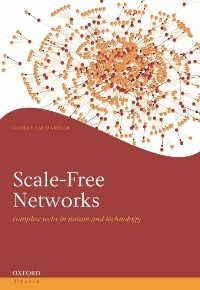
Thinking systematically, many social and scientific phenomena can be described in a mathematical framework. Exemplars of such phenomena range from governance to food systems and even human interactions in workplaces. Caldarelli (finance, U. Sapienza, Rome) finds these systems to have only a few elements with many connections and many with only a few, a situation he says is a "scale-free" network. He describes the theoretical underpinnings and algorithms necessary to study these structures and features by introducing readers to graphs, and then explains communities in terms of graph structures, scale-invariance, the origins of power-law functions, and graph-generating models, then gives examples in the forms of networks in the cell, geophysical and ecological networks, the Internet and the world-wide web, social and cognitive networks and financial networks. The appendices include a glossary and material on graph quantities, basic statistics, matrices and eigenvectors, and population dynamics. Annotation 漏2007 Book News, Inc., Portland, OR (booknews.com)
Publisher Summary 2
A variety of different social, natural and technological systems can be described by the same mathematical framework. This holds from Internet to the Food Webs and to the connections between different company boards given by common directors. In all these situations a graph of the elements and their connections displays a universal feature of some few elements with many connections and many with few. This book reports the experimental evidence of these ``Scale-free networks'' and provides to students and researchers a corpus of theoretical results and algorithms to analyse and understand these features. The contents of this book and their exposition makes it a clear textbook for the beginners and a reference book for the experts.
目录
I DFINITIONS AND METHODOLOGY
1. Introduction to graphs7
I Graphs, directed graphs, and weighted graphs 10
L.2 Trees 18
13 Vertex correlation, assortativity 23
S4 Hierarchical properties of graphs 29
5 The properties of scale-free networks 30
2. Gaph structures: communities 34
2.1 Introduction 34
2.2 Typical subgraphs, motifs 36
3 Classes of vertices 38
4 Centrality measures, betweenness and robustness 39
"25 Clustering detection, modularity 41
2.6 Communities in graphs 43
3. Scale-invariance 60
3.1 Geometrical scale-invariance: fractals 62
3.2 Measuring the fractal dimension 67
33 Scale-invariance and power laws 70
3.4 Plotting a power law 71
3.5 Scaleinvariane in natural sciences 74
3,6 Scale-invariance in economies and in social sciences 81
4 Theorigin of power-law functions 84
4. Random walk, Laplace equation, and fractals 86
2 Power laws from minimization principles 92
4.3 Multiphicative processes and normal distribution 95
4. Preferential attachment the Matthew effect 1.00
5 Graph generating models 103
5.1 Random graph model 105
52 The small-world model 1.08
5.3 e Barabasi-Albert model 112
.4 Modifications to the BarabDsi-Albert model 114
55 Copying models 118
5. Fitness based model 119
57 Graph from optimization principles 123
II EXAMPLES
6. Networks in the cell 131
6.1 Basic cell biology 134
6.2 Protein-protein interaction network 138
6.3 Metabolic pathways 142
6.4 Gene regulatory networks 146
70 Geophysical networks 148
"7. Satellite images and digital elevation models 150
7.2 Geometrical scale invariance for river networks 152
7.3 Saling relations for river networks 155
7.4 Rnier networks models 157
75 River netvworks on Mars' surface 164
8. Ecological networks 167
1 Species and evolution 170
2 Food webs: a very particular case of network 73
83 Food web quantities 74
4 Classifications of species 79
85 Yule process for taxonomies 180
90 Technological networks: Internet and WWW 185
91 The Internet protocols [88
".2 The geography of the Internet 193
9 b3 The autonomous systems 196
9 4 The scale-invariance i the Internet 197
9.5 The World Wide Web 199
9.6 Searching the web 200
9.7 Statistical measures of the Web 205
98 f-al ni etworks 208
10 Socia and cognitive networks 211
i1.1 Networks of scientific papers 213
10.2 Contact networks 219
103 Linguistic networks 224
10.4 Wikipedia 229
SFi.ancial networks 231
I. Board of directors 233
.2 Stock networks 235
113 Bank netorks 245
11.4 The world trad web 248
I APPENDICIES
A C Gossary 253
IB Graph quantities 256
B. Basics 256
B.2 Different kinds of graphs 257
B.3 Paths, cycles, and trees 260
C Basic statisics 262
C.I Events and proIability 262
C.2 Probability densities and distributions 263
C.3 Working with statistical distributions 267
C.4 Statistical properties of weighted networks 272
. Matrices and eigenvectors 275
E Population dynamics 277
TE. Populat on dynamics 27
- 名称
- 类型
- 大小
光盘服务联系方式: 020-38250260 客服QQ:4006604884
云图客服:
用户发送的提问,这种方式就需要有位在线客服来回答用户的问题,这种 就属于对话式的,问题是这种提问是否需要用户登录才能提问
Video Player
×
Audio Player
×
pdf Player
×
