

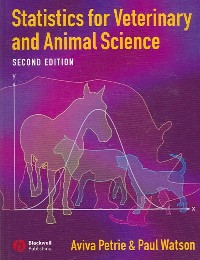
Statistics for veterinary and animal science / 2nd ed.
副标题:无
作 者:Aviva Petrie, Paul Watson.
分类号:
ISBN:9781405127813
微信扫一扫,移动浏览光盘
简介
"This textbook, now in its second edition and with an accompanying CD provides the reader with the necessary information to handle numerical data and critically appraise the statistical methodology in the literature in the fields of veterinary and animal science. Written in a non-mathematical way with an emphasis on assimilating underlying concepts and correctly interpreting computer output, it contains numerous worked real examples to help the reader develop an understanding of the procedures. This book is specifically written for veterinary science and animal science students; researchers and practitionersfor whom no other suitable text exists."--BOOK JACKET
目录
Preface p. ix
Preface to First Edition p. xi
The whys and wherefores of statistics p. 1
Learning objectives p. 1
Aims of the book p. 1
What is statistics? p. 2
Statistics in veterinary and animal science p. 3
Evidence-based veterinary medicine p. 4
Types of variable p. 4
Variations in measurements p. 5
Terms relating to measurement quality p. 8
Populations and samples p. 8
Types of statistical procedures p. 9
Conclusion p. 10
Exercises p. 10
Descriptive statistics p. 12
Learning objectives p. 12
Summarizing data p. 12
Empirical frequency distributions p. 12
Tables p. 14
Diagrams p. 14
Numerical measures p. 19
The reference range p. 25
Exercises p. 25
Probability and probability distributions p. 28
Learning objectives p. 28
Probability p. 28
Probability distributions p. 30
Discrete probability distributions p. 30
Continuous probability distributions p. 33
Relationships between distributions p. 42
Exercises p. 43
Sampling and sampling distributions p. 45
Learning objectives p. 45
The distinction between the sample and the population p. 45
Statistical inference p. 45
The sampling distribution of the mean p. 47
The confidence interval for a mean p. 49
The sampling distribution of the proportion p. 51
The confidence interval for a proportion p. 52
Bootstrapping and jackknifing p. 52
Exercises p. 53
Experimental design and clinical trials p. 54
Learning objectives p. 54
Types of study p. 54
Introducing clinical trials p. 58
The importance of design in the clinical trial p. 58
The control group p. 59
Assignment of animals to the treatment groups p. 60
The avoidance of bias in the assessment procedure p. 63
Increasing the precision of the estimates p. 64
Further considerations p. 66
Exercises p. 71
An introduction to hypothesis testing p. 73
Learning objectives p. 73
Introduction p. 73
Basic concepts of hypothesis testing p. 73
Type I and Type II errors p. 77
The distinction between statistical and biological significance p. 78
The confidence interval approach to hypothesis testing p. 79
Collecting our thoughts on confidence intervals p. 80
Equivalence and non-inferiority studies p. 80
Exercises p. 81
Hypothesis tests 1 - the t-test: comparing one or two means p. 83
Learning objectives p. 83
Requirements for hypothesis tests for comparing means p. 83
One-sample t-test p. 85
Two-sample t-test p. 86
The paired t-test p. 90
Exercises p. 94
Hypothesis tests 2 - the F-test: comparing two variances or more than two means p. 95
Learning objectives p. 95
Introduction p. 95
The F-test for the equality of two variances p. 95
Levene's test for the equality of two or more variances p. 97
The analysis of variance (ANOVA) for the equality of means p. 97
One-way ANOVA p. 100
Exercises p. 104
Hypothesis tests 3 - the Chisquared test: comparing proportions p. 107
Learning objectives p. 107
Introduction p. 107
Testing a hypothesis about a single proportion p. 107
Comparing two proportions - independent groups p. 108
Testing associations in an r x c contingency table p. 112
Comparing two proportions - paired observations p. 115
The Chi-squared goodness-of-fit test p. 117
Exercises p. 118
Linear correlation and regression p. 121
Learning objectives p. 121
Introducing linear correlation and regression p. 121
Linear correlation p. 122
Simple (univariable) linear regression p. 127
Regression to the mean p. 137
Exercises p. 137
Further regression analyses p. 141
Learning objectives p. 141
Introduction p. 141
Multiple linear regression p. 141
Multiple logistic regression - a binary response variable p. 148
Poisson regression p. 151
Regression methods for clustered data p. 153
Exercises p. 156
Non-parametric statistical methods p. 158
Learning objectives p. 158
Parametric and non-parametric tests p. 158
The sign test p. 160
Wilcoxon signed rank test p. 162
Wilcoxon rank sum test p. 164
Non-parametric analyses of variance p. 166
Spearman's rank correlation coefficient p. 168
Exercises p. 170
Further aspects of design and analysis p. 174
Learning objectives p. 174
Transformations p. 174
Sample size p. 177
Sequential and interim analysis p. 180
Meta-analysis p. 181
Methods of sampling p. 184
Exercises p. 188
Additional techniques p. 191
Learning objectives p. 191
Diagnostic tests p. 191
Bayesian analysis p. 195
Measuring agreement p. 196
Measurements at successive points in time p. 202
Survival analysis p. 204
Multivariate analysis p. 208
Exercises p. 209
Evaluation and reporting - evidence-based veterinary medicine and the CONSORT Statement p. 212
Learning objectives p. 212
Introduction p. 212
What is EBVM? p. 213
Why has EBVM developed? p. 213
What is involved in practising EBVM? p. 214
Integrating EBVM into clinical practice p. 218
Guidelines for reporting results p. 218
Example of CONSORT and EBVM p. 220
Conclusion p. 221
Exercises p. 221
Solutions to exercises p. 224
References p. 241
Appendices
Statistical tables p. 247
Tables of confidence intervals p. 263
Glossary of notation p. 265
Glossary of terms p. 268
Flow charts for selection of appropriate tests p. 286
Index p. 289
Preface to First Edition p. xi
The whys and wherefores of statistics p. 1
Learning objectives p. 1
Aims of the book p. 1
What is statistics? p. 2
Statistics in veterinary and animal science p. 3
Evidence-based veterinary medicine p. 4
Types of variable p. 4
Variations in measurements p. 5
Terms relating to measurement quality p. 8
Populations and samples p. 8
Types of statistical procedures p. 9
Conclusion p. 10
Exercises p. 10
Descriptive statistics p. 12
Learning objectives p. 12
Summarizing data p. 12
Empirical frequency distributions p. 12
Tables p. 14
Diagrams p. 14
Numerical measures p. 19
The reference range p. 25
Exercises p. 25
Probability and probability distributions p. 28
Learning objectives p. 28
Probability p. 28
Probability distributions p. 30
Discrete probability distributions p. 30
Continuous probability distributions p. 33
Relationships between distributions p. 42
Exercises p. 43
Sampling and sampling distributions p. 45
Learning objectives p. 45
The distinction between the sample and the population p. 45
Statistical inference p. 45
The sampling distribution of the mean p. 47
The confidence interval for a mean p. 49
The sampling distribution of the proportion p. 51
The confidence interval for a proportion p. 52
Bootstrapping and jackknifing p. 52
Exercises p. 53
Experimental design and clinical trials p. 54
Learning objectives p. 54
Types of study p. 54
Introducing clinical trials p. 58
The importance of design in the clinical trial p. 58
The control group p. 59
Assignment of animals to the treatment groups p. 60
The avoidance of bias in the assessment procedure p. 63
Increasing the precision of the estimates p. 64
Further considerations p. 66
Exercises p. 71
An introduction to hypothesis testing p. 73
Learning objectives p. 73
Introduction p. 73
Basic concepts of hypothesis testing p. 73
Type I and Type II errors p. 77
The distinction between statistical and biological significance p. 78
The confidence interval approach to hypothesis testing p. 79
Collecting our thoughts on confidence intervals p. 80
Equivalence and non-inferiority studies p. 80
Exercises p. 81
Hypothesis tests 1 - the t-test: comparing one or two means p. 83
Learning objectives p. 83
Requirements for hypothesis tests for comparing means p. 83
One-sample t-test p. 85
Two-sample t-test p. 86
The paired t-test p. 90
Exercises p. 94
Hypothesis tests 2 - the F-test: comparing two variances or more than two means p. 95
Learning objectives p. 95
Introduction p. 95
The F-test for the equality of two variances p. 95
Levene's test for the equality of two or more variances p. 97
The analysis of variance (ANOVA) for the equality of means p. 97
One-way ANOVA p. 100
Exercises p. 104
Hypothesis tests 3 - the Chisquared test: comparing proportions p. 107
Learning objectives p. 107
Introduction p. 107
Testing a hypothesis about a single proportion p. 107
Comparing two proportions - independent groups p. 108
Testing associations in an r x c contingency table p. 112
Comparing two proportions - paired observations p. 115
The Chi-squared goodness-of-fit test p. 117
Exercises p. 118
Linear correlation and regression p. 121
Learning objectives p. 121
Introducing linear correlation and regression p. 121
Linear correlation p. 122
Simple (univariable) linear regression p. 127
Regression to the mean p. 137
Exercises p. 137
Further regression analyses p. 141
Learning objectives p. 141
Introduction p. 141
Multiple linear regression p. 141
Multiple logistic regression - a binary response variable p. 148
Poisson regression p. 151
Regression methods for clustered data p. 153
Exercises p. 156
Non-parametric statistical methods p. 158
Learning objectives p. 158
Parametric and non-parametric tests p. 158
The sign test p. 160
Wilcoxon signed rank test p. 162
Wilcoxon rank sum test p. 164
Non-parametric analyses of variance p. 166
Spearman's rank correlation coefficient p. 168
Exercises p. 170
Further aspects of design and analysis p. 174
Learning objectives p. 174
Transformations p. 174
Sample size p. 177
Sequential and interim analysis p. 180
Meta-analysis p. 181
Methods of sampling p. 184
Exercises p. 188
Additional techniques p. 191
Learning objectives p. 191
Diagnostic tests p. 191
Bayesian analysis p. 195
Measuring agreement p. 196
Measurements at successive points in time p. 202
Survival analysis p. 204
Multivariate analysis p. 208
Exercises p. 209
Evaluation and reporting - evidence-based veterinary medicine and the CONSORT Statement p. 212
Learning objectives p. 212
Introduction p. 212
What is EBVM? p. 213
Why has EBVM developed? p. 213
What is involved in practising EBVM? p. 214
Integrating EBVM into clinical practice p. 218
Guidelines for reporting results p. 218
Example of CONSORT and EBVM p. 220
Conclusion p. 221
Exercises p. 221
Solutions to exercises p. 224
References p. 241
Appendices
Statistical tables p. 247
Tables of confidence intervals p. 263
Glossary of notation p. 265
Glossary of terms p. 268
Flow charts for selection of appropriate tests p. 286
Index p. 289
Statistics for veterinary and animal science / 2nd ed.
- 名称
- 类型
- 大小
光盘服务联系方式: 020-38250260 客服QQ:4006604884
云图客服:
用户发送的提问,这种方式就需要有位在线客服来回答用户的问题,这种 就属于对话式的,问题是这种提问是否需要用户登录才能提问
Video Player
×
Audio Player
×
pdf Player
×
亲爱的云图用户,
光盘内的文件都可以直接点击浏览哦
无需下载,在线查阅资料!
