

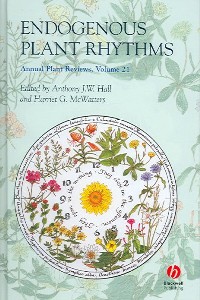
Endogenous plant rhythms /
副标题:无
作 者:edited by Anthony J.W. Hall and Harriet McWatters.
分类号:
ISBN:9781405123761
微信扫一扫,移动浏览光盘
简介
Summary:
Publisher Summary 1
Our knowledge of the circadian clock in plants has advanced considerably in recent years and we now have a clearer view of the biochemical processes making up its mechanism. Recent work provides insight into the central role played by the circadian system in the regulation of many aspects of metabolism. The multiple systems involved in photoreception have been determined, leading to an understanding of how light entrains the internal biological clock to the natural cycle of day and night, and how this impacts on key events in the plant lifecycle, such as the photoperiodic regulation of flowering.
This book provides a contemporary overview of endogenous plant rhythms for researchers and professionals in the plant sciences. It will also serve as a valuable source of reference for the wider circadian community.
目录
Table Of Contents:
Contributors xiii
Preface xvii
The plant circadian clock: review of a clockwork Arabidopsis 1(24)
Frank G. Harmon
Takato Imaizumi
Steve A. Kay
Introduction 1(1)
How plant circadian biology got to where it is today 1(5)
Forward genetics 1(1)
Direct circadian screens
TOCI, ZTL, TEJ, TIC, LUX 1(3)
Non-circadian forward genetic screens
LHY, ELF3, ELF4 4(1)
Reverse genetics
CCA1, PRR3-PRR9 5(1)
How the components were placed in the plant clock? 6(4)
CCA1, LHY, and TOC1 contribute to a feedback loop at the core of the oscillator 7(2)
The interplay between TOCI and ZTL sets circadian period 9(1)
PRR7 and PRR9 form a feedback loop that affects CCA1 and LHY expression 9(1)
Current framework for understanding the Arabidopsis clock 10(2)
What may pave the way to greater understanding of the clock 12(6)
Forward genetics 12(2)
Genomics and functional genomics 14(2)
Transient functional assays 16(1)
Characterizing protein modification 17(1)
Conclusion 18(7)
References 18(7)
Pseudo-response regulator genes `tell' the time of day: multiple feedbacks in the circadian system of higher plants 25(32)
Shigeru Hanano
Seth J. Davis
Introduction 25(1)
History of the circadian system 25(3)
The CCA1/LHY - TOCI model for the Arabidopsis clock 27(1)
An overview of the phosphorelay two-component system in Arabidopsis 28(3)
AHK and AHP genes involved in the phosphorelay system of Arabidopsis 28(2)
Arabidopsis response regulators 30(1)
Pseudo-response regulators 31(1)
Circadian regulation of TOCI/PRR family: CCA1/LHY-TOCI feedback model and circadian wave form of the TOCI/PRR family 32(4)
Regulation of TOCI expression 33(1)
Interactions between TOC1 and other PRR family members 34(1)
The role of the evening element in PRR9 regulation 35(1)
Interactions between PRRs and clock components 35(1)
A detailed description of signal convergence in the PRR genes 36(6)
TOCI/PRRI, At5g61380 36(1)
Toc 1-2 and TOC1 mini-gene mutants 36(2)
TOC1 and phytochrome 38(1)
TOC1 and flowering time 38(1)
PRR9, At2g46790 38(2)
PRR7, At5g02810 40(1)
PRR5, At5g24470 41(1)
PRR3, At5g60100 42(1)
Phylogenetic and epistatic relations between the PRRs 42(2)
Partners of PRR proteins 44(1)
PIF3-like family 44(1)
ZTL family 44(1)
Other interactions 45(1)
A brief overview of PRRs in other plants 45(1)
Perspective 46(11)
Limitations of the current model 48(2)
Acknowledgements 50(1)
References 50(7)
Multiple and slave oscillators 57(28)
Dorothee Staiger
Corinna Streitner
Fabian Rudolf
Xi Huang
Introduction 57(1)
Central and peripheral oscillators in the mammalian timing 58(2)
Organization of the timing system in plants 60(6)
Are clocks localized in different parts of the plant? 61(1)
Does the same type of clock control rhythms in distinct parts of the plant? 62(2)
Do individual clocks interact with each other? 64(1)
Do chloroplasts retain remnants of a clock of an endosymbiontic ancestor? 65(1)
Molecular organization of the clock within a plant cell 66(1)
Linking gene expression to the clockwork
how output genes are regulated 66(7)
Transcriptional control of output genes 66(1)
Identification of cycling transcription factors mediating rhythmic output 67(1)
Post-transcriptional control 68(2)
RNA stability 70(1)
Polyadenylation 70(1)
Splicing 71(1)
Translational control mediated by a new class of RNA-binding proteins 71(1)
RNA-based regulation: The role of an antisense RNA 72(1)
Control by second messengers: do Ca2+ ions mediate rhythmic output? 72(1)
Slave oscillators 73(3)
The clock-regulated RNA-binding protein ATGRP7 in Arabidopsis thaliana 73(2)
Transcriptional feedback loop as slave oscillator: EPR1 75(1)
Summary 76(9)
References 78(7)
Entrainment of the circadian clock 85(22)
Dave Somers
Introduction 85(1)
Light perception and entrainment 86(6)
Phytochromes 86(2)
Cryptochromes 88(2)
A novel family of blue light photoreceptors? 90(2)
Signal transduction and interaction 92(4)
ZTL and phototransduction: phy and cry photoreceptors 92(1)
ZTL and phototransduction: ELF3 92(3)
Other potential photoentrainment intermediates 95(1)
Coupling to the central oscillator 96(1)
Circadian gating of photic input 97(2)
Thermal entrainment 99(1)
Conclusion 100(7)
References 101(6)
Photoreceptors and light signaling pathways in plants 107(26)
Victoria S. Larner
Keara A. Franklin
Garry C. Whitelam
Introduction 107(1)
Photoreceptor structures 108(3)
Phototropin structure 108(1)
Cryptochrome structure 109(1)
Phytochrome structure 110(1)
Photoreceptor functions 111(4)
Phototropin functions 111(1)
Cryptochrome functions 112(1)
Phytochrome functions 113(2)
Cellular and sub-cellular localization of photoreceptors 115(2)
Phototropin localization 115(1)
Cryptochrome localization 115(1)
Phytochrome localization 115(2)
Photoreceptor signaling 117(6)
Post-translational Phosphorylation 117(1)
Cytosolic signaling mechanisms 118(1)
Regulation of protein degradation 119(1)
Photoreceptor interacting proteins 120(3)
Crosstalk in photoreceptor signaling 123(1)
Integration of environmental signals 123(1)
Integration of light and endogenous signals 123(1)
Conclusions 124(9)
References 125(8)
Circadian regulation of global gene expression and metabolism 133(34)
Stacey L. Harmer
Michael F. Covington
Oliver Blasing
Mark Stitt
Circadian rhythms in transcription 133(3)
Monitoring rhythms of transcription 133(2)
Circadian regulation of the transcriptome 135(1)
Post-transcriptional circadian regulation 136(2)
Proteomics 137(1)
Metabolomics 137(1)
Circadian regulation of transcription
what kinds of genes, and why? 138(1)
Clock-associated genes 138(1)
Slave oscillators 139(1)
Genes encoding other regulatory proteins 139(1)
Regulation of plant metabolism 139(5)
Photosynthesis 140(1)
Partitioning of fixed carbon 140(1)
Nitrogen assimilation 141(1)
Secondary metabolic pathways 142(2)
Circadian regulation of plant growth and development 144(2)
Plant growth 144(1)
Hormone regulation 144(2)
Control of flowering time 146(1)
How is clock-regulation of gene expression achieved? 146(2)
The evening element (EE) 146(1)
Other circadian associated motifs 147(1)
Cross-species comparisons 148(3)
Are similar genes clock regulated in all organisms? 148(1)
Rhythmic gene expression in photosynthetic species 149(2)
Comparing gene expression in constant and diurnal conditions 151(4)
Circadian rhythms vs. diurnal responses 151(2)
Interactions between sugar and circadian regulation 153(2)
Why have a clock rather than relying on driven rhythms? 155(2)
Might anticipation be key? 155(1)
Do transcript levels correlate with protein levels? 156(1)
Why are the transcripts of stable proteins under circadian regulation? 156(1)
Future prospects 157(10)
Acknowledgements 157(1)
References 158(9)
Photoperiodic responses and the regulation of flowering 167(24)
Isabelle Carre
George Coupland
Joanna Putterill
Introduction to photoperiodism 167(1)
Models for the measurement of day length 168(2)
The hourglass timer 168(1)
The circadian clock 168(2)
Internal and external coincidence models 170(1)
Arabidopsis molecular genetics identifies a regulatory pathway that controls flowering in long photoperiods 170(5)
The GI-CO-FT regulatory hierarchy 171(3)
Role of CO and FT in long-distance day-length signaling 174(1)
Regulation of the Arabidopsis photoperiod pathway: molecular evidence in favor of the coincidence model 175(3)
CO: a major link between photoperiod and the circadian clock 175(2)
How does light coincidence with CO mRNA expression result in the induction of FT transcription? 177(1)
Summary of the evidence in support of the external coincidence model of the photoperiodic regulation of flowering and a role for CO 178(1)
Interaction between photoperiod pathway and other flowering-time pathways in Arabidopsis 178(2)
Convergence of the photoperiod and vernalization pathways 178(2)
Other pathways converging with the photoperiod pathway? 180(1)
Comparative analysis of photoperiod regulation in rice and Arabidopsis 180(3)
Perspectives 183(8)
References 185(6)
Circadian regulation of Ca2+ signaling 191(20)
Michael J. Gardner
Antony N. Dodd
Carlos T. Hotta
Dale Sanders
Alex A. R. Webb
Introduction 191(1)
Ca2+ signaling is ubiquitous and versatile 191(4)
Transduction of extracellular signals 191(1)
Spatio-temporal dynamics of [Ca2+]cyt increases 191(2)
Circadian oscillations of cytosolic free calcium 193(2)
The cellular basis of circadian oscillations of plant [Ca2+]cyt 195(1)
Mechanisms controlling [Ca2+]cyt influx 195(1)
So how does the clock control Ca2+ influx? 195(1)
The cellular basis of circadian oscillations of [Ca2+]cyt in mammals 196(2)
The mammalian circadian clock 196(1)
A role for glutamate and cADPR-sensitive ryanodine receptor induced Ca2+ release in the entrainment of the mammalian clock 196(2)
The source of [Ca2+]cyt influx 198(1)
A comparison of the circadian regulation of Ca2+ homeostasis in both SCN and plant cells 198(2)
cADPR is a key player in mammalian circadian behaviour 199(1)
A role for nitric oxide in plant clock 199(1)
Molecular regulation of circadian Ca2+ signaling 200(3)
Circadian influx of Ca2+ to the cytosol 200(2)
Circadian efflux of Ca2+ from the cytosol 202(1)
Ca2+ sensor proteins 202(1)
Physiological targets for circadian oscillations of [Ca2+]cyt 203(2)
Difficulties in assigning of physiological function to oscillations in [Ca2+]cyt 203(1)
A role for Ca2+ in the photoperiodic control of flowering 204(1)
Conclusions and future prospects 205(6)
Acknowledgements 205(1)
References 205(6)
The circadian clock in CAM plants 211(26)
James Hartwell
Introduction 211(1)
The daily cycle of metabolism in CAM plants 211(4)
Discovery of a circadian rhythm of CO2 fixation in CAM species 212(1)
CAM CO2 output rhythms in constant darkness, CO2-free air, 15°C 213(1)
CAM CO2-assimilation rhythms in constant light and normal air 214(1)
Phase responses of CAM CO2 rhythms 215(2)
Light induced phase shifts 215(1)
Temperature induced phase shifts 216(1)
The biochemical basis for the circadian rhythm of CO2 fixation 217(6)
PEPc phosphorylation rhythms 217(1)
Regulation of PEPc phosphorylation 218(1)
Regulation of PEPc kinase activity 218(1)
The contribution of PEPc and Rubisco to CAM CO2 fixation rhythms 219(1)
The influence of temperature on rhythms of PEPc activity 220(1)
Cloning the PEPc kinase gene from CAM plants 221(1)
Regulation of PPCK 222(1)
Multiple points of clock control within the CAM pathway? 223(1)
The molecular identity of the central oscillator in CAM species? 224(5)
The tonoplast-as-oscillator? 225(1)
Is the CCA1/LHY-TOCI oscillator controlling CAM rhythmicity? 226(3)
Future perspectives and unanswered questions 229(8)
Starch synthesis rhythms in CAM plants 230(1)
Stomatal rhythms in CAM plants 231(1)
Multiple origins of CAM 232(1)
Insights from CAM plants 233(1)
Acknowledgements 234(1)
References 234(3)
Clock evolution and adaptation: whence and whither? 237(24)
Carl Hirschie Johnson
Charalambos P. Kyriacou
Introductory quotation 237(1)
Setting the stage: the appearance of circadian clocks 237(1)
Putative selective pressures 238(3)
Temporal separation of metabolic events 239(1)
`Escape from light' 239(2)
Cyanobacteria and the first clock genes 241(1)
The appearance of clocks in photosynthetic eukaryotes 242(2)
Absence of clock gene homologues across taxa 243(1)
Regulatory homologues do exist across taxa 244(1)
Clocks are widespread in plants: mosses, gymnosperms and angiosperms 244(1)
Clocks in `primitive' plants 245(1)
Rhythms controlled by the `Clockwork Green' 245(2)
Photoperiodic time measurement 246(1)
Why not an hourglass timer? 247(1)
Advantages of a self-sustained oscillator 247(1)
The clock as an adaptation: past and present 248(1)
The circadian clock as an adaptation 249(1)
Experimental tests of adaptive significance before 1980 249(2)
Laboratory studies of circadian clocks and reproductive fitness since 1980 251(3)
Advantages of cycles that resonate with the environment 251(2)
Testing clock conferred advantages in other species 253(1)
Evidence that the clock is still adaptive from studies of organisms in natural environments 254(1)
Environmental gradients 254(1)
Quantitative trait locus analysis 255(1)
Clocks: Where did they come from? What are they doing now? 255(6)
Acknowledgements 256(1)
References 256(5)
Index 261
Contributors xiii
Preface xvii
The plant circadian clock: review of a clockwork Arabidopsis 1(24)
Frank G. Harmon
Takato Imaizumi
Steve A. Kay
Introduction 1(1)
How plant circadian biology got to where it is today 1(5)
Forward genetics 1(1)
Direct circadian screens
TOCI, ZTL, TEJ, TIC, LUX 1(3)
Non-circadian forward genetic screens
LHY, ELF3, ELF4 4(1)
Reverse genetics
CCA1, PRR3-PRR9 5(1)
How the components were placed in the plant clock? 6(4)
CCA1, LHY, and TOC1 contribute to a feedback loop at the core of the oscillator 7(2)
The interplay between TOCI and ZTL sets circadian period 9(1)
PRR7 and PRR9 form a feedback loop that affects CCA1 and LHY expression 9(1)
Current framework for understanding the Arabidopsis clock 10(2)
What may pave the way to greater understanding of the clock 12(6)
Forward genetics 12(2)
Genomics and functional genomics 14(2)
Transient functional assays 16(1)
Characterizing protein modification 17(1)
Conclusion 18(7)
References 18(7)
Pseudo-response regulator genes `tell' the time of day: multiple feedbacks in the circadian system of higher plants 25(32)
Shigeru Hanano
Seth J. Davis
Introduction 25(1)
History of the circadian system 25(3)
The CCA1/LHY - TOCI model for the Arabidopsis clock 27(1)
An overview of the phosphorelay two-component system in Arabidopsis 28(3)
AHK and AHP genes involved in the phosphorelay system of Arabidopsis 28(2)
Arabidopsis response regulators 30(1)
Pseudo-response regulators 31(1)
Circadian regulation of TOCI/PRR family: CCA1/LHY-TOCI feedback model and circadian wave form of the TOCI/PRR family 32(4)
Regulation of TOCI expression 33(1)
Interactions between TOC1 and other PRR family members 34(1)
The role of the evening element in PRR9 regulation 35(1)
Interactions between PRRs and clock components 35(1)
A detailed description of signal convergence in the PRR genes 36(6)
TOCI/PRRI, At5g61380 36(1)
Toc 1-2 and TOC1 mini-gene mutants 36(2)
TOC1 and phytochrome 38(1)
TOC1 and flowering time 38(1)
PRR9, At2g46790 38(2)
PRR7, At5g02810 40(1)
PRR5, At5g24470 41(1)
PRR3, At5g60100 42(1)
Phylogenetic and epistatic relations between the PRRs 42(2)
Partners of PRR proteins 44(1)
PIF3-like family 44(1)
ZTL family 44(1)
Other interactions 45(1)
A brief overview of PRRs in other plants 45(1)
Perspective 46(11)
Limitations of the current model 48(2)
Acknowledgements 50(1)
References 50(7)
Multiple and slave oscillators 57(28)
Dorothee Staiger
Corinna Streitner
Fabian Rudolf
Xi Huang
Introduction 57(1)
Central and peripheral oscillators in the mammalian timing 58(2)
Organization of the timing system in plants 60(6)
Are clocks localized in different parts of the plant? 61(1)
Does the same type of clock control rhythms in distinct parts of the plant? 62(2)
Do individual clocks interact with each other? 64(1)
Do chloroplasts retain remnants of a clock of an endosymbiontic ancestor? 65(1)
Molecular organization of the clock within a plant cell 66(1)
Linking gene expression to the clockwork
how output genes are regulated 66(7)
Transcriptional control of output genes 66(1)
Identification of cycling transcription factors mediating rhythmic output 67(1)
Post-transcriptional control 68(2)
RNA stability 70(1)
Polyadenylation 70(1)
Splicing 71(1)
Translational control mediated by a new class of RNA-binding proteins 71(1)
RNA-based regulation: The role of an antisense RNA 72(1)
Control by second messengers: do Ca2+ ions mediate rhythmic output? 72(1)
Slave oscillators 73(3)
The clock-regulated RNA-binding protein ATGRP7 in Arabidopsis thaliana 73(2)
Transcriptional feedback loop as slave oscillator: EPR1 75(1)
Summary 76(9)
References 78(7)
Entrainment of the circadian clock 85(22)
Dave Somers
Introduction 85(1)
Light perception and entrainment 86(6)
Phytochromes 86(2)
Cryptochromes 88(2)
A novel family of blue light photoreceptors? 90(2)
Signal transduction and interaction 92(4)
ZTL and phototransduction: phy and cry photoreceptors 92(1)
ZTL and phototransduction: ELF3 92(3)
Other potential photoentrainment intermediates 95(1)
Coupling to the central oscillator 96(1)
Circadian gating of photic input 97(2)
Thermal entrainment 99(1)
Conclusion 100(7)
References 101(6)
Photoreceptors and light signaling pathways in plants 107(26)
Victoria S. Larner
Keara A. Franklin
Garry C. Whitelam
Introduction 107(1)
Photoreceptor structures 108(3)
Phototropin structure 108(1)
Cryptochrome structure 109(1)
Phytochrome structure 110(1)
Photoreceptor functions 111(4)
Phototropin functions 111(1)
Cryptochrome functions 112(1)
Phytochrome functions 113(2)
Cellular and sub-cellular localization of photoreceptors 115(2)
Phototropin localization 115(1)
Cryptochrome localization 115(1)
Phytochrome localization 115(2)
Photoreceptor signaling 117(6)
Post-translational Phosphorylation 117(1)
Cytosolic signaling mechanisms 118(1)
Regulation of protein degradation 119(1)
Photoreceptor interacting proteins 120(3)
Crosstalk in photoreceptor signaling 123(1)
Integration of environmental signals 123(1)
Integration of light and endogenous signals 123(1)
Conclusions 124(9)
References 125(8)
Circadian regulation of global gene expression and metabolism 133(34)
Stacey L. Harmer
Michael F. Covington
Oliver Blasing
Mark Stitt
Circadian rhythms in transcription 133(3)
Monitoring rhythms of transcription 133(2)
Circadian regulation of the transcriptome 135(1)
Post-transcriptional circadian regulation 136(2)
Proteomics 137(1)
Metabolomics 137(1)
Circadian regulation of transcription
what kinds of genes, and why? 138(1)
Clock-associated genes 138(1)
Slave oscillators 139(1)
Genes encoding other regulatory proteins 139(1)
Regulation of plant metabolism 139(5)
Photosynthesis 140(1)
Partitioning of fixed carbon 140(1)
Nitrogen assimilation 141(1)
Secondary metabolic pathways 142(2)
Circadian regulation of plant growth and development 144(2)
Plant growth 144(1)
Hormone regulation 144(2)
Control of flowering time 146(1)
How is clock-regulation of gene expression achieved? 146(2)
The evening element (EE) 146(1)
Other circadian associated motifs 147(1)
Cross-species comparisons 148(3)
Are similar genes clock regulated in all organisms? 148(1)
Rhythmic gene expression in photosynthetic species 149(2)
Comparing gene expression in constant and diurnal conditions 151(4)
Circadian rhythms vs. diurnal responses 151(2)
Interactions between sugar and circadian regulation 153(2)
Why have a clock rather than relying on driven rhythms? 155(2)
Might anticipation be key? 155(1)
Do transcript levels correlate with protein levels? 156(1)
Why are the transcripts of stable proteins under circadian regulation? 156(1)
Future prospects 157(10)
Acknowledgements 157(1)
References 158(9)
Photoperiodic responses and the regulation of flowering 167(24)
Isabelle Carre
George Coupland
Joanna Putterill
Introduction to photoperiodism 167(1)
Models for the measurement of day length 168(2)
The hourglass timer 168(1)
The circadian clock 168(2)
Internal and external coincidence models 170(1)
Arabidopsis molecular genetics identifies a regulatory pathway that controls flowering in long photoperiods 170(5)
The GI-CO-FT regulatory hierarchy 171(3)
Role of CO and FT in long-distance day-length signaling 174(1)
Regulation of the Arabidopsis photoperiod pathway: molecular evidence in favor of the coincidence model 175(3)
CO: a major link between photoperiod and the circadian clock 175(2)
How does light coincidence with CO mRNA expression result in the induction of FT transcription? 177(1)
Summary of the evidence in support of the external coincidence model of the photoperiodic regulation of flowering and a role for CO 178(1)
Interaction between photoperiod pathway and other flowering-time pathways in Arabidopsis 178(2)
Convergence of the photoperiod and vernalization pathways 178(2)
Other pathways converging with the photoperiod pathway? 180(1)
Comparative analysis of photoperiod regulation in rice and Arabidopsis 180(3)
Perspectives 183(8)
References 185(6)
Circadian regulation of Ca2+ signaling 191(20)
Michael J. Gardner
Antony N. Dodd
Carlos T. Hotta
Dale Sanders
Alex A. R. Webb
Introduction 191(1)
Ca2+ signaling is ubiquitous and versatile 191(4)
Transduction of extracellular signals 191(1)
Spatio-temporal dynamics of [Ca2+]cyt increases 191(2)
Circadian oscillations of cytosolic free calcium 193(2)
The cellular basis of circadian oscillations of plant [Ca2+]cyt 195(1)
Mechanisms controlling [Ca2+]cyt influx 195(1)
So how does the clock control Ca2+ influx? 195(1)
The cellular basis of circadian oscillations of [Ca2+]cyt in mammals 196(2)
The mammalian circadian clock 196(1)
A role for glutamate and cADPR-sensitive ryanodine receptor induced Ca2+ release in the entrainment of the mammalian clock 196(2)
The source of [Ca2+]cyt influx 198(1)
A comparison of the circadian regulation of Ca2+ homeostasis in both SCN and plant cells 198(2)
cADPR is a key player in mammalian circadian behaviour 199(1)
A role for nitric oxide in plant clock 199(1)
Molecular regulation of circadian Ca2+ signaling 200(3)
Circadian influx of Ca2+ to the cytosol 200(2)
Circadian efflux of Ca2+ from the cytosol 202(1)
Ca2+ sensor proteins 202(1)
Physiological targets for circadian oscillations of [Ca2+]cyt 203(2)
Difficulties in assigning of physiological function to oscillations in [Ca2+]cyt 203(1)
A role for Ca2+ in the photoperiodic control of flowering 204(1)
Conclusions and future prospects 205(6)
Acknowledgements 205(1)
References 205(6)
The circadian clock in CAM plants 211(26)
James Hartwell
Introduction 211(1)
The daily cycle of metabolism in CAM plants 211(4)
Discovery of a circadian rhythm of CO2 fixation in CAM species 212(1)
CAM CO2 output rhythms in constant darkness, CO2-free air, 15°C 213(1)
CAM CO2-assimilation rhythms in constant light and normal air 214(1)
Phase responses of CAM CO2 rhythms 215(2)
Light induced phase shifts 215(1)
Temperature induced phase shifts 216(1)
The biochemical basis for the circadian rhythm of CO2 fixation 217(6)
PEPc phosphorylation rhythms 217(1)
Regulation of PEPc phosphorylation 218(1)
Regulation of PEPc kinase activity 218(1)
The contribution of PEPc and Rubisco to CAM CO2 fixation rhythms 219(1)
The influence of temperature on rhythms of PEPc activity 220(1)
Cloning the PEPc kinase gene from CAM plants 221(1)
Regulation of PPCK 222(1)
Multiple points of clock control within the CAM pathway? 223(1)
The molecular identity of the central oscillator in CAM species? 224(5)
The tonoplast-as-oscillator? 225(1)
Is the CCA1/LHY-TOCI oscillator controlling CAM rhythmicity? 226(3)
Future perspectives and unanswered questions 229(8)
Starch synthesis rhythms in CAM plants 230(1)
Stomatal rhythms in CAM plants 231(1)
Multiple origins of CAM 232(1)
Insights from CAM plants 233(1)
Acknowledgements 234(1)
References 234(3)
Clock evolution and adaptation: whence and whither? 237(24)
Carl Hirschie Johnson
Charalambos P. Kyriacou
Introductory quotation 237(1)
Setting the stage: the appearance of circadian clocks 237(1)
Putative selective pressures 238(3)
Temporal separation of metabolic events 239(1)
`Escape from light' 239(2)
Cyanobacteria and the first clock genes 241(1)
The appearance of clocks in photosynthetic eukaryotes 242(2)
Absence of clock gene homologues across taxa 243(1)
Regulatory homologues do exist across taxa 244(1)
Clocks are widespread in plants: mosses, gymnosperms and angiosperms 244(1)
Clocks in `primitive' plants 245(1)
Rhythms controlled by the `Clockwork Green' 245(2)
Photoperiodic time measurement 246(1)
Why not an hourglass timer? 247(1)
Advantages of a self-sustained oscillator 247(1)
The clock as an adaptation: past and present 248(1)
The circadian clock as an adaptation 249(1)
Experimental tests of adaptive significance before 1980 249(2)
Laboratory studies of circadian clocks and reproductive fitness since 1980 251(3)
Advantages of cycles that resonate with the environment 251(2)
Testing clock conferred advantages in other species 253(1)
Evidence that the clock is still adaptive from studies of organisms in natural environments 254(1)
Environmental gradients 254(1)
Quantitative trait locus analysis 255(1)
Clocks: Where did they come from? What are they doing now? 255(6)
Acknowledgements 256(1)
References 256(5)
Index 261
Endogenous plant rhythms /
- 名称
- 类型
- 大小
光盘服务联系方式: 020-38250260 客服QQ:4006604884
云图客服:
用户发送的提问,这种方式就需要有位在线客服来回答用户的问题,这种 就属于对话式的,问题是这种提问是否需要用户登录才能提问
Video Player
×
Audio Player
×
pdf Player
×
