

简介
Summary:
Publisher Summary 1
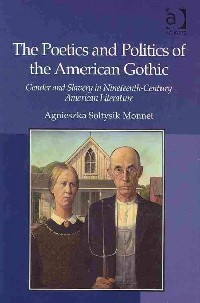
Taking as its point of departure recent insights about the performative nature of genre, The Poetics and Politics of the American Gothic challenges the critical tendency to accept at face value that gothic literature is mainly about fear. Instead, Agnieszka Soltysik Monnet argues that the American Gothic, and gothic literature in general, is also about judgment: how to judge and what happens when judgment is confronted with situations that defy its limits.
Poe, Hawthorne, Melville, Gilman, and James all shared a concern with the political and ideological debates of their time, but tended to approach these debates indirectly. Thus, Monnet suggests, while slavery and race are not the explicit subject matter of antebellum works by Poe and Hawthorne, they nevertheless permeate it through suggestive analogies and tacit references. Similarly, Melville, Gilman, and James use the gothic to explore the categories of gender and sexuality that were being renegotiated during the latter half of the century. Focusing on "The Fall of the House of Usher," The Marble Faun, Pierre, The Turn of the Screw, and "The Yellow Wallpaper," Monnet brings to bear minor texts by the same authors that further enrich her innovative readings of these canonical works. At the same time, her study persuasively argues that the Gothic's endurance and ubiquity are in large part related to its being uniquely adapted to rehearse questions about judgment and justice that continue to fascinate and disturb.
Publisher Summary 2
While many critics have argued the American gothic literary genre is primarily about the pleasure of fear, Monnet (American literature, U. of Lausanne, Switzerland) suggests that American gothic is primarily about the pleasures of (often ambiguous) judgment. In other words, American gothic engages with the problems of judgment when there is the lack of a shared paradigm. Furthermore, this engagement with judgment is often simultaneously an indirect intervention into major political issues of the day. Having defined the genre thusly, Monnet engages with the works of canonical literary authors as American gothic, partly in order to demonstrate the value of bringing genre studies to bear on well known and often studied works. She discusses the ways Edgar Allan Poe's short stories demonstrate his interest in ethical issues, particularly focusing on the "The Fall of the House of Usher" as resonant of anxieties about slave revolt. She reads Nathaniel Hawthorne's The Marble Faun as concerned with the ethical crisis posed by slavery wherein the physical movement of a dark travel narrative becomes a trope for the operations of denial. Herman Melville's Pierre is read as "a masterpiece of epistemological and moral skepticism," an exploration of "the nexus of shame, secrecy, and epistemological issues related to socially prohibited forms of desire," and one of America's earliest queer texts. Finally, she compares Henry James's The Turn of the Screw to Charlotte Perkins Gilman's "The Yellow Wall-Paper" through explorations of issues of female madness and queer complicities. Annotation 漏2010 Book News, Inc., Portland, OR (booknews.com)
目录
Table Of Contents:
List of Figures vii
Acknowledgements ix
Introduction 1(30)
1 Unreliable Narrators and "unnatural sensations": Irony and Consciencein Edgar Allan Poe 31(24)
2 "Everywhere... a Cross---and nastiness at the foot of it": History, Ethics, and Slavery in Nathaniel Hawthorne's The Marble Faun 55(24)
3 "Thy catching noblenessunsexes me, my brother": Queer Knowledge in Herman Melville's Pierre 79(24)
4 "I was queer company enough---quite as queer as the company I received": The Queer Gothic of Henry James and Charlotte Perkins Gilman 103(36)
Bibliography 139(20)
Index 159
List of Figures vii
Acknowledgements ix
Introduction 1(30)
1 Unreliable Narrators and "unnatural sensations": Irony and Consciencein Edgar Allan Poe 31(24)
2 "Everywhere... a Cross---and nastiness at the foot of it": History, Ethics, and Slavery in Nathaniel Hawthorne's The Marble Faun 55(24)
3 "Thy catching noblenessunsexes me, my brother": Queer Knowledge in Herman Melville's Pierre 79(24)
4 "I was queer company enough---quite as queer as the company I received": The Queer Gothic of Henry James and Charlotte Perkins Gilman 103(36)
Bibliography 139(20)
Index 159
- 名称
- 类型
- 大小
光盘服务联系方式: 020-38250260 客服QQ:4006604884
云图客服:
用户发送的提问,这种方式就需要有位在线客服来回答用户的问题,这种 就属于对话式的,问题是这种提问是否需要用户登录才能提问
Video Player
×
Audio Player
×
pdf Player
×
