

简介
Summary:
Publisher Summary 1
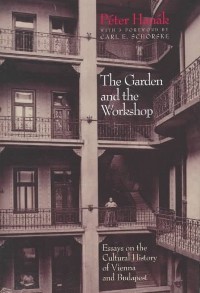
A century ago, Vienna and Budapest were the capital cities of the western and eastern halves of the increasingly unstable Austro-Hungarian empire and scenes of intense cultural activity. Vienna was home to such figures as Sigmund Freud, Gustav Klimt, and Hugo von Hofmannsthal; Budapest produced such luminaries as Bela Bartok, Georg Lukács, and Michael and Karl Polanyi. However, as Peter Hanák shows in these vignettes of Fin-de-Siecle life, the intellectual and artistic vibrancy common to the two cities emerged from deeply different civic cultures.Hanák surveys the urban development of the two cities and reviews the effects of modernization on various aspects of their cultures. He examines the process of physical change, as rapid population growth, industrialization, and the rising middle class ushered in a new age of tenements, suburbs, and town planning. He investigates how death and its rituals--once the domain of church, family, and local community--were transformed by the commercialization of burials and the growing bureaucratic control of graveyards. He explores the mentality of common soldiers and their families--mostly of peasant origin--during World War I, detecting in letters to and from the front a shift toward a revolutionary mood among Hungarians in particular. He presents snapshots of such subjects as the mentality of the nobility, operettas and musical life, and attitudes toward Germans and Jews, and also reveals the striking relationship between social marginality and cultural creativity.In comparing the two cities, Hanák notes that Vienna, famed for its spacious parks and gardens, was often characterized as a "garden" of esoteric culture. Budapest, however, was a dense city surrounded by factories, whose cultural leaders referred to the offices and cafes where they met as "workshops." These differences were reflected, he argues, in the contrast between Vienna's aesthetic and individualistic culture and Budapest's more moralistic and socially engaged approach. Like Carl Schorske's famous Fin-de-Siecle Vienna, Hanák's book paints a remarkable portrait of turn-of-the-century life in Central Europe. Its particular focus on mass culture and everyday life offers important new insights into cultural currents that shaped the course of the twentieth century.
目录
List of Illustrations p. vii
Foreword Carl E. Schorske p. ix
Acknowledgments p. xiii
Introductory Reflections on Cultural History p. xv
Chapter 1 Urbanization and Civilization: Vienna and Budapest in the Nineteenth Century p. 3
Chapter 2 The Image of the Germans and the Jews in the Hungarian Mirror of the Nineteenth Century p. 44
Chapter 3 The Garden and the Workshop: Reflections on Fin-de-Siecle Culture in Vienna and Budapest p. 63
Chapter 4 The Alienation of Death in Budapest and Vienna at the Turn of the Century p. 98
Chapter 5 The Start of Endre Ady's Literary Career (1903-1905) p. 110
Chapter 6 The Cultural Role of the Vienna-Budapest Operetta p. 135
Chapter 7 Social Marginality and Cultural Creativity in Vienna and Budapest (1890-1914) p. 147
Chapter 8 Vox Populi: Intercepted Letters in the First World War p. 179
Notes p. 213
Index p. 241
Foreword Carl E. Schorske p. ix
Acknowledgments p. xiii
Introductory Reflections on Cultural History p. xv
Chapter 1 Urbanization and Civilization: Vienna and Budapest in the Nineteenth Century p. 3
Chapter 2 The Image of the Germans and the Jews in the Hungarian Mirror of the Nineteenth Century p. 44
Chapter 3 The Garden and the Workshop: Reflections on Fin-de-Siecle Culture in Vienna and Budapest p. 63
Chapter 4 The Alienation of Death in Budapest and Vienna at the Turn of the Century p. 98
Chapter 5 The Start of Endre Ady's Literary Career (1903-1905) p. 110
Chapter 6 The Cultural Role of the Vienna-Budapest Operetta p. 135
Chapter 7 Social Marginality and Cultural Creativity in Vienna and Budapest (1890-1914) p. 147
Chapter 8 Vox Populi: Intercepted Letters in the First World War p. 179
Notes p. 213
Index p. 241
- 名称
- 类型
- 大小
光盘服务联系方式: 020-38250260 客服QQ:4006604884
云图客服:
用户发送的提问,这种方式就需要有位在线客服来回答用户的问题,这种 就属于对话式的,问题是这种提问是否需要用户登录才能提问
Video Player
×
Audio Player
×
pdf Player
×
