

简介
Summary:
Publisher Summary 1
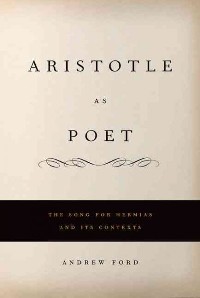
Aristotle is known as a philosopher and as a theorist of poetry, but he was also a composer of songs and verse. This is the first comprehensive study of Aristotle's poetic activity, interpreting his remaining fragments in relation to the earlier poetic tradition and to the literary culture of his time. Its centerpiece is a study of the single complete ode to survive, a song commemorating Hermias of Atarneus, Aristotle's father-in-law and patron in the 340's BCE. This remarkable text is said to have embroiled the philosopher in charges of impiety and so is studied both from a literary perspective and in its political and religious contexts.
Aristotle's literary antecedents are studied with an unprecedented fullness that considers the entire range of Greek poetic forms, including poems by Sappho, Pindar, and Sophocles, and prose texts as well. Apart from its interest as a complex and subtle poem, the Song for Hermias is noteworthy as one of the first Greek lyrics for which we have substantial and early evidence for how and where it was composed, performed, and received. It thus affords an opportunity to reconstruct how Greek lyric texts functioned as performance pieces and how they circulated and were preserved. The book argues that Greek lyric poems profit from being read as scripts for performances that both shaped and were shaped by the social occasions in which they were performed. The result is a thorough and wide-ranging study of a complex and fascinating literary document that gives a fuller view of literature in the late classical age.
目录
Cover 1
Contents 8
Abbreviations 20
1. The Text 22
Aristotle: The Song for Hermias 22
Sources and First Reading 24
2. History and Context 30
Deconstructing Atarneus: Questions of Method 31
Constructing Hermias: The Erythraean Inscription 38
The End of Hermias: Theopompus\u2019s Letter to Philip 42
3. Performance and Occasion 48
Commemorative Epigrams: Aristotle and Simonides 50
Book Epigrams: Theocritus of Chios 56
Texts and Things: Herodotus on Hermotimus 62
4. Performance and Context 66
Witnesses: Callisthenes\u2019 Hermias 69
Sources: Hermippus\u2019s On Aristotle 75
Authenticity: \u201cAristotle\u2019s\u201d Apology 81
5. Genres of Poetry 90
Lyric Genres from Plato to Alexandria 92
Impious Song: The Paean to Lysander 101
Paean, Hymn, Skolion? 107
6. Kinds of Hymn 112
Hymnic Form: Ariphron\u2019s Paean to Health 112
Hymnic Flexibility: Pindar\u2019s Fourteenth Olympic Ode 118
Hymns in Hexameters: \u201cHomer\u201d and Aristotle 126
7. Ethos 134
Ethos in Debate: An Attic Skolion and a Poem by Sappho 135
Ethos in Protreptic: Aristotle\u2019s Hymn to Hermias, vv. 1\u20138 142
Ethos in Epiphany: Immortal Virtue in Sophocles\u2019 Philoctetes 148
8. Reading 158
Troping: (omitted) in Euripides and Bacchylides 159
Mythologizing: Hymn to Hermias, vv. 9\u201316 165
Immortalizing: Hymn to Hermias, vv. 17\u201321 168
9. Endurance 178
Memorial: Aristotle\u2019s Elegiacs to Eudemus 181
Survival: A Letter from Plato 187
NOTES 194
BIBLIOGRAPHY 238
GENERAL INDEX 254
A 254
B 255
C 255
D 255
E 255
F 256
G 256
H 256
I 257
K 257
L 257
M 257
N 257
P 257
R 258
S 258
T 258
U 258
V 259
W 259
X 259
Z 259
INDEX OF PASSAGES DISCUSSED 260
A 260
B 261
C 261
D 261
E 262
G 262
H 262
I 263
L 263
M 263
P 263
S 264
T 264
X 264
Contents 8
Abbreviations 20
1. The Text 22
Aristotle: The Song for Hermias 22
Sources and First Reading 24
2. History and Context 30
Deconstructing Atarneus: Questions of Method 31
Constructing Hermias: The Erythraean Inscription 38
The End of Hermias: Theopompus\u2019s Letter to Philip 42
3. Performance and Occasion 48
Commemorative Epigrams: Aristotle and Simonides 50
Book Epigrams: Theocritus of Chios 56
Texts and Things: Herodotus on Hermotimus 62
4. Performance and Context 66
Witnesses: Callisthenes\u2019 Hermias 69
Sources: Hermippus\u2019s On Aristotle 75
Authenticity: \u201cAristotle\u2019s\u201d Apology 81
5. Genres of Poetry 90
Lyric Genres from Plato to Alexandria 92
Impious Song: The Paean to Lysander 101
Paean, Hymn, Skolion? 107
6. Kinds of Hymn 112
Hymnic Form: Ariphron\u2019s Paean to Health 112
Hymnic Flexibility: Pindar\u2019s Fourteenth Olympic Ode 118
Hymns in Hexameters: \u201cHomer\u201d and Aristotle 126
7. Ethos 134
Ethos in Debate: An Attic Skolion and a Poem by Sappho 135
Ethos in Protreptic: Aristotle\u2019s Hymn to Hermias, vv. 1\u20138 142
Ethos in Epiphany: Immortal Virtue in Sophocles\u2019 Philoctetes 148
8. Reading 158
Troping: (omitted) in Euripides and Bacchylides 159
Mythologizing: Hymn to Hermias, vv. 9\u201316 165
Immortalizing: Hymn to Hermias, vv. 17\u201321 168
9. Endurance 178
Memorial: Aristotle\u2019s Elegiacs to Eudemus 181
Survival: A Letter from Plato 187
NOTES 194
BIBLIOGRAPHY 238
GENERAL INDEX 254
A 254
B 255
C 255
D 255
E 255
F 256
G 256
H 256
I 257
K 257
L 257
M 257
N 257
P 257
R 258
S 258
T 258
U 258
V 259
W 259
X 259
Z 259
INDEX OF PASSAGES DISCUSSED 260
A 260
B 261
C 261
D 261
E 262
G 262
H 262
I 263
L 263
M 263
P 263
S 264
T 264
X 264
- 名称
- 类型
- 大小
光盘服务联系方式: 020-38250260 客服QQ:4006604884
云图客服:
用户发送的提问,这种方式就需要有位在线客服来回答用户的问题,这种 就属于对话式的,问题是这种提问是否需要用户登录才能提问
Video Player
×
Audio Player
×
pdf Player
×
