

简介
Summary:
Publisher Summary 1
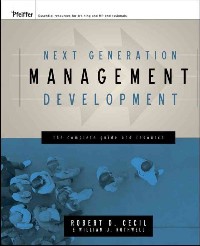
This resource for trainers and program developers provides all of the materials necessary to conduct an integrated management development and organization development (MD/OD) program. Each of seven modules consists of a set of training sessions, followed by recommendations for conducting post-training discussions and team-building exercises. The Mac- and Windows-compatible CD-ROM contains worksheets, a course syllabus, study guides, and other tools. Cecil developed the management training series upon which the book is based. Rothwell (The Pennsylvania State U.) is the author of some 60 books on workplace learning and performance. Annotation 漏2007 Book News, Inc., Portland, OR (booknews.com)
Publisher Summary 2
This innovative, comprehensive, and fully integrated management development program provides a vehicle for enabling managers and leaders to participate more effectively in their organization's OD processes. The concepts, models, tools, and other materials have been used successfully to train managers, leaders, and MD/OD personnel in organizations such as IBM, AT&T, Kraft, Baxter Labs, Sears, Caterpiller, and the U.S. Navy, Army, and Air Force. The accompanying CD-ROM contains customizable tools for OD consultants and facilitators as well as additional chapter material.
目录
Figures and Tables p. xvii
CD-ROM Contents p. xxiii
About the Authors p. xxvii
Introduction p. 1
Unfulfilled Needs of Organizations p. 2
Basic Description of the Book and Its Purposes p. 8
Benefits of This Book for Professional and Student Audiences p. 10
How All Readers Can Get the Most from This Book and Its CD-ROM p. 12
Preview of the Book's Next Generation MD/OD Project p. 17
Introduction p. 17
Description of an Integrated MD/OD Project p. 19
Recommendations on Designing a Highly Effective MD/OD Project p. 23
Concluding Remarks p. 29
Management (Integrative) Functions and Processes p. 31
Initial Perspectives on Management Functions and Processes p. 33
Introduction p. 33
The Basics p. 34
The Think-Work Functions p. 35
The Implementation Functions p. 37
Beyond the Basics p. 37
Fresh Perspectives on the Managerial (Integrative) Process p. 37
Additional Perspectives on Management and Management Processes p. 41
Basic Obstacles to Effective Think-Work p. 42
Concluding Remarks p. 43
The Analysis Phase p. 44
Introduction p. 44
The Basics p. 45
Definitions p. 45
Basic Analytic Steps p. 46
Four Major Reasons for Thoroughly Analyzing a Situation p. 46
Basic Rules for Effectively Analyzing a Situation p. 47
Beyond the Basics p. 50
Human Limitations and How to Compensate for Them p. 50
Analytic and Knowledge Management Tools p. 55
Concluding Remarks p. 63
Planning Phase Functions p. 64
Introduction p. 64
The Planning Phase in General p. 66
Goal Setting p. 81
Planning p. 91
Budgeting p. 94
Concluding Remarks p. 102
Decision Making p. 103
Introduction p. 103
The Basics p. 104
Definition p. 104
Purposes and Benefits of a Decision-Making Process p. 105
Description of the Decision-Making Process p. 105
Basic Types of Decision-Making Situations p. 105
Types of Decision-Making Situations Based on the Number of Alternatives That Can Be Chosen p. 107
Beyond the Basics p. 108
Visualization Tools for Better Decision Making p. 108
Basic Phenomena That Underlie Ineffective Decision Making p. 113
Common Pitfalls and How to Address Them p. 114
Concluding Remarks p. 120
Implementation Functions of Management p. 121
Introduction p. 121
Organizing p. 123
Staffing p. 135
Guiding Planned Activities p. 138
Controlling p. 138
Concluding Remarks p. 141
Managing Time p. 142
Introduction p. 142
The Basics on Wasted Time p. 145
Symptoms of Wasting Time (Ring D) p. 145
Cycle-Perpetuating Results: Emotional and Physical Stress (Ring E) p. 146
Ways That Many People Waste Time (Ring C) p. 146
Beyond the Basics p. 148
Major Causes of Wasted Time (Ring B) p. 148
The Real, Underlying Causes of Wasted Time (Ring A) p. 151
The Analytic Approach to Managing Time p. 153
Concluding Remarks p. 153
Recommendations for Conducting the Superior-Subordinates Discussion, OD Application, and Team-Building Sessions Following the Training Portion of Module 1 p. 157
Individual, Organizational, and Managerial Behavior and Development p. 161
Managerial and Leadership Styles p. 165
Introduction p. 165
The Basics of Motivation p. 167
Maslow's Hierarchy of Needs p. 167
Herzberg's Hygiene (Maintenance) and Motivator Factors p. 167
Factors' Effectiveness p. 170
Basic Frameworks for Understanding Managerial and Leadership Styles p. 171
McGregor's Theory X and Theory Y Styles p. 173
Three Additional Managerial Styles p. 177
Tannnenbaum and Schmidt's Continuum of Management Styles p. 180
Likert's Four Management Systems p. 180
The Ohio State Studies' Grid Framework p. 183
Blake and Mouton's Grid Concept p. 184
Miles's Human Resources Approach to Management p. 185
Situational (Contingency) Theories p. 189
Ouchi's Theory Z p. 192
Concluding Remarks p. 193
Major Nonpersonal Influences on Managerial Behavior p. 195
Introduction p. 195
The Socio-Technical Context p. 197
Task-Related or Technological Variables p. 198
Organizational Factors p. 202
Social Factors p. 206
External Forces and Factors p. 208
Subordinates' Individual Characteristics and Behavior p. 210
Concluding Remarks p. 211
Personal Influences on Managerial Behavior p. 212
Introduction p. 212
Concepts Underlying The Managerial Target p. 215
The Managerial Target p. 218
High Task, Low People (HT,LP), Theory X, Authoritarian, or 9,1 Tendencies p. 233
High Task, High People (HT,HP), Theory Y, Participative, Team, or 9,9 Tendencies p. 238
Determining What The Managerial Target Indicates About an Individual's Overall Level of Managerial or Leadership Effectiveness p. 243
Perspectives on the Usefulness of The Managerial Target p. 247
Concluding Remarks p. 250
Unifying "One Best Style" and Contingency or Situational Theories p. 253
Introduction p. 253
Summary of the Case for One Best Style p. 254
Situationalism p. 256
Two Tracks to One: Combining Both Theories into a Single, Synthesized Perspective p. 260
The Developmental and Participative Aspects of a High Task, High People Approach p. 261
Concluding Remarks p. 264
Summary of Socio-Technical Influences and the Implications for a Synergistic MD/OD Project p. 265
Introduction p. 265
Additional Contexts for Organization Development p. 268
Review of MD/OD Program Phases in Terms of Three Major Illustrations p. 271
Review of Basic Educational Considerations in Designing an Integrated MD/OD Program p. 272
Two Socio-Technical Considerations in Designing an Integrated MD/OD Program p. 273
Concluding Remarks p. 275
Recommendations for Conducting the Superior-Subordinates Discussion, OD Application, and Team-Building Sessions Following the Training Portion of Module 2 p. 276
Individual Problem Solving and Decision Making p. 281
Improving Individual Problem Solving and Decision Making p. 285
Introduction p. 285
The Basics p. 286
Types of Problem-Solving Situations p. 287
Approaches to Problem Solving That Are Less Effective Than the Analytic Approach p. 288
Phases and Steps of the Analytic Approach p. 289
Beyond the Basics p. 295
Problem-Solving Styles and Orientations p. 295
Factor-Related Ways to Improve Problem-Solving Effectiveness p. 295
Concluding Remarks p. 304
Recommendations for Conducting Superior-Subordinates Discussion, OD Application, and Team-Building Sessions Following the Training Portion of Module 3 p. 305
Interpersonal Relations and Skills p. 309
Perspectives on Interpersonal Relations p. 311
Introduction p. 311
Basic Personal Characteristics That Influence or Relate to Interpersonal Behavior p. 313
The Initiation, Development, and Maintenance Phases of Relationships p. 328
Interpersonal Styles on The Interpersonal Target p. 333
Behavior in Social Groups p. 339
Interpersonal Conflicts: Symptoms, Types, Sources, and Resolution p. 344
Concluding Remarks p. 350
Effective Communication p. 351
Introduction p. 351
The Basics p. 353
Definition and Objectives, and Modes of Communication p. 353
Basic Sender and Receiver Inputs to the Communication Process p. 353
Nonpersonal Socio-Technical Influences on the Communication Process p. 355
Basic Symptoms of Faulty Communication p. 355
Senders' and Receivers' Responsibilities for Effective and Ineffective Communication p. 358
Beyond the Basics p. 359
Communication Styles p. 359
Phases and Steps of an Analytic Approach to Communication p. 359
Advance and Ongoing Activities for Continually Improving Communication Processes p. 363
Concluding Remarks p. 363
Recommendations for Conducting Superior-Subordinates Discussion, OD Application, and Team-Building Sessions Following the Training Portion of Module 4 p. 367
Team Think-Work in Organizations p. 371
Guiding and Participating in Team Think-Work Processes p. 373
Introduction p. 373
The Basics p. 375
Definitions p. 375
Advantages of Individual Think-Work Processes (Disadvantages of Group Processes) p. 376
Advantages of Group Think-Work Processes (Disadvantages of Individual Processes) p. 378
Major Issues: Quality Versus Acceptance p. 380
Conclusions About Individual and Group Think-Work Processes p. 381
Symptoms of Faulty Team-Think Processes p. 381
Beyond the Basics p. 387
Managers' Team-Think Styles p. 387
Advance and Ongoing Activities for Continually Improving Team Think-Work Effectiveness p. 387
Concluding Remarks p. 387
Recommendations for Conducting Superior-Subordinates Discussion, OD Application, and Team-Building Sessions Following the Training Portion of Module 5 p. 390
Learning and Other Managerial and Personal Skills p. 393
Better Individual and Organizational Learning p. 395
Introduction p. 395
The Basics p. 397
Factors That Influence Learning p. 397
Modes of Learning p. 402
Methods of Learning p. 405
Phases, Steps, and Practices of a Structured Analytic Approach to Learning p. 407
Skill Development p. 407
Beyond the Basics p. 413
Learning Styles and Orientations p. 413
The Planning Aspects of Learning p. 413
The Learning Organization and Systems Thinking p. 414
Action Learning p. 415
Appreciative Inquiry p. 416
Reservations and Recommendations p. 416
Concluding Remarks p. 421
Recommendations for Conducting Superior-Subordinates Discussion, OD Application, and Team-Building Sessions Following the Training Portion of Module 6 p. 423
Summary and Synthesis of Concepts, Processes, Models, and Practices p. 427
The Unified Practice of Management Model and Its Implications for Developing More Effective Organizations p. 429
Introduction p. 429
The Unified Practice of Management Model: Integrated Processes and Models p. 431
The Unified Practice of Management Model: Management Gurus p. 443
Concluding Remarks p. 444
Recommendations for Conducting Superior-Subordinates Discussion, OD Application, and Team-Building Sessions Following the Training Portion of Module 7 p. 445
Basic Descriptions of Major Management Gurus' Concepts p. 449
References p. 461
Index p. 473
How to Use the CD-ROM p. 487
CD-ROM Contents p. xxiii
About the Authors p. xxvii
Introduction p. 1
Unfulfilled Needs of Organizations p. 2
Basic Description of the Book and Its Purposes p. 8
Benefits of This Book for Professional and Student Audiences p. 10
How All Readers Can Get the Most from This Book and Its CD-ROM p. 12
Preview of the Book's Next Generation MD/OD Project p. 17
Introduction p. 17
Description of an Integrated MD/OD Project p. 19
Recommendations on Designing a Highly Effective MD/OD Project p. 23
Concluding Remarks p. 29
Management (Integrative) Functions and Processes p. 31
Initial Perspectives on Management Functions and Processes p. 33
Introduction p. 33
The Basics p. 34
The Think-Work Functions p. 35
The Implementation Functions p. 37
Beyond the Basics p. 37
Fresh Perspectives on the Managerial (Integrative) Process p. 37
Additional Perspectives on Management and Management Processes p. 41
Basic Obstacles to Effective Think-Work p. 42
Concluding Remarks p. 43
The Analysis Phase p. 44
Introduction p. 44
The Basics p. 45
Definitions p. 45
Basic Analytic Steps p. 46
Four Major Reasons for Thoroughly Analyzing a Situation p. 46
Basic Rules for Effectively Analyzing a Situation p. 47
Beyond the Basics p. 50
Human Limitations and How to Compensate for Them p. 50
Analytic and Knowledge Management Tools p. 55
Concluding Remarks p. 63
Planning Phase Functions p. 64
Introduction p. 64
The Planning Phase in General p. 66
Goal Setting p. 81
Planning p. 91
Budgeting p. 94
Concluding Remarks p. 102
Decision Making p. 103
Introduction p. 103
The Basics p. 104
Definition p. 104
Purposes and Benefits of a Decision-Making Process p. 105
Description of the Decision-Making Process p. 105
Basic Types of Decision-Making Situations p. 105
Types of Decision-Making Situations Based on the Number of Alternatives That Can Be Chosen p. 107
Beyond the Basics p. 108
Visualization Tools for Better Decision Making p. 108
Basic Phenomena That Underlie Ineffective Decision Making p. 113
Common Pitfalls and How to Address Them p. 114
Concluding Remarks p. 120
Implementation Functions of Management p. 121
Introduction p. 121
Organizing p. 123
Staffing p. 135
Guiding Planned Activities p. 138
Controlling p. 138
Concluding Remarks p. 141
Managing Time p. 142
Introduction p. 142
The Basics on Wasted Time p. 145
Symptoms of Wasting Time (Ring D) p. 145
Cycle-Perpetuating Results: Emotional and Physical Stress (Ring E) p. 146
Ways That Many People Waste Time (Ring C) p. 146
Beyond the Basics p. 148
Major Causes of Wasted Time (Ring B) p. 148
The Real, Underlying Causes of Wasted Time (Ring A) p. 151
The Analytic Approach to Managing Time p. 153
Concluding Remarks p. 153
Recommendations for Conducting the Superior-Subordinates Discussion, OD Application, and Team-Building Sessions Following the Training Portion of Module 1 p. 157
Individual, Organizational, and Managerial Behavior and Development p. 161
Managerial and Leadership Styles p. 165
Introduction p. 165
The Basics of Motivation p. 167
Maslow's Hierarchy of Needs p. 167
Herzberg's Hygiene (Maintenance) and Motivator Factors p. 167
Factors' Effectiveness p. 170
Basic Frameworks for Understanding Managerial and Leadership Styles p. 171
McGregor's Theory X and Theory Y Styles p. 173
Three Additional Managerial Styles p. 177
Tannnenbaum and Schmidt's Continuum of Management Styles p. 180
Likert's Four Management Systems p. 180
The Ohio State Studies' Grid Framework p. 183
Blake and Mouton's Grid Concept p. 184
Miles's Human Resources Approach to Management p. 185
Situational (Contingency) Theories p. 189
Ouchi's Theory Z p. 192
Concluding Remarks p. 193
Major Nonpersonal Influences on Managerial Behavior p. 195
Introduction p. 195
The Socio-Technical Context p. 197
Task-Related or Technological Variables p. 198
Organizational Factors p. 202
Social Factors p. 206
External Forces and Factors p. 208
Subordinates' Individual Characteristics and Behavior p. 210
Concluding Remarks p. 211
Personal Influences on Managerial Behavior p. 212
Introduction p. 212
Concepts Underlying The Managerial Target p. 215
The Managerial Target p. 218
High Task, Low People (HT,LP), Theory X, Authoritarian, or 9,1 Tendencies p. 233
High Task, High People (HT,HP), Theory Y, Participative, Team, or 9,9 Tendencies p. 238
Determining What The Managerial Target Indicates About an Individual's Overall Level of Managerial or Leadership Effectiveness p. 243
Perspectives on the Usefulness of The Managerial Target p. 247
Concluding Remarks p. 250
Unifying "One Best Style" and Contingency or Situational Theories p. 253
Introduction p. 253
Summary of the Case for One Best Style p. 254
Situationalism p. 256
Two Tracks to One: Combining Both Theories into a Single, Synthesized Perspective p. 260
The Developmental and Participative Aspects of a High Task, High People Approach p. 261
Concluding Remarks p. 264
Summary of Socio-Technical Influences and the Implications for a Synergistic MD/OD Project p. 265
Introduction p. 265
Additional Contexts for Organization Development p. 268
Review of MD/OD Program Phases in Terms of Three Major Illustrations p. 271
Review of Basic Educational Considerations in Designing an Integrated MD/OD Program p. 272
Two Socio-Technical Considerations in Designing an Integrated MD/OD Program p. 273
Concluding Remarks p. 275
Recommendations for Conducting the Superior-Subordinates Discussion, OD Application, and Team-Building Sessions Following the Training Portion of Module 2 p. 276
Individual Problem Solving and Decision Making p. 281
Improving Individual Problem Solving and Decision Making p. 285
Introduction p. 285
The Basics p. 286
Types of Problem-Solving Situations p. 287
Approaches to Problem Solving That Are Less Effective Than the Analytic Approach p. 288
Phases and Steps of the Analytic Approach p. 289
Beyond the Basics p. 295
Problem-Solving Styles and Orientations p. 295
Factor-Related Ways to Improve Problem-Solving Effectiveness p. 295
Concluding Remarks p. 304
Recommendations for Conducting Superior-Subordinates Discussion, OD Application, and Team-Building Sessions Following the Training Portion of Module 3 p. 305
Interpersonal Relations and Skills p. 309
Perspectives on Interpersonal Relations p. 311
Introduction p. 311
Basic Personal Characteristics That Influence or Relate to Interpersonal Behavior p. 313
The Initiation, Development, and Maintenance Phases of Relationships p. 328
Interpersonal Styles on The Interpersonal Target p. 333
Behavior in Social Groups p. 339
Interpersonal Conflicts: Symptoms, Types, Sources, and Resolution p. 344
Concluding Remarks p. 350
Effective Communication p. 351
Introduction p. 351
The Basics p. 353
Definition and Objectives, and Modes of Communication p. 353
Basic Sender and Receiver Inputs to the Communication Process p. 353
Nonpersonal Socio-Technical Influences on the Communication Process p. 355
Basic Symptoms of Faulty Communication p. 355
Senders' and Receivers' Responsibilities for Effective and Ineffective Communication p. 358
Beyond the Basics p. 359
Communication Styles p. 359
Phases and Steps of an Analytic Approach to Communication p. 359
Advance and Ongoing Activities for Continually Improving Communication Processes p. 363
Concluding Remarks p. 363
Recommendations for Conducting Superior-Subordinates Discussion, OD Application, and Team-Building Sessions Following the Training Portion of Module 4 p. 367
Team Think-Work in Organizations p. 371
Guiding and Participating in Team Think-Work Processes p. 373
Introduction p. 373
The Basics p. 375
Definitions p. 375
Advantages of Individual Think-Work Processes (Disadvantages of Group Processes) p. 376
Advantages of Group Think-Work Processes (Disadvantages of Individual Processes) p. 378
Major Issues: Quality Versus Acceptance p. 380
Conclusions About Individual and Group Think-Work Processes p. 381
Symptoms of Faulty Team-Think Processes p. 381
Beyond the Basics p. 387
Managers' Team-Think Styles p. 387
Advance and Ongoing Activities for Continually Improving Team Think-Work Effectiveness p. 387
Concluding Remarks p. 387
Recommendations for Conducting Superior-Subordinates Discussion, OD Application, and Team-Building Sessions Following the Training Portion of Module 5 p. 390
Learning and Other Managerial and Personal Skills p. 393
Better Individual and Organizational Learning p. 395
Introduction p. 395
The Basics p. 397
Factors That Influence Learning p. 397
Modes of Learning p. 402
Methods of Learning p. 405
Phases, Steps, and Practices of a Structured Analytic Approach to Learning p. 407
Skill Development p. 407
Beyond the Basics p. 413
Learning Styles and Orientations p. 413
The Planning Aspects of Learning p. 413
The Learning Organization and Systems Thinking p. 414
Action Learning p. 415
Appreciative Inquiry p. 416
Reservations and Recommendations p. 416
Concluding Remarks p. 421
Recommendations for Conducting Superior-Subordinates Discussion, OD Application, and Team-Building Sessions Following the Training Portion of Module 6 p. 423
Summary and Synthesis of Concepts, Processes, Models, and Practices p. 427
The Unified Practice of Management Model and Its Implications for Developing More Effective Organizations p. 429
Introduction p. 429
The Unified Practice of Management Model: Integrated Processes and Models p. 431
The Unified Practice of Management Model: Management Gurus p. 443
Concluding Remarks p. 444
Recommendations for Conducting Superior-Subordinates Discussion, OD Application, and Team-Building Sessions Following the Training Portion of Module 7 p. 445
Basic Descriptions of Major Management Gurus' Concepts p. 449
References p. 461
Index p. 473
How to Use the CD-ROM p. 487
- 名称
- 类型
- 大小
光盘服务联系方式: 020-38250260 客服QQ:4006604884
云图客服:
用户发送的提问,这种方式就需要有位在线客服来回答用户的问题,这种 就属于对话式的,问题是这种提问是否需要用户登录才能提问
Video Player
×
Audio Player
×
pdf Player
×
亲爱的云图用户,
光盘内的文件都可以直接点击浏览哦
无需下载,在线查阅资料!
