

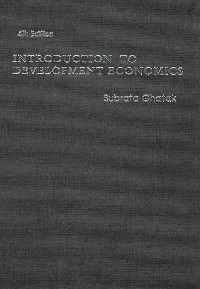
简介
Charged with analyzing and criticizing the way economies develop and grow, development economists play a vital role in attempting to reduce inequality across the world. The fourth edition of this classic textbook introduces students to this vital field. All of the popular aspects of earlier editions are retained with new additions such as the introduction of endogenous growth theory. The book also includes the very latest World Bank development data. With vastly improved and updated pedagogical features such as new topical case studies and questions for discussion, Subrata Ghatak introduces what can be a difficult topic with a welcome clarity.
目录
Table Of Contents:
Preface to the fourth edition xi
Preface to the third edition xii
Preface to the second edition xiii
Preface to the first edition xiv
Acknowledgements xvi
Introduction 1(34)
Introduction 1(1)
Characteristics of the less developed countries 1(19)
Types of markets in less developed countries 20(1)
Production conditions in less developed countries 20(3)
Growth and development 23(3)
Human development index 26(9)
Appendix 1.1 Measurement of income inequality 28(2)
Appendix 1.2 A note on production functions 30(5)
PART I The economic theory of growth and development 35(62)
Growth Theories and Their Relevance to Less Developed Countries 37(42)
Introduction 37(1)
Classical scenario 37(2)
The Keynesian theory and less developed countries 39(3)
The Harrod--Domar model and its applications 42(1)
The neoclassical theory and less developed countries 43(4)
Marx's theory and less developed countries 47(5)
The Kaldor--Mirrlees model 52(3)
The neoclassical growth accounting formula and the new endogenous growth theory 55(5)
Differences in economic growth 60(19)
Appendix 2.1 The basic equations of the neoclassical economic growth model 71(2)
Appendix 2.2 Endogenous growth models 73(6)
Dual Economy Models 79(18)
Introduction 79(1)
The `surplus' labour and its contribution to development 79(4)
The Fei--Ranis model 83(4)
The Jorgenson model 87(3)
Some extensions of the dual economy models: the Dixit--Marglin model 90(1)
The Kelly et al. model 91(1)
Dual economy models: a critique 91(6)
Appendix 3.1 Employment and growth 94(3)
Part II Investment, saving, foreign resources and industrialization in less developed countries 97(130)
Allocation of Resources: Investment Criteria 99(16)
The need for investment criteria in less developed countries 99(1)
The capital turnover criterion 100(1)
The social marginal productivity criterion 101(1)
The maximization of the rate of creation of investible surplus principle 101(2)
The reinvestible surplus criterion 103(6)
Balanced and unbalanced growth 109(6)
Appendix 4.1 The dichotomy between savings and output maximization and its solution 112(3)
Domestic Resources for Development 115(31)
Introduction 115(1)
The nature of money markets in less developed countries 115(1)
Money and economic growth 116(1)
Inflation and economic growth 117(7)
Financial liberalization in LDCs: causes and consequences 124(2)
Objectives of fiscal policy in less developed countries 126(1)
Fiscal policy and growth 127(4)
Deficit financing and less developed countries 131(1)
The tax structure in less developed countries 132(6)
Taxation and domestic resource mobilization in less developed countries: the evidence 138(2)
Tax reforms in less developed countries in the 1980s 140(1)
Budgetary deficits and Ricardian equivalence: the case of India 141(5)
Foreign Resources and Economic Development 146(44)
Introduction 146(1)
The concept of foreign resources 146(1)
Criteria for distribution of foreign resources 147(3)
Different types of foreign resource 150(4)
Dual-gap analysis and its evaluation 154(3)
Gains and losses of investment by multinational corporations in less developed countries: some theoretical issues 157(5)
Private foreign investment and the transfer of technology to less developed countries 162(8)
Special drawing rights and the `link' 170(6)
Foreign aid and economic growth 176(14)
Appendix 6.1 Less developed countries and world trade 180(10)
Industrialization, Protection and Trade Policies 190(37)
Major reasons for industrialization in less developed countries 190(100)
The role of tariffs in economic development 290
The optimum tariff argument 191(2)
The infant industry argument 193(3)
Distortions in the factor markets 196(1)
The balance of payments argument 197(1)
The employment argument 197(1)
`Nominal' and `effective' rates of protection 198(5)
The `cost' of protection 203(2)
Economic growth and trade 205(1)
Terms of trade between developed countries and less developed countries 206(2)
Export instability and economic growth in less developed countries 208(2)
The role of the United Nations Conference on Trade and Development and some trade policies to help less developed countries 210(2)
Non-tariff barriers and the generalized system of preferences 212(1)
Regional co-operation among less developed countries 213(1)
Trade liberalization and industrialization 214(5)
The North--South models and intra-industry trade 219(1)
Conclusion 220(7)
Appendix 7.1 Indices of instability of exports 223(4)
Part III Sectoral development and planning 227(136)
Sectoral Allocation of Resources: Agriculture 229(17)
Introduction 229(1)
The role of agriculture in economic development 229(2)
The concept of `marketed surplus' 231(4)
A model to mobilize agricultural surplus 235(3)
Acreage response to prices 238(1)
Marketed surplus, size-holdings and output 238(6)
Limitations of price policy and some alternatives 244(1)
Conclusion 245(1)
Green Revolution and Income Distribution 246(25)
Introduction 246(1)
The nature of the Green Revolution 246(5)
Causes of the Green Revolution 251(4)
Effects of the Green Revolution on income: a simple theory 255(1)
Effects of the Green Revolution on relative factor shares 255(3)
Problems and prospects of the Green Revolution 258(2)
The basic needs approach 260(2)
Growth theory and basic needs 262(3)
A note on famines 265(6)
Population, Poverty, Income Distribution, Employment and Migration 271(40)
Population and economic development 271(2)
Population explosion in less developed countries and the theory of demographic transition 273(1)
Low-level equilibrium trap 274(1)
Fertility and population growth in less developed countries 275(6)
Poverty and income distribution 281(1)
Income inequality 281(3)
Absolute poverty 284(3)
Redistribution with growth 287(2)
The employment problem 289(2)
The Todaro model 291(5)
Migration theory and evidence: an assessment 296(2)
Stark's model 298(1)
Employment policy 299(1)
Poverty, inequality and financial development 300(11)
Appendix 10.1 The definition of a poverty line 304(2)
Appendix 10.2 Migration 306(1)
Appendix 10.3 Schultz's model of the household production approach to fertility 307(3)
Appendix 10.4 Poverty and nutrition 310(1)
Development Planning 311(40)
Concept of economic planning 311(1)
Types of planning 311(1)
Economic models and economic planning 312(1)
The case for and against planning 313(1)
Development planning models 314(2)
Application of the Harrod--Domar model in development planning: India's first five year plan 316(1)
A two-sector Harrod--Domar model for planning: the Kenyan case 317(1)
Feldman--Mahalanobis sectoral planning and the Indian second five year plan 318(2)
Macroeconometric models in development planning 320(2)
Input--output analysis in development planning 322(4)
Linear programming and development planning 326(5)
Micro-planning: aims of cost--benefit analysis 331(4)
The Little and Mirrlees method of project evaluation in less developed countries 335(5)
The United Nations Industrial Development Organization (1972) guidelines 340(3)
Social accounting and development planning 343(8)
Barbara M. Roberts
Appendix 11.1 The Feldman--Mahalanobis model 347(4)
Structural Adjustment and Development 351(12)
Structural adjustment and economic growth 351(1)
The structural adjustment and stabilization policies of the IMF 351(2)
Trade adjustment 353(1)
Structural adjustment, stabilization and trade policies 354(2)
Exchange rate and trade reforms 356(3)
Structural adjustment programmes: the experience of sub-Saharan African countries 359(2)
Conclusion 361(2)
Part IV A new deal in commodity trade? 363(53)
The New International Economic Order 365(13)
Introduction 365(1)
The evolution of the new international economic order 366(2)
The main objectives of a new international economic order 368(1)
The theory of commodity price stabilization: demand/supply shifts 369(2)
Commodity price stabilization: gains and losses 371(2)
Implications of international commodity agreements, buffer stocks and compensatory finances 373(2)
Conclusion 375(3)
The International Debt Crisis 378(20)
Nigel M. Healey
Introduction 378(1)
The evolving debt position of the developing world 378(3)
Why do developing countries become indebted? 381(1)
Sources of external finance 382(1)
Why do debt servicing problems arise? 383(1)
The external dimensions of the 1982 crisis 384(1)
Phase one: `muddling through' the debt crisis, 1982--9 385(6)
Phase two: debt forgiveness and the Brady Plan 391(7)
Environment and Development 398(18)
Introduction 398(1)
Deforestation and macroeconomic environment 399(2)
The `tragedy of the commons' 401(1)
Externalities, natural resource degradation and economic policies 402(4)
A case study: the importance of fuelwood in household energy consumption 406(6)
An alternative farming system: alley cropping in humid West African agriculture 412(1)
Conclusion 413(3)
Bibliography 416(36)
Index 452
Preface to the fourth edition xi
Preface to the third edition xii
Preface to the second edition xiii
Preface to the first edition xiv
Acknowledgements xvi
Introduction 1(34)
Introduction 1(1)
Characteristics of the less developed countries 1(19)
Types of markets in less developed countries 20(1)
Production conditions in less developed countries 20(3)
Growth and development 23(3)
Human development index 26(9)
Appendix 1.1 Measurement of income inequality 28(2)
Appendix 1.2 A note on production functions 30(5)
PART I The economic theory of growth and development 35(62)
Growth Theories and Their Relevance to Less Developed Countries 37(42)
Introduction 37(1)
Classical scenario 37(2)
The Keynesian theory and less developed countries 39(3)
The Harrod--Domar model and its applications 42(1)
The neoclassical theory and less developed countries 43(4)
Marx's theory and less developed countries 47(5)
The Kaldor--Mirrlees model 52(3)
The neoclassical growth accounting formula and the new endogenous growth theory 55(5)
Differences in economic growth 60(19)
Appendix 2.1 The basic equations of the neoclassical economic growth model 71(2)
Appendix 2.2 Endogenous growth models 73(6)
Dual Economy Models 79(18)
Introduction 79(1)
The `surplus' labour and its contribution to development 79(4)
The Fei--Ranis model 83(4)
The Jorgenson model 87(3)
Some extensions of the dual economy models: the Dixit--Marglin model 90(1)
The Kelly et al. model 91(1)
Dual economy models: a critique 91(6)
Appendix 3.1 Employment and growth 94(3)
Part II Investment, saving, foreign resources and industrialization in less developed countries 97(130)
Allocation of Resources: Investment Criteria 99(16)
The need for investment criteria in less developed countries 99(1)
The capital turnover criterion 100(1)
The social marginal productivity criterion 101(1)
The maximization of the rate of creation of investible surplus principle 101(2)
The reinvestible surplus criterion 103(6)
Balanced and unbalanced growth 109(6)
Appendix 4.1 The dichotomy between savings and output maximization and its solution 112(3)
Domestic Resources for Development 115(31)
Introduction 115(1)
The nature of money markets in less developed countries 115(1)
Money and economic growth 116(1)
Inflation and economic growth 117(7)
Financial liberalization in LDCs: causes and consequences 124(2)
Objectives of fiscal policy in less developed countries 126(1)
Fiscal policy and growth 127(4)
Deficit financing and less developed countries 131(1)
The tax structure in less developed countries 132(6)
Taxation and domestic resource mobilization in less developed countries: the evidence 138(2)
Tax reforms in less developed countries in the 1980s 140(1)
Budgetary deficits and Ricardian equivalence: the case of India 141(5)
Foreign Resources and Economic Development 146(44)
Introduction 146(1)
The concept of foreign resources 146(1)
Criteria for distribution of foreign resources 147(3)
Different types of foreign resource 150(4)
Dual-gap analysis and its evaluation 154(3)
Gains and losses of investment by multinational corporations in less developed countries: some theoretical issues 157(5)
Private foreign investment and the transfer of technology to less developed countries 162(8)
Special drawing rights and the `link' 170(6)
Foreign aid and economic growth 176(14)
Appendix 6.1 Less developed countries and world trade 180(10)
Industrialization, Protection and Trade Policies 190(37)
Major reasons for industrialization in less developed countries 190(100)
The role of tariffs in economic development 290
The optimum tariff argument 191(2)
The infant industry argument 193(3)
Distortions in the factor markets 196(1)
The balance of payments argument 197(1)
The employment argument 197(1)
`Nominal' and `effective' rates of protection 198(5)
The `cost' of protection 203(2)
Economic growth and trade 205(1)
Terms of trade between developed countries and less developed countries 206(2)
Export instability and economic growth in less developed countries 208(2)
The role of the United Nations Conference on Trade and Development and some trade policies to help less developed countries 210(2)
Non-tariff barriers and the generalized system of preferences 212(1)
Regional co-operation among less developed countries 213(1)
Trade liberalization and industrialization 214(5)
The North--South models and intra-industry trade 219(1)
Conclusion 220(7)
Appendix 7.1 Indices of instability of exports 223(4)
Part III Sectoral development and planning 227(136)
Sectoral Allocation of Resources: Agriculture 229(17)
Introduction 229(1)
The role of agriculture in economic development 229(2)
The concept of `marketed surplus' 231(4)
A model to mobilize agricultural surplus 235(3)
Acreage response to prices 238(1)
Marketed surplus, size-holdings and output 238(6)
Limitations of price policy and some alternatives 244(1)
Conclusion 245(1)
Green Revolution and Income Distribution 246(25)
Introduction 246(1)
The nature of the Green Revolution 246(5)
Causes of the Green Revolution 251(4)
Effects of the Green Revolution on income: a simple theory 255(1)
Effects of the Green Revolution on relative factor shares 255(3)
Problems and prospects of the Green Revolution 258(2)
The basic needs approach 260(2)
Growth theory and basic needs 262(3)
A note on famines 265(6)
Population, Poverty, Income Distribution, Employment and Migration 271(40)
Population and economic development 271(2)
Population explosion in less developed countries and the theory of demographic transition 273(1)
Low-level equilibrium trap 274(1)
Fertility and population growth in less developed countries 275(6)
Poverty and income distribution 281(1)
Income inequality 281(3)
Absolute poverty 284(3)
Redistribution with growth 287(2)
The employment problem 289(2)
The Todaro model 291(5)
Migration theory and evidence: an assessment 296(2)
Stark's model 298(1)
Employment policy 299(1)
Poverty, inequality and financial development 300(11)
Appendix 10.1 The definition of a poverty line 304(2)
Appendix 10.2 Migration 306(1)
Appendix 10.3 Schultz's model of the household production approach to fertility 307(3)
Appendix 10.4 Poverty and nutrition 310(1)
Development Planning 311(40)
Concept of economic planning 311(1)
Types of planning 311(1)
Economic models and economic planning 312(1)
The case for and against planning 313(1)
Development planning models 314(2)
Application of the Harrod--Domar model in development planning: India's first five year plan 316(1)
A two-sector Harrod--Domar model for planning: the Kenyan case 317(1)
Feldman--Mahalanobis sectoral planning and the Indian second five year plan 318(2)
Macroeconometric models in development planning 320(2)
Input--output analysis in development planning 322(4)
Linear programming and development planning 326(5)
Micro-planning: aims of cost--benefit analysis 331(4)
The Little and Mirrlees method of project evaluation in less developed countries 335(5)
The United Nations Industrial Development Organization (1972) guidelines 340(3)
Social accounting and development planning 343(8)
Barbara M. Roberts
Appendix 11.1 The Feldman--Mahalanobis model 347(4)
Structural Adjustment and Development 351(12)
Structural adjustment and economic growth 351(1)
The structural adjustment and stabilization policies of the IMF 351(2)
Trade adjustment 353(1)
Structural adjustment, stabilization and trade policies 354(2)
Exchange rate and trade reforms 356(3)
Structural adjustment programmes: the experience of sub-Saharan African countries 359(2)
Conclusion 361(2)
Part IV A new deal in commodity trade? 363(53)
The New International Economic Order 365(13)
Introduction 365(1)
The evolution of the new international economic order 366(2)
The main objectives of a new international economic order 368(1)
The theory of commodity price stabilization: demand/supply shifts 369(2)
Commodity price stabilization: gains and losses 371(2)
Implications of international commodity agreements, buffer stocks and compensatory finances 373(2)
Conclusion 375(3)
The International Debt Crisis 378(20)
Nigel M. Healey
Introduction 378(1)
The evolving debt position of the developing world 378(3)
Why do developing countries become indebted? 381(1)
Sources of external finance 382(1)
Why do debt servicing problems arise? 383(1)
The external dimensions of the 1982 crisis 384(1)
Phase one: `muddling through' the debt crisis, 1982--9 385(6)
Phase two: debt forgiveness and the Brady Plan 391(7)
Environment and Development 398(18)
Introduction 398(1)
Deforestation and macroeconomic environment 399(2)
The `tragedy of the commons' 401(1)
Externalities, natural resource degradation and economic policies 402(4)
A case study: the importance of fuelwood in household energy consumption 406(6)
An alternative farming system: alley cropping in humid West African agriculture 412(1)
Conclusion 413(3)
Bibliography 416(36)
Index 452
- 名称
- 类型
- 大小
光盘服务联系方式: 020-38250260 客服QQ:4006604884
云图客服:
用户发送的提问,这种方式就需要有位在线客服来回答用户的问题,这种 就属于对话式的,问题是这种提问是否需要用户登录才能提问
Video Player
×
Audio Player
×
pdf Player
×
