

简介
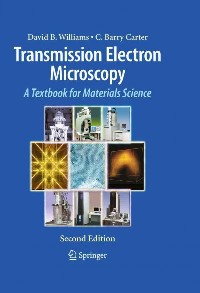
This groundbreaking text has been established as the market leader throughout the world. Now profusely illustrated with full color figures and diagrams throughout the text, Transmission Electron Microscopy: A Textbook for Materials Science, Second Edition, provides the necessary insight and guidance for successful hands-on application of this versatile and powerful materials characterization technique. For this first new edition in 12 years, many sections have been completely rewritten with all others revised and updated. The new edition also includes an extensive collection of questions for the student, providing approximately 800 for self-assessment and over 400 that are suitable for homework assignment. Key Features: Undisputed market leader, now completely revised and updated Ideal for use as a teaching text at the advanced undergraduate and graduate levels and as a hands-on reference for materials scientists Explains why a particular technique should be used and how a specific concept can be put into practice Nearly 700 figures and diagrams, most in full color Praise for the first edition: `The best textbook for this audience available.' 鈥?American Scientist "...highly readable, and an extremely valuable text for all users of the TEM at every level. Treat yourself to a copy!" 鈥?Microscopy and Microanalysis `This book is written in such a comprehensive manner that it is understandable to all people who are trained in physical science and it will be useful both for the expert as well as the student.' 鈥?Micron `The book answers nearly any question - be it instrumental, practical, or theoretical - either directly or with an appropriate reference...This book provides a basic, clear-cut presentation of how transmission electron microscopes should be used and of how this depends specifically on one's specific undergoing project.' 鈥?MRS Bulletin `The only complete text now available which includes all the remarkable advances made in the field of TEM in the past 30-40 years....The authors can be proud of an enormous task, very well done.' 鈥?from the Foreword by Professor Gareth Thomas, University of California, Berkeley
目录
About the Authors 5
Preface 8
Foreword to First Edition 10
Foreword to Second Edition 11
Acknowledgments 14
List of Initials and Acronyms 16
List of Symbols 19
About the Companion Volume 25
Contents 26
Figure Credits 42
Part 1 Basics 56
1 The Transmission Electron Microscope 57
2 Scattering and Diffraction 77
3 Elastic Scattering 93
4 Inelastic Scattering and Beam Damage 106
5 Electron Sources 125
6 Lenses, Apertures, and Resolution 142
7 How to \u2018See\u2019 Electrons 166
8 Pumps and Holders 178
9 The Instrument 192
10 Specimen Preparation 223
Part 2 Diffraction 244
11 Diffraction in TEM 245
12 Thinking in Reciprocal Space 258
13 Diffracted Beams 267
14 Bloch Waves 280
15 Dispersion Surfaces 289
16 Diffraction from Crystals 301
17 Diffraction from Small Volumes 314
18 Obtaining and Indexing Parallel-Beam Diffraction Patterns 326
19 Kikuchi Diffraction 353
20 Obtaining CBED Patterns 365
21 Using Convergent-Beam Techniques 388
Part 3 Imaging 410
22 Amplitude Contrast 411
23 Phase-Contrast Images 429
24 Thickness and Bending Effects 446
25 Planar Defects 457
26 Imaging Strain Fields 478
27 Weak-Beam Dark-Field Microscopy 499
28 High-Resolution TEM 518
29 Other Imaging Techniques 545
30 Image Simulation 567
31 Processing and Quantifying Images 583
Part 4 Spectrometry 613
32 X-ray Spectrometry 614
33 X-ray Spectra and Images 637
34 Qualitative X-ray Analysis and Imaging 656
35 Quantitative X-ray Analysis 670
36 Spatial Resolution and Minimum Detection 694
37 Electron Energy-Loss Spectrometers and Filters 709
38 Low-Loss and No-Loss Spectra and Images 729
39 High Energy-Loss Spectra and Images 744
40 Fine Structure and Finer Details 769
Index 789
Preface 8
Foreword to First Edition 10
Foreword to Second Edition 11
Acknowledgments 14
List of Initials and Acronyms 16
List of Symbols 19
About the Companion Volume 25
Contents 26
Figure Credits 42
Part 1 Basics 56
1 The Transmission Electron Microscope 57
2 Scattering and Diffraction 77
3 Elastic Scattering 93
4 Inelastic Scattering and Beam Damage 106
5 Electron Sources 125
6 Lenses, Apertures, and Resolution 142
7 How to \u2018See\u2019 Electrons 166
8 Pumps and Holders 178
9 The Instrument 192
10 Specimen Preparation 223
Part 2 Diffraction 244
11 Diffraction in TEM 245
12 Thinking in Reciprocal Space 258
13 Diffracted Beams 267
14 Bloch Waves 280
15 Dispersion Surfaces 289
16 Diffraction from Crystals 301
17 Diffraction from Small Volumes 314
18 Obtaining and Indexing Parallel-Beam Diffraction Patterns 326
19 Kikuchi Diffraction 353
20 Obtaining CBED Patterns 365
21 Using Convergent-Beam Techniques 388
Part 3 Imaging 410
22 Amplitude Contrast 411
23 Phase-Contrast Images 429
24 Thickness and Bending Effects 446
25 Planar Defects 457
26 Imaging Strain Fields 478
27 Weak-Beam Dark-Field Microscopy 499
28 High-Resolution TEM 518
29 Other Imaging Techniques 545
30 Image Simulation 567
31 Processing and Quantifying Images 583
Part 4 Spectrometry 613
32 X-ray Spectrometry 614
33 X-ray Spectra and Images 637
34 Qualitative X-ray Analysis and Imaging 656
35 Quantitative X-ray Analysis 670
36 Spatial Resolution and Minimum Detection 694
37 Electron Energy-Loss Spectrometers and Filters 709
38 Low-Loss and No-Loss Spectra and Images 729
39 High Energy-Loss Spectra and Images 744
40 Fine Structure and Finer Details 769
Index 789
- 名称
- 类型
- 大小
光盘服务联系方式: 020-38250260 客服QQ:4006604884
云图客服:
用户发送的提问,这种方式就需要有位在线客服来回答用户的问题,这种 就属于对话式的,问题是这种提问是否需要用户登录才能提问
Video Player
×
Audio Player
×
pdf Player
×
