

简介
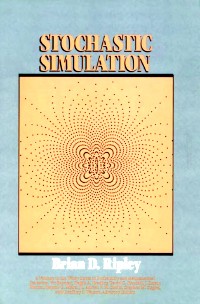
WILEY-INTERSCIENCE PAPERBACK SERIES The Wiley-Interscience Paperback Series consists of selected books that have been made more accessible to consumers in an effort to increase global appeal and general circulation. With these new unabridged softcover volumes, Wiley hopes to extend the lives of these works by making them available to future generations of statisticians, mathematicians, and scientists. ". . .this is a very competently written and useful addition to the statistical literature; a book every statistician should look at and that many should study!" -Short Book Reviews, International Statistical Institute ". . .reading this book was an enjoyable learning experience. The suggestions and recommendations on the methods [make] this book an excellent reference for anyone interested in simulation. With its compact structure and good coverage of material, it [is] an excellent textbook for a simulation course." -Technometrics ". . .this work is an excellent comprehensive guide to simulation methods, written by a very competent author. It is especially recommended for those users of simulation methods who want more than a 'cook book'. " -Mathematics Abstracts This book is a comprehensive guide to simulation methods with explicit recommendations of methods and algorithms. It covers both the technical aspects of the subject, such as the generation of random numbers, non-uniform random variates and stochastic processes, and the use of simulation. Supported by the relevant mathematical theory, the text contains a great deal of unpublished research material, including coverage of the analysis of shift-register generators, sensitivity analysis of normal variate generators, analysis of simulation output, and more.
目录
Preface 5
Contents 9
1. Aims of Simulation 15
1.1. The Tools 16
1.2. Models 16
1.3. Simulation as Experimentation 18
1.4. Simulation in Inference 18
1.5. Examples 19
1.6. Literature 26
1.7. Convention 26
Exercises 27
2. Pseudo-Random Numbers 28
2.1. History and Philosophy 28
2.2. Congruential Generators 34
2.3. Shift-Register Generators 40
2.4. Lattice Structure 47
2.5. Shuffing and Testing 56
2.6. Conclusions 59
2.7. Proofs 60
Exercises 64
3. Random Variables 67
3.1. Simple Examples 68
3.2. General Principles 73
3.3. Discrete Distributions 85
3.4. Continuous Distributions 95
3.5. Recommendations 105
Exercises 106
4. Stochastic Models 110
4.1. Order Statistics 110
4.2. Multivariate Distributions 112
4.3. Poisson Processes and Lifetimes 114
4.4. Markov Processes 118
4.5. Gaussian Processes 119
4.6. Point Processes 124
4.7. Metropolis\u2019 Method and Random Fields 127
Exercises 130
5. Variance Reduction 132
5.1. Monte-Carlo Integration 133
5.2. Importance Sampling 136
5.3. Control and Antithetic Variates 137
5.4. Conditioning 148
5.5. Experimental Design 151
Exercises 153
6. Output Analysis 156
6.1. The Initial Transient 160
6.2. Batching 164
6.3. Time-Series Methods 169
6.4. Regenerative Simulation 171
6.5. A Case Study 175
Exercises 183
7. Uses of Simulation 184
7.1. Statistical Inference 185
7.2. Stochastic Methods in Optimization 192
7.3. Systems of Linear Equations 200
7.4. Quasi-Monte-Carlo Integration 203
7.5. Sharpening Buffon\u2019s Needle 207
Exercises 212
References 214
Appendix A. Computer Systems 229
Appendix B. Computer Programs 231
B.1. Form a x b mod c 231
B.2. Check Primitive Roots 233
B.3. Lattice Constants for Congruential Generators 234
B.4. Test GFSR Generators 241
B.5. Normal Variates 242
B.6. Exponential Variates 244
B.7. Gamma Variates 244
B.8. Discrete Distributions 245
Index 249
Contents 9
1. Aims of Simulation 15
1.1. The Tools 16
1.2. Models 16
1.3. Simulation as Experimentation 18
1.4. Simulation in Inference 18
1.5. Examples 19
1.6. Literature 26
1.7. Convention 26
Exercises 27
2. Pseudo-Random Numbers 28
2.1. History and Philosophy 28
2.2. Congruential Generators 34
2.3. Shift-Register Generators 40
2.4. Lattice Structure 47
2.5. Shuffing and Testing 56
2.6. Conclusions 59
2.7. Proofs 60
Exercises 64
3. Random Variables 67
3.1. Simple Examples 68
3.2. General Principles 73
3.3. Discrete Distributions 85
3.4. Continuous Distributions 95
3.5. Recommendations 105
Exercises 106
4. Stochastic Models 110
4.1. Order Statistics 110
4.2. Multivariate Distributions 112
4.3. Poisson Processes and Lifetimes 114
4.4. Markov Processes 118
4.5. Gaussian Processes 119
4.6. Point Processes 124
4.7. Metropolis\u2019 Method and Random Fields 127
Exercises 130
5. Variance Reduction 132
5.1. Monte-Carlo Integration 133
5.2. Importance Sampling 136
5.3. Control and Antithetic Variates 137
5.4. Conditioning 148
5.5. Experimental Design 151
Exercises 153
6. Output Analysis 156
6.1. The Initial Transient 160
6.2. Batching 164
6.3. Time-Series Methods 169
6.4. Regenerative Simulation 171
6.5. A Case Study 175
Exercises 183
7. Uses of Simulation 184
7.1. Statistical Inference 185
7.2. Stochastic Methods in Optimization 192
7.3. Systems of Linear Equations 200
7.4. Quasi-Monte-Carlo Integration 203
7.5. Sharpening Buffon\u2019s Needle 207
Exercises 212
References 214
Appendix A. Computer Systems 229
Appendix B. Computer Programs 231
B.1. Form a x b mod c 231
B.2. Check Primitive Roots 233
B.3. Lattice Constants for Congruential Generators 234
B.4. Test GFSR Generators 241
B.5. Normal Variates 242
B.6. Exponential Variates 244
B.7. Gamma Variates 244
B.8. Discrete Distributions 245
Index 249
- 名称
- 类型
- 大小
光盘服务联系方式: 020-38250260 客服QQ:4006604884
云图客服:
用户发送的提问,这种方式就需要有位在线客服来回答用户的问题,这种 就属于对话式的,问题是这种提问是否需要用户登录才能提问
Video Player
×
Audio Player
×
pdf Player
×
