

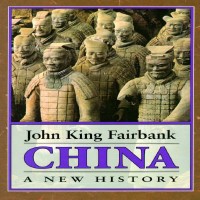
简介
Recognized for decades as the dean of Western sinologists, Fairbank died in September 1991, shortly after completing this rich and magisterial account of China and its people over the four millenia from the last neolithic days to the present. Includes a number of useful maps and 48 fascinating photos and historical illustrations on glossy stock. Annotation c. by Book News, Inc., Portland, Or.
目录
Preface to the Enlarged Edition
Preface to the Original Edition
Introduction: Approaches to Understanding China's History
The Variety of Historical Perspectives
Geography: The Contrast of North and South
Humankind in Nature
The Village: Family and Lineage
Inner Asia and China: The Steppe and the Sown
Rise and Decline of the Imperial Autocracy
Origins: The Discoveries of Archaeology Paleolithic China
Neolithic China
Excavation of Shang and Xia
The Rise of Central Authority
Western Zhou
Implications of the New Archaeological Record
The First Unification: Imperial Confucianism The Utility of Dynasties
Princes and Philosophers
The Confucian Code
Daoism
Unification by Qin
Consolidation and Expansion under the Han
Imperial Confucianism
Correlative Cosmology
Emperor and Scholars
Reunification in the Buddhist Age Disunion
The Buddhist Teaching
Sui-Tang Reunification
Buddhism and the State
Decline of the Tang Dynasty
Social Change: The Tang-Song Transition
China's Greatest Age: Northern and Southern Song Efflorescence of Material Growth
Education and the Examination System
The Creation of Neo-Confucianism
Formation of Gentry Society
The Paradox of Song China and Inner Asia The Symbiosis of Wen and Wu
The Rise of Non-Chinese Rule over China
China in the Mongol Empire
Interpreting the Song Era
Government in the Ming Dynasty Legacies of the Hongwu Emperor
Fiscal Problems
China Turns Inward
Factional Politics
The Qing Success Story The Manchu Conquest Institutional Adaptation The Jesuit Interlude
Growth of Qing Control in Inner Asia
The Attempted Integration of Polity and Culture
Late Imperial China, 1600-1911
The Paradox of Growth without Development The Rise in Population
Diminishing Returns of Farm Labor
The Subjection of Women
Domestic Trade and Commercial Organization
Merchant-Official Symbiosis
Limitations of the Law
Frontier Unrest and the Opening of China The Weakness of State Leadership
The White Lotus Rebellion, 1796-1804
Maritime China: Origins of the Overseas Chinese
European Trading Companies and the Canton Trade
Rebellion on the Turkestan Frontier, 1826-1835
Opium and the Struggle for a New Order at Guangzhou, 1834-1842
Inauguration of the Treaty Century after 1842
Preface to the Original Edition
Introduction: Approaches to Understanding China's History
The Variety of Historical Perspectives
Geography: The Contrast of North and South
Humankind in Nature
The Village: Family and Lineage
Inner Asia and China: The Steppe and the Sown
Rise and Decline of the Imperial Autocracy
Origins: The Discoveries of Archaeology Paleolithic China
Neolithic China
Excavation of Shang and Xia
The Rise of Central Authority
Western Zhou
Implications of the New Archaeological Record
The First Unification: Imperial Confucianism The Utility of Dynasties
Princes and Philosophers
The Confucian Code
Daoism
Unification by Qin
Consolidation and Expansion under the Han
Imperial Confucianism
Correlative Cosmology
Emperor and Scholars
Reunification in the Buddhist Age Disunion
The Buddhist Teaching
Sui-Tang Reunification
Buddhism and the State
Decline of the Tang Dynasty
Social Change: The Tang-Song Transition
China's Greatest Age: Northern and Southern Song Efflorescence of Material Growth
Education and the Examination System
The Creation of Neo-Confucianism
Formation of Gentry Society
The Paradox of Song China and Inner Asia The Symbiosis of Wen and Wu
The Rise of Non-Chinese Rule over China
China in the Mongol Empire
Interpreting the Song Era
Government in the Ming Dynasty Legacies of the Hongwu Emperor
Fiscal Problems
China Turns Inward
Factional Politics
The Qing Success Story The Manchu Conquest Institutional Adaptation The Jesuit Interlude
Growth of Qing Control in Inner Asia
The Attempted Integration of Polity and Culture
Late Imperial China, 1600-1911
The Paradox of Growth without Development The Rise in Population
Diminishing Returns of Farm Labor
The Subjection of Women
Domestic Trade and Commercial Organization
Merchant-Official Symbiosis
Limitations of the Law
Frontier Unrest and the Opening of China The Weakness of State Leadership
The White Lotus Rebellion, 1796-1804
Maritime China: Origins of the Overseas Chinese
European Trading Companies and the Canton Trade
Rebellion on the Turkestan Frontier, 1826-1835
Opium and the Struggle for a New Order at Guangzhou, 1834-1842
Inauguration of the Treaty Century after 1842
- 名称
- 类型
- 大小
光盘服务联系方式: 020-38250260 客服QQ:4006604884
云图客服:
用户发送的提问,这种方式就需要有位在线客服来回答用户的问题,这种 就属于对话式的,问题是这种提问是否需要用户登录才能提问
Video Player
×
Audio Player
×
pdf Player
×
