

简介
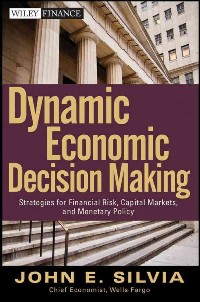
"A comprehensive analysis of the macroeconomic and financial forces altering the economic landscapeFinancial decision-making requires one to anticipate how their decision will not only affect their business, but also the economic environment. Unfortunately, all too often, both private and public sector decision-makers view their decisions as one-off responses and fail to see their decisions within the context of an evolving decision-making framework.In Decision-Making in a Dynamic Economic Setting, John Silvia, Chief Economist of Wells Fargo and one of the top 5 economic forecasters according to Bloomberg News and USA Today, skillfully puts this discipline in perspective. Details realistic, decision-making approaches and applications under a broad set of economic scenarios Analyzes monetary policy and addresses the impact of financial regulations Examines business cycles and how to identify economic trends, how to deal with uncertainty and manage risk, the building blocks of growth, and strategies for innovation Decision-Making in a Dynamic Economic Setting details the real-world application of economic principles and financial strategy in making better business decisions"--
目录
Preface p. xiii
Acknowledgments p. xvii
Dynamic Decision Making p. 1
Problems Change-Why Not Solutions? p. 3
Developing a Dynamic Decision-Making Process p. 7
Discussion Questions p. 19
Notes p. 21
Measuring Economic Benchmarks p. 23
Benchmarking Growth p. 24
Components of the Gdp p. 27
Benchmarking Inflation: Pricing Power and the Cost of Goods Sold p. 36
Interest Rates: Real Nominal, the Short and Long End of It All p. 41
Exchange Rates: A Relative Price with Many Relatives p. 45
Profits p. 48
Unbiased Information: Biased Users p. 50
Discussion Questions p. 51
Notes p. 52
Recommended Reading for Serious Players p. 53
Cyclical and Structural Change p. 55
Forces of Economic Success p. 55
Cyclical Patterns, Linear Projections p. 57
Leading, Coincident, and Lagging Economic Indicators p. 59
Identifying Trends and Cycles p. 64
Bias in Decision Making p. 66
Cycles, Structural Change, and the Evolution of a Framework p. 73
Discussion Questions p. 78
Notes p. 79
Recommended Reading for Serious Players p. 80
Economic Dynamism: Growth and Overcoming the Limits of Geography p. 81
A Framework for Growth p. 83
Population Growth and the Westward Expansion of the United States p. 88
Institutions and the Savings/Investment Decision p. 90
Why Does Capital Not Flow to Poor Countries? p. 92
Overcoming Geography: Stretching the Production possibilities Curve p. 92
The Competitive Implications of Altering the Exchange Rate p. 95
Growth, Opportunity, and Preservation p. 96
Discussion Questions p. 97
Notes p. 99
Recommended Reading for Serious Players p. 99
Information: Competitive Edge in the Twenty-First Century p. 101
Information in an Existing Business p. 102
Information as an Input to Today's Competitive Advantage p. 103
Information in a New Growth Business p. 104
Information as Input to the Decision Process for Firms and Households p. 106
Three Steps of Information Processing for Decision Makers p. 107
Information in the Decision Maker's Framework p. 116
Information as Part of the Business Model p. 117
Choices and Information Choke Points p. 119
Discussion Questions p. 119
Notes p. 121
Recommended Reading for Serious Players p. 122
Risk Modeling and Assessment p. 123
Economics and the Risk Modeling Process p. 124
Housing Prices: Deflation and the Shock to the American Psyche p. 129
Managing Economic Risk within the Decision-Making Process p. 132
Assessing Risks Using Econometric Models p. 138
Identifying Change p. 141
Principles for a New Model p. 153
Discussion Questions p. 155
Notes p. 157
Recommended Reading for Serious Players p. 158
Money, Interest Rates, and Financial Markets p. 159
Markets before Institutions p. 162
Markets: Interdependence and the Driving Force of Unexpected Events p. 162
Change and Putting Our Framework through Its Paces p. 166
Short-Run to Long-Run Adjustment p. 170
Quality Spreads, the Economic Cycle, and Accounting for Risk p. 172
Evolution of the Money, Inflation, and Interest Rate Framework p. 173
Lessons for Decision Makers p. 175
Discussion Questions p. 176
Notes p. 177
Recommended Reading for Serious Players p. 178
Strategy, Risk, Uncertainty, and the Role of Information p. 179
Four Levels of Strategic Thinking p. 180
Discussion Questions p. 197
Notes p. 198
Recommended Reading for Serious Players p. 198
Capital Markets: Financing Operations and Growth p. 199
Engine of Analysis: The Market for Real Capital and the Market for Funds p. 200
Perspective of Change over Time p. 201
Economic Change as Driver of an Evolving Capital Market Framework p. 203
Complex Interactions: Economics, Expectations, and Information p. 205
The 1980s: Another Decade, Another New Normal for the Financial Markets, and the Critical Role of the Recency Bias p. 208
Internal Cyclical Changes in Capital Markets and the Overconfidence Bias p. 210
Two Underappreciated Forces in Financial Markets Are Irony and Paradox p. 211
The Great Recession of 2007 to 2010: Under the Heading That Facts Don't Matter until They Do p. 212
Economic Evolution and the Changing Risk/ Reward Calculation p. 213
Price Dichotomy: Traded and Non-Traded Goods p. 215
Introducing the Wake-Up Call p. 216
Precise Mathematics Gives Way to Imprecise Reality: What Happens to Markets When the Average Expected Return and the Variability of Returns Become Uncertain? p. 217
Choices: Reacting to Feedback-The Most Dangerous Phase of the Credit Cycle p. 221
Credit Crunches: When Markets Don't Clear p. 224
Capital Markets and the Life Cycle of an Institution p. 226
Capital Markets and the Allocation of Capital p. 230
Discussion Questions p. 232
Notes p. 233
Recommended Reading for Serious Players p. 235
Financial Ratios: The Intersection of Economics and Finance p. 237
Financial Ratios p. 237
Developing a Framework within a Broader Economic Setting p. 240
Financial Ratios as Information p. 248
Discussion Questions p. 267
Notes p. 268
Recommended Reading for Serious Players p. 270
Fiscal Policy as Agent of Change p. 271
Fiscal Policy over Time: Altering Incentives and Rewards of Risk Taking p. 272
Public Policy and Private Expectations-the Lucas Critique p. 284
Interdependence between Fiscal and Monetary Policy p. 285
Policy in the Context of Expectations and Information p. 289
Long-Run Equilibrium versus Short-Run Equilibrium p. 292
Then the Long-Run Outlook Impacts Today's Behavior p. 294
Political Business Cycle: Political Realities for Private Decision Makers p. 296
Fiscal Policy in an Open Economy: The United States in the Twenty-First Century p. 298
Discussion Questions p. 298
Notes p. 300
Recommended Reading for Serious Players p. 301
Global Capital Flows: Financing Growth, Creating Risk and Opportunity p. 303
Building a Framework for Understanding p. 304
A Model of Capital Flows to Frame Our Decisions p. 306
The American Framework in Global Capital Markets: The Evolution of Imbalances p. 313
Global Interest Rates p. 320
Risks and Opportunities: Not All Countries Fit One Mold p. 323
Implications for Decision Makers: Introducing Risk into the Global Capital Markets p. 328
Feedback, Altered Expectations, and Building the New Framework p. 330
A New Framework and the Overconfidence Bias p. 332
Discussion Questions p. 332
Notes p. 333
Recommended Reading for Serious Players p. 334
Innovation and Its Role in Economics and Decision Making p. 335
Innovation and the Economy p. 336
Innovation and the Patterns of Progress p. 349
Risk, Innovation, and Prospect Theory p. 352
Innovation, Economic Thought, and the Big Challenges of the Day p. 354
Discussion Questions p. 357
Notes p. 358
Recommended Reading for Serious Players p. 359
Appendix: The Hodrick-Prescott Filter p. 361
Autoregressive Conditional Heteroscedasticity (Arch) p. 365
About the Author p. 369
What's on the Companion Web Site p. 370
Index p. 371
Acknowledgments p. xvii
Dynamic Decision Making p. 1
Problems Change-Why Not Solutions? p. 3
Developing a Dynamic Decision-Making Process p. 7
Discussion Questions p. 19
Notes p. 21
Measuring Economic Benchmarks p. 23
Benchmarking Growth p. 24
Components of the Gdp p. 27
Benchmarking Inflation: Pricing Power and the Cost of Goods Sold p. 36
Interest Rates: Real Nominal, the Short and Long End of It All p. 41
Exchange Rates: A Relative Price with Many Relatives p. 45
Profits p. 48
Unbiased Information: Biased Users p. 50
Discussion Questions p. 51
Notes p. 52
Recommended Reading for Serious Players p. 53
Cyclical and Structural Change p. 55
Forces of Economic Success p. 55
Cyclical Patterns, Linear Projections p. 57
Leading, Coincident, and Lagging Economic Indicators p. 59
Identifying Trends and Cycles p. 64
Bias in Decision Making p. 66
Cycles, Structural Change, and the Evolution of a Framework p. 73
Discussion Questions p. 78
Notes p. 79
Recommended Reading for Serious Players p. 80
Economic Dynamism: Growth and Overcoming the Limits of Geography p. 81
A Framework for Growth p. 83
Population Growth and the Westward Expansion of the United States p. 88
Institutions and the Savings/Investment Decision p. 90
Why Does Capital Not Flow to Poor Countries? p. 92
Overcoming Geography: Stretching the Production possibilities Curve p. 92
The Competitive Implications of Altering the Exchange Rate p. 95
Growth, Opportunity, and Preservation p. 96
Discussion Questions p. 97
Notes p. 99
Recommended Reading for Serious Players p. 99
Information: Competitive Edge in the Twenty-First Century p. 101
Information in an Existing Business p. 102
Information as an Input to Today's Competitive Advantage p. 103
Information in a New Growth Business p. 104
Information as Input to the Decision Process for Firms and Households p. 106
Three Steps of Information Processing for Decision Makers p. 107
Information in the Decision Maker's Framework p. 116
Information as Part of the Business Model p. 117
Choices and Information Choke Points p. 119
Discussion Questions p. 119
Notes p. 121
Recommended Reading for Serious Players p. 122
Risk Modeling and Assessment p. 123
Economics and the Risk Modeling Process p. 124
Housing Prices: Deflation and the Shock to the American Psyche p. 129
Managing Economic Risk within the Decision-Making Process p. 132
Assessing Risks Using Econometric Models p. 138
Identifying Change p. 141
Principles for a New Model p. 153
Discussion Questions p. 155
Notes p. 157
Recommended Reading for Serious Players p. 158
Money, Interest Rates, and Financial Markets p. 159
Markets before Institutions p. 162
Markets: Interdependence and the Driving Force of Unexpected Events p. 162
Change and Putting Our Framework through Its Paces p. 166
Short-Run to Long-Run Adjustment p. 170
Quality Spreads, the Economic Cycle, and Accounting for Risk p. 172
Evolution of the Money, Inflation, and Interest Rate Framework p. 173
Lessons for Decision Makers p. 175
Discussion Questions p. 176
Notes p. 177
Recommended Reading for Serious Players p. 178
Strategy, Risk, Uncertainty, and the Role of Information p. 179
Four Levels of Strategic Thinking p. 180
Discussion Questions p. 197
Notes p. 198
Recommended Reading for Serious Players p. 198
Capital Markets: Financing Operations and Growth p. 199
Engine of Analysis: The Market for Real Capital and the Market for Funds p. 200
Perspective of Change over Time p. 201
Economic Change as Driver of an Evolving Capital Market Framework p. 203
Complex Interactions: Economics, Expectations, and Information p. 205
The 1980s: Another Decade, Another New Normal for the Financial Markets, and the Critical Role of the Recency Bias p. 208
Internal Cyclical Changes in Capital Markets and the Overconfidence Bias p. 210
Two Underappreciated Forces in Financial Markets Are Irony and Paradox p. 211
The Great Recession of 2007 to 2010: Under the Heading That Facts Don't Matter until They Do p. 212
Economic Evolution and the Changing Risk/ Reward Calculation p. 213
Price Dichotomy: Traded and Non-Traded Goods p. 215
Introducing the Wake-Up Call p. 216
Precise Mathematics Gives Way to Imprecise Reality: What Happens to Markets When the Average Expected Return and the Variability of Returns Become Uncertain? p. 217
Choices: Reacting to Feedback-The Most Dangerous Phase of the Credit Cycle p. 221
Credit Crunches: When Markets Don't Clear p. 224
Capital Markets and the Life Cycle of an Institution p. 226
Capital Markets and the Allocation of Capital p. 230
Discussion Questions p. 232
Notes p. 233
Recommended Reading for Serious Players p. 235
Financial Ratios: The Intersection of Economics and Finance p. 237
Financial Ratios p. 237
Developing a Framework within a Broader Economic Setting p. 240
Financial Ratios as Information p. 248
Discussion Questions p. 267
Notes p. 268
Recommended Reading for Serious Players p. 270
Fiscal Policy as Agent of Change p. 271
Fiscal Policy over Time: Altering Incentives and Rewards of Risk Taking p. 272
Public Policy and Private Expectations-the Lucas Critique p. 284
Interdependence between Fiscal and Monetary Policy p. 285
Policy in the Context of Expectations and Information p. 289
Long-Run Equilibrium versus Short-Run Equilibrium p. 292
Then the Long-Run Outlook Impacts Today's Behavior p. 294
Political Business Cycle: Political Realities for Private Decision Makers p. 296
Fiscal Policy in an Open Economy: The United States in the Twenty-First Century p. 298
Discussion Questions p. 298
Notes p. 300
Recommended Reading for Serious Players p. 301
Global Capital Flows: Financing Growth, Creating Risk and Opportunity p. 303
Building a Framework for Understanding p. 304
A Model of Capital Flows to Frame Our Decisions p. 306
The American Framework in Global Capital Markets: The Evolution of Imbalances p. 313
Global Interest Rates p. 320
Risks and Opportunities: Not All Countries Fit One Mold p. 323
Implications for Decision Makers: Introducing Risk into the Global Capital Markets p. 328
Feedback, Altered Expectations, and Building the New Framework p. 330
A New Framework and the Overconfidence Bias p. 332
Discussion Questions p. 332
Notes p. 333
Recommended Reading for Serious Players p. 334
Innovation and Its Role in Economics and Decision Making p. 335
Innovation and the Economy p. 336
Innovation and the Patterns of Progress p. 349
Risk, Innovation, and Prospect Theory p. 352
Innovation, Economic Thought, and the Big Challenges of the Day p. 354
Discussion Questions p. 357
Notes p. 358
Recommended Reading for Serious Players p. 359
Appendix: The Hodrick-Prescott Filter p. 361
Autoregressive Conditional Heteroscedasticity (Arch) p. 365
About the Author p. 369
What's on the Companion Web Site p. 370
Index p. 371
- 名称
- 类型
- 大小
光盘服务联系方式: 020-38250260 客服QQ:4006604884
云图客服:
用户发送的提问,这种方式就需要有位在线客服来回答用户的问题,这种 就属于对话式的,问题是这种提问是否需要用户登录才能提问
Video Player
×
Audio Player
×
pdf Player
×
