

简介
Summary:
Publisher Summary 1
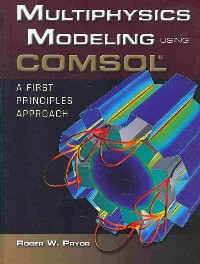
COMSOL Multiphysics software is a finite element, partial differential equation tool for modeling of physical systems and devices. This book/DVD package for students, engineers, and scientists focuses on models in electrical, electronic, electromagnetic, optical, thermal physics, and biophysics areas. It introduces techniques for hands-on computer model building and solving with the COMSOL Multiphysics software, the AC/DC Module, the Heat Transfer Module, and the RF Module. The models presented are built within the context of the physical world and are explored in light of first principles analysis techniques. The DVD contains executable copies of each model and related animations. The book is for senior undergraduate and graduate students, and for scientists or engineers interested in exploring the behavior of different physical device structures through computer modeling. Pryor is a COMSOL Certified Consultant. Annotation 漏2010 Book News, Inc., Portland, OR (booknews.com)
目录
Table Of Contents:
Preface ix
Introduction x
Modeling Methodology 1(38)
Guidelines for New COMSOL® Multiphysics® Modelers 1(5)
Hardware Considerations 1(1)
Coordinate Systems 2(3)
Implicit Assumptions 5(1)
1D Window Panes Heat Flow Models 6(29)
1D Single-Pane Heat Flow Model 6(10)
1D Dual-Pane Heat Flow Model 16(11)
1D Triple-Pane Heat Flow Model 27(8)
First Principles Applied to Model Definition 35(2)
Common Sources of Modeling Errors 37(1)
Exercises 38(1)
Materials and Databases 39(24)
Materials and Database Guidelines and Considerations 39(1)
COMSOL® Material Library Module: Searchable Materials Library 40(3)
MatWeb: Searchable Materials Properties Website 43(5)
PKS-MPD: Searchable Materials Properties Database 48(13)
References 61(1)
Exercises 62(1)
1D Modeling 63(50)
1D Guidelines for New COMSOL® Multiphysics® Modelers 63(1)
1D Modeling Considerations 63(1)
Coordinate System 64(1)
1D KdV Equation: Solitons and Optical Fibers 64(26)
COMSOL KdV Equation Model 65(12)
First Variation on the KdV Equation Model 77(6)
Second Variation on the KdV Equation Model 83(7)
1D KdV Equation Models: Summary and Conclusions 90(1)
1D Telegraph Equation 90(22)
COMSOL D Telegraph Equation Model 92(6)
First Variation on the Telegraph Equation Model 98(7)
Second Variation on the Telegraph Equation Model 105(5)
1D Telegraph Equation Models: Summary and Conclusions 110(2)
References 112(1)
Exercises 112(1)
2D Modeling 113(112)
2D Guidelines for New COMSOL® Multiphysics® Modelers 113(2)
2D Modeling Considerations 113(1)
Coordinate System 114(1)
2D Electrochemical Polishing (Electropolishing) Theory 115(52)
COMSOL 2D Electrochemical Polishing Model 118(12)
First Variation on the 2D Electrochemical Polishing Model 130(17)
Second Variation on the 2D Electrochemical Polishing Model 147(18)
2D Electrochemical Polishing Models: Summary and Conclusions 165(2)
2D Hall Effect Model Considerations 167(55)
2D Hall Effect Model 171(15)
First Variation on the 2D Hall Effect Model 186(17)
Second Variation on the 2D Hall Effect Model 203(18)
2D Hall Effect Models: Summary and Conclusions 221(1)
References 222(1)
Exercises 223(2)
2D Axisymmetric Modeling 225(96)
2D Axisymmetric Guidelines for New COMSOL® Multiphysics® Modelers 225(4)
2D Axisymmetric Modeling Considerations 225(2)
2D Axisymmetric Coordinate System 227(1)
Heat Conduction Theory 228(1)
2D Axisymmetric Heat Conduction Modeling 229(36)
2D Axisymmetric Cylinder Conduction Model 229(11)
First Variation on the 2D Axisymmetric Cylinder Conduction Model 240(10)
Second Variation on the 2D Axisymmetric Cylinder Conduction Model, Including a Vacuum Cavity 250(13)
2D Axisymmetric Cylinder Conduction Models: Summary and Conclusions 263(2)
2D Axisymmetric Insulated Container Design 265(53)
2D Axisymmetric Thermos_Container Model 265(20)
First Variation on the 2D Axisymmetric Thermos_Container Model 285(16)
Second Variation on the 2D Axisymmetric Thermos_Container Model 301(15)
2D Axisymmetric Thermos_Container Models: Summary and Conclusions 316(2)
References 318(1)
Exercises 319(2)
2D Simple Mixed-Mode Modeling 321(138)
2D Mixed-Mode Guidelines for New COMSOL® Multiphysics® Modelers 321(5)
2D Mixed-Mode Modeling Considerations 321(1)
2D Coordinate System 322(2)
2D Axisymmetric Coordinate System 324(1)
Joule Heating and Heat Conduction Theory 324(1)
Heat Conduction Theory 325(1)
2D Resistive Heating Modeling 326(63)
2D Resistive Heating Model 326(19)
First Variation on the 2D Resistive Heating Model 345(21)
Second Variation on the 2D Resistive Heating Model, Including Alumina Isolation 366(22)
2D Resistive Heating Models: Summary and Conclusions 388(1)
2D Inductive Heating Considerations 389(68)
2D Axisymmetric Coordinate System 389(4)
2D Axisymmetric Inductive Heating Model 393(18)
First Variation on the 2D Axisymmetric Inductive Heating Model 411(22)
Second Variation on the 2D Axisymmetric Inductive Heating Model 433(20)
2D Axisymmetric Inductive Heating Models: Summary and Conclusions 453(4)
References 457(1)
Exercises 457(2)
2D Complex Mixed-Mode Modeling 459(112)
2D Complex Mixed-Mode Guidelines for New COMSOL® Multiphysics® Modelers 459(2)
2D Complex Mixed-Mode Modeling Considerations 459(2)
2D Coordinate System 461(1)
Electrical Impedance Theory 461(32)
2D Electric Impedance Sensor Model: Basic 464(11)
Basic 2D Electric Impedance Sensor Model: Summary and Conclusions 475(2)
2D Electric Impedance Sensor Model: Advanced 477(15)
2D Electric Impedance Sensor Models: Summary and Conclusions 492(1)
Generator and Power Distribution Basics 493(37)
2D AC Generators: Static and Transient 498(1)
2D AC Generator Model (2D_ACG_1): Static 498(24)
2D AC Generator Model (2D_ACG_2): Transient 522(7)
2D AC Generators, Static and Transient Models: Summary and Conclusions 529(1)
2D AC Generator: Sector---Static and Transient 530(39)
2D AC Generator Sector Model (2D_ACGS_1): Static 531(24)
2D AC Generators, Static Sector Model: Summary and Conclusions 555(2)
2D AC Generator Sector Model (2D_ACGS_2): Transient 557(11)
2D AC Generators, Static and Transient Sector Models: Summary and Conclusions 568(1)
References 569(1)
Exercises 570(1)
3D Modeling 571(100)
3D Modeling Guidelines for New COMSOL® Multiphysics® Modelers 571(4)
3D Modeling Considerations 571(1)
3D Coordinate System 572(1)
Electrical Resistance Theory 573(2)
Thin Layer Resistance Modeling Basic 575(36)
3D Thin Layer Resistance Model: Thin Layer Approximation 577(14)
3D Thin Layer Resistance Model, Thin Layer Approximation: Summary and Conclusions 591(2)
3D Thin Layer Resistance Model: Thin Layer Subdomain 593(15)
3D Thin Layer Resistance Models: Summary and Conclusions 608(3)
Electrostatic Modeling Basics 611(23)
3D Electrostatic Potential Between Two Cylinders 613(9)
3D Electrostatic Potential Between Two Cylinders: Summary and Conclusions 622(1)
3D Electrostatic Potential Between Five Cylinders 622(11)
3D Electrostatic Potential Between Five Cylinders: Summary and Conclusions 633(1)
Magnetostatic Modeling Basics 634(35)
3D Magnetic Field of a Helmholtz Coil 636(13)
3D Magnetic Field of a Helmholtz Coil: Summary and Conclusions 649(3)
3D Magnetic Field of a Helmholtz Coil with a Magnetic Test Object 652(14)
3D Magnetic Field of a Helmholtz Coil with a Magnetic Test Object: Summary and Conclusions 666(3)
References 669(1)
Exercises 670(1)
Perfectly Matched Layer Models 671(76)
Perfectly Matched Layer Modeling Guidelines and Coordinate Considerations 671(5)
PML Theory 671(5)
PML Models 676(68)
2D Dielectric Lens Model, with PMLs 676(14)
2D Dielectric Lens Model, with PMLs: Summary and Conclusions 690(1)
2D Dielectric Lens Model, without PMLs 691(11)
2D Dielectric Lens Model, with and without PMLs: Summary and Conclusions 702(5)
2D Concave Mirror Model, with PMLs 707(16)
2D Concave Mirror Model, with PMLs: Summary and Conclusions 723(1)
2D Concave Mirror Model, without PMLs 724(12)
2D Concave Mirror Model, with and without PMLs: Summary and Conclusions 736(8)
References 744(1)
Exercises 745(2)
Bioheat Models 747(50)
Bioheat Modeling Guidelines and Coordinate Considerations 747(2)
Bioheat Equation Theory 747(2)
Tumor Laser Irradiation Theory 749(20)
2D Axisymmetric Tumor Laser Irradiation Model 749(19)
2D Axisymmetric Tumor Laser Irradiation Model: Summary and Conclusions 768(1)
Microwave Cancer Therapy Theory 769(25)
2D Axisymmetric Microwave Cancer Therapy Model 770(24)
2D Axisymmetric Microwave Cancer Therapy Model: Summary and Conclusions 794(1)
References 794(1)
Exercises 795(2)
Index 797
Preface ix
Introduction x
Modeling Methodology 1(38)
Guidelines for New COMSOL® Multiphysics® Modelers 1(5)
Hardware Considerations 1(1)
Coordinate Systems 2(3)
Implicit Assumptions 5(1)
1D Window Panes Heat Flow Models 6(29)
1D Single-Pane Heat Flow Model 6(10)
1D Dual-Pane Heat Flow Model 16(11)
1D Triple-Pane Heat Flow Model 27(8)
First Principles Applied to Model Definition 35(2)
Common Sources of Modeling Errors 37(1)
Exercises 38(1)
Materials and Databases 39(24)
Materials and Database Guidelines and Considerations 39(1)
COMSOL® Material Library Module: Searchable Materials Library 40(3)
MatWeb: Searchable Materials Properties Website 43(5)
PKS-MPD: Searchable Materials Properties Database 48(13)
References 61(1)
Exercises 62(1)
1D Modeling 63(50)
1D Guidelines for New COMSOL® Multiphysics® Modelers 63(1)
1D Modeling Considerations 63(1)
Coordinate System 64(1)
1D KdV Equation: Solitons and Optical Fibers 64(26)
COMSOL KdV Equation Model 65(12)
First Variation on the KdV Equation Model 77(6)
Second Variation on the KdV Equation Model 83(7)
1D KdV Equation Models: Summary and Conclusions 90(1)
1D Telegraph Equation 90(22)
COMSOL D Telegraph Equation Model 92(6)
First Variation on the Telegraph Equation Model 98(7)
Second Variation on the Telegraph Equation Model 105(5)
1D Telegraph Equation Models: Summary and Conclusions 110(2)
References 112(1)
Exercises 112(1)
2D Modeling 113(112)
2D Guidelines for New COMSOL® Multiphysics® Modelers 113(2)
2D Modeling Considerations 113(1)
Coordinate System 114(1)
2D Electrochemical Polishing (Electropolishing) Theory 115(52)
COMSOL 2D Electrochemical Polishing Model 118(12)
First Variation on the 2D Electrochemical Polishing Model 130(17)
Second Variation on the 2D Electrochemical Polishing Model 147(18)
2D Electrochemical Polishing Models: Summary and Conclusions 165(2)
2D Hall Effect Model Considerations 167(55)
2D Hall Effect Model 171(15)
First Variation on the 2D Hall Effect Model 186(17)
Second Variation on the 2D Hall Effect Model 203(18)
2D Hall Effect Models: Summary and Conclusions 221(1)
References 222(1)
Exercises 223(2)
2D Axisymmetric Modeling 225(96)
2D Axisymmetric Guidelines for New COMSOL® Multiphysics® Modelers 225(4)
2D Axisymmetric Modeling Considerations 225(2)
2D Axisymmetric Coordinate System 227(1)
Heat Conduction Theory 228(1)
2D Axisymmetric Heat Conduction Modeling 229(36)
2D Axisymmetric Cylinder Conduction Model 229(11)
First Variation on the 2D Axisymmetric Cylinder Conduction Model 240(10)
Second Variation on the 2D Axisymmetric Cylinder Conduction Model, Including a Vacuum Cavity 250(13)
2D Axisymmetric Cylinder Conduction Models: Summary and Conclusions 263(2)
2D Axisymmetric Insulated Container Design 265(53)
2D Axisymmetric Thermos_Container Model 265(20)
First Variation on the 2D Axisymmetric Thermos_Container Model 285(16)
Second Variation on the 2D Axisymmetric Thermos_Container Model 301(15)
2D Axisymmetric Thermos_Container Models: Summary and Conclusions 316(2)
References 318(1)
Exercises 319(2)
2D Simple Mixed-Mode Modeling 321(138)
2D Mixed-Mode Guidelines for New COMSOL® Multiphysics® Modelers 321(5)
2D Mixed-Mode Modeling Considerations 321(1)
2D Coordinate System 322(2)
2D Axisymmetric Coordinate System 324(1)
Joule Heating and Heat Conduction Theory 324(1)
Heat Conduction Theory 325(1)
2D Resistive Heating Modeling 326(63)
2D Resistive Heating Model 326(19)
First Variation on the 2D Resistive Heating Model 345(21)
Second Variation on the 2D Resistive Heating Model, Including Alumina Isolation 366(22)
2D Resistive Heating Models: Summary and Conclusions 388(1)
2D Inductive Heating Considerations 389(68)
2D Axisymmetric Coordinate System 389(4)
2D Axisymmetric Inductive Heating Model 393(18)
First Variation on the 2D Axisymmetric Inductive Heating Model 411(22)
Second Variation on the 2D Axisymmetric Inductive Heating Model 433(20)
2D Axisymmetric Inductive Heating Models: Summary and Conclusions 453(4)
References 457(1)
Exercises 457(2)
2D Complex Mixed-Mode Modeling 459(112)
2D Complex Mixed-Mode Guidelines for New COMSOL® Multiphysics® Modelers 459(2)
2D Complex Mixed-Mode Modeling Considerations 459(2)
2D Coordinate System 461(1)
Electrical Impedance Theory 461(32)
2D Electric Impedance Sensor Model: Basic 464(11)
Basic 2D Electric Impedance Sensor Model: Summary and Conclusions 475(2)
2D Electric Impedance Sensor Model: Advanced 477(15)
2D Electric Impedance Sensor Models: Summary and Conclusions 492(1)
Generator and Power Distribution Basics 493(37)
2D AC Generators: Static and Transient 498(1)
2D AC Generator Model (2D_ACG_1): Static 498(24)
2D AC Generator Model (2D_ACG_2): Transient 522(7)
2D AC Generators, Static and Transient Models: Summary and Conclusions 529(1)
2D AC Generator: Sector---Static and Transient 530(39)
2D AC Generator Sector Model (2D_ACGS_1): Static 531(24)
2D AC Generators, Static Sector Model: Summary and Conclusions 555(2)
2D AC Generator Sector Model (2D_ACGS_2): Transient 557(11)
2D AC Generators, Static and Transient Sector Models: Summary and Conclusions 568(1)
References 569(1)
Exercises 570(1)
3D Modeling 571(100)
3D Modeling Guidelines for New COMSOL® Multiphysics® Modelers 571(4)
3D Modeling Considerations 571(1)
3D Coordinate System 572(1)
Electrical Resistance Theory 573(2)
Thin Layer Resistance Modeling Basic 575(36)
3D Thin Layer Resistance Model: Thin Layer Approximation 577(14)
3D Thin Layer Resistance Model, Thin Layer Approximation: Summary and Conclusions 591(2)
3D Thin Layer Resistance Model: Thin Layer Subdomain 593(15)
3D Thin Layer Resistance Models: Summary and Conclusions 608(3)
Electrostatic Modeling Basics 611(23)
3D Electrostatic Potential Between Two Cylinders 613(9)
3D Electrostatic Potential Between Two Cylinders: Summary and Conclusions 622(1)
3D Electrostatic Potential Between Five Cylinders 622(11)
3D Electrostatic Potential Between Five Cylinders: Summary and Conclusions 633(1)
Magnetostatic Modeling Basics 634(35)
3D Magnetic Field of a Helmholtz Coil 636(13)
3D Magnetic Field of a Helmholtz Coil: Summary and Conclusions 649(3)
3D Magnetic Field of a Helmholtz Coil with a Magnetic Test Object 652(14)
3D Magnetic Field of a Helmholtz Coil with a Magnetic Test Object: Summary and Conclusions 666(3)
References 669(1)
Exercises 670(1)
Perfectly Matched Layer Models 671(76)
Perfectly Matched Layer Modeling Guidelines and Coordinate Considerations 671(5)
PML Theory 671(5)
PML Models 676(68)
2D Dielectric Lens Model, with PMLs 676(14)
2D Dielectric Lens Model, with PMLs: Summary and Conclusions 690(1)
2D Dielectric Lens Model, without PMLs 691(11)
2D Dielectric Lens Model, with and without PMLs: Summary and Conclusions 702(5)
2D Concave Mirror Model, with PMLs 707(16)
2D Concave Mirror Model, with PMLs: Summary and Conclusions 723(1)
2D Concave Mirror Model, without PMLs 724(12)
2D Concave Mirror Model, with and without PMLs: Summary and Conclusions 736(8)
References 744(1)
Exercises 745(2)
Bioheat Models 747(50)
Bioheat Modeling Guidelines and Coordinate Considerations 747(2)
Bioheat Equation Theory 747(2)
Tumor Laser Irradiation Theory 749(20)
2D Axisymmetric Tumor Laser Irradiation Model 749(19)
2D Axisymmetric Tumor Laser Irradiation Model: Summary and Conclusions 768(1)
Microwave Cancer Therapy Theory 769(25)
2D Axisymmetric Microwave Cancer Therapy Model 770(24)
2D Axisymmetric Microwave Cancer Therapy Model: Summary and Conclusions 794(1)
References 794(1)
Exercises 795(2)
Index 797
- 名称
- 类型
- 大小
光盘服务联系方式: 020-38250260 客服QQ:4006604884
云图客服:
用户发送的提问,这种方式就需要有位在线客服来回答用户的问题,这种 就属于对话式的,问题是这种提问是否需要用户登录才能提问
Video Player
×
Audio Player
×
pdf Player
×
亲爱的云图用户,
光盘内的文件都可以直接点击浏览哦
无需下载,在线查阅资料!
