

简介
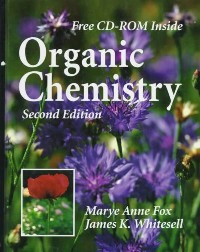
Fox and Whitesell, both affiliated with North Carolina State University, have added more exercises, expanded coverage of major concepts, new sections on nomenclature of amine and alcohols, and extensive coverage of both industrial and biological polymers to this third edition of a text/CD-ROM package for a year-long introductory course. The CD-ROM contains animated illustrations of concepts and reactions, and Chem3D files helpful for structure visualization. The text presupposes only the knowledge of chemistry typically attained in a high school course or in the first semester of college chemistry. Annotation 漏2004 Book News, Inc., Portland, OR (booknews.com)
目录
Organic Chemistry
Brief Contents
Contents
Preface
Concentrating on Fundamentals
Organic Chemistry, Second Edition: A Unique Organizational Structure
Tools for Student Success
What\\u0027s New in This Edition?
Customized for You
Supplementary Material
Acknowledgments
Tricks of the Trade—A Special Message to the Student
1— Structure and Bonding in Alkanes
1.1— The Development and Study of Organic Chemistry
1.2— The Formation of Molecules
Atomic Structure
Atomic Orbitals
Quantum Numbers
Shapes and Dimensions of Orbitals
Pauli Exclusion Principle
Valence Shell
Van der Waals Radii
Electron Configuration
Exercise 1.1
Exercise 1.2
Bonding
Bond Length
Bond Angles
Exercise 1.3
Covalent Bonding
Orbital Overlap and Molecular Orbitals
Hybridization
Characteristics of Hybrid Orbitals
Exercise 1.4
Electronegativity
Polar and Nonpolar Bonds
Exercise 1.5
Lewis Dot Structures
Exercise 1.6
Formal Charges
Exercise 1.7
Ionic Bonding
Representing Molecules
Exercise 1.8
Drawing Three-Dimensional Structures
Exercise 1.9
1.3— Simple Hydrocarbons
Properties of Hydrocarbons
Alkanes (Saturated Hydrocarbons)
Sigma Bonds in Alkanes
Structural Isomers
Exercise 1.10
1.4— Cycloalkanes
Structures and Formulas
Exercise 1.11
Exercise 1.12
Ring Strain
Exercise 1.13
1.5— Nomenclature
IUPAC Rules
Straight-Chain Hydrocarbons
Branched Hydrocarbons
Alkyl Groups
Exercise 1.14
Cis and Trans Isomers
Exercise 1.15
Exercise 1.16
1.6— Alkane Stability
Heat of Combustion
Exercise 1.17
Heat of Formation
Summary
Review Problems
2— Alkenes, Aromatic Hydrocarbons, and Alkynes
2.1— Alkenes
Hybridization
Sigma Bonding
Pi Bonding
Molecular Orbitals
Orbital Phasing: The Wave Nature of the Electron
Sigma Molecular Orbitals for Hydrogen
Sigma Molecular Orbitals for a Carbon–Carbon Bond
Pi Molecular Orbitals for a Carbon–Carbon Bond
Structures of Alkenes
Bond Angle
Bond Length
Hindered Rotation
Higher Alkenes
Degree of Unsaturation
Exercise 2.1
Isomerism in Alkenes
Nomenclature for Alkenes
Exercise 2.2
Exercise 2.3
Naming Geometric Isomers of Alkenes: E and Z Designations
Exercise 2.4
Exercise 2.5
Alkene Stability
Heats of Combustion
Exercise 2.6
Heats of Hydrogenation
Exercise 2.7
Exhaustive Hydrogenation
Hyperconjugation
Exercise 2.8
Heats of Formation
Exercise 2.9
2.2— Dienes and Polyenes
Exercise 2.10
Exercise 2.11
2.3— Aromatic Hydrocarbons
Resonance Structures
Exercise 2.12
Electron Pushing
Stability
Aromaticity and Hückel\\u0027s Rule
Exercise 2.13
Exercise 2.14
Arenes
Polycyclic Aromatic Hydrocarbons
Nomenclature for Aromatic Hydrocarbons
Exercise 2.15
Exercise 2.16
Exercise 2.17
Unsaturated Substituent Groups
Exercise 2.18
Exercise 2.19
2.4— Alkynes
sp Hybridization
Higher Alkynes
Nomenclature for Alkynes
Exercise 2.20
Exercise 2.21
Allenes
Exercise 2.22
Summary
Review of Reactions
Review Problems
3— Functional Groups Containing Heteroatoms
3.1— Compounds Containing sp[sup(3)]-Hybridized Nitrogen
Ammonia: Hybridization and Geometry
Amines
Primary, Secondary, and Tertiary Amines
Exercise 3.1
Formal Charges
Exercise 3.2
3.2— Polar Covalent Bonding in Amines
Dipole Moments
Exercise 3.3
Hydrogen Bonding
Exercise 3.4
Exercise 3.5
Solvation
Exercise 3.6
Acidity and Basicity of Amines
Exercise 3.7
Exercise 3.8
3.3— Compounds Containing sp[sup(2)]-Hybridized Nitrogen
Double Bonding at Nitrogen
Bond Strengths of Multiple Bonds
Exercise 3.9
Calculating Oxidation Levels
Exercise 3.10
Exercise 3.11
3.4— Compounds Containing sp-Hybridized Nitrogen
Exercise 3.12
3.5— Compounds Containing sp[sup(3)]-Hybridized Oxygen
Water
Alcohols: R—OH
Primary, Secondary, and Tertiary Alcohols
Exercise 3.13
Hydrogen Bonding
Exercise 3.14
Ethers: R—O—R
Exercise 3.15
3.6— Bond Cleavage
Exercise 3.16
Exercise 3.17
Homolytic Cleavage: Bond Energies and Radical Structure
Radical Stabilization
Exercise 3.18
Exercise 3.19
Heterolytic Cleavage of C—OH Bonds: Carbocation Formation
Cation Stabilization
Ordering Alcohol Reactivity by Class
Exercise 3.20
Conjugation in Cations and Radicals
Exercise 3.21
Exercise 3.22
3.7— Bond Formation: Nucleophiles and Electrophiles
3.8— Carbonyl Compounds (Aldehydes and Ketones):
Resonance Structures
Exercise 3.23
3.9— Carboxylic Acids: RCO[sub(2)]H
Derivatives of Carboxylic Acids
Resonance Effects: Hindered Rotation
Exercise 3.24
Reactivity toward Nucleophiles
Exercise 3.25
Oxidation Levels
Exercise 3.26
3.10— Sulfur-Containing Compounds
Exercise 3.27
3.11— Aromatic Compounds Containing Heteroatoms
Exercise 3.28
Biologically Important Heteroaromatics
Exercise 3.29
Heteroatom-Substituted Arenes
Exercise 3.30
3.12— Alkyl Halides
Exercise 3.31
3.13— Solvents for Organic Chemistry
3.14— Nomenclature for Functional Groups
Exercise 3.32
Exercise 3.33
Summary
Review of Reactions
Review Problems
4— Chromatography and Spectroscopy: Purification and Structure Determination
4.1— Using Physical Properties to Establish Structure
Purification of Compounds
Determination of Structure
4.2— Chromatography
Partitioning and Extraction
Liquid Chromatography on Stationary Columns
Exercise 4.1
Detectors
Paper and Thin-Layer Chromatography
Exercise 4.2
Reverse-Phase Chromatography
Gel Electrophoresis
Gas Chromatography
Exercise 4.3
4.3— Spectroscopy
Nuclear Magnetic Resonance (NMR) Spectroscopy
Theoretical Background
Shielding
Chemical Shifts
Spectral Interpretation
[sup(13)]C NMR Spectroscopy
Exercise 4.4
Exercise 4.5
[sup(1)]H NMR Spectroscopy
Chemical Shifts
Integration Curve
Making Structural Assignments from Chemical Shift and Integration Data
Exercise 4.6
Exercise 4.7
Spin-Spin Splitting
Pascal\\u0027s Triangle
Spin-Spin Decoupling
Nonequivalent Nuclei
Exercise 4.8
Effect of Symmetry
Exercise 4.9
Exercise 4.10
The NMR Spectrometer
Effect of Field Strength
Exercise 4.11
Medical Applications of NMR Spectroscopy
Infrared (IR) Spectroscopy
Theoretical Background
The Infrared Spectrometer
Characteristic Absorptions of Functional Groups
Exercise 4.12
Exercise 4.13
Exercise 4.14
Exercise 4.15
Exercise 4.16
Visible and Ultraviolet (UV) Spectroscopy
Theoretical Background
Molecular-Orbital Interpretation of UV Absorption
Extended Conjugation
Exercise 4.17
Mass Spectroscopy
The Mass Spectrometer
Molecular Weight Determination
Fragmentation Patterns
Exercise 4.18
Summary
Review Problems
5— Stereochemistry
5.1— Geometric Isomerization: Rotation about Pi Bonds
Geometry of Alkenes
Energetics of Rotation about Pi Bonds
Reaction Energetics
Exercise 5.1
Light-Induced Isomerization of Alkenes
Geometric Isomerization to the Less Stable Isomer
5.2— Conformational Analysis: Rotation about Sigma Bonds
Ethane
Newman Projections
Exercise 5.2
Torsional Strain
Butane
Steric Strain
Gauche and Anti Conformers
Exercise 5.3
Equilibrium Ratios of Gauche and Anti Conformers
Exercise 5.4
5.3— Cycloalkanes
Exercise 5.5
5.4— Six-Member Carbon Rings
Cyclohexane
Chair Conformation
Boat and Twist-Boat Conformations
Exercise 5.6
Interconversion of Chair, Boat, and Twist-Boat Conformations
Exercise 5.7
Monosubstituted Cyclohexanes
Exercise 5.8
Disubstituted Cyclohexanes
Exercise 5.9
Fused Six-Member Rings: Decalins
Exercise 5.10
5.5— Chirality
Enantiomers
Exercise 5.11
Representing Enantiomers in Two Dimensions
Exercise 5.12
5.6— Absolute Configuration
Exercise 5.13
Exercise 5.14
5.7— Polarimetry
Optical Activity
Optical Purity
Exercise 5.15
5.8— Designating Configuration
A Single Center of Chirality: Relative Configuration
Multiple Centers of Chirality: Absolute Configuration
Resolution of Enantiomers
Meso Compounds
Exercise 5.16
Exercise 5.17
Exercise 5.18
Fischer Projections
Exercise 5.19
Exercise 5.20
5.9— Optical Activity in Allenes
5.10— Stereoisomerism at Heteroatom Centers
Summary
Review of Reactions
Review Problems
6— Understanding Organic Reactions
6.1— Reaction Profiles (Energy Diagrams)
Free Energy
Thermodynamics: Initial and Final States
Kinetics: The Reaction Pathway
The Transition State
Reactive Intermediates
Exercise 6.1
6.2— Thermodynamic Factors
Enthalpy Effects: Keto-Enol Tautomerization
Exercise 6.2
Exercise 6.3
Entropy Effects: The Diels-Alder Reaction
Exercise 6.4
6.3— Characterizing Transition States: The Hammond Postulate
Exercise 6.5
6.4— Types of Reactive Intermediates
Carbocations and Radicals
Carbanions
Exercise 6.6
Exercise 6.7
Carbenes
Exercise 6.8
Radical Ions
Exercise 6.9
6.5— Kinetics: Relative Rates from Reaction Profiles
Exercise 6.10
Exercise 6.11
6.6— Kinetic and Thermodynamic Control
Exercise 6.12
Exercise 6.13
6.7— Chemical Equilibria
Relating Free Energy to an Equilibrium Constant
Exercise 6.14
Acid-Base Equilibria
Exercise 6.15
6.8— Acidity
A Quantitative Measure of Thermodynamic Equilibria
Exercise 6.16
Electronegativity
Bond Energies
Exercise 6.17
Inductive and Steric Effects
Exercise 6.18
Exercise 6.19
Hybridization Effects
Resonance Effects
Exercise 6.20
Exercise 6.21
Enolate Anion Stability
Aromaticity
Exercise 6.22
Exercise 6.23
6.9— Reaction Rates: Understanding Kinetics
Unimolecular Reactions
Exercise 6.24
Boltzmann Energy Distributions
Exercise 6.25
Exercise 6.26
Exercise 6.27
Bimolecular Reactions
Summary
Review of Reactions
Review Problems
7— Mechanisms of Organic Reactions
7.1— Classification of Reactions
Addition Reactions
Elimination Reactions
Substitution Reactions
Condensation Reactions
Le Chatelier\\u0027s Principle
Rearrangement Reactions
Isomerization Reactions
Oxidation-Reduction Reactions
Exercise 7.1
Reaction Mechanisms
7.2— Bond Making and Bond Breaking: Thermodynamic Feasibility
Energy Changes in Homolytic Reactions
Exercise 7.2
Energy Changes in Heterolytic Reactions
Exercise 7.3
7.3— How to Study a New Organic Reaction
Exercise 7.4
Exercise 7.5
7.4— Mechanism of a Concerted Reaction: Bimolecular Nucleophilic Substitution (S[sub(N)]2)
The Transition State of an S[sub(N)]2 Reaction
Inversion of Configuration
Exercise 7.6
Exercise 7.7
Nonsymmetrical S[sub(N)]2 Transition States
Factors Affecting the Rate of S[sub(N)]2 Reactions
Steric Hindrance in the Substrate
Electronic Effects in the Substrate
Exercise 7.8
Exercise 7.9
Exercise 7.10
Exercise 7.11
Nucleophilicity
Leaving Group
Solvent
Exercise 7.12
Synthetic Utility of S[sub(N)]2 Reactions
7.5— Mechanism of Two Multistep Heterolytic Reactions: Electrophilic Addition and Nucleophilic Subst...
Electrophilic Addition of HCl to an Alkene
Stabilization of Intermediate Cations
Regiospecificity: Markovnikov\\u0027s Rule
Exercise 7.13
Multistep Nucleophilic Substitution (S[sub(N)]1): Hydrolysis of Alkyl Bromides
Rate-Determining Step: Formation of a Carbocation Intermediate
Exercise 7.14
Reaction of the Carbocation Intermediate
Exercise 7.15
Exercise 7.16
Factors Affecting the Rate of S[sub(N)]1 Reactions
Rearrangements
Hydrogen Shifts
Alkyl Shifts
Exercise 7.17
7.6— Mechanism of a Multistep Homolytic Cleavage: Free-Radical Halogenation of Alkanes
Energetics of Homolytic Substitution in the Chlorination of Ethane
Exercise 7.18
Steps in a Radical Chain Reaction
Initiation Step
Propagation Steps
Termination Step
Net Reaction in a Radical Chain Reaction
Exercise 7.19
Relative Reactivity of Halogens
Transition States
Net Reaction Thermodynamics
Regiocontrol in Homolytic Substitution
Exercise 7.20
Selectivity in Free-Radical Chlorination and Bromination
Exercise 7.21
Exercise 7.22
Exercise 7.23
Exercise 7.24
7.7— Synthetic Applications
Summary
Review Problems
8— Substitution by Nucleophiles at sp[sup(3)]-Hybridized Carbon
8.1— Review of Mechanisms of Nucleophilic Substitution
S[sub(N)]2 Mechanism
S[sub(N)]1 Mechanism
Solvents for Organic Reactions
8.2— Competition between S[sub(N)]2 and S[sub(N)]1 Pathways
Exercise 8.1
8.3— Functional-Group Transformations through S[sub(N)]2 and S[sub(N)]1 Reactions
Substitution of Halogen to Form Alcohols by an S[sub(N)]2 Mechanism
Exercise 8.2
Substitution of Halogen to Form Alcohols by an S[sub(N)]1 Mechanism?
Exercise 8.3
Exercise 8.4
Exercise 8.5
Substitution of Halogen to Form Ethers: Williamson Ether Synthesis
Exercise 8.6
Sulfonate Esters As Leaving Groups for Substitution Reactions
Exercise 8.7
Substitution of Alcohols to Form Alkyl Halides
Alkyl Halides from Alcohols Via Sulfonate Esters
Alkyl Chlorides from Alcohols by the Action of Thionyl Chloride
Exercise 8.8
Exercise 8.9
Alkyl Halides from Alcohols by Treatment with Concentrated Halogen Acids
Alkyl Halides from Alcohols by Treatment with Phosphorus Trihalides
Substitution of Halogen to Form Thiols and Thioethers
Thiols
Thioethers
Controlling Substitution Reactions
Effect of Reagent Concentration
Exercise 8.10
Protecting Groups
Exercise 8.11
Substitution of Halogen to Form Amines
Stepwise Substitution on Nitrogen
Synthesis of Primary Amines
Gabriel Synthesis
Exercise 8.12
Exercise 8.13
Substitution of Halogen by Phosphines
Phosphoranes
8.4— Preparation and Use of Carbon Nucleophiles
Carbon Nucleophiles
General Methods for Preparation of Carbon Nucleophiles
Exercise 8.14
sp-Hybridized Carbon Nucleophiles: Cyanide and Acetylide Anions
Preparation of Cyanide and Acetylide Anions
Exercise 8.15
Exercise 8.16
Reactions of Acetylide and Cyanide Anions
Substitution Versus Elimination with Cyanide and Acetylide Anions
Exercise 8.17
Exercise 8.18
sp[sup(2)]-and sp[sup(3)]-Hybridized Carbon Nucleophiles: Organometallic Compounds
Formation of Organolithium and Organomagnesium Compounds
Reactions of Organolithium and Organomagnesium Compounds with Epoxides
Exercise 8.19
Lithium Dialkylcuprates: Transmetallation
Exercise 8.20
Reaction of Organometallic Compounds as Bases
Reduction of Alkyl Halides
Isotopic Labeling
Exercise 8.21
Exercise 8.22
8.5— Synthetic Methods: Functional-Group Conversion
8.6— Spectroscopy
Exercise 8.23
Summary
Review of Reactions
Review Problems
9— Elimination Reactions
9.1— Mechanistic Options for Elimination Reactions
E1 Mechanism: Carbocation Intermediates
Elimination Versus Substitution: E1 Versus S[sub(N)]1
E2 Mechanism: Synchronous Elimination
Elimination Versus Substitution: E2 Versus S[sub(N)]2
E1cB Mechanism: Carbanion Intermediates
Exercise 9.1
Exercise 9.2
Transition States and Reaction Profiles for E1 and E2 Eliminations
9.2— Dehydration of Alcohols
Dehydration Via an E1 Mechanism
Dehydration Via an E2 Mechanism
Dehydration Via an E1cB Mechanism
Summary of Alcohol Dehydration Reactions
Exercise 9.3
Exercise 9.4
9.3— E2 Elimination Reactions: Dehydrohalogenation of Alkyl Halides
Transition State for E2 Elimination: Anti-periplanar Relationship
Stereochemistry of E2 Elimination Reactions
Exercise 9.5
Regiochemistry of E2 Elimination Reactions
Effect of Reaction Conditions on Regiochemistry in E2 Reactions
The Effect of Base Structure on Elimination Reactions
Effect of Steric Hindrance on Nucleophilicity
Effects of Charge Density on Basicity
Exercise 9.6
Exercise 9.7
Hofmann Orientation
Zaitsev Orientation
Exercise 9.8
Effect of Substrate Structure on the Regiochemistry of E2 Elimination in Cyclohexane Rings
Elucidation of Mechanism by Isotopic Labeling
Summary of E2 Elimination
Exercise 9.9
9.4— E1 Elimination Reactions
Intermediate Cations in E1 Elimination Reactions
Stereochemistry of E1 Elimination Reactions
Factors Affecting Regioselectivity in E1 Reactions
E1 Elimination in Cyclohexane Rings
E1 Elimination in Acyclic Systems
Exercise 9.10
9.5— Competing Rearrangements in E1 Reactions
Exercise 9.11
E1 Versus E2 Elimination
Substrate Structure
Leaving Groups
Exercise 9.12
9.6— Elimination of X[sub(2)]
Exercise 9.13
9.7— Elimination of HX from Vinyl Halides
E1 Elimination of HX from Vinyl Halides
E1cB and E2 Elimination of HX from Vinyl Halides
Preparation and Use of Vinyl Halides
Exercise 9.14
9.8— Elimination of HX from Aryl Halides: Formation and Reactions of Benzyne
Mechanisms of Elimination from Aryl Halides
Structure of Benzyne
Reactions of Benzyne
Exercise 9.15
9.9— Oxidation
Oxidation of Alcohols with Chromium Reagents
Chromium Species Used in Oxidation Reactions
Mechanism of Chromate Oxidation
Functional Group Conversions Using Chromate Oxidations
Exercise 9.16
Exercise 9.17
Biological Oxidations
9.10— Oxidation of Hydrocarbons: Dehydrogenation
Direct Dehydrogenation
Laboratory-Scale Dehydrogenation
Indirect Dehydrogenation Via a Series of Steps
Direct Dehydrogenation to Aromatic Compounds
Exercise 9.18
9.11— Synthetic Methods
Summary
Review of Reactions
Review Problems
10— Addition to Carbon–Carbon Multiple Bonds
10.1— Electrophilic Addition of HC1, HBr, and H[sub(2)]O
Mechanism of Electrophilic Addition
Electrophilic Addition: First Step
Electrophilic Addition: Second Step
Thermodynamics of Electrophilic Addition
Exercise 10.1
Kinetics of Electrophilic Addition
Exercise 10.2
Addition of HCl
Gas-Phase Reactivity
Solution-Phase Reactivity: Effect of Solvation on Generation of the Carbocation Intermediate
Exercise 10.3
Solution-Phase Reactivity: Competition between Nucleophiles
Hydration
Addition of HX
Regiochemistry of Electrophilic Addition
Exercise 10.4
Addition to Conjugated Dienes
Exercise 10.5
Stereochemistry of Electrophilic Addition
Exercise 10.6
Rearrangements
Exercise 10.7
Addition of HX to Alkynes: Formation of Geminal Dihalides
Step 1— Formation of Vinyl Halides
Step 2— Formation of Geminal Dihalides
Exercise 10.8
10.2— Addition of Other Electrophiles
Oxymercuration–Demercuration
Exercise 10.9
Hydration of Alkynes
Exercise 10.10
Exercise 10.11
Hydration of Nitriles
Addition of Halogens
Bromine Test for Unsaturation
Mechanism of Br[sub(2)] Addition
Stereochemistry of Br[sub(2)] Addition to Cyclic Compounds
Stereochemistry of Br[sub(2)] Addition to Acyclic Compounds
Exercise 10.12
Addition of Cl[sub(2)]
Reactivity of I[sub(2)] and F[sub(2)]
Exercise 10.13
Exercise 10.14
Synthetic Utility of Vicinal Dihalides: Protection of Double Bonds and Preparation of Alkynes
Carbocations As Electrophiles
10.3— Radical Additions
Radical Addition of HBr: Reversing Markovnikov Regiochemistry
Initiation of Addition
Radical Propagation Steps
Regiochemistry of Addition
Stereochemistry of Addition
Exercise 10.15
Radical Polymerization
Exercise 10.16
10.4— Cycloaddition Reactions
Synthesis of Cyclopropanes
Singlet Carbenes
Triplet Carbenes
Carbenoids
Exercise 10.17
Epoxidation
Exercise 10.18
Exercise 10.19
Exercise 10.20
Four-Member Cyclic Transition State: Hydroboration–Oxidation
Mechanism of Hydroboration: syn Addition
Oxidation of Organoboranes
Regiochemistry of Hydroboration–Oxidation
Exercise 10.21
Five-Member Cyclic Intermediates
Oxidation by Osmium Tetroxide or Potassium Permanganate
Permanganate Test for Oxidizable Functional Groups
Exercise 10.22
Ozonolysis
Exercise 10.23
Formation of Six-Member Rings: The Diels–Alder Reaction
Exercise 10.24
10.5— Reduction of Multiple Bonds
Catalytic Hydrogenation
Catalysts
Hydrogenation of Alkenes
Hydrogenation of Alkynes
Hydrogenation of Aromatic Compounds
Hydrogenation of Heteroatom Functional Groups
Selective Hydrogenation
Dissolving-Metal Reductions
Reduction of Carbonyl Groups
Reduction of Alkynes
Biological Reductions
Exercise 10.25
10.6— Synthetic Methods
Summary
Review of Reactions
Review Problems
11— Electrophilic Aromatic Substitution
11.1— Mechanism of Electrophilic Aromatic Substitution
Step 1— Addition of the Electrophile and Formation of a Pentadienyl Cation As Intermediate
Step 2— Loss of a Proton
11.2— Introduction of Groups by Electrophilic Aromatic Substitution: Activated Electrophiles
Halogenation
Exercise 11.1
Nitration
Exercise 11.2
Sulfonation
Friedel–Crafts Alkylation
Complications in Friedel–Crafts Alkylation: Carbocation Formation and Rearrangement
Starting Materials for the Alkyl Side Chain
Exercise 11.3
Exercise 11.4
Friedel–Crafts Acylation
Comparison of Friedel–Crafts Alkylation and Acylation
Synthetic Utility of Friedel–Crafts Acylation
11.3— Reactions of Substituents and Side Chains of Aromatic Rings
Reduction of Nitro Groups to Primary Amines
Diazotization
Diazo Coupling
Diazo Substitution: Functional Group Conversion (Sandmeyer Reaction)
Nitriles
Halides
Phenols
Exercise 11.5
Replacement by Hydrogen
Oxidation of Carbon Side Chains
Reactions of Aryl Side Chains
Exercise 11.6
11.4— Substituent Effects in Aromatic Compounds: Reactivity and Orientation
Weakly Activating Substituents: Alkyl Groups
Orientation
Activation
Exercise 11.7
Exercise 11.8
Strongly Activating Heteroatom Substituents
Hydroxyl Group
Exercise 11.9
Amino Group
Moderately Activating Heteroatom Substituents
Moderately Deactivating Substituents: The Halogens
Moderately and Strongly Deactivating Substituents
Summary of Substituent Effects
Exercise 11.10
Exercise 11.11
Exercise 11.12
Multiple Substituents
Exercise 11.13
Using Substituent Effects in Synthesis
Exercise 11.14
Exercise 11.15
11.5— Electrophilic Attack on Polycyclic Aromatic Compounds
Exercise 11.16
11.6— Synthetic Applications
11.7— Spectroscopy
Summary
Review of Reactions
Review Problems
12— Nucleophilic Addition and Substitution at Carbonyl Groups
12.1— Nucleophilic Addition to a Carbonyl Group
The Carbonyl Group
Possible Reactions of a Nucleophile with a Carbonyl Group
Anions As Nucleophiles
Exercise 12.1
Exercise 12.2
12.2— Nucleophilic Addition of Hydrogen to Carbonyl Groups
Complex Metal Hydride Reductions
Reduction of Aldehydes and Ketones
Exercise 12.3
Reduction of Derivatives of Carboxylic Acids
Esters
Amides
Exercise 12.4
Exercise 12.5
Relative Reactivity of Carbonyl Compounds toward Hydride Reducing Agents
Exercise 12.6
Exercise 12.7
12.3— Oxygen Nucleophiles
Addition of Water: Hydrate Formation
Base-Catalyzed Hydration
Exercise 12.8
Acid-Catalyzed Hydration
Equilibria Involving Carbonyl Compounds and Their Corresponding Hydrates
Exercise 12.9
Addition of Hydroxide Ion: The Cannizzaro Reaction and Hydride Transfer
Hydride Transfer under Biological Conditions
Exercise 12.10
Addition of Alcohols
Formation of Hemiacetals and Acetals
Base Catalysis of Hemiacetal Formation
Acid Catalysis of Hemiacetal and Acetal Formation
Structure and Nomenclature of Carbonyl–Alcohol Adducts
Manipulating the Point of Equilibrium in Alcohol Addition
Formation of Hemiketals and Ketals
Acetals and Ketals As Protecting Groups
Exercise 12.11
12.4— Nitrogen Nucleophiles
Amines
Imine Formation
Exercise 12.12
Reductive Amination
Exercise 12.13
Enamines
Imine-Enamine Tautomerization
Other Nitrogen Nucleophiles
Formation of Derivatives
Variations in Nucleophilicity of Nitrogen Nucleophiles
Exercise 12.14
12.5— Nucleophilic Acyl Substitution of Carboxylic Acids and Derivatives
Relative Stability of Carboxylic Acid Derivatives
Exercise 12.15
Interconversion of Carboxylic Acid Derivatives
Hydrolysis of Carboxylic Acid Derivatives
Base Hydrolysis of Thiol Esters
Acid Hydrolysis of Thiol Esters
Interconversion of Carboxylic Acids and Esters
Shifting the Equilibrium in Acid-Catalyzed Ester Hydrolysis
Base Hydrolysis: An Irreversible Reaction
Exercise 12.16
Transesterification
Exercise 12.17
Amide Hydrolysis
Exercise 12.18
Exercise 12.19
Carboxylic Acid Chlorides
Substitution Reactions of Acid Chlorides
Preparation of Acid Chlorides
Energetics of Acid Chloride Preparation
Exercise 12.20
Reactions of Acid Anhydrides
Hydrolysis of Nitriles to Carboxylic Acids
Exercise 12.21
Exercise 12.22
12.6— Derivatives of Sulfonic and Phosphoric Acids
Sulfonic Acid Derivatives
Sulfonyl Chlorides
Sulfonate Esters
Exercise 12.23
Sulfonamides
Phosphoric Acid Derivatives
Exercise 12.24
12.7— Carbon Nucleophiles
Cyanide Ion
Exercise 12.25
Grignard Reagents
Addition to Carbonyl Groups: Synthesis of Alcohols
Addition to Carbon Dioxide: Synthesis of Carboxylic Acids
Synthetic Utility of Grignard Reagents
Exercise 12.26
Exercise 12.27
Organolithium Reagents
The Wittig Reaction
Exercise 12.28
Exercise 12.29
12.8— Synthetic Applications
12.9— Spectroscopy
Exercise 12.30
Summary
Review of Reactions
Review Problems
13— Substitution Alpha to Carbonyl Groups: Enolate Anions and Enols As Nucleophiles
13.1— Formation and Reactions of Enolate Anions and Enols
Molecular Orbitals of Enolate Anions
Structure of Enolate Anions
Protonation of Enolate Anions
Exercise 13.1
Halogenation Alpha to Carbonyl Groups
Halogenation of Ketones under Basic Conditions: A Sequence out of Control
Halogenation of Methyl Ketones under Basic Conditions: The Iodoform Reaction
Sequential Halogenation
Cleavage of the Triiodoketone
The Haloform Reaction
Exercise 13.2
Halogenation of Ketones under Acidic Conditions
The Hell–Volhard–Zelinski Reaction
Exercise 13.3
Kinetic Versus Thermodynamic Deprotonation of Carbonyl Groups
Quantitative Deprotonation
Quantitative Deprotonation of Unsymmetrical Ketones
Exercise 13.4
13.2— Alkylation of Ketones and Esters: S[sub(N)]2 Reaction with Alkyl Halides
Exercise 13.5
13.3— Aldol Reaction, Aldol Condensation, and Related Reactions: Nucleophilic Addition of Enolate An...
The Aldol Reaction
The Aldol Condensation
Exercise 13.6
Aldol Reaction and Aldol Condensation of Ketones
Intramolecular Aldol Reaction and Aldol Condensation
Exercise 13.7
Exercise 13.8
Crossed Aldol Reaction
Exercise 13.9
Exercise 13.10
Nucleophilic Addition to [alpha],[beta]-Unsaturated Carbonyl Groups: Conjugate Addition
Conjugation in [alpha],[beta]-Unsaturated Carbonyl Compounds
1,2- Versus 1,4-Addition of Nucleophiles to [alpha],[beta]-Unsaturated Carbonyl Compounds
Nucleophilic Addition at the [beta] Carbon
Alkylation of [alpha],[beta]-Unsaturated Compounds
Michael Addition
Exercise 13.11
Robinson Ring Annulation
Exercise 13.12
13.4— The Claisen Condensation and Related Reactions: Acylation of Esters
The Claisen Condensation
Exercise 13.13
The Dieckmann Condensation
Exercise 13.14
Crossed Claisen Condensation
Exercise 13.15
Exercise 13.16
The Reformatsky Reaction
Exercise 13.17
13.5— Alkylation of b-Dicarbonyl Compounds
[beta]-Dicarbonyl Compounds
Alkylation of [beta]-Ketoesters
Alkylation of Malonic Acid Diesters
Hydrolysis and Decarboxylation of [beta]-Ketoesters and Malonic Acid Diesters
Exercise 13.18
Exercise 13.19
Exercise 13.20
Exercise 13.21
Acetoacetic Ester and Malonic Ester Syntheses
Exercise 13.22
Formation of Carbocyclic Rings Using Acetoacetic Ester and Malonic Ester Syntheses
Exercise 13.23
13.6— Synthetic Methods
13.7— Spectroscopy
Summary
Review of Reactions
Review Problems
14— Skeletal-Rearrangement Reactions
14.1— Carbon–Carbon Rearrangements
Cationic Rearrangements
The Wagner–Meerwein Rearrangement
Alkyl Group Migration
Rate of Rearrangement Compared with That of Simple Solvolysis
Ring Expansion
Exercise 14.1
The Pinacol Rearrangement
Exercise 14.2
Anionic Rearrangements
Exercise 14.3
Exercise 14.4
Pericyclic Rearrangements
The Cope Rearrangement
Isotopic Labeling Experiments
Energetics and Geometry of the Cope Rearrangement
Exercise 14.5
Exercise 14.6
Electrocyclic Reactions
Exercise 14.7
Exercise 14.8
14.2— Carbon–Nitrogen Rearrangements
The Beckmann Rearrangement
Exercise 14.9
Exercise 14.10
Exercise 14.11
The Hofmann Rearrangement
Exercise 14.12
Exercise 14.13
Exercise 14.14
14.3— Carbon–Oxygen Rearrangements
The Baeyer–Villiger Oxidation
Exercise 14.15
Exercise 14.16
The Claisen Rearrangement
Exercise 14.17
14.4— Synthetic Applications
Summary
Review of Reactions
Review of Reactions from Chapters 8–14
Review Problems
15— Multistep Syntheses
15.1— Grouping Chemical Reactions
Exercise 15.1
15.2— Retrosynthetic Analysis
Designing a Synthesis by Working Backward
Rationale for Retrosynthetic Analysis
Exercise 15.2
15.3— Reactions Requiring Both Functional-Group Transformation and Skeletal Construction
Exercise 15.3
15.4— Extending the Retrosynthetic Approach: Alternative Routes for Synthesizing More Complex Molecu...
Analyzing Individual Reactions in a Sequence
Order of Chemical Transformations
Exercise 15.4
15.5— Selecting the Best Synthetic Route
Exercise 15.5
Exercise 15.6
15.6— Criteria for Evaluating Synthetic Efficiency
Linear Synthesis
Convergent Synthesis
Logistical Factors
Exercise 15.7
15.7— Real-World Synthetic Objectives
Multifunctional Compounds
Functional-Group Compatibility
Exercise 15.8
15.8— Protecting Groups
Protection of Aldehydes and Ketones
Requirements for the Use of Protecting Groups
Exercise 15.9
Protection of Alcohols
Exercise 15.10
Protection of Carboxylates
Exercise 15.11
Exercise 15.12
Protection of Amines
Exercise 15.13
Exercise 15.14
Use of an Alcohol Protecting Group
15.9— Practical Examples of Multistep Syntheses
Phenylpropionic Acid Analogs: Ibuprofen and Ketoprofen
Exercise 15.15
Benzodiazepines: Valium
Exercise 15.16
Exercise 15.17
Summary
Review of Reactions
Review Problems
16— Polymeric Materials
16.1— Monomers and Polymers
Exercise 16.1
16.2— Linear and Branched Polymers
16.3— Types of Polymerization
16.4— Addition Polymerization
Radical Polymerization
Exercise 16.2
Exercise 16.3
Ionic Polymerization
Polyethylenes
Exercise 16.4
Exercise 16.5
Butadiene Polymers: Rubbers
Cross-Linking in Polymers
Exercise 16.6
Heteroatom-Containing Addition Polymers
Carbon-Linked Monomer Units: Polyols
Heteroatom-Linked Monomer Units
Polyethers
Exercise 16.7
Polyacetals
Exercise 16.8
16.5— Condensation Polymers
Polyesters
Exercise 16.9
Exercise 16.10
Polysaccharides
Exercise 16.11
Polyamides
Exercise 16.12
Exercise 16.13
Polypeptides
Polyurethanes
Exercise 16.14
16.6— Extensively Cross-Linked Polymers
Exercise 16.15
Exercise 16.16
16.7— Three-Dimensional Structure of Polymers
Polypropylene
Stereochemical Designations
Isotactic Polypropylene: Ziegler–Natta Polymerization
Exercise 16.17
Naturally Occurring Polypeptides
Properties of the Amide Bond
Hydrogen Bonding in Amides
Exercise 16.18
The [beta]-Pleated Sheet
The [alpha]-Helix
Exercise 16.19
Primary, Secondary, Tertiary, and Quaternary Structure
Exercise 16.20
Cellulose and Starch
Summary
Review of Reactions
Review Problems
17— Naturally Occurring Oxygen-Containing Compounds
17.1— Lipids
Fats and Waxes
Exercise 17.1
Saponification
Exercise 17.2
Exercise 17.3
Micelles
Bilayer Membranes
Exercise 17.4
Terpenes
Classification of Terpenes
Biological Activity of Terpenes
Exercise 17.5
Steroids
17.2— Biosynthesis
Biosynthesis of Terpenes
Exercise 17.6
Phosphates As Leaving Groups
Exercise 17.7
Biosynthetic Pathways Involving Phosphates
Exercise 17.8
Exercise 17.9
Biosynthetic Pathways Involving Epoxides
Exercise 17.10
17.3— Carbohydrates
Exercise 17.11
Trioses
Exercise 17.12
Aldotetroses
Exercise 17.13
Exercise 17.14
Aldopentoses
Furanose and Pyranose Forms
Anomers
Aldohexoses
Exercise 17.15
Mutarotation
Exercise 17.16
The Anomeric Effect
Exercise 17.17
Ketoses
Exercise 17.18
17.4— Dimeric and Polymeric Carbohydrates
Exercise 17.19
Summary
Review of Reactions
Review Problems
Important New Terms
18— Naturally Occurring Nitrogen-Containing Compounds
18.1— Methods for Forming Carbon–Nitrogen Bonds: A Review
Amines Via Nucleophilic Substitution
Amides
Synthesis of Amides
Reduction of Amides to Amines
Imines
Reduction of Imines to Amines
Exercise 18.1
Nucleophilic Addition to Imines
Exercise 18.2
The Mannich Condensation
Exercise 18.3
Exercise 18.4
Amines Via Nitrile Reduction
The Beckmann Rearrangement of Oximes: Amides from Carbonyl Compounds
Exercise 18.5
Exercise 18.6
18.2— Amino Acids: Structure and Properties
Structure of Amino Acids
Properties of Amino Acids
Hydrophobic and Hydrophilic Properties
Acidic and Basic Amino Acids
Exercise 18.7
Zwitterionic Character of Amino Acids
18.3— Polypeptides: Structure, Function, and Synthesis
Structure and Function of Polypeptides
Synthesis of Polypeptides
Exercise 18.8
Exercise 18.9
The Merrifield Solid-Phase Synthesis
Polymer Support
Exercise 18.10
Use of Amino Protecting Groups
Exercise 18.11
Epimerization
Exercise 18.12
Activation of the Carboxylate Group
Recovery of the Product
Synthesis of a Simple Dipeptide
Exercise 18.13
18.4— Alkaloids: Structure and Biological Activity
Exercise 18.14
18.5— Structure of Nucleic Acids
Polynucleotide Backbone
Nucleic Acid Bases
Attachment of Base to Sugar
Exercise 18.15
Sugar–Phosphate Linkages
18.6— Aminocarbohydrates: Structure and Function
18.7— Abiotic Synthesis
Adenine
Exercise 18.16
Exercise 18.17
Exercise 18.18
Exercise 18.19
Exercise 18.20
Carbohydrates (Ribose)
Exercise 18.21
Exercise 18.22
Summary
Review of Reactions
Review Problems
Important New Terms
19— Noncovalent Interactions and Molecular Recognition
19.1— Nonpolar (Hydrophobic) Interactions
Influence of van der Waals Interactions on Physical Properties
Strength of van der Waals Interactions
Origin of van der Waals Interactions
19.2— Polar Interactions
Dipole–Dipole Interactions
Effect of Dipole–Dipole Interactions on Boiling Point
Effect of Dipole–Dipole Interactions on Melting Point
Hydrogen Bonds
Nature of the Hydrogen Bond
Exercise 19.1
Proton Transfer
Geometry of Hydrogen Bonds and Proton Transfer
Exercise 19.2
Hydrogen Bonding and Solubility
Role of Entropy in Phase Changes
Exercise 19.3
Exercise 19.4
Energetics of Hydrogen Bonding
Multiple Hydrogen Bonds between Two Molecules
Metal–Heteroatom Bonds
Cyclic Ionophores
Exercise 19.5
Entropy Effects on Ligand Binding
Entropy Considerations in Cyclic Systems
19.3— Genetic Coding
Hydrogen Bonding in Biopolymers
Complementary Base Pairing
Exercise 19.6
Replication
Coding Requirements
Exercise 19.7
Reading the Genetic Code
Exercise 19.8
Misreading the Genetic Code
Exercise 19.9
19.4— Molecular Recognition of Chiral Molecules
Necessity of Three-Point Contact for Chiral Recognition
Resolution of Enantiomers
Exercise 19.10
Biological Significance of Chirality
Summary
Review Problems
Important New Terms
20— Catalyzed Reactions
20.1— General Concepts of Catalysis
Transition-State Stabilization
Effect of Solvation on S[sub(N)]2 Reactions
Exercise 20.1
20.2— Avoiding Charge Separation in Multistep Reactions
Exercise 20.2
Intermolecular Proton Transfer
Proton Transfer Via Charge Relay
Exercise 20.3
20.3— Distinction between Catalysis and Induction
Exercise 20.4
Exercise 20.5
20.4— Base Catalysis
20.5— Comparison of Intermolecular and Intramolecular Reactions
20.6— Transition-Metal Catalysis
Catalytic Addition of Hydrogen to Alkenes
Exercise 20.6
Catalysis of Olefin Polymerization
20.7— Catalysis by Enzymes
Enzyme–Substrate Binding
Catalysis by the Enzyme Chymotrypsin
Stabilization of Transition States by Enzymes
Exercise 20.7
Enzymes and Chiral Recognition
Artificial Enzymes: Catalytic Antibodies
Exercise 20.8
Summary
Review Problems
Important New Terms
21— Cofactors for Biological Reactions
21.1— Molecular Recognition
21.2— Recycling of Biological Reagents
Exercise 21.1
21.3— Cofactors: Chemical Reagents for Biological Transformations
21.4— Cofactors for Redox Reactions
Pyridoxamine Phosphate
Reductive Amination of [alpha]-Ketoacids As a Route to [alpha]-Amino Acids
Exercise 21.2
Oxidative Deamination and the Amino Acid Pool
Exercise 21.3
NADPH
Hydride Reduction of [beta]-Ketoacids
Exercise 21.4
Oxidation of [beta]-Hydroxyacids
Exercise 21.5
FADH[sub(2)]
Mechanisms of FADH[sub(2)] Reduction
Electron-Transfer Reduction of an [alpha],[beta]-Unsaturated Thiol Ester
Exercise 21.6
Exercise 21.7
21.5— Acetyl CoA: Cofactor for Acyl Transfer
The Role of Thiol Esters
Activation of Carboxylic Acids (as Thiol Esters) toward Nucleophilic Attack
Exercise 21.8
21.6— Tetrahydrofolic Acid: A One-Carbon Transfer Cofactor for Methylation of Nucleic Acids
Structure and Function of Tetrahydrofolic Acid
Exercise 21.9
Exercise 21.10
Exercise 21.11
Transfer of a Methylene Fragment
Reductive Methylation of Deoxyuridylic Acid to Form Deoxythymidylic Acid
Exercise 21.12
21.7— Thiamine Pyrophosphate and Lipoic Acid: Cofactors for the Decarboxylation of [alpha]-Ketoacids...
Mechanisms of Decarboxylation
Exercise 21.13
Structure and Function of the Cofactors Thiamine Pyrophosphate and Lipoic Acid
Decarboxylation of [alpha]-Ketoacids in Biological Systems
Exercise 21.14
21.8— Mimicking Biological Activation with Reverse-Polarity Reagents
Analysis of Carbon Reactivity
Exercise 21.15
Analysis of Carbon Reactivity in [beta]-Ketoesters
Exercise 21.16
Analysis of Carbon Reactivity in [alpha]-Ketoesters
Reversal of Reactivity
Exercise 21.17
Exercise 21.18
Summary
Review Problems
Important New Terms
22— Energy Storage in Organic Molecules
22.1— Reaction Energetics
Kinetics and Thermodynamics
Catalysis
Multistep Transformations
22.2— Complex Reaction Cycles
22.3— Energy in Living Organisms
22.4— Energy Transfer via Phosphoric Acid Anhydrides
Exercise 22.1
22.5— Energy Transfer through Redox Reactions
22.6— Energy Storage in Fatty Acid Biosynthesis
Carbon–Carbon Bond Formation
Exercise 22.2
Exercise 22.3
Exercise 22.4
Exercise 22.5
Reduction
Exercise 22.6
Exercise 22.7
Exercise 22.8
Synthesis of Longer Chains
Exercise 22.9
22.7— Energy Release in Fatty Acid Degradation
Exercise 22.10
22.8— The Krebs Cycle: Release and Transfer of Energy from Acetate
Oxidative Decarboxylation: Overview of the Krebs Cycle
Prochiral Centers in Citric Acid
Exercise 22.11
Energy Transfer
Exercise 22.12
Exercise 22.13
22.9— Maximizing the Efficiency of Energy Release by Controlling Heat Release
22.10— Energy Release from Carbohydrates through Glycolysis
Isomerization of Glucose to Fructose
Exercise 22.14
Cleavage of Fructose into Three-Carbon Fragments
Exercise 22.15
Exercise 22.16
Conversion of the Three-Carbon Fragments into Acetic Acid Derivatives
Oxidation of Glyceraldehyde at C-1
Adjusting the Oxidation Levels of C-2 and C-3
Entry into the TCA Cycle via Decarboxylation of Pyruvic Acid
Exercise 22.17
22.11— Biological Reactions in Energy Storage and Utilization
Summary
Review Problems
Important New Terms
23— Molecular Basis for Drug Action
23.1— Chemical Basis of Disease States
23.2— Intact Biological Systems As Chemical Factories
23.3— H[sub(2)] Blockers: Modern Antacids
Exercise 23.1
23.4— Neurologically Active Drugs: [beta]-Phenethylamines
Exercise 23.2
23.5— Antibiotics
Blocking Synthesis of Tetrahydrofolic Acid
Exercise 23.3
Disruption of Membrane Structure and Interference with Ion Balance across Membranes
Disruption of Bacterial Cell Walls
Structure of Bacterial Cell Walls
Discovery and Structure of Penicillin Antibiotics
Mode of Action of Penicillin Antibiotics
Stability of Antibiotics in Vivo
23.6— Antiviral Agents
Viral Structure
Viral Attack on Cells
Viral Replication: The "Coup de Grace"
Antiviral Therapy: Looking for a "Magic Bullet"
Blocking Viral Attack: Amantadine
Blocking DNA Replication: Acyclovir
Interfering with Reverse Transcription: AZT
Protease Inhibitors
23.7— Prions
Identification of Disease-Causing Agents
Diseases Caused by Prions
Protein Misfolding and Alzheimer\\u0027s Disease
23.8— Cancer Chemotherapy
Characteristics of Cancer
Causes of Cancer
Treatment of Cancer: Chemotherapeutic Agents
Drugs Affecting Nucleic Acid Synthesis
Antimetabolites
Methotrexate
5-Fluorouracil (5-FU)
Hadacidin
Exercise 23.4
DNA Cross-Linkers
DNA Binding Agents
Modes of DNA Binding
Action of Binding Agents
Photochemotherapy
23.9— Organic Chemistry: Retrospective and Prospects
Summary
Review Problems
Important New Terms
Appendix: Summary of Synthetic Methods
Glossary
A
B
C
D
E
F
G
H
I
K
L
M
N
O
P
Q
R
S
T
U
V
W
Y
Z
Index
A
B
C
D
E
F
G
H
I
J
K
L
M
N
O
P
Q
R
S
T
U
V
W
X
Y
Z
- 名称
- 类型
- 大小
光盘服务联系方式: 020-38250260 客服QQ:4006604884
云图客服:
用户发送的提问,这种方式就需要有位在线客服来回答用户的问题,这种 就属于对话式的,问题是这种提问是否需要用户登录才能提问
Video Player
×
Audio Player
×
pdf Player
×
亲爱的云图用户,
光盘内的文件都可以直接点击浏览哦
无需下载,在线查阅资料!
