

简介
Summary:
Publisher Summary 1
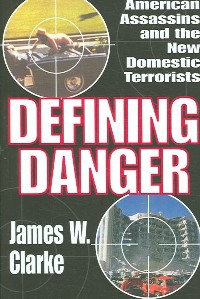
Since the assassination of John F. Kennedy, there have been 10 assassination attempts on nationally prominent political leaders. Clarke (political science, University of Arizona) explores the cultural and psychological linkages that define political assassinations within the context of the new era of domestic terrorism in America begun in the 1990's with the acts of Timothy McVeigh (the Oklahoma City bomber), Ted Kaczynski (the Unabomber), and Eric Rudolph, the abortion clinic bomber. Annotation 漏2007 Book News, Inc., Portland, OR (booknews.com)
Publisher Summary 2
Since 1789, when George Washington became the first president of the United States, forty-three men have held the nation's highest office. Four were killed by assassins,and serious attempts were made on the lives of eight others.Add to that list Martin Luther King, Jr. and Malcolm X,and it is reasonable to conclude that political prominence in the U.S. entails grave risks. In Defining Danger, James W. Clarke explores the cultural and psychological linkages that define assassinations and a new era of domestic terrorism in America.Clarke notes an upsurge in political violence beginning with the assassination of John F. Kennedy in 1963. Since then, there have been ten assassination attempts on nationally prominent political leaders. That is two more than the eight recorded in the previous 174 years of the nation's presidential history. New elements of domestic terror in American life were introduced in the 1990s by Timothy McVeigh, the 鈥淥klahoma City Bomber,鈥?Ted Kacynski, the 鈥淯nabomber,鈥?and Eric Rudolph, the abortion clinic bomber. These men were politically motivated; their crimes were unprecedented. These events and the perpetrators behind them are among the subjects of this book.Defining Danger conveys two central themes. The first is that individual acts of violence directed toward America's democratically elected leaders represent a defining element of American politics. The second addresses how danger is defined, through an analysis of the motives and characteristics of twenty-one perpetrators responsible for these acts of political violence where shots were fired, or bombs detonated, and in most instances, victims died.The book is written in an accessible and engaging stylethat will appeal to the informed general reader, as well as to professionals in a variety of fields鈥攅specially in the wake of recent events and the specter of future violence that, sadly, haunts us all.
目录
Table Of Contents:
Prologue xi
1. On Being Mad or Merely Angry 1
Part 1: Type I
2. Type I鈥擱egion and Class: John Wilkes Booth and Leon F. Czolgosz 11
3. Type I鈥擭ationalism: Oscar Collazo, Griselio Torresola, and Sirhan Bishara Sirhan 57
Part 2: Type II
4. Type II鈥擱ejection: Lee Harvey Oswald and Samuel Joseph Byck 103
5. Type II鈥擳he Feminine Dimension: Lynette Alice Fromme and Sara Jane Moore 145
Part 3: Type III
6. Type III鈥擭ihilism: Giuseppe Zangara and Arthur Herman Bremer 171
7. Type III鈥擭ihilism: John W. Hinckley, Jr. and Francisco Martin Duran 201
Part 4: Type IV and Atypical
8. Type IV鈥擳he Psychotics: Richard Lawrence, Charles J. Guiteau, and John Schrank 235
9. The Atypicals鈥擣amily and Money: Carl Austin Weiss and James Earl Ray 267
Part 5: Domestic Terrorists
10. Industrial Society: Theodore John Kaczynski 309
11. Ruby Ridge, Waco, and Roe v. Wade: Timothy James McVeigh and Eric Robert Rudolph 335
Part 6: Conclusion
l2. Criminal Responsibility and Risk 373
Selected Bibliography 385
Index 401
Prologue xi
1. On Being Mad or Merely Angry 1
Part 1: Type I
2. Type I鈥擱egion and Class: John Wilkes Booth and Leon F. Czolgosz 11
3. Type I鈥擭ationalism: Oscar Collazo, Griselio Torresola, and Sirhan Bishara Sirhan 57
Part 2: Type II
4. Type II鈥擱ejection: Lee Harvey Oswald and Samuel Joseph Byck 103
5. Type II鈥擳he Feminine Dimension: Lynette Alice Fromme and Sara Jane Moore 145
Part 3: Type III
6. Type III鈥擭ihilism: Giuseppe Zangara and Arthur Herman Bremer 171
7. Type III鈥擭ihilism: John W. Hinckley, Jr. and Francisco Martin Duran 201
Part 4: Type IV and Atypical
8. Type IV鈥擳he Psychotics: Richard Lawrence, Charles J. Guiteau, and John Schrank 235
9. The Atypicals鈥擣amily and Money: Carl Austin Weiss and James Earl Ray 267
Part 5: Domestic Terrorists
10. Industrial Society: Theodore John Kaczynski 309
11. Ruby Ridge, Waco, and Roe v. Wade: Timothy James McVeigh and Eric Robert Rudolph 335
Part 6: Conclusion
l2. Criminal Responsibility and Risk 373
Selected Bibliography 385
Index 401
- 名称
- 类型
- 大小
光盘服务联系方式: 020-38250260 客服QQ:4006604884
云图客服:
用户发送的提问,这种方式就需要有位在线客服来回答用户的问题,这种 就属于对话式的,问题是这种提问是否需要用户登录才能提问
Video Player
×
Audio Player
×
pdf Player
×
