

简介
所属分类:少儿 > 少儿原版书 >
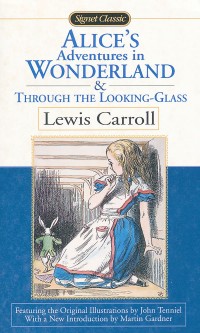
the mad hatter, the ugly duchess, the mock turtle, the queenof hearts, the cheshire cat-characters each eccentric than thelast, and that could only have come from lewis carroll, the masterof sublime nonsense. in these two brilliant burlesques he createdtwo of the most famous and fantastic novels of all time that notonly stirred our imagination but revolutionized literature.
autobor's note
one down the rabbit-hole
two the pool of tears
three a caucus-race and a long tale
four the rabbit sends in a little bill
five advice from a caterpillar
six pig and pepper
seven a mad tea-party
eight the queen's croquet ground
nine the mock turtle's story
ten the lobster quadrille
eleven who stole the tarts?
twelve alice's evidence
e-books from mobilereference - best books. best price.
best search and navigation (tm)
all fiction books are only $0.99. all collections are only
$5.99
designed for optimal navigation on kindle and other electronic
devices
search for any title: enter mobi (shortened mobilereference) and
a keyword; for example: mobi shakespeare
to view all books, click on the mobilereference link next to a
book title
literary classics: over 10,000 complete works by shakespeare,
jane austen, mark twain, conan doyle, jules verne, dickens,
tolstoy, and other authors. all books feature hyperlinked table of
contents, footnotes, and author biography. books are also available
as collections, organized by an author. collections simplify book
access through categorical, alphabetical, and chronological
indexes. they offer lower price, convenience of one-time download,
and reduce clutter of titles in your digital library.
religion: the illustrated king james bible, american standard
bible, world english bible (modern translation), mormon church's
sacred texts
philosophy: rousseau, spinoza, plato, aristotle, marx,
engels
travel guides and phrasebooks for all major cities: new york,
paris, london, rome, venice, prague, beijing, greecemedical study
guides: anatomy and physiology, pharmacology, abbreviations and
terminology, human nervous system, biochemistry
college study guides: free weight and measures, physics, math,
chemistry, organic chemistry, statistics, languages, philosophy,
psychology, mythology
history: art history, american presidents, u.s. history,
encyclopedias of roman empire, ancient egypt
health: acupressure guide, first aid guide, art of love,
cookbook, cocktails, astrology
reference: the world's biggest mobile encyclopedia; cia world
factbook, illustrated encyclopedias of birds, mammals
——this text refers to the kindle edition edition.
alice's adventures in wonderland and through the looking glass
and what alice found there pursue what lies beyond and down rabbit
holes and on reverse sides of mirrors. but mainly their subject is
what comes after, and in this sense the books are allegories about
what a child can know and come to know. this quest, as in many
great works of literature, unwinds against a larger backdrop: what
can and what cannot be known at a particular historical moment, a
moment that in lewis carroll's case preceded both freud's
speculations on the unconscious and heisenberg's formulation of the
uncertainty principle. yet because the books were written by a
teacher of mathematics who was also a reverend, they are also
concerned with what can and cannot be taught to a child who has an
infinite faith in the goodness and good sense of the world. but
alice's quest for knowledge, her desire to become something (a
grown-up) she is not, is inverted. the books are not conventional
quest romances in which alice matures, overcomes obstacles, and
eventually gains wisdom. for when alice arrives in wonderland, she
is already the most reasonable creature there. she is wiser than
any lesson books are able to teach her to be. more important, she
is eminently more reasonable than her own feelings will allow her
to express. what comes after for alice? near the end of through the
looking glass, the white queen tells alice, "something's going to
happen!"
quests for mastery are continually frustrated in the alice books.
in comparison with the ever—sane alice, it is the various
wonderland creatures who appear to be ridiculous, coiners of
abstract word games. yet carroll also frustrates, with equal
precision, alice's more reasonable human desires. why, after all,
cannot alice know why the mad hatter is mad? or why will alice
never get to 20 in her multiplication tables? in carroll, the logic
of mathematical proofs runs counter to the logic of reasonable
human desire—and neither logic is easily mastered. to his radical
epistemological doubt, carroll added a healthy dose of skepticism
for the conventional children's story—a story that in his day came
packaged with a moral aim and treated the child as an innocent or
tabula rasa upon which the morals and knowledge of the adult could
be tidily imprinted.
alice embodies an idea freud would later develop at length: what
alice the child already knows, the adult has yet to learn. or to be
more precise, what alice has not yet forgotten, the adult has yet
to remember as something that is by nature unforgettable. in other
words, in alice childhood fantasy meets the reality of adulthood,
which to the child looks as unreal and unreasonable as a cheshire
cat's grin or a queen who yells "off with her head!" but even as
she calls adult reality unreal, alice, as the most reasonable
creature in her unreasonable dreams, doesn't quite yet realize that
the adult's sense of reality has already taken up residence in her.
the principal dream of most children—the dream within the dream, as
it were—is the dream of not dreaming any longer, the dream of
growing up. for the adult, the outlook is reversed. the adult's
quest is an inverted one: to find those desires again, in more
reasonable forms—and this involves forgetting the original
childhood desires (to become an adult) in order to remember them as
an adult. the psychoanalyst adam phillips notes: "freud is not
really saying that we are really children, but that the sensual
intensities of childhood cannot be abolished, that our ideals are
transformed versions of childhood pleasures. looking forward . . .
is a paradoxical form of looking back. the future is where one
retrieves the pleasures, the bodily pleasures of the past."1 the
alice books manage to show both these quests—that of the child to
look forward, and of the adult to look back—simultaneously, as
mirror logics of each other.
like both freud and the surrealists, carroll implicitly
understood that a child's emotions and desires appear omnipotent
and boundless to the child—and thus make the adult's forgetting of
them difficult if not illogical. growing up poses psychological and
logical absurdities. the quandary of a logically grounded knowledge
constituted out of an illogical universe pervades both books. the
questions that alice asks are not answered by the animals in
wonderland nor by anyone after she wakens. it is likely that her
questions don't have answers or that there are no right questions
to ask. alice's adventures in wonderland and through the looking
glass remain the most prophetic of the nineteenth century's
anti-narratives, inverted quest romances, circular mathematical
treatises on the illogical logic of forgetting one's desires. they
display a logic that the child must master in order to grow up. as
the white queen remarks of the red queen: "she's in that state of
mind . . . that she wants to deny something—only she doesn't know
what to deny!"
lewis carroll's real name was charles lutwidge dodgson. he was
born on 27th january 1832 at daresbury in cheshire. he studied at
christ church, oxford university and later became a mathematics
lecturer there. he wrote alice's adventures in wonderland (1865)
and through the looking glass (1872) for the daughters of the dean
of christ church. he was very fond of puzzles and some readers have
found mathematical jokes and codes hidden in his alice books. his
other works include phantasmagoria and other poems (1869), the
hunting of the snark (1876), rhyme? and reason? (1882), the game of
logic (1887) and sylvie and bruno (1889, 1893). dodgson was also an
influential photographer. he died on 14th january 1898.
目录
Autobor's Note
ONE Down the Rabbit-Hole
TWO The Pool of Tears
THREE A Caucus-Race and a Long Tale
FOUR The Rabbit Sends in a Little Bill
FIVE Advice from a Caterpillar
SIX Pig and Pepper
SEVEN A Mad Tea-Party
EIGHT The Queen's Croquet Ground
NINE The Mock Turtle's Story
TEN The Lobster Quadrille
ELEVEN Who Stole the Tarts?
TWELVE Alice's Evidence
ONE Down the Rabbit-Hole
TWO The Pool of Tears
THREE A Caucus-Race and a Long Tale
FOUR The Rabbit Sends in a Little Bill
FIVE Advice from a Caterpillar
SIX Pig and Pepper
SEVEN A Mad Tea-Party
EIGHT The Queen's Croquet Ground
NINE The Mock Turtle's Story
TEN The Lobster Quadrille
ELEVEN Who Stole the Tarts?
TWELVE Alice's Evidence
- 名称
- 类型
- 大小
光盘服务联系方式: 020-38250260 客服QQ:4006604884
云图客服:
用户发送的提问,这种方式就需要有位在线客服来回答用户的问题,这种 就属于对话式的,问题是这种提问是否需要用户登录才能提问
Video Player
×
Audio Player
×
pdf Player
×
