

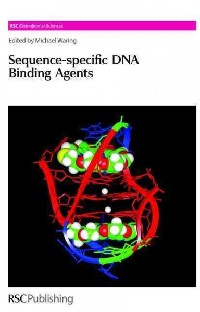
Sequence-specific DNA binding agents /
副标题:无
分类号:
ISBN:9780854043705
微信扫一扫,移动浏览光盘
简介
These eleven chapters assembled by Waring (pharmacology, U. of Cambridge, UK) were written by senior scientists on diverse aspects on the binding of drugs and antibiotics to sequence-specific DNA. Topics include DNA recognition by triple helix formation, interfacial inhibitors of human topoisomerase I, diversity of topoisomerase I inhibitors for cancer chemotherapy, slow DNA binding, DNA gene targeting using peptide nucleic acid, thermal denaturation of drug-DNA complexes, computer simulations of drug-DNA interactions, the discovery of G-quadruplex telomere targeting drugs, the mechanism of action of telomestatin (a G-quadruplex interactive compound), and structural features of the specific interactions between nucleic acids and small organic molecules. Also included is a more historical paper describing sixty rears of research in characterizing the sequence-selective DNA-binding agent, actinomycin D. Annotation 漏2007 Book News, Inc., Portland, OR (booknews.com)
目录
Chapter 1 DNA Recognition by Triple Helix Formation
David A. Rusling, Tom Brown and Keith R. Fox
1I, Introduction
L1.1 Triplets and Triplex Motifs 1
i.2 Strategies to Increase Triplex Stability 3
12.1 Sugar Modifications 3
12.2 Addition of Positive Charges 4
1.2.3 Backbone Modifications 9
1.2.4 Base Stacking 10
1.2.5 Triplex-Binding Ligands 10
1.3 Overcoming the pH Dependency 11
1.3.1 Pyrimidine Base Analogues 12
!3.2 Purine Base Analogues 13
1.4 Recognition of Pyrimidine Interruptions 14
1.4.1 Null Bases and Abasic Linkers 14
1.4.2 Natural Bases 15
.4.3 Nucleotide Analogues for Recognizing
Pyrimidine Interruptions 16
1.4.4 Nucleotide Analogues for Recognizing both
Partners of the Base Pair 18
1.5 Mixed Sequence Recognition 20
Acknowledgements 22
References 22
Chapter 2 Interfacial Inhibitors of Human Topoisomerase I 29
Christophe Marchand and Yves Pommier
2.1 Introduction 29
2.2 Molecular Mechanism of Action of Drugs that Trap
Topl Cleavage Complexes 33
22.21 intercalation between the Base Pairs Flanking
the Topl-Mediated DNA Break 33
22.2 DNA Untwisting by Drugs at the Topl-
Mediated DNA Cleavage Site 35
22.23 Common Hydrogen-Bond Network for Topi
Inhibitors Bound in the Ternary Complex 37
2.3 Generalization of the interfacial Inhibitor ConceDt 39
Acknowledgments 41
References 41
Chapter 3 Diversity of Topoisomerase I Inhibitors for Cancer
Chemotherapy 44
Nathalie Dias and Christian Baillv
3.1 Introduction 44
3.2 Camptothecins 47
3.3 Indenoisoquinolines 51
3.4 Benzimidazoles 54
3.5 Indolocarbazoles 54
3.6 Phenanthridines and Related Compounds 56
3.7 Marine Alkaloids 58
3,8 Plant Natural Products 59
3.9 Conclusion 60
References 60
Chapter 4 Slow DNA Binding 69
L. Marrcs ' ilhelmsson, Per Lincoin and Bentg N'orden
4.1 introduction
Kinetics vs. Thermodynamics of DNA
Binding 69
4.2 Different DNA-Binding Modes - Different DNA-
Binding Kinetics 71
4.21 External Electrostatic Binding 74
4.2.2 Groove Binding 75
4.2.3 intercalation 76
4 2.4 Threading Intercalation 77
4.3 Common Slow DNA Binders 78
4.3.1 Actinomnycin D 78
4.3.2 Nogalarvcin 80
4.4 Ruthenium Complexes Exhibiting Slow DNA Binding
Kinetics 82
4.4, 1 Bis-intercalating Ru-dimer [pIc4(cpdppz>
(phen)4Ru ]4 84
4.4,2 Semirigid Ru-dimer - 1,l l'-bidppz)(x)4Ruj]4
(1 x - phen or hipy) 87
References 91
Chapter 5 DNA Gene Targeting using Peptide Nucleic Acid (PNA) 96
Peter E. Nielsen
5.1 Introduction 96
5.2 Duplex DNA Recognition in vitro 97
5.3 PNA Conjugates 99
54 Effect of PNA Binding on DNA Structure 100
5.5 Cellular Gene Targeting 101
5.6 Activation of Gene Transcription 102
5.7 Gene-Targeted Repair 102
"5.8 Cellular Delivery and Bioavailability in vivo 102
5.9 Prospects 103
References 103
Chapter 6 Actinomycin D: Sixty Years of Progress in Characterizing
a Sequence-Selective DNA-Binding Agent 109
David E, Graves
6.1 Summary 109
6.2 Introduction 1 10
6.2.1 Historical Perspectives 110
6.3 DNA-Binding Studies: The Early Years 113
6.3.1 The Intercalation Model 113
6.3.2 Sequence-Selectivity of Actinomycin D 1 5
6.4 Characterization of the Actinomycin D-DNA
Complex 116
6.4.1 Role of Bases Flanking the Actinomycin
D-Binding Site 1 16
6,4.2 Promiscuity in the Sequence Selectivity of
Actinomycin D 18
6.5 Global vs. Microscopic Sequence-Recognition 119
,5.1 The Shufflig Hypothesis Revisited 20
6,6 Structural Motifs as Actinomycin D Targets 122
6.6.1 The Era of Single-Strand DNA Binding 1 22
6.7 Conclusions 125
Acknowledgments 126
References 126
Chapter 7 Thermal Denaturation of Drug-DNA Complexes:
Tools and Tricks 130
Jonathan B. Chaires and Xiaochun Shi
7.1 introduction 130
7 2 Thermal Denaturation Tools 131
7.2.1 Analysis of T, Shifts in the Presence of Drug 131
7.2.2 Obtaining Binding Enthaipy Values by DSC 133
.2.3 Modeling Melting Curves by McGhee's
Algorithm 136
7 2,4 Case Studies: B isitercalating Anthracyclines
and Echinomycin 137
7.2.5 Summary: Advantages and Pitfalls 142
/3 Thermal Denaturation New Tricks 143
"7 .31 Melting Mixtures to Assess Sequence- and
Structural-Selectivity 143
7,3.2 Advantages and Prospects 148
7.4 Summary 148
Acknowledgments 148
References 148
Chapter 8 Computer Simulations of Drug-DNA interactions: A
Personal Journey 152
Federico Gago
l.I introduction 152
8.2 Minor Groove DNA Binders 155
8.3 Natural Bifunctiona Intercalators and Hoogsteen
Base Pairing 158
8.4 Bisfntercalation of Echinomycin and Related
Bifunctional Agents in Relation to Binding Sequence
Preferences 162
8.5 Binding Preferences of Synthetic Pyridocarbazole
Bis-Intercalators 167
8.6 Sequence Selectivity of Actinomycin D i69
8.7 Binding of the Potent Antitumour Agent Trabectedin
to DNA 171
8.8 Lamellarins as Topoisorerase I Poisons 176
8.9 Concluding Remarks 179
Acknowledgements 79
References 179
Chapter 9 The Discovery of G-Quadruplex Telomere Targeting Drugs 190
St phen Neidle
9. I ntroduction 190
9.2 Anthraquinones and Intercalation into Duplex DNA 190
9.3 Interactions with Higher-Order DNA 192
9.4 Telomerase and Cancer 192
9.5 First-Generation G-Quadruplex Ligands 193
9.6 Molecular Models for Quadruplex-Trisubstituted
Acridi e Complexes 197
9.7 Cellular and Pharmacological Properties of
Trisubsitulted Acridines 200
9.8 Conclusions 20 1
Acknowledgements 202
References 202
Chapter 10 The Mechanism of Action of Telomestatin, a G-Quadruplex-
Interactive Compound 207
Daekvu Sun cnd Laurence H. Hurlev
10.1 ntroduction 207
10.L 1 Te omere Structure in Mammals and
Telomerase 207
10. 1.2 Mechanism of Inhibition of Telomerase by
Telomestatin 2
10. 3 The Stoichiometry of Binding of Telomestatin
to the Human Telomeric G-Quadruplex 212
10 1.4 Identity of the Telomeric G Quadruplex
Formed in the Presence of Telomestatin 214
10.1.5 Proposed Models for Telomestatin Binding to
the Human Telomeric G-Quadruplex
Structure 215
0.1 .6 Potential Effect of Telomestatin on the
Assembly of Telomteres into Higher-Order
Structures 224
10.1 .7 Genonic Instability Caused by Telomestatin
Treatment and Activation of DNA Damage
Response 226
i01.8 Other Mechanisms of Telornestatin in
Mediating its Biological Activity 226
10.2 Concluding Remarks 228
Acknowledgments 228
References 228
Chapter I t Structural Features of the Specific Interactions between
Nucleic Acids and Small Organic Molecules 233
Alexander Serganov and Dinshaw J. Pate!
11.1 Introduction 233
S1.2 Diels-Alder Ribozymes 234
11 3 Theophylline and Flavin Mononucleotide Bindingi 238
1 I4 Purine Riboswitches 240
11.5 Adenosine Monophosphate Binding 245
1 .6 Conclusions 247
1 11 Perspectives 248
References 249
Sequence-specific DNA binding agents /
- 名称
- 类型
- 大小
光盘服务联系方式: 020-38250260 客服QQ:4006604884
云图客服:
用户发送的提问,这种方式就需要有位在线客服来回答用户的问题,这种 就属于对话式的,问题是这种提问是否需要用户登录才能提问
Video Player
×
Audio Player
×
pdf Player
×
