

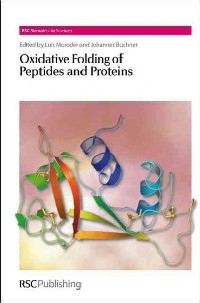
Oxidative folding of peptides and proteins /
副标题:无
作 者:edited by Johannes Buchner, Luis Moroder.
分类号:
ISBN:9780854041480
微信扫一扫,移动浏览光盘
简介
"The formation of disulfide bonds is probably the most influential modification of peptides and proteins. An elaborate set of cellular machinery exists to catalyse andguide this process. In recent years, significant developments have been made in both our understanding of the in vivo situation and the in vivo manipulation of disulfide bonds. This is the first monograph to provide a comprehensive overview of this rapidly developing area. Itoffers in-depth insights into the mechanisms of in vivo and in vitro oxidative foldinq of proteins and mono- and multiple-stranded peptides."--BOOK JACKET
目录
Table Of Contents:
Oxidative Folding of Proteins in vivo
Thioredoxins and the Regulation of Redox Conditions in Prokaryotes
Carsten Berndt
Arne Holmgren
The Thioredoxin Family of Proteins 2(1)
The Thioredoxin Fold 2(1)
Thioredoxins and the Thioredoxin System 3(1)
Glutaredoxins and the Glutaredoxin System 4(1)
NrdH and Other Related Proteins 5(1)
Functions of Thioredoxin and Glutaredoxin 6(1)
Regulation of Redox Conditions 6(1)
Regulation of Metabolic Enzymes 7(1)
Thioredoxins, Glutaredoxins and Protein Folding 8(1)
Regulation of Protein Folding via Electrons Provided by Thioredoxins and Glutaredoxins 8(1)
Thioredoxins and Glutaredoxins Acting as Protein Disulfide Isomerases or Molecular Chaperones 9(2)
Concluding Remarks 11(1)
Acknowledgments 12(1)
References 12(7)
Disulfide-bond Formation and Isomerization in Prokaryotes
Goran Malojcic
Rudi Glockshuber
Introduction 19(1)
Disulfide-bond Formation 20(1)
The Periplasmic Dithiol Oxidase DsbA 20(3)
DsbB 23(4)
Disulfide-bond Isomerization 27(1)
Disulfide-bond Isomerase DsbC 27(2)
Reactivation of DsbC: The Inner Membrane Electron Transporter DsbD 29(4)
DsbG, a Structural Homolog of DsbC with Unknown Function 33(1)
The Cytochrome c Maturation Factor CcmG is a DsbD Substrate 33(1)
Coexistence of the Oxidative Disulfide-bond Formation and the Reductive Disulfide Isomerization Pathways 34(2)
Concluding Remarks 36(1)
Acknowledgements 36(1)
References 36(5)
The Periplasm of E. coli --- Oxidative Folding of Recombinant Proteins
Katharina M. Gebendorfer
Jeannette Winter
Escherichia coli as Host for the Production of Recombinant Proteins --- Benefits and Drawbacks 41(1)
Cytoplasm, Periplasm or Cultivation Media --- Where to Direct the Target Protein? 42(2)
Physiology and Properties of the Periplasm 44(1)
The Periplasm --- How to Get There? 45(1)
Signal Sequences 45(2)
Secretion of Unfolded Proteins via the Sec Pathway 47(1)
Secretion of Folded Proteins via the Tat Pathway 48(2)
Biotechnological Application --- the Periplasm as Production Compartment for Recombinant Proteins 50(1)
Production of Antibodies and Antibody Fragments 51(3)
Secretory Production of Human Proinsulin 54(3)
Production of Other Therapeutic Proteins 57(1)
Conclusions and Future Directions 58(1)
Acknowledgements 59(1)
References 59(8)
Oxidative Protein Folding in Mitochondria
Kai Hell
Walter Neupert
Introduction 67(2)
Disulfide Bonds in the IMS of Mitochondria 69(1)
Protein Import into the IMS by Oxidative Protein Folding 70(1)
The Redox-dependent Import Receptor Mia40 70(2)
The FAD-dependent Sulfhydryl Oxidase Erv1 72(1)
The Mia40-Erv1 Disulfide Relay System 73(2)
Cytochrome c Links the Disulfide Relay System to the Respiratory Chain of Mitochondria 75(1)
Oxidative Protein Folding Drives Import of Sod1 76(1)
Conclusion and Perspectives 77(1)
Acknowledgements 77(1)
References 77(4)
Oxidative Folding in the Endoplasmic Reticulum
Seema Chakravarthi
Catherine E. Jessop
Neil J. Bulleid
Introduction 81(1)
Biochemistry of Disulfide-bond Formation 82(1)
Folding Environment of the ER 82(3)
Thiol Disulfide Oxidoreductase Family 85(1)
Disulfide-bond Oxidation Pathway 86(1)
Protein Disulfide Isomerase (PDI) 86(3)
Oxidation by Ero1 89(2)
Oxidation by QSOX 91(1)
Disulfide-bond Reduction Pathway 92(1)
The Role of Glutathione in the ER 93(2)
Maintaining the Redox Balance of the ER 95(2)
Substrate Recognition by PDI and its Homologs 97(2)
Conclusion 99(1)
References 100(5)
The Ero1 Sulfhydryl Oxidase and the Oxidizing Potential of the Endoplasmic Reticulum
Deborah Fass
Carolyn S. Sevier
Introduction 105(1)
Mechanism for Generation and Transfer of Disulfides by Ero1 106(1)
A Route for Intramolecular Electron Transfer Supported by the Ero1 Structure 106(2)
Oxidation of PDI by Ero1 108(2)
Comparison of Ero1 with the DsbB Intramembrane Sulfhydryl Oxido-reductase of Bacteria 110(3)
Comparison of Ero1 to Erv Sulfhydryl Oxidases 113(1)
Destination of Reducing Equivalents Derived from Cysteine Thiol Oxidation by Ero1 113(1)
Regulation of Ero1 and the Maintenance of Redox Homeostasis in the ER 114(2)
Ero1 Orthologs 116(1)
Summary 117(1)
References 117(4)
Eukaryotic Protein Disulfide-isomerases and their Potential in the Production of Disulfide-bonded Protein Products: What We Need to Know but Do Not!
Robert B. Freedman
Introduction 121(2)
Evidence that PDI is Rate or Yield Limiting in the Production of High-value Proteins 123(1)
Oxidative Folding in vitro 123(3)
Optimizing Production of Disulfide-bonded Proteins in Escherichia coli 126(2)
Optimizing Production of Disulfide-bonded Proteins in Saccharomyces cerevisiae 128(1)
Optimizing Production of Disulfide-bonded Proteins in Mammalian and Insect Cells 129(3)
What Limits our Ability to Enhance the Usefulness of PDI in the Production of High-value Proteins? 132(1)
Functional Organization of Chaperones and Folding Factors in the ER 132(3)
Functional Significance of the Existence of Multiple Members of the PDI Family 135(5)
Functional Organization of the Flow of Redox Equivalents to Newly Synthesized Proteins in the ER: Linear Electron Transfer Chain or Network? 140(6)
Dynamic Description of the Action of PDI on Protein Substrates 146(5)
Acknowledgements 151(1)
References 151(7)
Cellular Responses to Oxidative Stress
Marianne Ilbert
Caroline Kumsta
Ursula Jakob
Oxidative Stress: An Imbalance in Favor of Pro-oxidants 158(1)
Reactive Oxygen Species 158(1)
The Deleterious Effects of Oxidative Stress 159(1)
Cellular Responses to Oxidative Stress 159(1)
Cysteines: The Building Blocks of ROS-sensing Nano-switches 160(1)
OxyR: A Redox-regulated Transcription Factor 161(1)
Discovery of an H2O2-response Regulator in E. coli 161(1)
The OxyR Regulon 162(1)
Redox Regulation of OxyR's Function 162(4)
Biotechnological Application of OxyR 166(1)
Hsp33: A Chaperone Specialized for Oxidative Stress Protection 167(1)
The Redox-regulated Chaperone Holdase Hsp33 167(1)
Mechanism of Hsp33's Redox Regulation 168(4)
Hsp33: Central Member of a Multi-chaperone Network 172(1)
Oxidative Stress and Redox Regulation: Turning Lemons into Lemonade 173(1)
References 174(5)
Oxidative Folding of Proteins in vitro
The Role of Disulfide Bonds in Protein Folding and Stability
Matthias Johannes Feige
Johannes Buchner
Introduction 179(1)
Stabilization of Proteins by Disulfide Bonds 180(5)
Disulfide Bonds in Protein Folding Reactions 185(3)
Conclusions 188(1)
References 188(7)
Strategies for the Oxidative in vitro Refolding of Disulfide-bridge-containing Proteins
Rainer Rudolph
Christian Lange
Introduction 195(2)
Chemical Systems for the in vitro Formation of Disulfide Bridges 197(1)
Transition Metal-catalyzed Air Oxidation 198(1)
Thiol-Disulfide Exchange Systems 199(1)
Mixed Disulfides 200(2)
Enzymatic Catalysis of Disulfide-bond Formation in vitro 202(3)
Alternative Approaches to Oxidative in vitro Folding 205(1)
Dithiols 205(1)
Aromatic Thiols 206(1)
Matrix-assisted Oxidative Refolding 207(2)
Other Oxidizing Compounds 209(1)
Electrochemical Oxidation 210(1)
Chemical Modification of Cysteine Residues in vitro 211(1)
Cell-free Expression Systems 212(1)
Conclusions 213(1)
References 213(7)
Redox Potentials of Cysteine Residues in Peptides and Proteins: Methods for their Determination
Dallas L. Rabenstein
Introduction 220(1)
Formation of Disulfide Bonds by Thiol-disulfide Exchange 220(2)
Redox Potentials of Mixed Disulfide Bonds 222(1)
Redox Potentials of Intramolecular Disulfide Bonds 223(1)
Measurement of Equilibrium Constants for Thiol-disulfide Exchange 224(3)
Reference Redox Couples 227(2)
The GSH/GSSG Reference Redox Couple 229(1)
Determination of Redox Potentials with GSH/GSSG1 Redox Buffers: an Example 230(2)
Determination of Redox Potentials by the Direct Protein-Protein Equilibration Method: an Example 232(4)
References 233(3)
Engineered Disulfide Bonds for Protein Design
Luis Moroder
Hans-Jurgen Musiol
Christian Renner
Introduction 236(2)
Helices 238(4)
Disulfide-stabilized Helices 238(1)
Helical Bundles 239(3)
β-Turns 242(1)
β-Sheets 243(4)
β-Hairpins 243(4)
Multi-stranded β-Sheets 247(1)
Conclusions 247(6)
Acknowledgements 248(1)
References 248(5)
Selenocysteine as a Probe of Oxidative Protein Folding
Joris Beld
Kenneth J. Woycechowsky
Donald Hilvert
Introduction 253(3)
Incorporation of Selenocysteine into Proteins 256(4)
Codon Suppression 256(1)
Codon Reassignment 257(1)
Post-translational Modification 258(1)
Peptide Synthesis 259(1)
Oxidative Protein Folding 260(7)
Selenium as a Folding Probe 260(4)
Selenium as a Folding Catalyst 264(3)
Perspectives 267(7)
References 268(6)
Oxidative Folding of Peptides in vitro
Oxidative Folding of Single-stranded Disulfide-rich Peptides
Grzegorz Bulaj
Aleksandra Walewska
Introduction 274(5)
Molecular Diversity of Disulfide-rich Peptides 274(1)
Oxidative Folding Problem 275(4)
Scope of the Chapter 279(1)
Mechanisms of in vitro Oxidative Folding 279(8)
Thiol/Disulfide Exchange Reactions in Peptides 280(1)
Cysteine Patterns and Loop Sizes 280(2)
Amino Acid Sequences and Non-covalent Interactions 282(2)
A Case Study - Folding of ω-Conotoxin MVIIA 284(1)
Role of Post-translational Modifications 284(1)
Oxidative Folding Conditions - Practical Considerations 285(2)
Biosynthetic Aspects of the Oxidative Folding 287(5)
Precursor Sequences 287(2)
Protein Disulfide Isomerase 289(1)
Macromolecular Crowding 289(2)
Oxidative Folding in the Endoplasmic Reticulum 291(1)
Conclusions and Outlook 292(5)
Acknowledgements 292(1)
References 292(5)
Regioselective Disulfide Formation
Knut Adermann
Kleomenis Barlos
Introduction 297(1)
Thiol-protecting Groups 298(2)
Regioselective Disulfide Formation in Solution 300(10)
Peptides with Two Disulfides 301(4)
Peptides with Three Disulfides 305(3)
Peptides with Multiple Disulfides 308(2)
Disulfide Formation on the Solid Support 310(2)
Semi-selective Formation of Disulfide Bonds 312(1)
Concluding Remarks 313(5)
References 314(4)
Folding Motifs of Cystine-rich Peptides
Norelle L. Daly
David J. Craik
Overview of Folding Motifs in Disulfide-rich Peptides 318(2)
Sources, Activities and Structures of Disulfide-rich Peptides 318(2)
Scope of Review 320(1)
Classes of Disulfide-rich Motifs 320(10)
Geometry of the Disulfide Bond 321(1)
Disulfide-bond Frameworks 322(6)
Fold Classifications 328(2)
Examples and Applications of Peptide Classes with Disulfide-rich Motifs 330(5)
Cyclotides 330(3)
Conotoxin Frameworks 333(1)
Defensin Frameworks 334(1)
Disulfide-rich Frameworks as Bioengineering Scaffolds 335(2)
Outlook 337(8)
Acknowledgements 337(1)
References 337(8)
Double-stranded Cystine Peptides
John D. Wade
Introduction 345(1)
Insulin and Insulin-like Peptides 346(3)
Human Insulin 346(2)
Insulin-like Peptides from Other Species 348(1)
Other Double-stranded Cystine Peptides 349(1)
From Natural Origin 349(1)
Synthetic Constructs 350(1)
Oxidative Folding 350(3)
Combination of Two Chains into Double-stranded Peptides 350(1)
Insulin and Insulin-like Peptides 351(2)
Regioselective Disulfide Formation 353(4)
Oxidative Folding of Single Chain Precursors 357(2)
Head-to-tail Constructs 358(1)
Precursors with Mini-connecting Peptides 358(1)
Folding Pathways of Insulin 359(2)
Concluding Remarks 361(6)
Acknowledgements 361(1)
References 361(6)
Multiple-strand Cystine Peptides
Marion G. Gotz
Hans-Jurgen Musiol
Luis Moroder
Introduction 367(2)
Synthesis of Disulfide Cross-linked Homotrimeric Collagenous Peptides 369(5)
Oxidative Assembly of Collagenous Homotrimers with the C-Terminal Cystine Knot of Collagen Type III 369(2)
Oxidative Assembly of Collagenous Homotrimers with the Cystine Knot of FACIT COL1-NC1 Junctions 371(1)
Assembly of Homotrimeric Collagen Peptides by Regioselective Disulfide Formation 372(2)
Synthesis of Disulfide Cross-linked Heterotrimeric Collagenous Peptides 374(3)
Oxidative Assembly of Collagenous Heterotrimers with the Cystine Knot of Collagen Type IX 375(1)
Assembly of Heterotrimeric Collagen Molecules by Regioselective Disulfide Formation 375(2)
Concluding Remarks 377(4)
References 377(4)
Cystine-based Scaffolds for Functional Miniature Proteins
Rudolf K Allemann
Introduction 381(1)
Pre-organization of Amino Acid Side-chains 382(1)
Natural Linear Cystine-stabilized Peptides and Cyclotides 383(2)
Cystine-stabilized Miniature Proteins 385(7)
A Metal Ion Induced Helical Foldamer 385(1)
ApaMyoD: A Miniature DNA-binding Protein 386(3)
Apoxaldie-1: A Miniature Oxaloacetate Decarboxylase 389(3)
Conclusion 392(4)
Acknowledgements 392(1)
References 392(4)
Selenocystine Peptides - Synthesis, Folding and Applications
Markus Muttenthaler
Paul F. Alewood
Introduction 396(1)
Selenium - Isosteric Replacement for Sulfur 397(6)
Selenium 397(1)
Selenocysteine - the 21st Proteinogenic Amino Acid 398(1)
Selenocysteine as an Isosteric Replacement for Cysteine 399(1)
Selenocysteine and its Role as a Mechanistic Probe 399(1)
pKa, Nucleophilicity and Reactivity 400(2)
The Redox Potential of Selenocysteine 402(1)
Selenocystine in Reducing Environments 402(1)
Incorporation of Selenocysteine into Peptides and Proteins 403(3)
Peptide Synthesis 403(2)
Deprotection, Cleavage 405(1)
Synthesis of Selenocysteine Building Blocks 406(2)
Overview 406(1)
Selenol Protection 407(1)
Building Blocks for Fmoc/tBu Chemistry 407(1)
Building Blocks for Boc/Bzl Chemistry 407(1)
Reactions with Selenocysteine 408(4)
Selenocysteine-mediated Native Chemical Ligation 408(1)
Dehydroamino Acids - Versatile Precursors 409(3)
Concluding Remarks and Perspectives 412(1)
Scaffold Design 412(1)
Folding Pathways 412(1)
Tailoring of Enzymatic Reactions 413(1)
References 413(6)
Subject Index 419
Oxidative Folding of Proteins in vivo
Thioredoxins and the Regulation of Redox Conditions in Prokaryotes
Carsten Berndt
Arne Holmgren
The Thioredoxin Family of Proteins 2(1)
The Thioredoxin Fold 2(1)
Thioredoxins and the Thioredoxin System 3(1)
Glutaredoxins and the Glutaredoxin System 4(1)
NrdH and Other Related Proteins 5(1)
Functions of Thioredoxin and Glutaredoxin 6(1)
Regulation of Redox Conditions 6(1)
Regulation of Metabolic Enzymes 7(1)
Thioredoxins, Glutaredoxins and Protein Folding 8(1)
Regulation of Protein Folding via Electrons Provided by Thioredoxins and Glutaredoxins 8(1)
Thioredoxins and Glutaredoxins Acting as Protein Disulfide Isomerases or Molecular Chaperones 9(2)
Concluding Remarks 11(1)
Acknowledgments 12(1)
References 12(7)
Disulfide-bond Formation and Isomerization in Prokaryotes
Goran Malojcic
Rudi Glockshuber
Introduction 19(1)
Disulfide-bond Formation 20(1)
The Periplasmic Dithiol Oxidase DsbA 20(3)
DsbB 23(4)
Disulfide-bond Isomerization 27(1)
Disulfide-bond Isomerase DsbC 27(2)
Reactivation of DsbC: The Inner Membrane Electron Transporter DsbD 29(4)
DsbG, a Structural Homolog of DsbC with Unknown Function 33(1)
The Cytochrome c Maturation Factor CcmG is a DsbD Substrate 33(1)
Coexistence of the Oxidative Disulfide-bond Formation and the Reductive Disulfide Isomerization Pathways 34(2)
Concluding Remarks 36(1)
Acknowledgements 36(1)
References 36(5)
The Periplasm of E. coli --- Oxidative Folding of Recombinant Proteins
Katharina M. Gebendorfer
Jeannette Winter
Escherichia coli as Host for the Production of Recombinant Proteins --- Benefits and Drawbacks 41(1)
Cytoplasm, Periplasm or Cultivation Media --- Where to Direct the Target Protein? 42(2)
Physiology and Properties of the Periplasm 44(1)
The Periplasm --- How to Get There? 45(1)
Signal Sequences 45(2)
Secretion of Unfolded Proteins via the Sec Pathway 47(1)
Secretion of Folded Proteins via the Tat Pathway 48(2)
Biotechnological Application --- the Periplasm as Production Compartment for Recombinant Proteins 50(1)
Production of Antibodies and Antibody Fragments 51(3)
Secretory Production of Human Proinsulin 54(3)
Production of Other Therapeutic Proteins 57(1)
Conclusions and Future Directions 58(1)
Acknowledgements 59(1)
References 59(8)
Oxidative Protein Folding in Mitochondria
Kai Hell
Walter Neupert
Introduction 67(2)
Disulfide Bonds in the IMS of Mitochondria 69(1)
Protein Import into the IMS by Oxidative Protein Folding 70(1)
The Redox-dependent Import Receptor Mia40 70(2)
The FAD-dependent Sulfhydryl Oxidase Erv1 72(1)
The Mia40-Erv1 Disulfide Relay System 73(2)
Cytochrome c Links the Disulfide Relay System to the Respiratory Chain of Mitochondria 75(1)
Oxidative Protein Folding Drives Import of Sod1 76(1)
Conclusion and Perspectives 77(1)
Acknowledgements 77(1)
References 77(4)
Oxidative Folding in the Endoplasmic Reticulum
Seema Chakravarthi
Catherine E. Jessop
Neil J. Bulleid
Introduction 81(1)
Biochemistry of Disulfide-bond Formation 82(1)
Folding Environment of the ER 82(3)
Thiol Disulfide Oxidoreductase Family 85(1)
Disulfide-bond Oxidation Pathway 86(1)
Protein Disulfide Isomerase (PDI) 86(3)
Oxidation by Ero1 89(2)
Oxidation by QSOX 91(1)
Disulfide-bond Reduction Pathway 92(1)
The Role of Glutathione in the ER 93(2)
Maintaining the Redox Balance of the ER 95(2)
Substrate Recognition by PDI and its Homologs 97(2)
Conclusion 99(1)
References 100(5)
The Ero1 Sulfhydryl Oxidase and the Oxidizing Potential of the Endoplasmic Reticulum
Deborah Fass
Carolyn S. Sevier
Introduction 105(1)
Mechanism for Generation and Transfer of Disulfides by Ero1 106(1)
A Route for Intramolecular Electron Transfer Supported by the Ero1 Structure 106(2)
Oxidation of PDI by Ero1 108(2)
Comparison of Ero1 with the DsbB Intramembrane Sulfhydryl Oxido-reductase of Bacteria 110(3)
Comparison of Ero1 to Erv Sulfhydryl Oxidases 113(1)
Destination of Reducing Equivalents Derived from Cysteine Thiol Oxidation by Ero1 113(1)
Regulation of Ero1 and the Maintenance of Redox Homeostasis in the ER 114(2)
Ero1 Orthologs 116(1)
Summary 117(1)
References 117(4)
Eukaryotic Protein Disulfide-isomerases and their Potential in the Production of Disulfide-bonded Protein Products: What We Need to Know but Do Not!
Robert B. Freedman
Introduction 121(2)
Evidence that PDI is Rate or Yield Limiting in the Production of High-value Proteins 123(1)
Oxidative Folding in vitro 123(3)
Optimizing Production of Disulfide-bonded Proteins in Escherichia coli 126(2)
Optimizing Production of Disulfide-bonded Proteins in Saccharomyces cerevisiae 128(1)
Optimizing Production of Disulfide-bonded Proteins in Mammalian and Insect Cells 129(3)
What Limits our Ability to Enhance the Usefulness of PDI in the Production of High-value Proteins? 132(1)
Functional Organization of Chaperones and Folding Factors in the ER 132(3)
Functional Significance of the Existence of Multiple Members of the PDI Family 135(5)
Functional Organization of the Flow of Redox Equivalents to Newly Synthesized Proteins in the ER: Linear Electron Transfer Chain or Network? 140(6)
Dynamic Description of the Action of PDI on Protein Substrates 146(5)
Acknowledgements 151(1)
References 151(7)
Cellular Responses to Oxidative Stress
Marianne Ilbert
Caroline Kumsta
Ursula Jakob
Oxidative Stress: An Imbalance in Favor of Pro-oxidants 158(1)
Reactive Oxygen Species 158(1)
The Deleterious Effects of Oxidative Stress 159(1)
Cellular Responses to Oxidative Stress 159(1)
Cysteines: The Building Blocks of ROS-sensing Nano-switches 160(1)
OxyR: A Redox-regulated Transcription Factor 161(1)
Discovery of an H2O2-response Regulator in E. coli 161(1)
The OxyR Regulon 162(1)
Redox Regulation of OxyR's Function 162(4)
Biotechnological Application of OxyR 166(1)
Hsp33: A Chaperone Specialized for Oxidative Stress Protection 167(1)
The Redox-regulated Chaperone Holdase Hsp33 167(1)
Mechanism of Hsp33's Redox Regulation 168(4)
Hsp33: Central Member of a Multi-chaperone Network 172(1)
Oxidative Stress and Redox Regulation: Turning Lemons into Lemonade 173(1)
References 174(5)
Oxidative Folding of Proteins in vitro
The Role of Disulfide Bonds in Protein Folding and Stability
Matthias Johannes Feige
Johannes Buchner
Introduction 179(1)
Stabilization of Proteins by Disulfide Bonds 180(5)
Disulfide Bonds in Protein Folding Reactions 185(3)
Conclusions 188(1)
References 188(7)
Strategies for the Oxidative in vitro Refolding of Disulfide-bridge-containing Proteins
Rainer Rudolph
Christian Lange
Introduction 195(2)
Chemical Systems for the in vitro Formation of Disulfide Bridges 197(1)
Transition Metal-catalyzed Air Oxidation 198(1)
Thiol-Disulfide Exchange Systems 199(1)
Mixed Disulfides 200(2)
Enzymatic Catalysis of Disulfide-bond Formation in vitro 202(3)
Alternative Approaches to Oxidative in vitro Folding 205(1)
Dithiols 205(1)
Aromatic Thiols 206(1)
Matrix-assisted Oxidative Refolding 207(2)
Other Oxidizing Compounds 209(1)
Electrochemical Oxidation 210(1)
Chemical Modification of Cysteine Residues in vitro 211(1)
Cell-free Expression Systems 212(1)
Conclusions 213(1)
References 213(7)
Redox Potentials of Cysteine Residues in Peptides and Proteins: Methods for their Determination
Dallas L. Rabenstein
Introduction 220(1)
Formation of Disulfide Bonds by Thiol-disulfide Exchange 220(2)
Redox Potentials of Mixed Disulfide Bonds 222(1)
Redox Potentials of Intramolecular Disulfide Bonds 223(1)
Measurement of Equilibrium Constants for Thiol-disulfide Exchange 224(3)
Reference Redox Couples 227(2)
The GSH/GSSG Reference Redox Couple 229(1)
Determination of Redox Potentials with GSH/GSSG1 Redox Buffers: an Example 230(2)
Determination of Redox Potentials by the Direct Protein-Protein Equilibration Method: an Example 232(4)
References 233(3)
Engineered Disulfide Bonds for Protein Design
Luis Moroder
Hans-Jurgen Musiol
Christian Renner
Introduction 236(2)
Helices 238(4)
Disulfide-stabilized Helices 238(1)
Helical Bundles 239(3)
β-Turns 242(1)
β-Sheets 243(4)
β-Hairpins 243(4)
Multi-stranded β-Sheets 247(1)
Conclusions 247(6)
Acknowledgements 248(1)
References 248(5)
Selenocysteine as a Probe of Oxidative Protein Folding
Joris Beld
Kenneth J. Woycechowsky
Donald Hilvert
Introduction 253(3)
Incorporation of Selenocysteine into Proteins 256(4)
Codon Suppression 256(1)
Codon Reassignment 257(1)
Post-translational Modification 258(1)
Peptide Synthesis 259(1)
Oxidative Protein Folding 260(7)
Selenium as a Folding Probe 260(4)
Selenium as a Folding Catalyst 264(3)
Perspectives 267(7)
References 268(6)
Oxidative Folding of Peptides in vitro
Oxidative Folding of Single-stranded Disulfide-rich Peptides
Grzegorz Bulaj
Aleksandra Walewska
Introduction 274(5)
Molecular Diversity of Disulfide-rich Peptides 274(1)
Oxidative Folding Problem 275(4)
Scope of the Chapter 279(1)
Mechanisms of in vitro Oxidative Folding 279(8)
Thiol/Disulfide Exchange Reactions in Peptides 280(1)
Cysteine Patterns and Loop Sizes 280(2)
Amino Acid Sequences and Non-covalent Interactions 282(2)
A Case Study - Folding of ω-Conotoxin MVIIA 284(1)
Role of Post-translational Modifications 284(1)
Oxidative Folding Conditions - Practical Considerations 285(2)
Biosynthetic Aspects of the Oxidative Folding 287(5)
Precursor Sequences 287(2)
Protein Disulfide Isomerase 289(1)
Macromolecular Crowding 289(2)
Oxidative Folding in the Endoplasmic Reticulum 291(1)
Conclusions and Outlook 292(5)
Acknowledgements 292(1)
References 292(5)
Regioselective Disulfide Formation
Knut Adermann
Kleomenis Barlos
Introduction 297(1)
Thiol-protecting Groups 298(2)
Regioselective Disulfide Formation in Solution 300(10)
Peptides with Two Disulfides 301(4)
Peptides with Three Disulfides 305(3)
Peptides with Multiple Disulfides 308(2)
Disulfide Formation on the Solid Support 310(2)
Semi-selective Formation of Disulfide Bonds 312(1)
Concluding Remarks 313(5)
References 314(4)
Folding Motifs of Cystine-rich Peptides
Norelle L. Daly
David J. Craik
Overview of Folding Motifs in Disulfide-rich Peptides 318(2)
Sources, Activities and Structures of Disulfide-rich Peptides 318(2)
Scope of Review 320(1)
Classes of Disulfide-rich Motifs 320(10)
Geometry of the Disulfide Bond 321(1)
Disulfide-bond Frameworks 322(6)
Fold Classifications 328(2)
Examples and Applications of Peptide Classes with Disulfide-rich Motifs 330(5)
Cyclotides 330(3)
Conotoxin Frameworks 333(1)
Defensin Frameworks 334(1)
Disulfide-rich Frameworks as Bioengineering Scaffolds 335(2)
Outlook 337(8)
Acknowledgements 337(1)
References 337(8)
Double-stranded Cystine Peptides
John D. Wade
Introduction 345(1)
Insulin and Insulin-like Peptides 346(3)
Human Insulin 346(2)
Insulin-like Peptides from Other Species 348(1)
Other Double-stranded Cystine Peptides 349(1)
From Natural Origin 349(1)
Synthetic Constructs 350(1)
Oxidative Folding 350(3)
Combination of Two Chains into Double-stranded Peptides 350(1)
Insulin and Insulin-like Peptides 351(2)
Regioselective Disulfide Formation 353(4)
Oxidative Folding of Single Chain Precursors 357(2)
Head-to-tail Constructs 358(1)
Precursors with Mini-connecting Peptides 358(1)
Folding Pathways of Insulin 359(2)
Concluding Remarks 361(6)
Acknowledgements 361(1)
References 361(6)
Multiple-strand Cystine Peptides
Marion G. Gotz
Hans-Jurgen Musiol
Luis Moroder
Introduction 367(2)
Synthesis of Disulfide Cross-linked Homotrimeric Collagenous Peptides 369(5)
Oxidative Assembly of Collagenous Homotrimers with the C-Terminal Cystine Knot of Collagen Type III 369(2)
Oxidative Assembly of Collagenous Homotrimers with the Cystine Knot of FACIT COL1-NC1 Junctions 371(1)
Assembly of Homotrimeric Collagen Peptides by Regioselective Disulfide Formation 372(2)
Synthesis of Disulfide Cross-linked Heterotrimeric Collagenous Peptides 374(3)
Oxidative Assembly of Collagenous Heterotrimers with the Cystine Knot of Collagen Type IX 375(1)
Assembly of Heterotrimeric Collagen Molecules by Regioselective Disulfide Formation 375(2)
Concluding Remarks 377(4)
References 377(4)
Cystine-based Scaffolds for Functional Miniature Proteins
Rudolf K Allemann
Introduction 381(1)
Pre-organization of Amino Acid Side-chains 382(1)
Natural Linear Cystine-stabilized Peptides and Cyclotides 383(2)
Cystine-stabilized Miniature Proteins 385(7)
A Metal Ion Induced Helical Foldamer 385(1)
ApaMyoD: A Miniature DNA-binding Protein 386(3)
Apoxaldie-1: A Miniature Oxaloacetate Decarboxylase 389(3)
Conclusion 392(4)
Acknowledgements 392(1)
References 392(4)
Selenocystine Peptides - Synthesis, Folding and Applications
Markus Muttenthaler
Paul F. Alewood
Introduction 396(1)
Selenium - Isosteric Replacement for Sulfur 397(6)
Selenium 397(1)
Selenocysteine - the 21st Proteinogenic Amino Acid 398(1)
Selenocysteine as an Isosteric Replacement for Cysteine 399(1)
Selenocysteine and its Role as a Mechanistic Probe 399(1)
pKa, Nucleophilicity and Reactivity 400(2)
The Redox Potential of Selenocysteine 402(1)
Selenocystine in Reducing Environments 402(1)
Incorporation of Selenocysteine into Peptides and Proteins 403(3)
Peptide Synthesis 403(2)
Deprotection, Cleavage 405(1)
Synthesis of Selenocysteine Building Blocks 406(2)
Overview 406(1)
Selenol Protection 407(1)
Building Blocks for Fmoc/tBu Chemistry 407(1)
Building Blocks for Boc/Bzl Chemistry 407(1)
Reactions with Selenocysteine 408(4)
Selenocysteine-mediated Native Chemical Ligation 408(1)
Dehydroamino Acids - Versatile Precursors 409(3)
Concluding Remarks and Perspectives 412(1)
Scaffold Design 412(1)
Folding Pathways 412(1)
Tailoring of Enzymatic Reactions 413(1)
References 413(6)
Subject Index 419
Oxidative folding of peptides and proteins /
- 名称
- 类型
- 大小
光盘服务联系方式: 020-38250260 客服QQ:4006604884
云图客服:
用户发送的提问,这种方式就需要有位在线客服来回答用户的问题,这种 就属于对话式的,问题是这种提问是否需要用户登录才能提问
Video Player
×
Audio Player
×
pdf Player
×
