

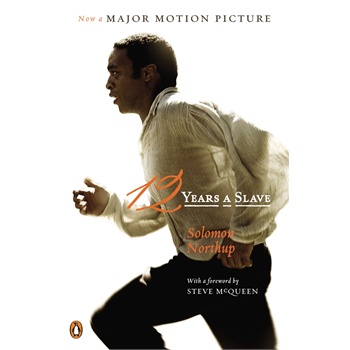
12 Years a Slave 第86届奥斯卡影片《为奴十二载》响应当今美国政治正确的黑奴历史题材电影导演史蒂夫·麦奎因,制片人布拉德·皮特 当当网5星级英文学习产品
副标题:无
作 者:Solomon
分类号:
ISBN:9780143125419
微信扫一扫,移动浏览光盘
简介
Twelve Years a Slave, a chronicle of the amazing ordeal of a free African-American kidnapped from Washington, D.C., and impressed into slavery in Louisiana, is one of the most compelling and detailed slave narratives in existence. Although a best-selling book in its time, Solomon Northup’s narrative has existed in the shadow of more academically prominent and popularly celebrated narratives like The Narrative of the Life of Frederick Douglass (1845). Nonetheless, Northup’s account of his kidnapping and enslavement is a masterpiece of historical detail, and the narrative has been noted for its easily researched and widely corroborated elements. The text and story were virtually unchallenged by Southern apologists or partisans of the era. Northup resists the urge to laud himself as an exemplary character or focus solely his own experience, giving contemporary readers a remarkable account of the lives of the slave community as a whole. As an educated man, torn from freedom and plunged into slavery, he brings into horrible and tantalizingly exact clarity the life and labor of slaves in the antebellum American South, the complex economic choices and ironic moral concessions of slaveholding, and the calamitous effect of slavery on the foundations of civilization.
Born in 1808 to an unnamed mother and Mintus Northup, a former slave who was freed on the death of his master, Solomon Northup lived the life of a free man and educated tradesman in New York. Beginning with his childhood, he was early acquainted with voting and civic life through his father, and he developed a strong sense of his own liberty and dignity. Like his father, he maintained a cordial relationship with the white family that had previously held his own family in bondage, an association that would help secure his freedom. Northup and his wife, Anne Hampton Northup, were engaged in a quintessentially American quest for social and economic advancement when he was enticed away from the safety of Saratoga Springs, New York, with the promise of work and kidnapped into slavery in 1841. Upon his escape in 1853, Northup resolved to tell his story, first to the New York Times and later in a book through his editor, David Wilson. Although his sensational story showed great commercial promise, Northup insisted in its first pages that his primary aim was to “give a candid and truthful statement of facts: to repeat the story of my life, without exaggeration, leaving it for others to determine, whether even the pages of fiction present a picture of more cruel wrong or a severer bondage.”
Northup’s life before slavery was notable because of his industriousness. He worked on the repairs of the Champlain Canal, navigated rafts of supplies from Lake Champlain to Troy, New York, engaged in woodcutting, purchased property, farmed for profit, and worked in railroad construction. In addition, he plied his trade as a violinist during the tourist season. It was in pursuit of work that Northup found himself drugged, kidnapped, and enslaved, and for twelve years he labored in the grinding agricultural netherworld of Southern bondage. After returning to his family, Northup not only published his narrative but also pressed his legal case against his abductors. With the help of Thaddeus St. John, a New York county judge who had witnessed Northup traveling in the company of his abductors, and Henry B. Northup, of the family who had formerly enslaved the African-American Northups, Solomon Northup was able to seek redress in the courts. His abductors, Alexander Merrill and Joseph Russell, were captured and faced trial in 1854. By 1856, the case had meandered through the New York legal system to the state supreme court and the court of appeals, only to be remanded for action in the lower courts. Ultimately, the delays and technicalities of trial exhausted the interest of the state, which did not retry the abductors.
For all of his misfortune and his resulting celebrity, Solomon Northup’s end remains a mystery. He returned to his family, who settled in Glen Falls, New York, purchased property, and lived in the area until his death. His wife and family sold their property and moved from the town. The circumstances and date of his death are unknown, but the city of Saratoga Springs still commemorates his life and narrative with an annual “Solomon Northup Day.”
Commentary on Northup’s penchant for detail punctuates any evaluation of his narrative, and well it should. His de*ions of nineteenth-century cotton production and sugar manufacturing are amazingly detailed historical gifts to scholars of the antebellum era, and they provide revealing texture to the brutal and onerous labor involved on Southern plantations. Given recent questions about the veracity of portions of Olaudah (Olaudiah) Equiano’s famous narrative, Northup’s exactness and well-supported facts about people and places in his narrative have new contemporary importance. Northup also notes variations in the personalities, characters, attributes, and fortunes of the slaves and slaveholders and even finds space for irony and faint humor amid the considerable pain of slave life. Northup also possesses an egalitarian gaze, and where other escaped slaves have been faulted for selective or manipulative recollection in their narratives, Northup is circumspect.
While scholars have faulted Frederick Douglass for his one-dimensional and largely physical representations of women (in near-nakedness and under torture or sexual abuse) and the primacy of his own struggle, Northup labors over the details of life in the slave community and gives personality and depth to the varied men and women who were enslaved and abused. He recounts the deceptive appearance of ease and satisfaction Southern slaves and slaveholders presented when traveling North, but he reveals both their true yearnings for liberty and his own early exhortations to them to escape. He also follows the life of the slave Eliza from her treacherous sale, to the loss of her children, to her end as a mere shadow of her once lively and elegant womanhood.
Remarkably, Northup relates what is likely a new version of the story of American slavery for even contemporary readers—a world of plantation life where the backbreaking work is done exclusively by African-American women. Northup writes compellingly of the labor of slave women who are not only caretakers and cooks and cotton hands but also horse-riders and lumberjacks. He describes the exceptional physical strength of Patsey with a remarkably liberated eye, marking no impediment of gender and describing her intellect and acquisition of horsemanship and teamster-talent with ease. At the same time, he takes pains to describe her additional burden as a woman who is the object and victim of her master’s lascivious designs and her mistress’ infernal jealousy.
Northup’s narrative is no less an account of the physical horror beyond the bloodstained gate of Southern slavery than others in the genre. The shrieks of pain so familiar to readers of slave narratives are in the air of Northup’s plantations, resonating for miles, as they do in so many narrative accounts. But his report of the physical abuse native to slavery is raised to superlative form by his analysis of the psychological, sexual, economic, and personally capricious horrors that accompanied the crack and pain of the lash. Northup distinguishes the lash itself as not just the tool of forcing labor or of venting vicious anger, but also the tool of caprice or a recreational device for slaveholders’ drunken gamesmanship.
【编辑推荐】
“An incredible document, amazingly told and structured. Tough, but riveting. The movie of it by Steve McQueen might be the most successful adaptation of a book ever undertaken; text and film complement each other wildly.” —Rachel Kushner, The New York Times Book Review
“Northup published a memoir of his 12-year nightmare in 1853, the year after Uncle Tom’s Cabin came out, and it was so successful that he went on to participate in two stage adaptations. The book dropped from sight in the 20th century, but the movie tie-in will certainly reestablish its virtually unique status as a work by an educated free man who managed to return from slavery.” —The Hollywood Reporter
目录
光盘服务联系方式: 020-38250260 客服QQ:4006604884
云图客服:
用户发送的提问,这种方式就需要有位在线客服来回答用户的问题,这种 就属于对话式的,问题是这种提问是否需要用户登录才能提问
Video Player
×
Audio Player
×
pdf Player
×
