

简介
在线阅读本书
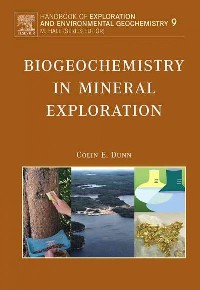
Significant refinements of biogeochemical methods applied to mineral exploration have been made during more than twenty years since the last major publication on this technique. This innovative, practical and comprehensive text is designed as a field handbook and an office reference volume. It outlines the historical development of biogeochemical methods applied to mineral exploration, and provides details of what, how, why and when to collect samples from all major climatic environments with examples from around the world. Recent commercialization of sophisticated analytical technology permits immensely more insight into the multi-element composition of plants. In particular, precise determination of ultra-trace levels of 'pathfinder' elements in dry tissues and recognition of element distribution patterns with respect to concealed mineralization. Data handling and interpretation are discussed in context of a wealth of previously unpublished information, including a section on plant mineralogy, much of which has been classified as confidential until recently. Data are provided on the biogeochemistry of more than 60 elements and, by case history examples, their roles discussed in assisting in the discovery of concealed mineral deposits. A look to the future includes the potential role of bacteria to provide new focus for mineral exploration. Analyses of samples from the controlled environment of Britain's Eden Project are presented on an accompanying CD as part of a database that includes, also, the potential role of the halogens to assist in mineral exploration. Data on this CD provide a 'hands-on' approach for the reader to interrogate and personally assess real datasets from the burgeoning discipline of biogeochemical exploration.
* Describes the practical aspects of plant selection and collection in different environments around the world, and how to process and analyze them * Discusses more than 60 elements in plants, with data interpretation and case history results that include exploration for Au, PGEs, U, base metals and kimberlites * Contains databases as digital files on an accompanying CD for "hands-on" experimentation with real biogeochemical data
目录
Table Of Contents:
Editor's Foreword xiii
Preface xv
Introduction 1(20)
Setting the scene 1(1)
Biogeochemistry and geobotany 1(9)
General considerations and distinctions 1(3)
History of geobotany 4(1)
History of biogeochemistry 5(5)
Plant evolution and chemistry 10(7)
Barrier mechanisms 17(4)
Plant Function, Chemistry and Mineralogy 21(16)
Plant requirements 21(3)
Element uptake and function 24(3)
Root form and controls on element uptake 27(1)
Summary comments on chemical requirements of plants 28(2)
Mineralogy of plants 30(7)
Field Guide 1: Climatic and Geographic Zones 37(26)
Selection of plant species 37(23)
Orientation 38(4)
Boreal (northern) forest 42(2)
Black spruce 44(3)
Balsam fir 47(1)
Alder 48(1)
Temperate coniferous forest 49(1)
Temperate deciduous forest 50(1)
Tundra 51(1)
Arid and semi-arid environments
general comments 52(1)
North America
arid and semi-arid 52(1)
Northern basin and range 52(1)
Southern basin and range, and desert of the southwestern USA and Mexico 52(1)
Central America 53(1)
North Africa-arid
southern Morocco into the Sahara Desert 53(1)
Mediterranean coast 53(1)
Middle East
from Turkey and Armenia, through Saudi Arabia to Pakistan, and Africa east of the Sahara 54(1)
Central, West and South Africa 54(1)
India 55(1)
China, Mongolia and Japan 56(1)
Australia 57(1)
South America (excluding the Amazon) 58(1)
Humid tropics
Amazon, West Africa, Indonesia 59(1)
Summary notes 60(3)
Field Guide 2: Sample Selection and Collection 63(64)
General considerations 63(10)
Seasonal variations 66(6)
Summary considerations of seasonal variations
a practical approach 72(1)
Selection of tissue type 73(29)
Element differences among plant species 74(3)
The inhomogeneity of trees 77(4)
Bark 81(4)
Twigs 85(1)
Foliage 86(3)
Trunk wood 89(1)
Treetops 90(6)
Cones 96(1)
Stunted trees of the Tundra 97(2)
LFH/forest litter/humus 99(1)
Flowers, seeds, spores and pollen 100(2)
Summary 102(4)
Sample collection 106(10)
Precautions 106(3)
Field accessories 109(2)
Sample bags 111(2)
Sample size 113(1)
Samples required for quality control 113(1)
Checklist for vegetation sample collection and site observations 114(2)
Field drying and shipping 116(1)
Alternative samples 116(8)
Saps 116(3)
Fungi 119(1)
Moss 120(2)
Seaweed 122(2)
Geozoology 124(3)
Survey Design and Comparisons with Other Sample Media 127(24)
Introduction 127(2)
Survey design 129(1)
Scale of survey 130(13)
Low density (1 site per 10 km2 or greater)
Reconnaissance level 130(4)
Moderate density (1 site per 1-10 km2) 134(2)
Semi-detailed surveys (1 site per 0.25-1 km2) 136(3)
Detailed surveys (25-200m spacing) 139(4)
Comparisons with other types of geochemical survey 143(6)
Vegetation versus Soils 144(2)
Vegetation versus Glacial Tills 146(2)
Comparison of multi-media reconnaissance-level surveys using plants, soils, and sediments from lakes and streams 148(1)
Summary 149(2)
Sample Preparation and Decomposition 151(40)
Introduction 151(1)
Washing 151(8)
Thorough washing using solvents or dispersants 151(3)
Washing in water 154(5)
Particle and sample size 159(4)
Sample decomposition 163(2)
Dry ashing 165(9)
Element volatilization 165(4)
Dry ashing
the realities 169(5)
A special case: Vegetation from sites near smelters or other sites of point-source metal emissions 174(4)
Wet decomposition 178(1)
Microwave digestion 179(1)
Selective leaching 180(5)
Fusions 185(1)
Standard reference materials and analytical controls 186(3)
Summary 189(2)
Plant Analysis 191(22)
`Fit for purpose' 192(2)
Analytical techniques 194(2)
Analytical instrumentation 196(13)
Atomic absorption spectrometry 196(1)
Inductively coupled plasma emission spectrometry (ICP-ES) 197(3)
Inductively coupled plasma mass spectrometry (ICP-MS) 200(4)
Instrumental neutron activation analysis (INAA) 204(4)
X-ray fluorescence (XRF) 208(1)
Summary 209(4)
The Eden Project
Source of a Biogeochemical Database 213(16)
Introduction 213(1)
Samples in the collection 213(1)
Soil in the biomes 214(1)
Foliage collection from the biomes 215(14)
Biogeochemical Behaviour of the Elements 229(98)
Introduction 229(1)
The importance of data quality 229(2)
Elements in plants and their relevance to mineral exploration 231(96)
Aluminium (Al) 232(1)
Antimony (Sb) 233(1)
Arsenic (As) 234(2)
Barium (Ba) 236(1)
Beryllium (Be) 237(2)
Bismuth (Bi) 239(1)
Boron (B) 240(1)
Bromine (Br) 241(1)
Cadmium (Cd) 242(1)
Calcium (Ca) 243(1)
Cerium (Ce) 244(1)
Cesium (Cs) 245(1)
Chromium (Cr) 246(2)
Chlorine (Cl) 248(1)
Cobalt (Co) 248(1)
Copper (Cu) 249(1)
Dysprosium (Dy) 250(1)
Erbium (Er) 250(1)
Europium (Eu) 251(1)
Fluorine (F) 251(1)
Gadolinium (Gd) 251(1)
Gallium (Ga) 251(1)
Germanium (Ge) 252(1)
Gold (Au) 253(4)
Hafnium (Hf) 257(1)
Halogens (F, Br, Cl and I) 258(1)
Holmium (Ho) 259(1)
Indium (In) 259(1)
Iodine (I) 259(1)
Iridium (Ir) 259(1)
Iron (Fe) 259(1)
Lanthanum (La), the rare earth elements (REE) and yttrium (Y) 260(4)
Lead (Pb) 264(2)
Lithium (Li) 266(1)
Lutetium (Lu) 267(1)
Magnesium (Mg) 267(1)
Manganese (Mn) 268(1)
Mercury (Hg) 269(6)
Molybdenum (Mo) 275(3)
Neodymium (Nd) 278(1)
Nickel (Ni) 279(3)
Niobium (Nb) 282(1)
Osmium (Os) 283(1)
Palladium (Pd) 283(1)
Phosphorus (P) 283(2)
Platinum (Pt) and the platinum group elements (PGEs)
palladium (Pd), iridium (Ir), osmium (Os), rhodium (Rh) and ruthenium (Ru) 285(5)
Praseodymium (Pr) 290(1)
Promethium (Pm) 290(1)
Potassium (K) 291(1)
Radium (Ra) 291(1)
Rhenium (Re) 292(3)
Rhodium (Rh) 295(1)
Rubidium (Rb) 295(1)
Ruthenium (Ru) 296(1)
Samarium (Sm) 296(1)
Scandium (Sc) 297(1)
Selenium (Se) 298(1)
Silver (Ag) 299(3)
Sodium (Na) 302(1)
Strontium (Sr) 303(1)
Sulphur (S) 304(2)
Tantalum (Ta) 306(2)
Tellurium (Te) 308(2)
Terbium (Tb) 310(1)
Thallium (Tl) 310(2)
Thorium (Th) 312(2)
Thulium (Tm) 314(1)
Tin (Sn) 314(2)
Titanium (Ti) 316(1)
Tungsten (W) 316(1)
Uranium (U) 317(3)
Vanadium (V) 320(1)
Ytterbium (Yb) 321(1)
Yttrium (Y) 321(1)
Zinc (Zn) 322(2)
Zirconium (Zr) 324(3)
Data Handling and Analysis 327(16)
First estimation of the data 327(3)
Computer software tools 330(1)
Data analysis 331(7)
Univariate statistics 332(3)
Bivariate statistics 335(1)
Multivariate analysis 335(3)
Map plots of data distributions 338(1)
Unusual concentrations of selected elements 339(4)
Analytical artefacts 339(1)
Sampling and sample preparation artefacts 340(1)
Contamination of the natural environment 340(1)
Species-specific enrichments 341(2)
Case Histories 343(50)
Gold 344(17)
Canada: La Ronge and Glennie Domains, Northern Saskatchewan 344(1)
Rod Zone
Jolu Mine
La Ronge Domain 344(1)
Geology and mineralization 344(1)
Biogeochemical survey 345(1)
Post survey exploration 345(1)
Jasper pond 345(1)
Geology and mineralization 345(1)
Biogeochemical surveys 346(1)
Post survey development 347(1)
Seabee Mine, Laonil Lake 347(1)
Geology and mineralization 347(1)
Biogeochemical survey 348(1)
Post survey developments 348(1)
Canada: Temperate forest of British Columbia QR (Quesnel River) deposit 349(1)
Geology and mineralization 349(1)
Environment 349(1)
Scope of survey and analysis 349(1)
Results 349(1)
South America: Peru--Ecuador Border 350(1)
Cordillera del Condor Geology and mineralization 350(1)
Environment 351(1)
Scope of survey and analysis 351(5)
South America: Bolivia and Argentina 356(1)
Geology and mineralization 356(1)
Environment 356(1)
Biogeochemical surveys 356(4)
Summary of results from the orientation surveys 360(1)
Platinum group metals/nickel/copper 361(32)
Canada: Rottenstone Lake, northern Saskatchewan 361(1)
Geology and mineralization 361(1)
Environment 362(1)
Exploration history 362(1)
Biogeochemical surveys 363(3)
Post survey exploration 366(1)
Summary notes 366(1)
Nickel 366(1)
Canada: Thompson Nickel Belt, Northern Manitoba 366(1)
Geology and mineralization 366(1)
Environment 366(1)
Biogeochemical survey 367(5)
Post survey exploration 372(1)
Uranium 373(1)
Canada: Athabasca Basin, Northern Saskatchewan 373(1)
Geology and mineralization 373(1)
Exploration history 373(1)
Environment 374(1)
Biogeochemical surveys 374(6)
Subsequent discoveries 380(1)
Summary notes 381(1)
Kimberlites 381(1)
Canada: Ekati Trend, Lac de Gras, Northwest Territories 381(1)
Geology 381(1)
Environment 382(1)
Biogeochemical survey 382(2)
South Africa: Kimberley 384(1)
Geology 384(2)
Environment 386(1)
Biogeochemical surveys 386(1)
Expanded surveys
summary observations 387(1)
Canada: Buffalo Head Hills, North-Central Alberta 388(1)
Geology 388(1)
Exploration history 389(1)
Environment 390(1)
Biogeochemical survey 390(1)
Kimberlites
summary 391(2)
Exploration Geomicrobiology
The New Frontier 393(22)
Introduction 393(1)
Significance of micro-organisms as biogeochemical agents 394(3)
Methods for identifying micro-organisms and microbial processes 397(2)
Culture-dependent techniques 397(2)
Culture-independent methods 399(1)
Molecular procedures 399(1)
Extraction and purification of nucleic acids from soils 399(1)
Amplification of target genes from extracted DNA or RNA 400(3)
Assessing genetic diversity 402(1)
Genetic fingerprinting 402(1)
Case studies 403(7)
Case Study 1
The geomicrobiological cycling of gold 403(6)
Case Study 2
Microbial diversity in soils and sediments contaminated with Zn and Cu 409(1)
Case Study 3
Bacterial biosensors as alternatives for measuring heavy metals in soil extracts 410(1)
Future technologies for bio-prospecting 410(3)
Conclusions 413(2)
A Look to the Future 415(6)
Introduction 415(1)
Hyperspectral imagery in relation to biogeochemistry 415(2)
Exploration geomicrobiology 417(1)
Forensic biogeochemistry 417(1)
Plant mineralogy 418(1)
Chemical analysis 418(1)
Concluding remarks 419(2)
References 421(30)
Botanical Index 451(4)
Subject Index 455(6)
Contents of CD 461
Editor's Foreword xiii
Preface xv
Introduction 1(20)
Setting the scene 1(1)
Biogeochemistry and geobotany 1(9)
General considerations and distinctions 1(3)
History of geobotany 4(1)
History of biogeochemistry 5(5)
Plant evolution and chemistry 10(7)
Barrier mechanisms 17(4)
Plant Function, Chemistry and Mineralogy 21(16)
Plant requirements 21(3)
Element uptake and function 24(3)
Root form and controls on element uptake 27(1)
Summary comments on chemical requirements of plants 28(2)
Mineralogy of plants 30(7)
Field Guide 1: Climatic and Geographic Zones 37(26)
Selection of plant species 37(23)
Orientation 38(4)
Boreal (northern) forest 42(2)
Black spruce 44(3)
Balsam fir 47(1)
Alder 48(1)
Temperate coniferous forest 49(1)
Temperate deciduous forest 50(1)
Tundra 51(1)
Arid and semi-arid environments
general comments 52(1)
North America
arid and semi-arid 52(1)
Northern basin and range 52(1)
Southern basin and range, and desert of the southwestern USA and Mexico 52(1)
Central America 53(1)
North Africa-arid
southern Morocco into the Sahara Desert 53(1)
Mediterranean coast 53(1)
Middle East
from Turkey and Armenia, through Saudi Arabia to Pakistan, and Africa east of the Sahara 54(1)
Central, West and South Africa 54(1)
India 55(1)
China, Mongolia and Japan 56(1)
Australia 57(1)
South America (excluding the Amazon) 58(1)
Humid tropics
Amazon, West Africa, Indonesia 59(1)
Summary notes 60(3)
Field Guide 2: Sample Selection and Collection 63(64)
General considerations 63(10)
Seasonal variations 66(6)
Summary considerations of seasonal variations
a practical approach 72(1)
Selection of tissue type 73(29)
Element differences among plant species 74(3)
The inhomogeneity of trees 77(4)
Bark 81(4)
Twigs 85(1)
Foliage 86(3)
Trunk wood 89(1)
Treetops 90(6)
Cones 96(1)
Stunted trees of the Tundra 97(2)
LFH/forest litter/humus 99(1)
Flowers, seeds, spores and pollen 100(2)
Summary 102(4)
Sample collection 106(10)
Precautions 106(3)
Field accessories 109(2)
Sample bags 111(2)
Sample size 113(1)
Samples required for quality control 113(1)
Checklist for vegetation sample collection and site observations 114(2)
Field drying and shipping 116(1)
Alternative samples 116(8)
Saps 116(3)
Fungi 119(1)
Moss 120(2)
Seaweed 122(2)
Geozoology 124(3)
Survey Design and Comparisons with Other Sample Media 127(24)
Introduction 127(2)
Survey design 129(1)
Scale of survey 130(13)
Low density (1 site per 10 km2 or greater)
Reconnaissance level 130(4)
Moderate density (1 site per 1-10 km2) 134(2)
Semi-detailed surveys (1 site per 0.25-1 km2) 136(3)
Detailed surveys (25-200m spacing) 139(4)
Comparisons with other types of geochemical survey 143(6)
Vegetation versus Soils 144(2)
Vegetation versus Glacial Tills 146(2)
Comparison of multi-media reconnaissance-level surveys using plants, soils, and sediments from lakes and streams 148(1)
Summary 149(2)
Sample Preparation and Decomposition 151(40)
Introduction 151(1)
Washing 151(8)
Thorough washing using solvents or dispersants 151(3)
Washing in water 154(5)
Particle and sample size 159(4)
Sample decomposition 163(2)
Dry ashing 165(9)
Element volatilization 165(4)
Dry ashing
the realities 169(5)
A special case: Vegetation from sites near smelters or other sites of point-source metal emissions 174(4)
Wet decomposition 178(1)
Microwave digestion 179(1)
Selective leaching 180(5)
Fusions 185(1)
Standard reference materials and analytical controls 186(3)
Summary 189(2)
Plant Analysis 191(22)
`Fit for purpose' 192(2)
Analytical techniques 194(2)
Analytical instrumentation 196(13)
Atomic absorption spectrometry 196(1)
Inductively coupled plasma emission spectrometry (ICP-ES) 197(3)
Inductively coupled plasma mass spectrometry (ICP-MS) 200(4)
Instrumental neutron activation analysis (INAA) 204(4)
X-ray fluorescence (XRF) 208(1)
Summary 209(4)
The Eden Project
Source of a Biogeochemical Database 213(16)
Introduction 213(1)
Samples in the collection 213(1)
Soil in the biomes 214(1)
Foliage collection from the biomes 215(14)
Biogeochemical Behaviour of the Elements 229(98)
Introduction 229(1)
The importance of data quality 229(2)
Elements in plants and their relevance to mineral exploration 231(96)
Aluminium (Al) 232(1)
Antimony (Sb) 233(1)
Arsenic (As) 234(2)
Barium (Ba) 236(1)
Beryllium (Be) 237(2)
Bismuth (Bi) 239(1)
Boron (B) 240(1)
Bromine (Br) 241(1)
Cadmium (Cd) 242(1)
Calcium (Ca) 243(1)
Cerium (Ce) 244(1)
Cesium (Cs) 245(1)
Chromium (Cr) 246(2)
Chlorine (Cl) 248(1)
Cobalt (Co) 248(1)
Copper (Cu) 249(1)
Dysprosium (Dy) 250(1)
Erbium (Er) 250(1)
Europium (Eu) 251(1)
Fluorine (F) 251(1)
Gadolinium (Gd) 251(1)
Gallium (Ga) 251(1)
Germanium (Ge) 252(1)
Gold (Au) 253(4)
Hafnium (Hf) 257(1)
Halogens (F, Br, Cl and I) 258(1)
Holmium (Ho) 259(1)
Indium (In) 259(1)
Iodine (I) 259(1)
Iridium (Ir) 259(1)
Iron (Fe) 259(1)
Lanthanum (La), the rare earth elements (REE) and yttrium (Y) 260(4)
Lead (Pb) 264(2)
Lithium (Li) 266(1)
Lutetium (Lu) 267(1)
Magnesium (Mg) 267(1)
Manganese (Mn) 268(1)
Mercury (Hg) 269(6)
Molybdenum (Mo) 275(3)
Neodymium (Nd) 278(1)
Nickel (Ni) 279(3)
Niobium (Nb) 282(1)
Osmium (Os) 283(1)
Palladium (Pd) 283(1)
Phosphorus (P) 283(2)
Platinum (Pt) and the platinum group elements (PGEs)
palladium (Pd), iridium (Ir), osmium (Os), rhodium (Rh) and ruthenium (Ru) 285(5)
Praseodymium (Pr) 290(1)
Promethium (Pm) 290(1)
Potassium (K) 291(1)
Radium (Ra) 291(1)
Rhenium (Re) 292(3)
Rhodium (Rh) 295(1)
Rubidium (Rb) 295(1)
Ruthenium (Ru) 296(1)
Samarium (Sm) 296(1)
Scandium (Sc) 297(1)
Selenium (Se) 298(1)
Silver (Ag) 299(3)
Sodium (Na) 302(1)
Strontium (Sr) 303(1)
Sulphur (S) 304(2)
Tantalum (Ta) 306(2)
Tellurium (Te) 308(2)
Terbium (Tb) 310(1)
Thallium (Tl) 310(2)
Thorium (Th) 312(2)
Thulium (Tm) 314(1)
Tin (Sn) 314(2)
Titanium (Ti) 316(1)
Tungsten (W) 316(1)
Uranium (U) 317(3)
Vanadium (V) 320(1)
Ytterbium (Yb) 321(1)
Yttrium (Y) 321(1)
Zinc (Zn) 322(2)
Zirconium (Zr) 324(3)
Data Handling and Analysis 327(16)
First estimation of the data 327(3)
Computer software tools 330(1)
Data analysis 331(7)
Univariate statistics 332(3)
Bivariate statistics 335(1)
Multivariate analysis 335(3)
Map plots of data distributions 338(1)
Unusual concentrations of selected elements 339(4)
Analytical artefacts 339(1)
Sampling and sample preparation artefacts 340(1)
Contamination of the natural environment 340(1)
Species-specific enrichments 341(2)
Case Histories 343(50)
Gold 344(17)
Canada: La Ronge and Glennie Domains, Northern Saskatchewan 344(1)
Rod Zone
Jolu Mine
La Ronge Domain 344(1)
Geology and mineralization 344(1)
Biogeochemical survey 345(1)
Post survey exploration 345(1)
Jasper pond 345(1)
Geology and mineralization 345(1)
Biogeochemical surveys 346(1)
Post survey development 347(1)
Seabee Mine, Laonil Lake 347(1)
Geology and mineralization 347(1)
Biogeochemical survey 348(1)
Post survey developments 348(1)
Canada: Temperate forest of British Columbia QR (Quesnel River) deposit 349(1)
Geology and mineralization 349(1)
Environment 349(1)
Scope of survey and analysis 349(1)
Results 349(1)
South America: Peru--Ecuador Border 350(1)
Cordillera del Condor Geology and mineralization 350(1)
Environment 351(1)
Scope of survey and analysis 351(5)
South America: Bolivia and Argentina 356(1)
Geology and mineralization 356(1)
Environment 356(1)
Biogeochemical surveys 356(4)
Summary of results from the orientation surveys 360(1)
Platinum group metals/nickel/copper 361(32)
Canada: Rottenstone Lake, northern Saskatchewan 361(1)
Geology and mineralization 361(1)
Environment 362(1)
Exploration history 362(1)
Biogeochemical surveys 363(3)
Post survey exploration 366(1)
Summary notes 366(1)
Nickel 366(1)
Canada: Thompson Nickel Belt, Northern Manitoba 366(1)
Geology and mineralization 366(1)
Environment 366(1)
Biogeochemical survey 367(5)
Post survey exploration 372(1)
Uranium 373(1)
Canada: Athabasca Basin, Northern Saskatchewan 373(1)
Geology and mineralization 373(1)
Exploration history 373(1)
Environment 374(1)
Biogeochemical surveys 374(6)
Subsequent discoveries 380(1)
Summary notes 381(1)
Kimberlites 381(1)
Canada: Ekati Trend, Lac de Gras, Northwest Territories 381(1)
Geology 381(1)
Environment 382(1)
Biogeochemical survey 382(2)
South Africa: Kimberley 384(1)
Geology 384(2)
Environment 386(1)
Biogeochemical surveys 386(1)
Expanded surveys
summary observations 387(1)
Canada: Buffalo Head Hills, North-Central Alberta 388(1)
Geology 388(1)
Exploration history 389(1)
Environment 390(1)
Biogeochemical survey 390(1)
Kimberlites
summary 391(2)
Exploration Geomicrobiology
The New Frontier 393(22)
Introduction 393(1)
Significance of micro-organisms as biogeochemical agents 394(3)
Methods for identifying micro-organisms and microbial processes 397(2)
Culture-dependent techniques 397(2)
Culture-independent methods 399(1)
Molecular procedures 399(1)
Extraction and purification of nucleic acids from soils 399(1)
Amplification of target genes from extracted DNA or RNA 400(3)
Assessing genetic diversity 402(1)
Genetic fingerprinting 402(1)
Case studies 403(7)
Case Study 1
The geomicrobiological cycling of gold 403(6)
Case Study 2
Microbial diversity in soils and sediments contaminated with Zn and Cu 409(1)
Case Study 3
Bacterial biosensors as alternatives for measuring heavy metals in soil extracts 410(1)
Future technologies for bio-prospecting 410(3)
Conclusions 413(2)
A Look to the Future 415(6)
Introduction 415(1)
Hyperspectral imagery in relation to biogeochemistry 415(2)
Exploration geomicrobiology 417(1)
Forensic biogeochemistry 417(1)
Plant mineralogy 418(1)
Chemical analysis 418(1)
Concluding remarks 419(2)
References 421(30)
Botanical Index 451(4)
Subject Index 455(6)
Contents of CD 461
- 名称
- 类型
- 大小
光盘服务联系方式: 020-38250260 客服QQ:4006604884
云图客服:
用户发送的提问,这种方式就需要有位在线客服来回答用户的问题,这种 就属于对话式的,问题是这种提问是否需要用户登录才能提问
Video Player
×
Audio Player
×
pdf Player
×
