

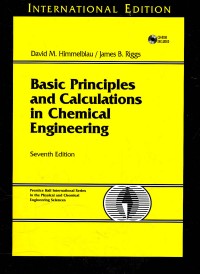
简介
This book is intended to serve as an introduction to the principles and techniques used in the field of chemical, petroleum, and environmental engineering. Although the range of subjects deemed to be in the province of chemical engineering has broadened over the last decade, the basic principles involved in chemical engineering remain the same. This book lays a foundation of certain information and skills that can be repeatedly employed in subsequent courses as well as in professional life. Much of the previous edition has been rewritten. One new topic (Chapter 20) on adsorption has been added.Reorganization: Although each chapter has been revised, the sequence of the topics and the format remain about the same. The Seventh edition takes individual topics that were previously in one long chapter, and makes them individual short chapters of them so that readers can feel a sense of accomplishment more rapidly and review more definitively.In addition to the revised learning tutorial placed on CD, the new edition boasts revamped problem solving strategy (now emphasized in all of the examples) and brand new problems to solve (35% of the problems are brand new).
MyLab或是Mastering系列是在线作业系统。Access Code Card是在线作业系统的访问码,是老师和学生课堂之外网络互动及交流的平台,个人是无法使用这个平台的。请读者注意您购买的这个ISBN是不带Access Code Card的。
目录
preface.
read me.
frequently asked questions.
i. introduction.
1. dimensions, units, and their conversion.
units and dimensions. operations with units. conversion of units and conversion factors. dimensional consistency (homogeneity). significant figures. validation of problem solutions. 2. moles, density, and concentration.
the mole. density. specific gravity. flow rate. mole fraction and mass (weight) fraction. analyses of multicomponent solutions and mixtures. concentration. 3. choosing a basis.
4. temperature.
5. pressure.
pressure and its units. measurement of pressure. differential pressure measurements.
ii. material balances.
6. introduction to material balances.
the concept of a material balance. open and closed systems. steady-state and unsteady-state systems. multiple component systems. accounting for chemical reactions in material balances. material balances for batch and semi-batch processes. 7. a general strategy for solving material balance problems.
problem solving. the strategy for solving problems. 8. solving material balance problems for single units without reaction.
9. the chemical reaction equation and stoichiometry.
stoichiometry. terminology for applications of stoichiometry. 10. material balances for processes involving reaction.
species material balances. element material balances. material balances involving combustion. 11. material balance problems involving multiple units.
12. recycle, bypass, purge, and the industrial application of material balances.
introduction. recycle without chemical reaction. recycle with chemical reaction. bypass and purge. the industrial application of material balances.
iii. gases, vapors, liquids, and solids.
.13. ideal gases.
the ideal gas law. ideal gas mixtures and partial pressure. material balances involving ideal gases. 14. real gases: compressibility.
15. real gases: equations of state.
16. single component two-phase systems (vapor pressure).
phase diagrams. modeling and predicting vapor pressure as a function of temperature. 17. two-phase gas-liquid systems (saturation, condensation, and vaporization).
saturation. condensation. vaporization. 18. two-phase gas-liquid systems (partial saturation and humidity).
terminology involved for partial saturation. material balance problems involving partial saturation. 19. the phase rule and vapor-liquid equilibria.
the gibbs phase rule. vapor-liquid equlibria in binary systems. 20. liquids and gases in equilibrium with solids.
iv. energy balances.
21. energy: terminology, concepts, and units.
the terminology associated with energy balances. types of energy. 22. introduction to energy balances for processes without reaction.
the concept of the conservation of energy. energy balances for closed, unsteady-state systems. energy balances for closed, steady-state systems. energy balances for open, unsteady-state systems. energy balances for open, steady-state systems. 23. calculation of enthalpy changes.
phase transitions. heat capacity equations. tables and charts to retrieve enthalpy values. computer databases. 24. application of energy balances in the absence of chemical reactions.
simplifications of the general energy balance. the strategy for solving energy balance problems. application of the energy balance to closed systems. application of the energy balance to open systems. 25. energy balances: how to account for chemical reaction.
the standard heat (enthalpy) of formation. the heat (enthalpy) of reaction. merging the heat of formation with the sensible heat of a compound in making an energy balance. the heat of combustion.
26. energy balances that include the effects of chemical reaction.
analysis of the degrees of freedom to include the energy balance with reaction. applications of energy balances in processes that include reactions. 27. ideal processes, efficiency, and the mechanical energy balance.
ideal reversible processes. efficiency. the mechanical energy balance. 28. heats of solution and mixing.
heats of solution, dissolution, and mixing. introducing the effects of mixing into the energy balance.
29. humidity (psychrometric) charts and their use.
terminology. the humidity (psychrometric) chart. applications of the humidity chart.
v. supplementary material (on the accompanying cd)
30. analysis of the degrees of freedom in a steady-state process.
31. solving material and energy balances using process simulators (flowsheeting codes).
32. unsteady-state material and energy balances.
vi. appendices.
a. answers to self-assessment tests.
b. atomic weights and numbers.
c. table of the pitzer z0 and z1 factors.
d. physical properties of various organic and inorganic substances.
e. heat capacity equations.
f. heats of formation and combustion.
g. vapor pressures.
h. heats of solution and dilution.
i. enthalpy-concentration data.
j. thermodynamic charts.
k. physical properties of petroleum fractions.
l. solution of sets of equations.
m. fitting functions to data.
n. answers to selected problems.
index.
read me.
frequently asked questions.
i. introduction.
1. dimensions, units, and their conversion.
units and dimensions. operations with units. conversion of units and conversion factors. dimensional consistency (homogeneity). significant figures. validation of problem solutions. 2. moles, density, and concentration.
the mole. density. specific gravity. flow rate. mole fraction and mass (weight) fraction. analyses of multicomponent solutions and mixtures. concentration. 3. choosing a basis.
4. temperature.
5. pressure.
pressure and its units. measurement of pressure. differential pressure measurements.
ii. material balances.
6. introduction to material balances.
the concept of a material balance. open and closed systems. steady-state and unsteady-state systems. multiple component systems. accounting for chemical reactions in material balances. material balances for batch and semi-batch processes. 7. a general strategy for solving material balance problems.
problem solving. the strategy for solving problems. 8. solving material balance problems for single units without reaction.
9. the chemical reaction equation and stoichiometry.
stoichiometry. terminology for applications of stoichiometry. 10. material balances for processes involving reaction.
species material balances. element material balances. material balances involving combustion. 11. material balance problems involving multiple units.
12. recycle, bypass, purge, and the industrial application of material balances.
introduction. recycle without chemical reaction. recycle with chemical reaction. bypass and purge. the industrial application of material balances.
iii. gases, vapors, liquids, and solids.
.13. ideal gases.
the ideal gas law. ideal gas mixtures and partial pressure. material balances involving ideal gases. 14. real gases: compressibility.
15. real gases: equations of state.
16. single component two-phase systems (vapor pressure).
phase diagrams. modeling and predicting vapor pressure as a function of temperature. 17. two-phase gas-liquid systems (saturation, condensation, and vaporization).
saturation. condensation. vaporization. 18. two-phase gas-liquid systems (partial saturation and humidity).
terminology involved for partial saturation. material balance problems involving partial saturation. 19. the phase rule and vapor-liquid equilibria.
the gibbs phase rule. vapor-liquid equlibria in binary systems. 20. liquids and gases in equilibrium with solids.
iv. energy balances.
21. energy: terminology, concepts, and units.
the terminology associated with energy balances. types of energy. 22. introduction to energy balances for processes without reaction.
the concept of the conservation of energy. energy balances for closed, unsteady-state systems. energy balances for closed, steady-state systems. energy balances for open, unsteady-state systems. energy balances for open, steady-state systems. 23. calculation of enthalpy changes.
phase transitions. heat capacity equations. tables and charts to retrieve enthalpy values. computer databases. 24. application of energy balances in the absence of chemical reactions.
simplifications of the general energy balance. the strategy for solving energy balance problems. application of the energy balance to closed systems. application of the energy balance to open systems. 25. energy balances: how to account for chemical reaction.
the standard heat (enthalpy) of formation. the heat (enthalpy) of reaction. merging the heat of formation with the sensible heat of a compound in making an energy balance. the heat of combustion.
26. energy balances that include the effects of chemical reaction.
analysis of the degrees of freedom to include the energy balance with reaction. applications of energy balances in processes that include reactions. 27. ideal processes, efficiency, and the mechanical energy balance.
ideal reversible processes. efficiency. the mechanical energy balance. 28. heats of solution and mixing.
heats of solution, dissolution, and mixing. introducing the effects of mixing into the energy balance.
29. humidity (psychrometric) charts and their use.
terminology. the humidity (psychrometric) chart. applications of the humidity chart.
v. supplementary material (on the accompanying cd)
30. analysis of the degrees of freedom in a steady-state process.
31. solving material and energy balances using process simulators (flowsheeting codes).
32. unsteady-state material and energy balances.
vi. appendices.
a. answers to self-assessment tests.
b. atomic weights and numbers.
c. table of the pitzer z0 and z1 factors.
d. physical properties of various organic and inorganic substances.
e. heat capacity equations.
f. heats of formation and combustion.
g. vapor pressures.
h. heats of solution and dilution.
i. enthalpy-concentration data.
j. thermodynamic charts.
k. physical properties of petroleum fractions.
l. solution of sets of equations.
m. fitting functions to data.
n. answers to selected problems.
index.
- 名称
- 类型
- 大小
光盘服务联系方式: 020-38250260 客服QQ:4006604884
云图客服:
用户发送的提问,这种方式就需要有位在线客服来回答用户的问题,这种 就属于对话式的,问题是这种提问是否需要用户登录才能提问
Video Player
×
Audio Player
×
pdf Player
×
亲爱的云图用户,
光盘内的文件都可以直接点击浏览哦
无需下载,在线查阅资料!
