

简介
Summary:
Publisher Summary 1
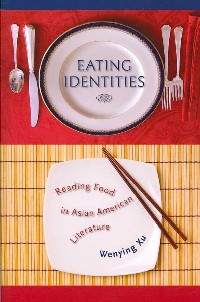
Through the examination of the work of several writers, Xu (English, Florida Atlantic U.) explores how cooking, eating, and food are representative of Asian American identities in terms of race and ethnicity, gender, class, diaspora, and sexuality. She considers the relationship between food and identities in literature by John Okada, Joy Kogawa, Frank Chin, Li-Young Lee, David Wong Louie, Mei Ng, and Monique Truong, and how their narratives are sites of economic, cultural, and political struggle. South Asian literature is not included. Annotation 漏2008 Book News, Inc., Portland, OR (booknews.com)
目录
Acknowledgments p. ix
Introduction p. 1
Enjoyment and Ethnic Identity in No-No Boy and Obasan p. 18
Masculinity, Food, and Appetite in Frank Chin's Donald Duk and "The Eat and Run Midnight People" p. 37
Class and Cuisine in David Wong Louie's The Barbarians Are Coming p. 62
Diaspora, Transcendentalism, and Ethnic Gastronomy in the Works of Li-Young Lee p. 94
Sexuality, Colonialism, and Ethnicity in Monique Truong's The Book of Salt and Mei Ng's Eating Chinese Food Naked p. 127
Epilogue p. 162
Notes p. 171
Bibliography p. 181
Index p. 191
Introduction p. 1
Enjoyment and Ethnic Identity in No-No Boy and Obasan p. 18
Masculinity, Food, and Appetite in Frank Chin's Donald Duk and "The Eat and Run Midnight People" p. 37
Class and Cuisine in David Wong Louie's The Barbarians Are Coming p. 62
Diaspora, Transcendentalism, and Ethnic Gastronomy in the Works of Li-Young Lee p. 94
Sexuality, Colonialism, and Ethnicity in Monique Truong's The Book of Salt and Mei Ng's Eating Chinese Food Naked p. 127
Epilogue p. 162
Notes p. 171
Bibliography p. 181
Index p. 191
- 名称
- 类型
- 大小
光盘服务联系方式: 020-38250260 客服QQ:4006604884
云图客服:
用户发送的提问,这种方式就需要有位在线客服来回答用户的问题,这种 就属于对话式的,问题是这种提问是否需要用户登录才能提问
Video Player
×
Audio Player
×
pdf Player
×
