

简介
Summary:
Publisher Summary 1
Presents a new theory of context that explains how text and talk are adapted to their social environment.
Publisher Summary 2
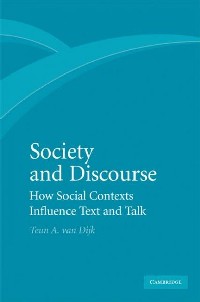
Van Dijk presents a new theory of context that explains how text and talk are adapted to their social environment. He argues that instead of the usual direct relationship being established between society and discourse, this influence is indirect and depends on how language users themselves 'define' the communicative situation. The new concept Van Dijk introduces for such definitions is that of context models. These models control all language production and understanding and explain how discourse is made appropriate in each situation. They are the missing link between language and society so far ignored in pragmatics and sociolinguistics. In this interdisciplinary book, the new theory of context is developed from a linguistic and psychological perspective. The theory is applied to the domain of politics, including the debate about the war in Iraq, where political leaders' speeches serve as a case study for detailed contextual analysis.
目录
Contents 7
Preface 9
1 Introduction 13
Towards a sociocognitive theory of context 13
The importance of context 13
The definition (delimitation) of \ 15
Mental models 17
Context models 18
An example: Tony Blair's Iraq speech in the UK parliament 22
Context in systemic-functional linguistics 24
Pragmatics 25
Knowledge and context 28
Sociolinguistics and social discourse analysis 29
On variation 31
Style, register and genre 31
Contextual analysis 32
Social situations and social beliefs 34
Shared beliefs 36
Context and society 36
Context and culture 38
Context and politics: the Iraq debate in the UK parliament 39
2 Context and social cognition 41
Introduction: social psychological dimensions of context 41
Social situations 46
Environment 52
Dimensions 53
Goals 53
Motivations and decision making 54
Related concepts 57
Setting 57
Location: space and place 57
Types of places 59
Personal and interpersonal space and place 59
Social places 60
Geographical places 63
Attitudes, opinions and feelings about places 65
The structures of places 66
Other aspects of the environment 68
Time 72
Circumstances 75
Concluding remark on Settings 76
Social actors 77
Person perception and social categorization 79
Social identity 82
Social Self 85
Communicative roles: speakers 86
Other communicative roles 87
Managing social identities 88
Relations between participants 89
Action and interaction 91
Social cognition 92
Conclusions 95
3 Context, situation and society 98
Introduction 98
The \ 100
Max Weber 101
Other classical sociologists on actions and situations 102
Alfred Schutz 104
Erving Goffman 105
The \ 106
Situations of everyday life 108
Social episodes as basic units of the social order 109
Context, ethnomethodology and conversation analysis 111
Harold Garfinkel and ethnomethodology 111
Conversation analysis 114
The CDA approach to discourse and social structure 122
The interactional approach to context 125
Macro- and micro-contexts 128
Agency and structure: Giddens 130
Levels of context 132
Group minds? 134
Structures of social situations 136
Social Settings 138
Place 138
Time 140
Social actors, roles and identities 141
Communication participants 142
Social categories 147
Societal roles 147
Social relations: power and dissent 151
Other properties of participants 152
Groups, networks, communities and other human collectivities 154
Interaction 157
Formulations 159
Social beliefs 160
The problem of media: text or context? 162
Context models in discourse and interaction 163
Final remarks 164
4 Context and culture 166
Introduction 166
Culture? 168
First definitions of context in anthropology 170
The cross-cultural relevance of context categories 174
Context 174
Context categories 176
Context categories in some classical studies 178
Participation structure 184
Setting: space/place and time 186
New directions in the ethnography of context 187
The current state in linguistic anthropology 188
Rethinking context 192
Contexts of talk - not of text - and from a US perspective 192
Defining context 193
The relation between context and talk 194
Dimensions of context 195
Figure and ground 195
Relevant directions of research 196
Precursors 196
Antimentalism 198
Other precursors 199
Other contributions 202
William Hanks 206
Racist discourse and context 213
The role of discourse in the reproduction of racism 214
The role of the elites 216
Concluding remarks 223
5 Context and politics: the Iraq debate in the British parliament 225
Introduction 225
Context and political identity 225
Other interventions in the Iraq debate in the UK House of Commons 231
The speech by John Randall 250
Concluding remarks 257
6 Conclusions 260
Open problems and future research 266
References 268
Subject index 290
Author index 295
Preface 9
1 Introduction 13
Towards a sociocognitive theory of context 13
The importance of context 13
The definition (delimitation) of \ 15
Mental models 17
Context models 18
An example: Tony Blair's Iraq speech in the UK parliament 22
Context in systemic-functional linguistics 24
Pragmatics 25
Knowledge and context 28
Sociolinguistics and social discourse analysis 29
On variation 31
Style, register and genre 31
Contextual analysis 32
Social situations and social beliefs 34
Shared beliefs 36
Context and society 36
Context and culture 38
Context and politics: the Iraq debate in the UK parliament 39
2 Context and social cognition 41
Introduction: social psychological dimensions of context 41
Social situations 46
Environment 52
Dimensions 53
Goals 53
Motivations and decision making 54
Related concepts 57
Setting 57
Location: space and place 57
Types of places 59
Personal and interpersonal space and place 59
Social places 60
Geographical places 63
Attitudes, opinions and feelings about places 65
The structures of places 66
Other aspects of the environment 68
Time 72
Circumstances 75
Concluding remark on Settings 76
Social actors 77
Person perception and social categorization 79
Social identity 82
Social Self 85
Communicative roles: speakers 86
Other communicative roles 87
Managing social identities 88
Relations between participants 89
Action and interaction 91
Social cognition 92
Conclusions 95
3 Context, situation and society 98
Introduction 98
The \ 100
Max Weber 101
Other classical sociologists on actions and situations 102
Alfred Schutz 104
Erving Goffman 105
The \ 106
Situations of everyday life 108
Social episodes as basic units of the social order 109
Context, ethnomethodology and conversation analysis 111
Harold Garfinkel and ethnomethodology 111
Conversation analysis 114
The CDA approach to discourse and social structure 122
The interactional approach to context 125
Macro- and micro-contexts 128
Agency and structure: Giddens 130
Levels of context 132
Group minds? 134
Structures of social situations 136
Social Settings 138
Place 138
Time 140
Social actors, roles and identities 141
Communication participants 142
Social categories 147
Societal roles 147
Social relations: power and dissent 151
Other properties of participants 152
Groups, networks, communities and other human collectivities 154
Interaction 157
Formulations 159
Social beliefs 160
The problem of media: text or context? 162
Context models in discourse and interaction 163
Final remarks 164
4 Context and culture 166
Introduction 166
Culture? 168
First definitions of context in anthropology 170
The cross-cultural relevance of context categories 174
Context 174
Context categories 176
Context categories in some classical studies 178
Participation structure 184
Setting: space/place and time 186
New directions in the ethnography of context 187
The current state in linguistic anthropology 188
Rethinking context 192
Contexts of talk - not of text - and from a US perspective 192
Defining context 193
The relation between context and talk 194
Dimensions of context 195
Figure and ground 195
Relevant directions of research 196
Precursors 196
Antimentalism 198
Other precursors 199
Other contributions 202
William Hanks 206
Racist discourse and context 213
The role of discourse in the reproduction of racism 214
The role of the elites 216
Concluding remarks 223
5 Context and politics: the Iraq debate in the British parliament 225
Introduction 225
Context and political identity 225
Other interventions in the Iraq debate in the UK House of Commons 231
The speech by John Randall 250
Concluding remarks 257
6 Conclusions 260
Open problems and future research 266
References 268
Subject index 290
Author index 295
- 名称
- 类型
- 大小
光盘服务联系方式: 020-38250260 客服QQ:4006604884
云图客服:
用户发送的提问,这种方式就需要有位在线客服来回答用户的问题,这种 就属于对话式的,问题是这种提问是否需要用户登录才能提问
Video Player
×
Audio Player
×
pdf Player
×
