

简介
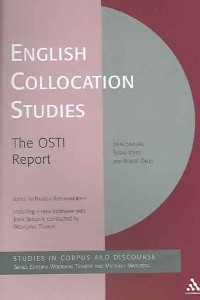
This is the first published edition of John Sinclair, Susan Jones and Robert Daley's research on collocation undertaken in 1970. The unpublished report was circulated amongst a small group of academics and was enormously influential, sparking a growth of interest in collocation amongst researchers in linguistics. Collocation was first viewed as important in computational linguistics in the work of Harold Palmer in Japan. Later M.A.K. Halliday and John Sinclair published on collocation in the 1960s. English Collocation Studies is a report on empirical research into collocation, devised by Halliday with Sinclair acting as the Principal Investigator and editor of the resultant OSTI report. The present edition contains an introduction by Professor Wolfgang Teubert based on his interview with John Sinclair. The introduction assesses the extent to which the findings of the original research have developed in the intervening years, and how some of the techniques mentioned in the report were implemented in the COBUILD project at Birmingham University in the 1980s.
目录
Table Of Contents:
Preface ix
Contributors xi
Editor's Preface xiii
Interview with John Sinclair conducted by Wolfgang Teubert xvii
English Lexical Studies: Report to OSTI on Project C/LP/08
Acknowledgements 2(1)
Steering Committee 2(1)
Staff 2(1)
Organisation of the Report 2(1)
INTRODUCTION 3(136)
Grammar Versus Lexis 3(2)
Span 5(1)
Lexical Items 5(2)
Loose Ends 7(2)
Background 9(9)
Definition of Specialized Terms used in the Report 9(1)
Brief History of the Project: Edinburgh 10(1)
Brief History of the Project: Birmingham 11(4)
Possibilities for Future Research 15(3)
Texts 18(16)
Introduction 18(1)
The Spoken English Text 18(5)
The Brown University Text 23(2)
The Scientific Text 25(1)
Experiments in Obtaining Text from Informants 25(4)
Literary Texts 29(1)
Discussion of the Statistical Characteristics of Texts 29(5)
Significant COLLOCATION 34(23)
Definitions 34(1)
Population and Sample 34(1)
Significance at a Span Position and Significance within a Span 35(1)
Significance Tests Used 36(5)
Level of Significance and Minimum Number of Occurrences 41(1)
Test Decisions 42(1)
Span 42(6)
Prediction on the Left and on the Right 48(3)
Point of Maximum Difference 51(2)
Calculation of Expected Values and Variances 53(2)
Methods Used in Section 3.6 55(2)
Frequent Words 57(13)
Introduction 57(1)
An Examination of Some Grammatical Items 58(7)
Semi-Grammatical Items 65(5)
Collocational Patterns of Selected Lexical Items 70(21)
Introduction 70(1)
Selection of Data 70(1)
Production of Collocational Information 71(3)
Analysis of Collocational Information 74(11)
Statistical Considerations 85(6)
Identifying Lexical Items 91(32)
Introduction 91(1)
Multiword Items 91(7)
Homographs 98(15)
Paradigms 113(10)
Discrimination Between two Texts Using Strength of Collocation As a Discriminant 123(16)
Introduction 123(1)
Texts 124(1)
Test Words 124(1)
Discrimination using Bayes Theorem 125(1)
Choosing the Prior Distribution of f 126(2)
Discussion of the Use of Bayes Formula in Deriving Posterior Odds 128(1)
Choosing the Collocates 128(4)
The Disputed Text 132(1)
Conclusions 133(6)
APPENDICES (EDITED FOR THIS PUBLICATION) 139(60)
Section 1
Appendix 1i: Program Descriptions 139(4)
Section 2
Appendix 2i: Words in text with 10 or more occurrences (Rank Order) 143(1)
Appendix 2ii: Words in text with 10 or more occurrences (Alphabetical Order) 144(1)
Appendix 2iii: Part of first synthetic text 145(2)
Appendix 2iv: Significant collocates (second synthetic text) 147(4)
Section 4
Appendix 4i: Collocational tables for grammatical items 151(1)
Appendix 4iA: the, a 151(5)
Appendix 4iB: and 156(1)
Appendix 4iC: of, in, and to 157(4)
Appendix 4iD: I, you, it (spoken text only) 161(2)
Appendix 4ii: Selection from the available collocation information for semi-grammatical items 163(13)
Section 5
Appendix 5i: Collocations significant with only 2 occurrences 176(1)
Appendix 5ii: Collocational patterns for selected lexical items 177(6)
Section 6
Appendix 6i: Concordance of right with minority meanings marked 183(1)
Appendix 6ii: Classified occurrences of way 184(2)
Appendix 6iii: Collocates significant with comelcame 186(2)
Appendix 6iv: Classified occurrences of year/years 188(1)
Appendix 6iv: Collocates significant with year/years 189(2)
Appendix 6v: Classified occurrences of word/words 191(1)
Appendix 6v: Collocates significant with word/words 192(2)
Appendix 6vi: The ``Red Herring'' Results 194(5)
APPENDIX 199(4)
Sample from the Spoken English Text 199(4)
References 203(2)
Index 205
Preface ix
Contributors xi
Editor's Preface xiii
Interview with John Sinclair conducted by Wolfgang Teubert xvii
English Lexical Studies: Report to OSTI on Project C/LP/08
Acknowledgements 2(1)
Steering Committee 2(1)
Staff 2(1)
Organisation of the Report 2(1)
INTRODUCTION 3(136)
Grammar Versus Lexis 3(2)
Span 5(1)
Lexical Items 5(2)
Loose Ends 7(2)
Background 9(9)
Definition of Specialized Terms used in the Report 9(1)
Brief History of the Project: Edinburgh 10(1)
Brief History of the Project: Birmingham 11(4)
Possibilities for Future Research 15(3)
Texts 18(16)
Introduction 18(1)
The Spoken English Text 18(5)
The Brown University Text 23(2)
The Scientific Text 25(1)
Experiments in Obtaining Text from Informants 25(4)
Literary Texts 29(1)
Discussion of the Statistical Characteristics of Texts 29(5)
Significant COLLOCATION 34(23)
Definitions 34(1)
Population and Sample 34(1)
Significance at a Span Position and Significance within a Span 35(1)
Significance Tests Used 36(5)
Level of Significance and Minimum Number of Occurrences 41(1)
Test Decisions 42(1)
Span 42(6)
Prediction on the Left and on the Right 48(3)
Point of Maximum Difference 51(2)
Calculation of Expected Values and Variances 53(2)
Methods Used in Section 3.6 55(2)
Frequent Words 57(13)
Introduction 57(1)
An Examination of Some Grammatical Items 58(7)
Semi-Grammatical Items 65(5)
Collocational Patterns of Selected Lexical Items 70(21)
Introduction 70(1)
Selection of Data 70(1)
Production of Collocational Information 71(3)
Analysis of Collocational Information 74(11)
Statistical Considerations 85(6)
Identifying Lexical Items 91(32)
Introduction 91(1)
Multiword Items 91(7)
Homographs 98(15)
Paradigms 113(10)
Discrimination Between two Texts Using Strength of Collocation As a Discriminant 123(16)
Introduction 123(1)
Texts 124(1)
Test Words 124(1)
Discrimination using Bayes Theorem 125(1)
Choosing the Prior Distribution of f 126(2)
Discussion of the Use of Bayes Formula in Deriving Posterior Odds 128(1)
Choosing the Collocates 128(4)
The Disputed Text 132(1)
Conclusions 133(6)
APPENDICES (EDITED FOR THIS PUBLICATION) 139(60)
Section 1
Appendix 1i: Program Descriptions 139(4)
Section 2
Appendix 2i: Words in text with 10 or more occurrences (Rank Order) 143(1)
Appendix 2ii: Words in text with 10 or more occurrences (Alphabetical Order) 144(1)
Appendix 2iii: Part of first synthetic text 145(2)
Appendix 2iv: Significant collocates (second synthetic text) 147(4)
Section 4
Appendix 4i: Collocational tables for grammatical items 151(1)
Appendix 4iA: the, a 151(5)
Appendix 4iB: and 156(1)
Appendix 4iC: of, in, and to 157(4)
Appendix 4iD: I, you, it (spoken text only) 161(2)
Appendix 4ii: Selection from the available collocation information for semi-grammatical items 163(13)
Section 5
Appendix 5i: Collocations significant with only 2 occurrences 176(1)
Appendix 5ii: Collocational patterns for selected lexical items 177(6)
Section 6
Appendix 6i: Concordance of right with minority meanings marked 183(1)
Appendix 6ii: Classified occurrences of way 184(2)
Appendix 6iii: Collocates significant with comelcame 186(2)
Appendix 6iv: Classified occurrences of year/years 188(1)
Appendix 6iv: Collocates significant with year/years 189(2)
Appendix 6v: Classified occurrences of word/words 191(1)
Appendix 6v: Collocates significant with word/words 192(2)
Appendix 6vi: The ``Red Herring'' Results 194(5)
APPENDIX 199(4)
Sample from the Spoken English Text 199(4)
References 203(2)
Index 205
- 名称
- 类型
- 大小
光盘服务联系方式: 020-38250260 客服QQ:4006604884
云图客服:
用户发送的提问,这种方式就需要有位在线客服来回答用户的问题,这种 就属于对话式的,问题是这种提问是否需要用户登录才能提问
Video Player
×
Audio Player
×
pdf Player
×
