

微信扫一扫,移动浏览光盘
简介
Summary:
Publisher Summary 1
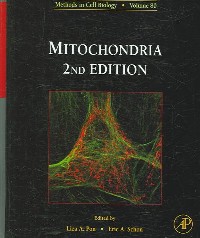
This book provides an update on the step-by-step "how to" methods for the study mitochondrial structure, function, and biogenesis contained in the successful first edition. As in the previous edition, the biochemical, cell biological, and genetic approaches are presented along with sample results, interpretations, and pitfalls from each method.
目录
Front Cover 1
Methods in Cell Biology 4
Copyright Page 5
Contents 6
Contributors 18
Preface 24
Part I: Isolation and Subfractionation of Mitochondria 26
Chapter 1: Isolation and Subfractionation of Mitochondria from Animal Cells and Tissue Culture Lines 28
I. Introduction 29
II. General Features of Mitochondrial Preparations 30
A. Cell Rupturing by Mechanical and/or Chemical Means and Resuspension in Isolation Medium 30
B. Differential Centrifugation 32
C. Storage 33
D. Criteria of Purity and Intactness 33
III. Mitochondria from Beef Heart 33
A. Small-Scale Preparation 34
B. Preparation of Coupled Submitochondrial Particles 36
C. Broken Submitochondrial Particles 37
D. Keilin-Hartree Heart Muscle Preparation 38
E. Cytochrome c-Depleted and Cytochrome c-Reconstituted Mitochondria and ETPH 39
F. CoQ-Depleted and CoQ-Reconstituted Mitochondria 40
IV. Mitochondria from Rat Liver 42
A. Standard Preparation 43
B. Gradient-Purified Rat Liver Mitochondria 43
C. Liver SMP 45
D. Mitochondria from Rat Hepatocytes 45
E. Isolation of Mitochondria from Frozen Tissues 45
F. Preparation of Rat Liver Mitoplasts 46
G. Phospholipid-Enriched Mitoplasts and SMP with or Without Excess CoQ 47
V. Mitochondria from Skeletal Muscle 48
VI. Synaptic and Nonsynaptic Mitochondria from Different Rat Brain Regions 51
VII. Mitochondria from Kidney and Testis 54
VIII. Mitochondria from Hamster Brown Adipose Tissue 54
IX. Mitochondria from Insect Flight Muscle 55
X. Mitochondria from Porcine Adrenal Cortex 55
XI. Mitochondria from Human Platelets 56
A. Crude Mitochondrial Membranes 56
B. Coupled Mitochondrial Particles from Platelet Mitochondria 57
XII. Mitochondria from Fish Liver 57
XIII. Mitochondria from Sea Urchin Eggs 58
XIV. Mitochondria and Kinetoplasts from Protozoa 58
XV. Mitochondria from Fish Erythrocytes 60
XVI. Mitochondria from Caenorhabditis elegans 60
XVII. Mitochondria from Drosophila 60
XVIII. Mitochondria and Mitoplasts from Cultured Cells 61
Acknowledgments 64
References 64
Chapter 2: Purification and Subfractionation of Mitochondria from the Yeast Saccharomyces cerevisiae 70
I. Introduction 70
II. Isolation of Mitochondria 71
A. Growth of Yeast Cells 74
B. Isolation of Crude Mitochondria 74
C. Purification of Crude Mitochondria Using Continuous Nycodenz Gradient Centrifugation 76
III. Analysis of Isolated Mitochondria 78
A. Assessing the Purity of Mitochondrial Preparations 78
B. Determining the Integrity of Mitochondrial Preparations 80
C. Assessment of Protein Localization to Mitochondria and to Subcompartments in the Organelle 83
D. Assessment of the Disposition of Proteins on Mitochondrial Membranes 84
IV. Isolation of Mitochondrial Outer Membranes, Contact Sites, and Inner Membranes 86
Acknowledgments 88
References 88
Chapter 3: Isolation and Subfractionation of Mitochondria from Plants 90
I. Introduction 91
II. Growth and Preparation of Plant Material 91
III. Isolation of Mitochondria 92
IV. Density Gradient Purification of Mitochondria 94
A. Sucrose 94
B. Percoll 94
C. Mini-Mitochondrial. Preparations for Screening Transgenic Lines 96
D. Cell Culture/Callus Mitochondria Preparation 97
V. Mitochondrial Yield, Purity, Integrity, Storage, and Function 98
A. Yield Calculations 98
B. Purity Determinations 99
C. Integrity Determinations 99
D. Storage 100
E. Assays of Mitochondria Function 100
VI. Subfractionation of Mitochondrial Compartments 102
A. Separation of Inner Mitochondrial Membrane, Outer Mitochondrial Membrane, Matrix, and Intermembrane Space 102
B. Separation of Mitochondrial Inner Membrane Components by MonoQ 103
C. Isoelectric Focusing and SDS-PAGE 105
D. BN-PAGE of Intact ETC Components 106
VII. In Organello Translation Analysis 108
VIII. Proteome Analysis 110
A. Experimental Analysis of Mitochondrial Proteomes 110
B. Prediction of Mitochondrial Proteomes 111
IX. Conclusion 112
References 112
Part II: Biochemical Assays of Mitochondrial Activity 116
Chapter 4: Biochemical Assays of Respiratory Chain Complex Activity 118
I. Introduction 118
II. Materials and Methods 121
A. Sample Preparation 121
B. Enzyme Assays 126
III. Interpreting Results of RC Enzymology 139
Acknowledgments 141
References 141
Chapter 5: Polarographic Assays of Respiratory Chain Complex Activity 146
I. Introduction 146
II. Measurements of Endogenous Respiration in Intact Cells 147
A. Media and Reagents 147
B. Procedure 147
C. Comments 148
III. KCN Titration of COX Activity in Intact Cells 149
A. Principle 149
B. Media and Reagents 150
C. Procedure 150
D. Analysis of Data 152
IV. In Situ Analysis of Mitochondrial OXPHOS 153
A. Media and Reagents 154
B. Digitonin Titration 154
C. P/O Ratio Assay 154
D. Analysis of Data 155
Acknowledgments 157
References 157
Chapter 6: Optical Imaging Techniques (Histochemical, Immunohistochemical, and In Situ Hybridization Staining Methods) to Visualize Mitochondria 160
I. Introduction 160
II. Histochemistry 162
A. Succinate Dehydrogenase 163
B. Cytochrome c Oxidase 165
III. Immunohistochemistry 167
A. Immunolocalization of nDNA- and mtDNA-Encoded Subunits of the Respiratory Chain in Frozen Samples 167
B. Immunolocalization of mtDNA on Frozen Samples 170
C. Immunolocalization of Mitochondrial Proteins on Paraffin-Embedded Samples 171
IV. In Situ Hybridization to mtDNA 173
Acknowledgments 176
References 176
Chapter 7: Assay of Mitochondrial ATP Synthesis in Animal Cells and Tissues 180
I. Introduction 180
II. ATP Synthesis Assays 181
III. Methodological Considerations 182
A. Cell Permeabilization (Detergent Titration in Cultured Cells) 182
B. ATP Detection by Luciferase-Luciferin 182
C. Specificity of the Assay 183
IV. Experimental Procedures 185
A. Measurement of ATP Synthesis in Cultured Cells 185
B. ATP Synthesis in Mitochondria Isolated from Animal Tissues 187
V. Measurement of High-Energy Phosphates in Animal Tissue and Cultured Cells by HPLC 190
A. Apparatus and Reagents 191
B. Preparation of Biological Samples 191
C. Chromatography 192
D. Standard Curves 192
E. Measurement of Creatine, Phosphocreatine, and Phosphorylated Nucleotides 193
Acknowledgments 194
References 194
Chapter 8: Measurement of the Ratio of Lactate to Pyruvate in Skin Fibroblast Cultures 198
I. Introduction 198
II. Principle 199
III. Procedure 200
A. Sample Preparation 200
B. Determination of Lactate 201
C. Determination of Pyruvate 201
IV. Results 202
References 203
Chapter 9: Assays of Fatty Acid beta-Oxidation Activity 204
I. Introduction 204
II. Metabolite Measurements 208
A. Acylcarnitine Profiles and Total and Free Carnitine Levels 208
B. Measurement of Urine Organic Acids and Acylglycine 209
III. Enzyme and Transporter Assays 211
A. Carnitine Uptake 211
B. Carnitine Cycle 211
C. Intramitochondrial Enzymes 214
IV. Metabolic Flux Studies 218
A. Whole-Flux Measurement 218
B. Metabolite Accumulation Assays 220
V. Discussion 220
References 220
Chapter 10: Biochemical Assays for Mitochondrial Activity: Assays of TCA Cycle Enzymes and PDHc 224
I. Introduction 224
II. Pyruvate Dehydrogenase Complex 227
A. Pyruvate Dehydrogenase Assays 227
B. LAD Assay 228
III. Citrate Synthase 232
IV. Aconitase 234
V. Isocitrate Dehydrogenase 234
VI. alpha-Ketoglutarate Dehydrogenase Complex 235
VII. Succinyl CoA Synthetase 237
VIII. Succinate Dehydrogenase 238
IX. Fumarase 239
X. Malate Dehydrogenase 242
XI. Conclusion 242
Acknowledgments 242
References 242
Chapter 11: Assays of Cardiolipin Levels 248
I. Introduction 248
II. Molecular Species of Cardiolipin 250
III. Cardiolipin Analysis by TLC 251
A. Overview 251
B. Protocol for TLC with Phosphorus Assay 253
C. Protocol for TLC with Fatty Acid Assay 255
IV. Cardiolipin Analysis by HPLC 255
A. Overview 255
B. Protocol for Nonderivatized Cardiolipin 257
C. Protocol for Fluorescence-Labeled Cardiolipin 257
V. Cardiolipin Analysis by MS 259
A. Overview 259
B. Method 260
VI. Applications of Cardiolipin Measurements 261
Acknowledgments 263
References 263
Chapter 12: Measurement of VDAC Permeability in Intact Mitochondria and in Reconstituted Systems 266
I. Introduction 266
II. Determining the Permeability of the Mitochondrial Outer Membrane to Metabolites 268
A. Rationale 268
B. Assay of Outer Membrane Intactness 268
C. Methods 268
D. Controls 277
III. VDAC Activity After Reconstitution into Phospholipid Membranes 278
A. Rationale 278
B. Purification of VDAC 278
C. Reconstitution of VDAC into Planar Membranes 279
D. Electrophysiological Recordings 281
IV. Summary 284
Acknowledgments 284
References 284
Chapter 13: Methods for Studying Iron Metabolism in Yeast Mitochondria 286
I. Introduction 286
II. Determination of Cellular Fe/S Protein Formation and Heme Synthesis 288
A. Determination of Cellular Fe/S Cluster Formation by Radiolabeling of Yeast Cells In Vivo 289
B. Determination of Cellular Heme Levels by Radiolabeling of Yeast Cells In Vivo 292
C. Determination of Fe/S Cluster Formation in Isolated Mitochondria In Vitro 293
D. Analysis of Fe/S Cluster Formation In Vitro Using Recombinant Ferredoxins 295
III. Determination of Mitochondrial Iron Contents 297
A. Bathophenantroline Assay 298
B. Nitro-PAPS Assay 298
IV. Reporter Assays for Analysis of Iron-Dependent Gene Expression in S. cerevisiae 299
A. Promoter Assay Based on Green Fluorescent Protein 301
B. Promoter Assays Based on Luciferase Reporters 301
Acknowledgments 304
References 304
Part III: Assays for Mitochondrial Respiratory Activity and Permeability in Living Cells 306
Chapter 14: Imaging of Mitochondrial Polarization and Depolarization with Cationic Fluorophores 308
I. Introduction 308
II. Quantitative Imaging of DeltaPsi with Fluorescent Cations 309
A. Nernstian Distribution of Cationic Fluorophores 309
B. Cellular Loading of Potential-Indicating Fluorophores 310
C. Image Acquisition and Processing 310
D. Nonideal Characteristics of Fluorophores 314
III. Visualization of Depolarized Mitochondria 314
A. Covalent Adduct Formation by MitoTracker Probes 314
B. FRET Between Cationic Fluorophores 315
C. FRET Between MitoTracker Green FM and TMRM 316
D. Use of FRET to Distinguish Depolarized from Polarized Mitochondria 317
IV. Conclusion 318
Acknowledgments 319
References 319
Chapter 15: Biosensors for the Detection of Calcium and pH 322
I. Introduction 322
II. Targeting Strategies and Transfection 323
A. Targeting to the Mitochondrial Matrix 323
B. Targeting to the Mitochondrial Intermembrane Space 324
III. Calcium Reporters 325
A. Mitochondrial Calcium Measurements Using Aequorin 326
B. Procedure 330
C. Mitochondrial Calcium Measurements Using GFP 336
D. Procedure 341
IV. pH Reporters 341
A. Mitochondrial pH-Sensitive Fluorescent Proteins 342
B. Procedure 346
V. Conclusions 346
Acknowledgments 346
References 347
Chapter 16: Measurement of Membrane Permeability and the Permeability Transition of Mitochondria 352
I. Introduction 352
II. Procedures 353
A. Mitochondrial Alterations in Intact Cells 353
B. Cytometric Analysis: Lipophilic Cationic Dyes 353
References 363
Chapter 17: Luciferase Expression for ATP Imaging: Application to Cardiac Myocytes 366
I. Introduction 366
II. ATP Homeostasis in the Heart 368
III. Measurement of Mitochondrial and Cytosolic ATP in Cardiac Myocytes 368
IV. Measurement of ATP in Subcellular Compartments by Luminometery 371
A. Luciferase Vectors 372
B. Cell Transfection and ATP Assays 373
C. ATP Standards 375
Acknowledgments 376
References 376
Part IV: Oxidative Stress Measurements 378
Chapter 18: Measurement of Reactive Oxygen Species in Cells and Mitochondria 380
I. Introduction 380
II. Measurement of ROS in Cells 382
A. CL-Based Characterization of ROS Generated by HX/XO and Phorbol Myristate Acetate (PMA)-Stimulated WBCs 382
B. Electron Spin Resonance Spectroscopy 386
C. Fluorescence Dye Techniques for the Determination of Cellular ROS 388
D. The Determination of ROS Using HE and FACS Analyses 391
E. Spectrophotometric Methods for Determination of ROS 392
III. Measurement of ROS in Mitochondria 394
A. Isolation of Mitochondria from Cells and Tissue 394
B. Measurement of Mitochondrial ROS (H2O2) 395
C. Measurement of Mitochondrial ROS (O2bull-) 396
IV. General Problems Associated with the Measurement of ROS 397
V. Conclusions 398
Acknowledgments 399
References 399
Chapter 19: Measurements of the Antioxidant Enzyme Activities of Superoxide Dismutase, Catalase, and Glutathione Peroxidase 404
I. Introduction 404
II. Experimental Procedures 405
A. Sample Preparation 405
B. SOD Activity Assay 406
C. GPx Activity Assay 411
D. Catalase Activity Assay 414
Acknowledgments 416
References 416
Chapter 20: Methods for Measuring the Regulation of Respiration by Nitric Oxide 420
I. Introduction 421
A. Basic Concepts of Metabolic Control 421
II. Apparatus 423
A. Classical Closed System Respirometer 423
B. Open-Flow Respirometer 425
III. Calibration of the NObull Electrode 426
A. Preparing NObull Stock Solutions for Electrode Calibration 426
B. NObull Electrode Calibration 426
C. Effects of O2 on NObull Electrode Calibration 427
D. NObull Release from NObull Donor Compounds 429
IV. NObull Threshold Measurement 431
A. Threshold Measurements in Isolated Mitochondria 431
B. Altered Thresholds in Disease 433
C. Measurement of NObull Thresholds in Cells 433
V. Open-Flow Respirometry 436
VI. An In Vitro Model of Ischemia/Reperfusion Injury 438
VII. Conclusion 439
Acknowledgments 440
References 440
Chapter 21: Methods for Determining the Modification of Protein Thiols by Reactive Lipids 442
I. Introduction 442
A. Formation of Reactive Lipids in Physiology and Pathology 442
B. Electrophilic Lipids as Reactive Lipid Mediators 443
C. Reactivity of Electrophilic Lipids with Protein Thiols and the Role of Mitochondria 444
II. Rationale 444
III. Methods 446
A. Biotin Labeling of Free Protein Thiols Using Biotinylated Iodoacetamide 446
B. Synthesis of a Biotinylated Electrophilic Lipid 447
C. Preparation and Calibration of Biotinylated Cytochrome c and Other Proteins 450
D. Blotting and Image Analysis 454
IV. Discussion 457
Acknowledgments 458
References 458
Part V: Mitochondrial Genes and Genes and Gene Expression 460
Chapter 22: Detection of Mutations in mtDNA 462
I. Introduction 463
II. Large-Scale Rearrangements of mtDNA 464
III. Detecting mtDNA Rearrangements 465
IV. Details of Southern Blot Hybridization Analysis 468
A. DNA Preparation 468
B. Probe Preparation 468
C. Labeling of the Probe 469
D. Preparation of Restriction Enzyme Digest 469
E. Agarose Gel Elect 470
F. DNA Transfer 470
G. Hybridization 470
H. Washing the Membrane 471
I. Film Developing 471
V. Depletion of mtDNA 472
A. Southern Blot Hybridization Analysis to Detect mtDNA Depletion 472
B. Quantitation of mtDNA by Real-Time PCR 473
VI. Point Mutations in mtDNA 474
A. Detecting mtDNA Point Mutations by PCR/RFLP Analysis 476
B. Quantification of Heteroplasmy Level by the Amplification-Refractory Mutation System and Quantitative Real-Time PCR 481
C. Detection of Unknown Mutations in mtDNA 484
Acknowledgments 485
References 485
Chapter 23: Diagnostic Assays for Defects in mtDNA Replication and Transcription in Yeast and Humans 490
I. Introduction 490
II. Diagnosis of mtDNA Replication Defects in Yeast and Human Cells 491
A. Fundamental Aspects of mtDNA Replication 491
B. Methods for Detecting mtDNA and Measuring Copy Number 492
III. Analyzing Mitochondrial Transcripts In Vivo 497
A. Mitochondrial Transcription Initiation 497
B. Standard Assays for Mitochondrial Transcription 498
IV. Additional Considerations 502
Acknowledgment 502
References 502
Chapter 24: Microdissection and Analytical PCR for the Investigation of mtDNA Lesions 506
I. Introduction 506
II. Microdissection and DNA Purification 507
A. Tissue Preparation and Sectioning 507
B. Microdissection Techniques 508
C. Laser Microdissection 509
D. DNA Purification 510
E. PCR 512
III. Analytical PCR for Investigation of mtDNA in Microdissected Samples 512
A. Common Strategies for Improving PCR Signal Strength from Microdissected Samples 512
B. RELP of know Polymorphisms and Mutations 515
C. Sample Protocol 515
D. mtDNA Sequencing 518
E. Quantification of mtDNA Content 518
F. Detection of DeltamtDNA Species 520
G. Quantification of DeltamtDNA Abundance 521
IV. Concluding Remarks 523
Acknowledgments 523
References 524
Chapter 25: Transmitochondrial Technology in Animal Cells 528
I. Introduction 529
II. Generation of Nuclear Donors 529
A. Generation of rho0 Cells 529
B. rho+ Cells Treated with Rhodamine 6G as Nuclear Donors 532
III. Generation of mtDNA Donors 535
A. Cultured Cells as mtDNA Donors Enucleated with Cytochalasin B and Centrifugation (Cytoplasts) 535
B. Platelets as mtDNA Donors 537
C. Synaptosomes as mtDNA Donors 537
D. Chemical Enucleation to Produce mtDNA Donors 538
IV. Generation of Transmitochondrial Cybrids 539
A. Using Enucleated Cells as mtDNA Donors and rho0 Cells as Nuclear Donors 539
B. Using.Platelets as Mitochondrial Donors 540
C. Using rho+ Cells Treated with R6G as Nuclear Donors 541
D. Using Synaptosomes as Mitochondrial Donors 541
E. Using Cells Chemically Enucleated with Actinomycin D as Mitochondrial Donors 541
F. Generation of Transmitochondrial Hybrid Cells by Microcell-Mediated Chromosome and mtDNA Transfer 542
V. Manipulating Heteroplasmy 544
A. Manipulating Heteroplasmy by the Use of EtBr 544
B. Manipulating Heteroplasmy by Delivering Restriction Endonucleases to Mitochondria 544
Acknowledgments 545
References 545
Chapter 26: Genetic Transformation of Saccharomyces.cerevisiae and Chlamydomonas reinhardtii Mitochondria 550
I. Introduction 551
II. Important Features of S. cerevisiae and C. reinhardtii Mitochondrial Genetics 552
A. Phenotypes Associated with Mitochondrial Gene Expression 552
B. Novel Mitochondrial Genes Conferring Useful Mitochondrial Phenotypes in S. cerevisiae 553
C. Replication of mtDNA and Mitochondrial Deletion Mutants 554
D. Recombination and Segregation of mtDNA 555
III. Delivery of DNA to the Mitochondrial Compartment of rho0 Cells and Detection of Mitochondrial Transformants 557
A. Overview of Transformation Procedure 557
B. Experimental Details for Transformation and Identification of Mitochondrial Transformants 558
IV. Strategies for Gene Replacement in S. cerevisiae mtDNA 563
A. Integration of Altered mtDNA Sequences by Homologous Double Crossovers 563
B. Experimental Details for Mating and Isolation of Recombinant Cytoductants 564
C. Streamlining the Integration of Multiple Mutations in a Short Region by Use of rho+ Recipients Containing Defined Deletions 565
D. Experimental Details for Identification of Nonrespiring Cytoductants by Marker Rescue 565
V. Transformation of rho+ Cells with Plasmids or Linear DNA Fragments 567
VI. Concluding Remarks 569
Acknowledgments 569
References 569
Chapter 27: Generation of Transmitochondrial Mice: Development of Xenomitochondrial Mice to Model Neurodegenerative Diseases 574
I. Introduction 574
II. Spontaneous and Induced Models of Mitochondrial Disease 575
III. Transgenic Models 577
IV. Introduction of Mutant mtDNA into Mitochondria 577
A. Use of Transfected rho0 Cells as Intermediate Mitochondrial Carriers in the Production of Mouse Models 578
B. Embryonic Stem Cell Technology 579
V. The First Transmitochondrial Mice 580
A. mtDNA Injection Versus ES Cell-Derived Models 583
B. Xenomitochondrial Mice 585
C. Neurodegenerative Disorders 588
VI. Summary/Future Directions 589
Acknowledgments 589
References 590
Chapter 28: In Vivo and In Organello Analyses of Mitochondrial Translation 596
I. Introduction 596
II. Rationale 598
III. Methods 601
A. In Vivo Mitochondrial Protein Synthesis 601
B. In Organello Protein Synthesis 605
C. Complementary Analyses: In Organello Aminoacylation Assay 606
IV. Materials 608
V. Discussion 609
VI. Summary 610
Acknowledgments 610
References 610
Part VI: Assays for Mitochondrial Morphology and Motility 614
Chapter 29: Visualization of Mitochondria in Budding Yeast 616
I. Introduction 617
II. Use of Vital Dyes to Stain Yeast Mitochondria 617
A. DNA-Binding Dyes 617
B. Lipophilic Membrane Potential-Sensing Dyes 619
C. Staining Protocol 620
III. Use of Immunostaining to Detect Mitochondria in Fixed Yeast Cells 621
A. Pretreatment of Antibodies with Yeast Cell Walls 621
B. Yeast Cell Growth, Fixation, and Cell Wall Removal 623
C. Preparation of a Staining Chamber 626
D. Immobilization of Fixed Spheroplasts on Coverslips and Incubation with Primary and Secondary Antibodies 627
IV. Ectopic Expression of Mitochondria-Targeted Fluorescent Fusion Proteins 629
A. Transformation of Yeast with Plasmid-Borne Targeted FPs 630
B. Validation of Targeted FPs 632
V. Tagging Endogenous Proteins with Fluorescent Proteins 632
A. Vectors for PCR-Mediated Tagging of Chromosomal Genes 633
B. PCR Amplification of Insertion Cassette 633
C. Transformation of Yeast with the Amplified Insertion Cassette 636
D. Validation of Tagging and Gene Function 637
E. Marker Excision by Cre Recombinase 637
VI. Strategies for Visualization of Yeast Mitochondria 639
A. Defining Imaging Needs 639
B. Imaging Technologies 641
C. Equipment for Imaging 644
VII. Methods for Imaging of Mitochondria in Living Yeast Cells 645
Acknowledgments 649
References 649
Chapter 30: Visualization and Quantification of Mitochondrial Dynamics in Living Animal Cells 652
I. Introduction 653
II. Labeling of Mitochondria in Living Animal Cells 656
A. Fluorescent Labeling of Mitochondria Using Mitochondrial Dyes and Fluorescent Proteins 656
III. Probing Interactions Between Mitochondria and the Cytoskeleton and Molecular Motors in Living Animal Cells 659
A. Visualization of the Cytoskeleton in Living Animal Cells 659
B. Use of Cytoskeletal Inhibitors in Living Animal Cells 660
C. Inhibition of Microtubule-Based Molecular Motors in Living Animal Cells 660
IV. Image Acquisition 664
A. Equipment 664
V. Preparation of Cells 670
A. Isolation, Culture, and Transfection of Primary Cortical Neurons 670
B. Culture and Transfection of N2A Neuroblastoma Cells and CV-1 Cells 672
VI. Time-Lapse Recordings 673
VII. Analysis of Mitochondrial Motility 675
A. Software 675
B. Analysis of Total Mitochondrial Movement 675
C. Kymograph Analysis 676
D. Full Quantitative Analysis of Mitochondrial Motility 678
VIII. Analysis of Mitochondrial Morphology 685
A. Analysis of Morphology of Individual Mitochondria and Mitochondrial Fusion and Fission 685
B. Analysis of Mitochondrial Branching and Networks 689
IX. Appendix A 691
A. Total_Motility 691
X. Appendix B 695
A. SlopeToVelocity_ 695
Acknowledgments 698
References 698
Chapter 31: Cell-Free Assays for Mitochondria-Cytoskeleton Interactions 708
I. Introduction 708
II. In Vitro Reconstitution of Microtubule-Based Mitochondrial Transport 709
A. Preparation of Motility Assay Components 710
B. Motility Assays 719
C. Analysis of Mitochondrial Motility 721
III. Sedimentation Assay for Binding of Actin to Mitochondria 721
A. Reagents 723
B. Binding Assay 725
C. Salt Treatment of Mitochondria 727
D. Analysis of Mitochondria-Actin Binding 728
Acknowledgments 730
References 730
Chapter 32: In Vitro Assays for Mitochondrial Fusion and Division 732
I. Introduction 732
II. Mitochondrial Fusion In Vitro 733
A. Plasmids 734
B. Cell Culturing and Preparation of Fusion Competent Mitochondria 735
C. Fusion Reactions 736
D. Analysis of Fusion In Vitro 737
III. Analysis of Dynamin-Related GTPase Activity In Vitro 737
A. Continuous GTPase Assay 739
B. Protein Purification and Storage 740
C. Reagents 740
D. Procedure 741
E. Data Analysis 742
Acknowledgments 743
References 743
Part VII: Methods to Determine Protein Localization to Mitochondria 746
Chapter 33: Electrophoretic Methods to Isolate Protein Complexes from Mitochondria 748
I. Introduction 748
II. Materials and Methods 750
A. Chemicals 750
B. First Dimension: Blue Native Electrophoresis 750
C. First Dimension: Clear Native Electrophoresis 755
D. Second Dimension: Modified Blue Native Electrophoresis 756
E. Second or Third Dimension: SDS-PAGE 757
III. Applications 758
A. Protein Complexes from Mitochondria and Chloroplasts 759
B. Isolation of Protein Complexes from Tissue Homogenates and Cell Lines 763
C. Purification of Partially Purified Protein Complexes Using BN-PAGE 763
IV. Outlook 763
Acknowledgment 764
References 764
Chapter 34: Analysis of Protein-Protein Interactions in Mitochondria 768
I. Introduction 768
II. Rationale 769
III. Methods 770
A. Coimmunoprecipitation 771
B. Copurification Using Affinity Tags 776
C. Cross-Linking 778
Acknowledgments 782
References 782
Chapter 35: Analysis and Prediction of Mitochondrial Targeting Signals 786
I. Introduction 786
II. Overview on Protein Translocation into Mitochondria 787
III. Mitochondrial-Targeting Signals 789
A. Matrix-Targeting Signal (Presequence) 789
B. Internal Targeting Signals 793
IV. Bioinformatics Tools to Predict Mitochondrial Targeting Signals 797
A. TargetP 797
B. PSORT II 798
C. MITOPRED 798
D. MitoProt II 798
E. Predotar 798
V. Experimental Analysis of Mitochondrial-Targeting Signals 799
A. Construction of Hybrid Proteins 799
B. Mutagenesis Approach 799
C. Peptide Library Scan 800
D. Replacing of the Putative Signal with Known Mitochondrial-Targeting Sequences 800
VI. Summary 801
Acknowledgments 801
References 801
Chapter 36: Import of Proteins into Mitochondria 808
I. Introduction 808
II. In Vitro Synthesis of Precursor Proteins 810
A. RNA Preparation and In Vitro Transcription 810
B. In Vitro Translation 813
III. The Import Reaction 814
A. Mitochondrial Isolation 814
B. Standard Import Reaction into Isolated Yeast Mitochondria 815
C. Time Course Experiment 816
IV. Steps to Resolve the Location of Imported Mitochondrial Precursors 819
A. Protease Protection Assays 819
B. Mitochondrial Swelling 820
C. Mitochondrial Solubilization for Protease Treatment 821
D. Is the Newly Imported Mitochondrial Protein Soluble, Peripherally Membrane Associated, or Integrated into Mitochondrial Membranes? 821
V. Assaying Protein Complex Assembly by BN-PAGE 822
VI. Resolving Protein Complex Constituents 823
A. Antibody Shift and Antibody Depletion Assays 823
B. Cross-Linking After Import 824
VII. Assaying Protein Import in Yeast Mutants 826
VIII. Concluding Remarks 827
Acknowledgments 828
References 828
Part VIII: Appendices 832
Appendix 1: Basic Properties of Mitochondria 834
Appendix 2. Direct and Indirect Inhibitors of Mitochondrial ATP Synthesis 838
Appendix 3: Linearized Maps of Circular Mitochondrial Genomes from Representative Organisms 852
Appendix 4: Mitochondrial Genetic Codes in Various Organisms 856
Appendix 5: Gene Products Present in Mitochondria of Yeast and Animal Cells 860
Appendix 6: Changes in the Mitochondrial Transcriptome and Proteome Under Various Stresses and Growth Conditions 902
Index 914
Volumes in Series 938
Methods in Cell Biology 4
Copyright Page 5
Contents 6
Contributors 18
Preface 24
Part I: Isolation and Subfractionation of Mitochondria 26
Chapter 1: Isolation and Subfractionation of Mitochondria from Animal Cells and Tissue Culture Lines 28
I. Introduction 29
II. General Features of Mitochondrial Preparations 30
A. Cell Rupturing by Mechanical and/or Chemical Means and Resuspension in Isolation Medium 30
B. Differential Centrifugation 32
C. Storage 33
D. Criteria of Purity and Intactness 33
III. Mitochondria from Beef Heart 33
A. Small-Scale Preparation 34
B. Preparation of Coupled Submitochondrial Particles 36
C. Broken Submitochondrial Particles 37
D. Keilin-Hartree Heart Muscle Preparation 38
E. Cytochrome c-Depleted and Cytochrome c-Reconstituted Mitochondria and ETPH 39
F. CoQ-Depleted and CoQ-Reconstituted Mitochondria 40
IV. Mitochondria from Rat Liver 42
A. Standard Preparation 43
B. Gradient-Purified Rat Liver Mitochondria 43
C. Liver SMP 45
D. Mitochondria from Rat Hepatocytes 45
E. Isolation of Mitochondria from Frozen Tissues 45
F. Preparation of Rat Liver Mitoplasts 46
G. Phospholipid-Enriched Mitoplasts and SMP with or Without Excess CoQ 47
V. Mitochondria from Skeletal Muscle 48
VI. Synaptic and Nonsynaptic Mitochondria from Different Rat Brain Regions 51
VII. Mitochondria from Kidney and Testis 54
VIII. Mitochondria from Hamster Brown Adipose Tissue 54
IX. Mitochondria from Insect Flight Muscle 55
X. Mitochondria from Porcine Adrenal Cortex 55
XI. Mitochondria from Human Platelets 56
A. Crude Mitochondrial Membranes 56
B. Coupled Mitochondrial Particles from Platelet Mitochondria 57
XII. Mitochondria from Fish Liver 57
XIII. Mitochondria from Sea Urchin Eggs 58
XIV. Mitochondria and Kinetoplasts from Protozoa 58
XV. Mitochondria from Fish Erythrocytes 60
XVI. Mitochondria from Caenorhabditis elegans 60
XVII. Mitochondria from Drosophila 60
XVIII. Mitochondria and Mitoplasts from Cultured Cells 61
Acknowledgments 64
References 64
Chapter 2: Purification and Subfractionation of Mitochondria from the Yeast Saccharomyces cerevisiae 70
I. Introduction 70
II. Isolation of Mitochondria 71
A. Growth of Yeast Cells 74
B. Isolation of Crude Mitochondria 74
C. Purification of Crude Mitochondria Using Continuous Nycodenz Gradient Centrifugation 76
III. Analysis of Isolated Mitochondria 78
A. Assessing the Purity of Mitochondrial Preparations 78
B. Determining the Integrity of Mitochondrial Preparations 80
C. Assessment of Protein Localization to Mitochondria and to Subcompartments in the Organelle 83
D. Assessment of the Disposition of Proteins on Mitochondrial Membranes 84
IV. Isolation of Mitochondrial Outer Membranes, Contact Sites, and Inner Membranes 86
Acknowledgments 88
References 88
Chapter 3: Isolation and Subfractionation of Mitochondria from Plants 90
I. Introduction 91
II. Growth and Preparation of Plant Material 91
III. Isolation of Mitochondria 92
IV. Density Gradient Purification of Mitochondria 94
A. Sucrose 94
B. Percoll 94
C. Mini-Mitochondrial. Preparations for Screening Transgenic Lines 96
D. Cell Culture/Callus Mitochondria Preparation 97
V. Mitochondrial Yield, Purity, Integrity, Storage, and Function 98
A. Yield Calculations 98
B. Purity Determinations 99
C. Integrity Determinations 99
D. Storage 100
E. Assays of Mitochondria Function 100
VI. Subfractionation of Mitochondrial Compartments 102
A. Separation of Inner Mitochondrial Membrane, Outer Mitochondrial Membrane, Matrix, and Intermembrane Space 102
B. Separation of Mitochondrial Inner Membrane Components by MonoQ 103
C. Isoelectric Focusing and SDS-PAGE 105
D. BN-PAGE of Intact ETC Components 106
VII. In Organello Translation Analysis 108
VIII. Proteome Analysis 110
A. Experimental Analysis of Mitochondrial Proteomes 110
B. Prediction of Mitochondrial Proteomes 111
IX. Conclusion 112
References 112
Part II: Biochemical Assays of Mitochondrial Activity 116
Chapter 4: Biochemical Assays of Respiratory Chain Complex Activity 118
I. Introduction 118
II. Materials and Methods 121
A. Sample Preparation 121
B. Enzyme Assays 126
III. Interpreting Results of RC Enzymology 139
Acknowledgments 141
References 141
Chapter 5: Polarographic Assays of Respiratory Chain Complex Activity 146
I. Introduction 146
II. Measurements of Endogenous Respiration in Intact Cells 147
A. Media and Reagents 147
B. Procedure 147
C. Comments 148
III. KCN Titration of COX Activity in Intact Cells 149
A. Principle 149
B. Media and Reagents 150
C. Procedure 150
D. Analysis of Data 152
IV. In Situ Analysis of Mitochondrial OXPHOS 153
A. Media and Reagents 154
B. Digitonin Titration 154
C. P/O Ratio Assay 154
D. Analysis of Data 155
Acknowledgments 157
References 157
Chapter 6: Optical Imaging Techniques (Histochemical, Immunohistochemical, and In Situ Hybridization Staining Methods) to Visualize Mitochondria 160
I. Introduction 160
II. Histochemistry 162
A. Succinate Dehydrogenase 163
B. Cytochrome c Oxidase 165
III. Immunohistochemistry 167
A. Immunolocalization of nDNA- and mtDNA-Encoded Subunits of the Respiratory Chain in Frozen Samples 167
B. Immunolocalization of mtDNA on Frozen Samples 170
C. Immunolocalization of Mitochondrial Proteins on Paraffin-Embedded Samples 171
IV. In Situ Hybridization to mtDNA 173
Acknowledgments 176
References 176
Chapter 7: Assay of Mitochondrial ATP Synthesis in Animal Cells and Tissues 180
I. Introduction 180
II. ATP Synthesis Assays 181
III. Methodological Considerations 182
A. Cell Permeabilization (Detergent Titration in Cultured Cells) 182
B. ATP Detection by Luciferase-Luciferin 182
C. Specificity of the Assay 183
IV. Experimental Procedures 185
A. Measurement of ATP Synthesis in Cultured Cells 185
B. ATP Synthesis in Mitochondria Isolated from Animal Tissues 187
V. Measurement of High-Energy Phosphates in Animal Tissue and Cultured Cells by HPLC 190
A. Apparatus and Reagents 191
B. Preparation of Biological Samples 191
C. Chromatography 192
D. Standard Curves 192
E. Measurement of Creatine, Phosphocreatine, and Phosphorylated Nucleotides 193
Acknowledgments 194
References 194
Chapter 8: Measurement of the Ratio of Lactate to Pyruvate in Skin Fibroblast Cultures 198
I. Introduction 198
II. Principle 199
III. Procedure 200
A. Sample Preparation 200
B. Determination of Lactate 201
C. Determination of Pyruvate 201
IV. Results 202
References 203
Chapter 9: Assays of Fatty Acid beta-Oxidation Activity 204
I. Introduction 204
II. Metabolite Measurements 208
A. Acylcarnitine Profiles and Total and Free Carnitine Levels 208
B. Measurement of Urine Organic Acids and Acylglycine 209
III. Enzyme and Transporter Assays 211
A. Carnitine Uptake 211
B. Carnitine Cycle 211
C. Intramitochondrial Enzymes 214
IV. Metabolic Flux Studies 218
A. Whole-Flux Measurement 218
B. Metabolite Accumulation Assays 220
V. Discussion 220
References 220
Chapter 10: Biochemical Assays for Mitochondrial Activity: Assays of TCA Cycle Enzymes and PDHc 224
I. Introduction 224
II. Pyruvate Dehydrogenase Complex 227
A. Pyruvate Dehydrogenase Assays 227
B. LAD Assay 228
III. Citrate Synthase 232
IV. Aconitase 234
V. Isocitrate Dehydrogenase 234
VI. alpha-Ketoglutarate Dehydrogenase Complex 235
VII. Succinyl CoA Synthetase 237
VIII. Succinate Dehydrogenase 238
IX. Fumarase 239
X. Malate Dehydrogenase 242
XI. Conclusion 242
Acknowledgments 242
References 242
Chapter 11: Assays of Cardiolipin Levels 248
I. Introduction 248
II. Molecular Species of Cardiolipin 250
III. Cardiolipin Analysis by TLC 251
A. Overview 251
B. Protocol for TLC with Phosphorus Assay 253
C. Protocol for TLC with Fatty Acid Assay 255
IV. Cardiolipin Analysis by HPLC 255
A. Overview 255
B. Protocol for Nonderivatized Cardiolipin 257
C. Protocol for Fluorescence-Labeled Cardiolipin 257
V. Cardiolipin Analysis by MS 259
A. Overview 259
B. Method 260
VI. Applications of Cardiolipin Measurements 261
Acknowledgments 263
References 263
Chapter 12: Measurement of VDAC Permeability in Intact Mitochondria and in Reconstituted Systems 266
I. Introduction 266
II. Determining the Permeability of the Mitochondrial Outer Membrane to Metabolites 268
A. Rationale 268
B. Assay of Outer Membrane Intactness 268
C. Methods 268
D. Controls 277
III. VDAC Activity After Reconstitution into Phospholipid Membranes 278
A. Rationale 278
B. Purification of VDAC 278
C. Reconstitution of VDAC into Planar Membranes 279
D. Electrophysiological Recordings 281
IV. Summary 284
Acknowledgments 284
References 284
Chapter 13: Methods for Studying Iron Metabolism in Yeast Mitochondria 286
I. Introduction 286
II. Determination of Cellular Fe/S Protein Formation and Heme Synthesis 288
A. Determination of Cellular Fe/S Cluster Formation by Radiolabeling of Yeast Cells In Vivo 289
B. Determination of Cellular Heme Levels by Radiolabeling of Yeast Cells In Vivo 292
C. Determination of Fe/S Cluster Formation in Isolated Mitochondria In Vitro 293
D. Analysis of Fe/S Cluster Formation In Vitro Using Recombinant Ferredoxins 295
III. Determination of Mitochondrial Iron Contents 297
A. Bathophenantroline Assay 298
B. Nitro-PAPS Assay 298
IV. Reporter Assays for Analysis of Iron-Dependent Gene Expression in S. cerevisiae 299
A. Promoter Assay Based on Green Fluorescent Protein 301
B. Promoter Assays Based on Luciferase Reporters 301
Acknowledgments 304
References 304
Part III: Assays for Mitochondrial Respiratory Activity and Permeability in Living Cells 306
Chapter 14: Imaging of Mitochondrial Polarization and Depolarization with Cationic Fluorophores 308
I. Introduction 308
II. Quantitative Imaging of DeltaPsi with Fluorescent Cations 309
A. Nernstian Distribution of Cationic Fluorophores 309
B. Cellular Loading of Potential-Indicating Fluorophores 310
C. Image Acquisition and Processing 310
D. Nonideal Characteristics of Fluorophores 314
III. Visualization of Depolarized Mitochondria 314
A. Covalent Adduct Formation by MitoTracker Probes 314
B. FRET Between Cationic Fluorophores 315
C. FRET Between MitoTracker Green FM and TMRM 316
D. Use of FRET to Distinguish Depolarized from Polarized Mitochondria 317
IV. Conclusion 318
Acknowledgments 319
References 319
Chapter 15: Biosensors for the Detection of Calcium and pH 322
I. Introduction 322
II. Targeting Strategies and Transfection 323
A. Targeting to the Mitochondrial Matrix 323
B. Targeting to the Mitochondrial Intermembrane Space 324
III. Calcium Reporters 325
A. Mitochondrial Calcium Measurements Using Aequorin 326
B. Procedure 330
C. Mitochondrial Calcium Measurements Using GFP 336
D. Procedure 341
IV. pH Reporters 341
A. Mitochondrial pH-Sensitive Fluorescent Proteins 342
B. Procedure 346
V. Conclusions 346
Acknowledgments 346
References 347
Chapter 16: Measurement of Membrane Permeability and the Permeability Transition of Mitochondria 352
I. Introduction 352
II. Procedures 353
A. Mitochondrial Alterations in Intact Cells 353
B. Cytometric Analysis: Lipophilic Cationic Dyes 353
References 363
Chapter 17: Luciferase Expression for ATP Imaging: Application to Cardiac Myocytes 366
I. Introduction 366
II. ATP Homeostasis in the Heart 368
III. Measurement of Mitochondrial and Cytosolic ATP in Cardiac Myocytes 368
IV. Measurement of ATP in Subcellular Compartments by Luminometery 371
A. Luciferase Vectors 372
B. Cell Transfection and ATP Assays 373
C. ATP Standards 375
Acknowledgments 376
References 376
Part IV: Oxidative Stress Measurements 378
Chapter 18: Measurement of Reactive Oxygen Species in Cells and Mitochondria 380
I. Introduction 380
II. Measurement of ROS in Cells 382
A. CL-Based Characterization of ROS Generated by HX/XO and Phorbol Myristate Acetate (PMA)-Stimulated WBCs 382
B. Electron Spin Resonance Spectroscopy 386
C. Fluorescence Dye Techniques for the Determination of Cellular ROS 388
D. The Determination of ROS Using HE and FACS Analyses 391
E. Spectrophotometric Methods for Determination of ROS 392
III. Measurement of ROS in Mitochondria 394
A. Isolation of Mitochondria from Cells and Tissue 394
B. Measurement of Mitochondrial ROS (H2O2) 395
C. Measurement of Mitochondrial ROS (O2bull-) 396
IV. General Problems Associated with the Measurement of ROS 397
V. Conclusions 398
Acknowledgments 399
References 399
Chapter 19: Measurements of the Antioxidant Enzyme Activities of Superoxide Dismutase, Catalase, and Glutathione Peroxidase 404
I. Introduction 404
II. Experimental Procedures 405
A. Sample Preparation 405
B. SOD Activity Assay 406
C. GPx Activity Assay 411
D. Catalase Activity Assay 414
Acknowledgments 416
References 416
Chapter 20: Methods for Measuring the Regulation of Respiration by Nitric Oxide 420
I. Introduction 421
A. Basic Concepts of Metabolic Control 421
II. Apparatus 423
A. Classical Closed System Respirometer 423
B. Open-Flow Respirometer 425
III. Calibration of the NObull Electrode 426
A. Preparing NObull Stock Solutions for Electrode Calibration 426
B. NObull Electrode Calibration 426
C. Effects of O2 on NObull Electrode Calibration 427
D. NObull Release from NObull Donor Compounds 429
IV. NObull Threshold Measurement 431
A. Threshold Measurements in Isolated Mitochondria 431
B. Altered Thresholds in Disease 433
C. Measurement of NObull Thresholds in Cells 433
V. Open-Flow Respirometry 436
VI. An In Vitro Model of Ischemia/Reperfusion Injury 438
VII. Conclusion 439
Acknowledgments 440
References 440
Chapter 21: Methods for Determining the Modification of Protein Thiols by Reactive Lipids 442
I. Introduction 442
A. Formation of Reactive Lipids in Physiology and Pathology 442
B. Electrophilic Lipids as Reactive Lipid Mediators 443
C. Reactivity of Electrophilic Lipids with Protein Thiols and the Role of Mitochondria 444
II. Rationale 444
III. Methods 446
A. Biotin Labeling of Free Protein Thiols Using Biotinylated Iodoacetamide 446
B. Synthesis of a Biotinylated Electrophilic Lipid 447
C. Preparation and Calibration of Biotinylated Cytochrome c and Other Proteins 450
D. Blotting and Image Analysis 454
IV. Discussion 457
Acknowledgments 458
References 458
Part V: Mitochondrial Genes and Genes and Gene Expression 460
Chapter 22: Detection of Mutations in mtDNA 462
I. Introduction 463
II. Large-Scale Rearrangements of mtDNA 464
III. Detecting mtDNA Rearrangements 465
IV. Details of Southern Blot Hybridization Analysis 468
A. DNA Preparation 468
B. Probe Preparation 468
C. Labeling of the Probe 469
D. Preparation of Restriction Enzyme Digest 469
E. Agarose Gel Elect 470
F. DNA Transfer 470
G. Hybridization 470
H. Washing the Membrane 471
I. Film Developing 471
V. Depletion of mtDNA 472
A. Southern Blot Hybridization Analysis to Detect mtDNA Depletion 472
B. Quantitation of mtDNA by Real-Time PCR 473
VI. Point Mutations in mtDNA 474
A. Detecting mtDNA Point Mutations by PCR/RFLP Analysis 476
B. Quantification of Heteroplasmy Level by the Amplification-Refractory Mutation System and Quantitative Real-Time PCR 481
C. Detection of Unknown Mutations in mtDNA 484
Acknowledgments 485
References 485
Chapter 23: Diagnostic Assays for Defects in mtDNA Replication and Transcription in Yeast and Humans 490
I. Introduction 490
II. Diagnosis of mtDNA Replication Defects in Yeast and Human Cells 491
A. Fundamental Aspects of mtDNA Replication 491
B. Methods for Detecting mtDNA and Measuring Copy Number 492
III. Analyzing Mitochondrial Transcripts In Vivo 497
A. Mitochondrial Transcription Initiation 497
B. Standard Assays for Mitochondrial Transcription 498
IV. Additional Considerations 502
Acknowledgment 502
References 502
Chapter 24: Microdissection and Analytical PCR for the Investigation of mtDNA Lesions 506
I. Introduction 506
II. Microdissection and DNA Purification 507
A. Tissue Preparation and Sectioning 507
B. Microdissection Techniques 508
C. Laser Microdissection 509
D. DNA Purification 510
E. PCR 512
III. Analytical PCR for Investigation of mtDNA in Microdissected Samples 512
A. Common Strategies for Improving PCR Signal Strength from Microdissected Samples 512
B. RELP of know Polymorphisms and Mutations 515
C. Sample Protocol 515
D. mtDNA Sequencing 518
E. Quantification of mtDNA Content 518
F. Detection of DeltamtDNA Species 520
G. Quantification of DeltamtDNA Abundance 521
IV. Concluding Remarks 523
Acknowledgments 523
References 524
Chapter 25: Transmitochondrial Technology in Animal Cells 528
I. Introduction 529
II. Generation of Nuclear Donors 529
A. Generation of rho0 Cells 529
B. rho+ Cells Treated with Rhodamine 6G as Nuclear Donors 532
III. Generation of mtDNA Donors 535
A. Cultured Cells as mtDNA Donors Enucleated with Cytochalasin B and Centrifugation (Cytoplasts) 535
B. Platelets as mtDNA Donors 537
C. Synaptosomes as mtDNA Donors 537
D. Chemical Enucleation to Produce mtDNA Donors 538
IV. Generation of Transmitochondrial Cybrids 539
A. Using Enucleated Cells as mtDNA Donors and rho0 Cells as Nuclear Donors 539
B. Using.Platelets as Mitochondrial Donors 540
C. Using rho+ Cells Treated with R6G as Nuclear Donors 541
D. Using Synaptosomes as Mitochondrial Donors 541
E. Using Cells Chemically Enucleated with Actinomycin D as Mitochondrial Donors 541
F. Generation of Transmitochondrial Hybrid Cells by Microcell-Mediated Chromosome and mtDNA Transfer 542
V. Manipulating Heteroplasmy 544
A. Manipulating Heteroplasmy by the Use of EtBr 544
B. Manipulating Heteroplasmy by Delivering Restriction Endonucleases to Mitochondria 544
Acknowledgments 545
References 545
Chapter 26: Genetic Transformation of Saccharomyces.cerevisiae and Chlamydomonas reinhardtii Mitochondria 550
I. Introduction 551
II. Important Features of S. cerevisiae and C. reinhardtii Mitochondrial Genetics 552
A. Phenotypes Associated with Mitochondrial Gene Expression 552
B. Novel Mitochondrial Genes Conferring Useful Mitochondrial Phenotypes in S. cerevisiae 553
C. Replication of mtDNA and Mitochondrial Deletion Mutants 554
D. Recombination and Segregation of mtDNA 555
III. Delivery of DNA to the Mitochondrial Compartment of rho0 Cells and Detection of Mitochondrial Transformants 557
A. Overview of Transformation Procedure 557
B. Experimental Details for Transformation and Identification of Mitochondrial Transformants 558
IV. Strategies for Gene Replacement in S. cerevisiae mtDNA 563
A. Integration of Altered mtDNA Sequences by Homologous Double Crossovers 563
B. Experimental Details for Mating and Isolation of Recombinant Cytoductants 564
C. Streamlining the Integration of Multiple Mutations in a Short Region by Use of rho+ Recipients Containing Defined Deletions 565
D. Experimental Details for Identification of Nonrespiring Cytoductants by Marker Rescue 565
V. Transformation of rho+ Cells with Plasmids or Linear DNA Fragments 567
VI. Concluding Remarks 569
Acknowledgments 569
References 569
Chapter 27: Generation of Transmitochondrial Mice: Development of Xenomitochondrial Mice to Model Neurodegenerative Diseases 574
I. Introduction 574
II. Spontaneous and Induced Models of Mitochondrial Disease 575
III. Transgenic Models 577
IV. Introduction of Mutant mtDNA into Mitochondria 577
A. Use of Transfected rho0 Cells as Intermediate Mitochondrial Carriers in the Production of Mouse Models 578
B. Embryonic Stem Cell Technology 579
V. The First Transmitochondrial Mice 580
A. mtDNA Injection Versus ES Cell-Derived Models 583
B. Xenomitochondrial Mice 585
C. Neurodegenerative Disorders 588
VI. Summary/Future Directions 589
Acknowledgments 589
References 590
Chapter 28: In Vivo and In Organello Analyses of Mitochondrial Translation 596
I. Introduction 596
II. Rationale 598
III. Methods 601
A. In Vivo Mitochondrial Protein Synthesis 601
B. In Organello Protein Synthesis 605
C. Complementary Analyses: In Organello Aminoacylation Assay 606
IV. Materials 608
V. Discussion 609
VI. Summary 610
Acknowledgments 610
References 610
Part VI: Assays for Mitochondrial Morphology and Motility 614
Chapter 29: Visualization of Mitochondria in Budding Yeast 616
I. Introduction 617
II. Use of Vital Dyes to Stain Yeast Mitochondria 617
A. DNA-Binding Dyes 617
B. Lipophilic Membrane Potential-Sensing Dyes 619
C. Staining Protocol 620
III. Use of Immunostaining to Detect Mitochondria in Fixed Yeast Cells 621
A. Pretreatment of Antibodies with Yeast Cell Walls 621
B. Yeast Cell Growth, Fixation, and Cell Wall Removal 623
C. Preparation of a Staining Chamber 626
D. Immobilization of Fixed Spheroplasts on Coverslips and Incubation with Primary and Secondary Antibodies 627
IV. Ectopic Expression of Mitochondria-Targeted Fluorescent Fusion Proteins 629
A. Transformation of Yeast with Plasmid-Borne Targeted FPs 630
B. Validation of Targeted FPs 632
V. Tagging Endogenous Proteins with Fluorescent Proteins 632
A. Vectors for PCR-Mediated Tagging of Chromosomal Genes 633
B. PCR Amplification of Insertion Cassette 633
C. Transformation of Yeast with the Amplified Insertion Cassette 636
D. Validation of Tagging and Gene Function 637
E. Marker Excision by Cre Recombinase 637
VI. Strategies for Visualization of Yeast Mitochondria 639
A. Defining Imaging Needs 639
B. Imaging Technologies 641
C. Equipment for Imaging 644
VII. Methods for Imaging of Mitochondria in Living Yeast Cells 645
Acknowledgments 649
References 649
Chapter 30: Visualization and Quantification of Mitochondrial Dynamics in Living Animal Cells 652
I. Introduction 653
II. Labeling of Mitochondria in Living Animal Cells 656
A. Fluorescent Labeling of Mitochondria Using Mitochondrial Dyes and Fluorescent Proteins 656
III. Probing Interactions Between Mitochondria and the Cytoskeleton and Molecular Motors in Living Animal Cells 659
A. Visualization of the Cytoskeleton in Living Animal Cells 659
B. Use of Cytoskeletal Inhibitors in Living Animal Cells 660
C. Inhibition of Microtubule-Based Molecular Motors in Living Animal Cells 660
IV. Image Acquisition 664
A. Equipment 664
V. Preparation of Cells 670
A. Isolation, Culture, and Transfection of Primary Cortical Neurons 670
B. Culture and Transfection of N2A Neuroblastoma Cells and CV-1 Cells 672
VI. Time-Lapse Recordings 673
VII. Analysis of Mitochondrial Motility 675
A. Software 675
B. Analysis of Total Mitochondrial Movement 675
C. Kymograph Analysis 676
D. Full Quantitative Analysis of Mitochondrial Motility 678
VIII. Analysis of Mitochondrial Morphology 685
A. Analysis of Morphology of Individual Mitochondria and Mitochondrial Fusion and Fission 685
B. Analysis of Mitochondrial Branching and Networks 689
IX. Appendix A 691
A. Total_Motility 691
X. Appendix B 695
A. SlopeToVelocity_ 695
Acknowledgments 698
References 698
Chapter 31: Cell-Free Assays for Mitochondria-Cytoskeleton Interactions 708
I. Introduction 708
II. In Vitro Reconstitution of Microtubule-Based Mitochondrial Transport 709
A. Preparation of Motility Assay Components 710
B. Motility Assays 719
C. Analysis of Mitochondrial Motility 721
III. Sedimentation Assay for Binding of Actin to Mitochondria 721
A. Reagents 723
B. Binding Assay 725
C. Salt Treatment of Mitochondria 727
D. Analysis of Mitochondria-Actin Binding 728
Acknowledgments 730
References 730
Chapter 32: In Vitro Assays for Mitochondrial Fusion and Division 732
I. Introduction 732
II. Mitochondrial Fusion In Vitro 733
A. Plasmids 734
B. Cell Culturing and Preparation of Fusion Competent Mitochondria 735
C. Fusion Reactions 736
D. Analysis of Fusion In Vitro 737
III. Analysis of Dynamin-Related GTPase Activity In Vitro 737
A. Continuous GTPase Assay 739
B. Protein Purification and Storage 740
C. Reagents 740
D. Procedure 741
E. Data Analysis 742
Acknowledgments 743
References 743
Part VII: Methods to Determine Protein Localization to Mitochondria 746
Chapter 33: Electrophoretic Methods to Isolate Protein Complexes from Mitochondria 748
I. Introduction 748
II. Materials and Methods 750
A. Chemicals 750
B. First Dimension: Blue Native Electrophoresis 750
C. First Dimension: Clear Native Electrophoresis 755
D. Second Dimension: Modified Blue Native Electrophoresis 756
E. Second or Third Dimension: SDS-PAGE 757
III. Applications 758
A. Protein Complexes from Mitochondria and Chloroplasts 759
B. Isolation of Protein Complexes from Tissue Homogenates and Cell Lines 763
C. Purification of Partially Purified Protein Complexes Using BN-PAGE 763
IV. Outlook 763
Acknowledgment 764
References 764
Chapter 34: Analysis of Protein-Protein Interactions in Mitochondria 768
I. Introduction 768
II. Rationale 769
III. Methods 770
A. Coimmunoprecipitation 771
B. Copurification Using Affinity Tags 776
C. Cross-Linking 778
Acknowledgments 782
References 782
Chapter 35: Analysis and Prediction of Mitochondrial Targeting Signals 786
I. Introduction 786
II. Overview on Protein Translocation into Mitochondria 787
III. Mitochondrial-Targeting Signals 789
A. Matrix-Targeting Signal (Presequence) 789
B. Internal Targeting Signals 793
IV. Bioinformatics Tools to Predict Mitochondrial Targeting Signals 797
A. TargetP 797
B. PSORT II 798
C. MITOPRED 798
D. MitoProt II 798
E. Predotar 798
V. Experimental Analysis of Mitochondrial-Targeting Signals 799
A. Construction of Hybrid Proteins 799
B. Mutagenesis Approach 799
C. Peptide Library Scan 800
D. Replacing of the Putative Signal with Known Mitochondrial-Targeting Sequences 800
VI. Summary 801
Acknowledgments 801
References 801
Chapter 36: Import of Proteins into Mitochondria 808
I. Introduction 808
II. In Vitro Synthesis of Precursor Proteins 810
A. RNA Preparation and In Vitro Transcription 810
B. In Vitro Translation 813
III. The Import Reaction 814
A. Mitochondrial Isolation 814
B. Standard Import Reaction into Isolated Yeast Mitochondria 815
C. Time Course Experiment 816
IV. Steps to Resolve the Location of Imported Mitochondrial Precursors 819
A. Protease Protection Assays 819
B. Mitochondrial Swelling 820
C. Mitochondrial Solubilization for Protease Treatment 821
D. Is the Newly Imported Mitochondrial Protein Soluble, Peripherally Membrane Associated, or Integrated into Mitochondrial Membranes? 821
V. Assaying Protein Complex Assembly by BN-PAGE 822
VI. Resolving Protein Complex Constituents 823
A. Antibody Shift and Antibody Depletion Assays 823
B. Cross-Linking After Import 824
VII. Assaying Protein Import in Yeast Mutants 826
VIII. Concluding Remarks 827
Acknowledgments 828
References 828
Part VIII: Appendices 832
Appendix 1: Basic Properties of Mitochondria 834
Appendix 2. Direct and Indirect Inhibitors of Mitochondrial ATP Synthesis 838
Appendix 3: Linearized Maps of Circular Mitochondrial Genomes from Representative Organisms 852
Appendix 4: Mitochondrial Genetic Codes in Various Organisms 856
Appendix 5: Gene Products Present in Mitochondria of Yeast and Animal Cells 860
Appendix 6: Changes in the Mitochondrial Transcriptome and Proteome Under Various Stresses and Growth Conditions 902
Index 914
Volumes in Series 938
Mitochondria / 2nd ed.
- 名称
- 类型
- 大小
光盘服务联系方式: 020-38250260 客服QQ:4006604884
云图客服:
用户发送的提问,这种方式就需要有位在线客服来回答用户的问题,这种 就属于对话式的,问题是这种提问是否需要用户登录才能提问
Video Player
×
Audio Player
×
pdf Player
×
