

简介
Summary:
Publisher Summary 1
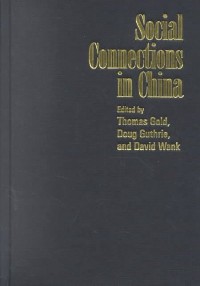
Presented by Gold (sociology, U. of California at Berkeley, US), Guthrie (Sociology, New York U., US) and Wank (sociology, Sophia U., Japan), 11 papers study the presence and operation of guanxi and guanxixue (loosely translated as social relations and the art of social relations) in a variety of settings of the Chinese political economy. Topics include social ties in business groups, business-state clientelism, job mobility processes, neighborhood gossip as a medium of social communication, and guanxi in China's legal system. A couple of the earlier contributions focus more on conceptual and methodological issues. Annotation c. Book News, Inc., Portland, OR (booknews.com)
Publisher Summary 2
Guanxi, loosely translated as "social connections," or "social networks," is among the most important, talked about, and studied phenomena in China today. Guanxi lies at the heart of China's social order, its economic structure, and its changing institutional landscape. It is considered important in most every realm of life, from politics to business, and from officialdom to street life. This volume offers the latest scholarly thinking on the subject by top China sociologists whose work on guanxi has been influential and by new scholars offering cutting-edge insights on the topic.
Publisher Summary 3
This volume assesses the evolving role of guanxi (social networks) in China's transforming society.
目录
Cover 1
Half-title 3
Series-title 5
Title 7
Copyright 8
CONTENTS 9
CONTRIBUTORS 11
LIST OF FIGURES AND TABLES 15
FIGURES 15
TABLES 15
PROLOGUE 17
INTRODUCTION 21
AN INTRODUCTION TO THE STUDY OF GUANXI 23
DISENTANGLING GUANXI 25
SCHOLARSHIP ON GUANXI 29
Is Guanxi a Chinese phenomenon? 30
The institutional turn in analyses of Guanxi 33
Contributions to current scholarship 37
1 PRACTICES OF GUANXI PRODUCTION AND PRACTICES OF GANQING AVOIDANCE 41
PRACTICES OF GUANXI PRODUCTION 42
THEORIES OF COMMUNICATIVE PRACTICE 43
WHAT IS GUANXI? 45
What is not Guanxi, or rather, practices of Ganqing avoidance 48
CONCLUSIONS 53
METHODOLOGICAL AND CONCEPTUAL CONSIDERATIONS 55
2 INFORMATION ASYMMETRIES AND THE PROBLEM OF PERCEPTION: THE SIGNIFICANCE OF STRUCTURAL POSITION IN ASSESSING THE\u2026 57
THEORETICAL AND METHODOLOGICAL PROBLEMS IN THE ANALYSIS OF GUANXI 59
Inappropriate data 60
Difficulties in operationalizing theory 63
Predicting the future 64
STRUCTURAL POSITION AND PERCEPTIONS OF GUANXI 65
TWO EMPIRICAL EXAMPLES 67
The importance of guanxi in hiring practices: The view from the other side 67
Conflicting reports on the importance of guanxi in a rationalizing economy 72
CONCLUSION 75
3 BEYOND DYADIC SOCIAL EXCHANGE: GUANXI AND THIRD-PARTY EFFECTS 77
INSTRUMENTALIZATION OF GUANXI: MECHANISMS AT WORK 79
Cultural and relational factors 80
The milieu of social exchange under Mao 82
Changes in the reform era 84
UNEVEN STRUCTURAL CONSTRAINTS: A FURTHER ILLUSTRATION 86
Favor-seeking and state agents\u2019 vested interests 87
Crowded political market 90
Collusion and whistle-blowing 91
SUMMARY 94
NEW SUBSTANTIVE STUDIES OF GUANXI 95
4 GUANXI IN BUSINESS GROUPS: SOCIAL TIES AND THE FORMATION OF ECONOMIC RELATIONS 97
INTRODUCTION 97
THEORETICAL ISSUES 99
Manufacturing social indebtedness 99
Social relations and economic exchange 100
Social relations and economic dependence 102
GUANXI IN THE FORMATION OF EXCHANGE TIES IN CHINA 103
EMPIRICAL EVALUATION OF LENDING AND TRADE IN BUSINESS GROUPS 106
Data 106
Methods of analysis 107
Results 108
CONCLUSIONS 112
APPENDIX 113
Logistic regression models 113
Variables 115
5 BUSINESS-STATE CLIENTELISM IN CHINA: DECLINE OR EVOLUTION? 117
THEORETICAL ISSUES 118
ENTREPRENEURIAL PERCEPTIONS 124
PATTERNS OF COMPETITION AND CLIENTELISM 128
Enduring and temporal utilities of guanxi practice 129
Business scale and differential networks 131
From personal to localistic networks 133
CONCLUSION 135
6 INSTITUTIONAL HOLES AND JOB MOBILITY PROCESSES: GUANXI MECHANISMS IN CHINA\u2019S EMERGENT LABOR MARKETS 137
FROM GUANXI TO STRONG TIES 138
PERSISTENCE OF GUANXI EFFECTS: OBSERVATION FROM 100 JOB CHANGERS 139
Subsidiary establishments 142
International joint ventures 143
Foreign firms 143
Domestic private businesses 144
Economic entities with ambiguous or mixed-property forms 144
Migrant peasant labor in the cities 145
VIEWS OF CHINA\u2019S TRANSITION TO LABOR MARKETS 146
INSTITUTIONAL HOLES AND GUANXI IN EMERGENT LABOR MARKETS 148
Information flow 148
Trust-Bridging 150
Obligation binding 152
GUANXI CAPITAL IN THE ECONOMY OF INSTITUTIONAL HOLES 153
7 YOUTH JOB SEARCHES IN URBAN CHINA: THE USE OF SOCIAL CONNECTIONS IN A CHANGING LABOR MARKET 157
GUANXI AND FINDING A JOB 157
The rise (and fall?) of guanxi 158
Network theory and tie strength 160
Guanxi and social ties 162
Social connections and youth 163
Finding a job in urban China: The 1990s 164
Labor market reform and employer demands 165
Workplace and regional mobility 168
Job specificity and skill marketability 171
Guanxi or ties? 176
CONCLUSION 180
8 FACE, NORMS, AND INSTRUMENTALITY 183
THEORETICAL ISSUES 184
VILLAGE LEVEL CHANGES 187
Changes in the local economy 187
Changes in village guanxi networks 188
Shifts in village social exchange 189
House construction and shifting forms of aid 190
Agricultural mutual aid 193
Cash, geography, and instrumentality 194
CONCLUSION 197
9 GUANXI AND THE PRC LEGAL SYSTEM: FROM CONTRADICTION TO COMPLEMENTARITY 199
INTRODUCTION 199
GUANXI AND CHINESE LEGAL CULTURE 200
THE ROLE OF GUANXI IN LEGAL ATTITUDES AND BEHAVIOR 203
Attitudes about guanxi in domestic legal relations 203
Behavior: Guanxi and foreign-related dispute resolution 205
Guanxi and judicial behavior 208
IMPLICATIONS OF COMPLEMENTARITY OF GUANXI AND LAW: APPLICATION AND THE CASE OF CONTRACT LAW 211
CONCLUSION 214
10 \u201cIDLE TALK\u201d: NEIGHBORHOOD GOSSIP AS A MEDIUM OF SOCIAL COMMUNICATION IN REFORM ERA SHANGHAI 217
INTRODUCTION: GOSSIP AND GUANXI 217
A MAOIST NEIGHBORHOOD IN DENGIST SHANGHAI 221
STORIES FROM OUR NEIGHBORHOOD 225
THE USES OF NEIGHBORHOOD GOSSIP 227
Gossip as moral discourse 227
Gossip as information medium 228
Instrumental uses of gossip networks 230
The pragmatics of gossip 231
Gender and gossip 232
THE CHANGING ECOLOGY OF SHANGHAI\u2019S NEIGHBORHOOD NETWORKS 233
CONCLUSION: PRODUCTIVE DISORDER 236
CONCLUSIONS 239
11 NETWORKING GUANXI 241
THE SOCIAL NETWORK APPROACH 241
From metaphor to toolkit 241
ANALYZING GUANXI 242
THE SOCIAL NETWORK ANALYTIC APPROACH 244
From method and metaphor to paradigm and substance 244
A network is not always \u2013 perhaps not often \u2013 a group 245
WHOLE NETWORKS 248
Patterns of connectivity and cleavage 248
Structurally equivalent role relationships 248
Indirect ties between persons and organizations 249
Personal networks 252
STUDYING PERSONAL NETWORKS 254
Differentiated ties 255
A multi-level approach 258
A network society 259
REFERENCES 263
INDEX 293
Half-title 3
Series-title 5
Title 7
Copyright 8
CONTENTS 9
CONTRIBUTORS 11
LIST OF FIGURES AND TABLES 15
FIGURES 15
TABLES 15
PROLOGUE 17
INTRODUCTION 21
AN INTRODUCTION TO THE STUDY OF GUANXI 23
DISENTANGLING GUANXI 25
SCHOLARSHIP ON GUANXI 29
Is Guanxi a Chinese phenomenon? 30
The institutional turn in analyses of Guanxi 33
Contributions to current scholarship 37
1 PRACTICES OF GUANXI PRODUCTION AND PRACTICES OF GANQING AVOIDANCE 41
PRACTICES OF GUANXI PRODUCTION 42
THEORIES OF COMMUNICATIVE PRACTICE 43
WHAT IS GUANXI? 45
What is not Guanxi, or rather, practices of Ganqing avoidance 48
CONCLUSIONS 53
METHODOLOGICAL AND CONCEPTUAL CONSIDERATIONS 55
2 INFORMATION ASYMMETRIES AND THE PROBLEM OF PERCEPTION: THE SIGNIFICANCE OF STRUCTURAL POSITION IN ASSESSING THE\u2026 57
THEORETICAL AND METHODOLOGICAL PROBLEMS IN THE ANALYSIS OF GUANXI 59
Inappropriate data 60
Difficulties in operationalizing theory 63
Predicting the future 64
STRUCTURAL POSITION AND PERCEPTIONS OF GUANXI 65
TWO EMPIRICAL EXAMPLES 67
The importance of guanxi in hiring practices: The view from the other side 67
Conflicting reports on the importance of guanxi in a rationalizing economy 72
CONCLUSION 75
3 BEYOND DYADIC SOCIAL EXCHANGE: GUANXI AND THIRD-PARTY EFFECTS 77
INSTRUMENTALIZATION OF GUANXI: MECHANISMS AT WORK 79
Cultural and relational factors 80
The milieu of social exchange under Mao 82
Changes in the reform era 84
UNEVEN STRUCTURAL CONSTRAINTS: A FURTHER ILLUSTRATION 86
Favor-seeking and state agents\u2019 vested interests 87
Crowded political market 90
Collusion and whistle-blowing 91
SUMMARY 94
NEW SUBSTANTIVE STUDIES OF GUANXI 95
4 GUANXI IN BUSINESS GROUPS: SOCIAL TIES AND THE FORMATION OF ECONOMIC RELATIONS 97
INTRODUCTION 97
THEORETICAL ISSUES 99
Manufacturing social indebtedness 99
Social relations and economic exchange 100
Social relations and economic dependence 102
GUANXI IN THE FORMATION OF EXCHANGE TIES IN CHINA 103
EMPIRICAL EVALUATION OF LENDING AND TRADE IN BUSINESS GROUPS 106
Data 106
Methods of analysis 107
Results 108
CONCLUSIONS 112
APPENDIX 113
Logistic regression models 113
Variables 115
5 BUSINESS-STATE CLIENTELISM IN CHINA: DECLINE OR EVOLUTION? 117
THEORETICAL ISSUES 118
ENTREPRENEURIAL PERCEPTIONS 124
PATTERNS OF COMPETITION AND CLIENTELISM 128
Enduring and temporal utilities of guanxi practice 129
Business scale and differential networks 131
From personal to localistic networks 133
CONCLUSION 135
6 INSTITUTIONAL HOLES AND JOB MOBILITY PROCESSES: GUANXI MECHANISMS IN CHINA\u2019S EMERGENT LABOR MARKETS 137
FROM GUANXI TO STRONG TIES 138
PERSISTENCE OF GUANXI EFFECTS: OBSERVATION FROM 100 JOB CHANGERS 139
Subsidiary establishments 142
International joint ventures 143
Foreign firms 143
Domestic private businesses 144
Economic entities with ambiguous or mixed-property forms 144
Migrant peasant labor in the cities 145
VIEWS OF CHINA\u2019S TRANSITION TO LABOR MARKETS 146
INSTITUTIONAL HOLES AND GUANXI IN EMERGENT LABOR MARKETS 148
Information flow 148
Trust-Bridging 150
Obligation binding 152
GUANXI CAPITAL IN THE ECONOMY OF INSTITUTIONAL HOLES 153
7 YOUTH JOB SEARCHES IN URBAN CHINA: THE USE OF SOCIAL CONNECTIONS IN A CHANGING LABOR MARKET 157
GUANXI AND FINDING A JOB 157
The rise (and fall?) of guanxi 158
Network theory and tie strength 160
Guanxi and social ties 162
Social connections and youth 163
Finding a job in urban China: The 1990s 164
Labor market reform and employer demands 165
Workplace and regional mobility 168
Job specificity and skill marketability 171
Guanxi or ties? 176
CONCLUSION 180
8 FACE, NORMS, AND INSTRUMENTALITY 183
THEORETICAL ISSUES 184
VILLAGE LEVEL CHANGES 187
Changes in the local economy 187
Changes in village guanxi networks 188
Shifts in village social exchange 189
House construction and shifting forms of aid 190
Agricultural mutual aid 193
Cash, geography, and instrumentality 194
CONCLUSION 197
9 GUANXI AND THE PRC LEGAL SYSTEM: FROM CONTRADICTION TO COMPLEMENTARITY 199
INTRODUCTION 199
GUANXI AND CHINESE LEGAL CULTURE 200
THE ROLE OF GUANXI IN LEGAL ATTITUDES AND BEHAVIOR 203
Attitudes about guanxi in domestic legal relations 203
Behavior: Guanxi and foreign-related dispute resolution 205
Guanxi and judicial behavior 208
IMPLICATIONS OF COMPLEMENTARITY OF GUANXI AND LAW: APPLICATION AND THE CASE OF CONTRACT LAW 211
CONCLUSION 214
10 \u201cIDLE TALK\u201d: NEIGHBORHOOD GOSSIP AS A MEDIUM OF SOCIAL COMMUNICATION IN REFORM ERA SHANGHAI 217
INTRODUCTION: GOSSIP AND GUANXI 217
A MAOIST NEIGHBORHOOD IN DENGIST SHANGHAI 221
STORIES FROM OUR NEIGHBORHOOD 225
THE USES OF NEIGHBORHOOD GOSSIP 227
Gossip as moral discourse 227
Gossip as information medium 228
Instrumental uses of gossip networks 230
The pragmatics of gossip 231
Gender and gossip 232
THE CHANGING ECOLOGY OF SHANGHAI\u2019S NEIGHBORHOOD NETWORKS 233
CONCLUSION: PRODUCTIVE DISORDER 236
CONCLUSIONS 239
11 NETWORKING GUANXI 241
THE SOCIAL NETWORK APPROACH 241
From metaphor to toolkit 241
ANALYZING GUANXI 242
THE SOCIAL NETWORK ANALYTIC APPROACH 244
From method and metaphor to paradigm and substance 244
A network is not always \u2013 perhaps not often \u2013 a group 245
WHOLE NETWORKS 248
Patterns of connectivity and cleavage 248
Structurally equivalent role relationships 248
Indirect ties between persons and organizations 249
Personal networks 252
STUDYING PERSONAL NETWORKS 254
Differentiated ties 255
A multi-level approach 258
A network society 259
REFERENCES 263
INDEX 293
- 名称
- 类型
- 大小
光盘服务联系方式: 020-38250260 客服QQ:4006604884
云图客服:
用户发送的提问,这种方式就需要有位在线客服来回答用户的问题,这种 就属于对话式的,问题是这种提问是否需要用户登录才能提问
Video Player
×
Audio Player
×
pdf Player
×
