

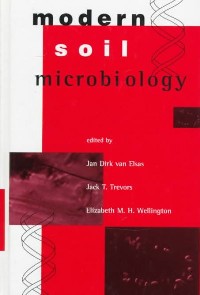
Modern Soil Microbiology/
副标题:无
作 者:edited by Jan Dirk van Elsas, Jack T. Trevors, Elizabeth M.H. Wellington.
分类号:
ISBN:9780824794361
微信扫一扫,移动浏览光盘
简介
Summary:
Publisher Summary 1
International scientists (51 to be precise) provide a reference/text encompassing the relationship between soil microbial communities, structures and functions under varying conditions and habitats as analyzed by standard statistical tools and state of the art molecular biological techniques (e.g., cloning, DNA and RNA extraction, reporter gene technology). A timely case study examines the ramifications of the release of genetically engineered bacteria into the soil. Innovative research into plant-pathogenic reactions, biochemical biomarkers, and the need for altered agricultural practices are guiding principles. Photographs, drawings and tables further illustrate the analyses of, and environmental diversity, natural, and man-made threats to, global soil ecology. Annotation c. by Book News, Inc., Portland, Or.
目录
Table Of Contents:
Preface iii(12)
Contributors xv
Section I. Introductory Chapters 1(278)
1. Soil as an Environment for Microbial Life 1(20)
G. Stotzky
1. Introduction 1(1)
2. Inoculation of Soil 2(2)
3. Soil Physicochemical Characteristics that Affect Bacterial Growth and Survival 4(2)
4. Microhabitats in Soil 6(3)
5. Clay Minerals and Soil Microbes 9(2)
6. Heterogeneity of Microhabitats in Soil 11(1)
7. Manipulation of Physicochemical and Biological Factors in Soil 11(7)
8. Conclusions 18(1)
References 19(2)
2. The Rhizosphere as a Habitat for Soil Microorganisms 21(26)
Jan Sorensen
1. Introduction 21(1)
2. Structure and Chemistry of the Rhizosphere 22(7)
3. Microbial Populations in the Rhizosphere 29(9)
4. Prospects in Rhizosphere Microbiology: Revival of the Microscope 38(4)
Acknowledgments 42(1)
References 42(5)
3. Culturable and Nonculturable Bacteria in Soil 47(16)
Lars Reier Bakken
1. Introduction 47(1)
2. The Cultured Bacteria 48(1)
3. Direct Observations of Whole Bacterial Communities 49(1)
4. Filterability, Cell Constituents, and Culturability 50(3)
5. Filterability and Metabolic Activity 53(1)
6. The Starvation Response of Bacteria 54(4)
7. Novel Methods 58(1)
References 59(4)
4. The Fungi in Soil 63(66)
Greg Thorn
1. Introduction 63(4)
2. Taxonomic Diversity 67(6)
3. Communities of Soil Fungi 73(1)
4. Fungal Numbers and Biomass 74(2)
5. The Roles of Soil Fungi 76(7)
6. Mycorrhizae 83(12)
7. Interactions of Fungi with Other Soil Organisms 95(8)
8. Miscellaneous Topics in Soil Fungi 103(4)
9. Conclusions 107(1)
Acknowledgments 108(1)
References 108(21)
5. Ecology and Biology of Soil Protozoa, Nematodes, and Microarthropods 129(36)
Richard D. Bardgett
Bryan S. Griffiths
1. Introduction 129(1)
2. Protozoa 129(8)
3. Nematodes 137(7)
4. Microarthropods 144(8)
Acknowledgments 152(1)
References 152(13)
6. Interactions Between Microbe-Feeding Invertebrates and Soil Microorganisms 165(18)
Bryan S. Griffiths
Richard D. Bardgett
1. Introduction 165(1)
2. Microfauna (Nematodes and Protozoa)-Microbial Interactions 166(5)
3. Microarthropod (Collembola and Mite)-Microbial Interactions 171(6)
Acknowledgments 177(1)
References 177(6)
7. Microbial Processes Within the Soil 183(32)
James I. Prosser
1. Introduction 183(2)
2. Microcosm or Field Measurements 185(2)
3. Soil Heterogeneity 187(5)
4. General Activity 192(5)
5. Specific Activity 197(9)
6. Growth Rates 206(5)
7. Conclusions 211(1)
References 211(4)
8. Microbial Interactions in Soil 215(30)
Jack T. Trevors
Jan Dirk van Elsas
1. Introduction 215(2)
2. Interactions Between Microorganisms in Soil 217(8)
3. Interactions Between Microorganisms and Plants 225(5)
4. Protozoa as Predators of Bacteria 230(2)
5. Predatory Bdellovibrio 232(1)
6. Bacterial-Fungal Interactions 233(2)
7. Bacterial-Animal Interactions 235(1)
8. Microorganisms-Metal Interactions 236(2)
9. Conclusions 238(1)
Acknowledgment 239(1)
References 239(6)
9. Soil Food Webs and Nutrient Cycling in Agroecosystems 245(34)
Jaap Bloem
Peter de Ruiter
Lucas Bouwman
1. Introduction 245(2)
2. Microbes, Microbivores, and Mineralization in Microcosms 247(7)
3. Microbes, Microbivores, and N Mineralization in Arable Fields Under Conventional and Integrated Management 254(10)
4. Simulation of N Mineralization in the Food Webs of Arable Fields Under Conventional and Integrated Management 264(4)
5. Contributions of Various Organisms to N Mineralization in Different Farming Systems 268(5)
6. Conclusions 273(2)
References 275(4)
Section II. Modern Methodology and Approaches 279(246)
10. Direct Approaches for Studying Soil Microbes 279(32)
Anton Hartmann
Bernhard ABmus
Gudrun Kirchhof
Michael Schloter
1. Introduction 279(1)
2. Conventional Staining Methods for Microorganisms 280(2)
3. Molecular Detection Methods for Microorganisms in Soil 282(14)
4. New Microscopic Techniques and Image Analysis 296(3)
5. Flow Cytometric Analysis of Microbial Populations 299(2)
6. Conclusions 301(1)
References 301(10)
11. Indirect Approaches for Studying Soil Microorganisms Based on Cell Extraction and Culturing 311(20)
Elizabeth M. H. Wellington
Peter Marsh
Joy Elizabeth Margaret Watts
John Burden
1. Introduction 311(1)
2. Approaches to Microbial Biomass Extraction 312(6)
3. Immunomagnetic Capture 318(1)
4. Soil Fractionation 319(3)
5. Enumeration and Isolation of Soil Bacteria 322(5)
6. Conclusions 327(1)
References 327(4)
12a. Microbial Biomarkers 331(22)
J. Alun W. Morgan
Craig Winstanley
1. Introduction 331(1)
2. Cell Envelope Biomarkers 332(5)
3. General Biochemical Markers 337(2)
4. Nucleic Acid Biomarkers 339(7)
5. Microbial Populations as Biomarkers 346(1)
6. Conclusions 347(1)
Acknowledgment 347(1)
References 347(6)
12b. Application of Denaturing Gradient Gel Electrophoresis and Temperature Gradient Gel Electrophoresis for Studying Soil Microbial Communities 353(22)
Holger Heuer
Kornelia Smalla
1. Introduction 353(1)
2. Analysis of PCR-Amplified DNA 354(7)
3. Application of DGGE or TGGE Profiling 361(6)
4. Potential Pitfalls of the DGGE or TGGE Analysis 367(1)
5. Conclusion and Comparison of DGGE/TGGE Community Analyses with Other Fingerprinting Techniques 368(1)
Acknowledgments 369(1)
References 370(5)
13. Microbial Diversity in Soil: The Need for a Combined Approach Using Molecular and Cultivation Techniques 375(66)
Werner Liesack
Peter H. Janssen
Frederick A. Rainey
Naomi L. Ward-Rainey
Erko Stackebrandt
1. Soil Microbial Communities 375(3)
2. The 16S rRNA Gene as a Biological Marker 378(1)
3. Diversity of Microbial 16S rDNA in Soils 389(20)
4. Methodological Problems of 16S rDNA-Based Studies 409(3)
5. Diversity at the Physiological Level 412(5)
6. Strategies for the Isolation of Microorganisms 417(8)
7. The Need for a Polyphasic Approach 425(1)
Acknowledgments 426(1)
References 427(14)
14. Adaptation of Bacteria to Soil Conditions: Applications of Molecular Physiology in Soil Microbiology 441(38)
Leo van Overbeek
Jan Dirk van Elsas
1. Introduction 441(2)
2. Soil and Rhizosphere Conditions Affecting Introduced Bacteria 443(3)
3. Bacterial Responses to Plant-Released Compounds and Other Soil Conditions 446(6)
4. Detection of Specific Promoter Activity in Soil and the Rhizosphere 452(7)
5. Prospects for the Use of Environmentally Induced Promoters in Soil Inoculants 459(3)
6. Physiological and Metabolic Aspects of the Survival of Bacteria Introduced into Soil 462(3)
7. Conclusions 465(1)
Acknowledgments 466(1)
References 466(13)
15. Microbial Ecology, Inoculant Distribution, and Gene Flux Within Populations of Bacteria Colonizing the Surface of Plants: Case Study of a GMM Field Release in the United Kingdom 479(22)
Mark J. Bailey
Andrew K. Lilley
Richard J. Ellis
Penny A. Bramwell
Ian P. Thompson
1. Introduction 480(1)
2. Microbiology of Soil and Plant Surfaces 480(1)
3. Selection and Genetic Modification of Candidate Bacteria Suitable for Field Release 481(4)
4. Prerelease Safety Evaluation and Greenhouse-Based Microcosm Studies of the Fate of the GMM in the Phytosphere 485(1)
5. Statistical Considerations for the Design of Field Experiments 486(3)
6. Survival, Dispersal, and Persistence of GMM After Field Release 489(5)
7. Gene Stability and Assessment of Gene Transfer in the Phytosphere 494(2)
8. Conclusions 496(2)
Acknowledgments 498(1)
References 498(3)
16. Application of Common Statistical Tools 501(24)
Brian B. McSpadden Gardener
Andrew K. Lilley
1. Introduction 501(1)
2. Experimental Data 502(2)
3. Statistical Measures 504(12)
4. Planning and Presentation of Statistical Analyses 516(2)
5. Example of Statistical Analysis 518(3)
6. Conclusion 521(1)
References 522(3)
Section III. Soil Microbial Processes and Soil Perturbance 525(140)
17. Ecological Considerations Involved in Commercial Development of Biological Control Agents for Soil-Borne Diseases 525(22)
John M. Whipps
1. Introduction 525(4)
2. Natural Biocontrol 529(4)
3. Inoculants for Biological Disease Control 533(5)
4. Commercially Successful Biocontrol Agents 538(2)
5. Conclusions 540(1)
Acknowledgments 540(1)
References 540(7)
18. Pesticides: Microbial Degradation and Effects on Microorganisms 547(30)
Edward Topp
Tatiana Vallaeys
Guy Soulas
1. Introduction 547(1)
2. Factors Influencing Pesticide Biodegradation in Soils 548(7)
3. Microbial Pesticide Transformation Reactions 555(6)
4. Metabolism and Cometabolism of Pesticides 561(7)
5. Adaptation and the Development of New Degradative Capabilities 568(1)
6. Applied Aspects of Pesticide Biodegradation 569(2)
7. Inhibitory Effects of Pesticides on Soil Microorganisms 571(1)
8. Conclusions 572(1)
References 572(5)
19. A Case Study of Bioremediation of Polluted Soil: Biodegradation and Toxicity of Chlorophenols in Soil 577(30)
Kam Tin Leung
Deena Errampalli
Mike Cassidy
Hung Lee
B. Hall
Jack T. Trevors
Hideo Okamura
Hans-Jurgen Bach
1. Introduction 577(1)
2. Toxicity of Chlorophenols 578(1)
3. Biodegradation and Biotransformation of Chlorophenols in Soil 578(6)
4. Chlorophenol-Degrading Microorganisms and Their Degradative Pathways 584(4)
5. Environmental Factors Affecting the Biodegradation of Chlorophenols 588(6)
6. Chlorophenol Bioremediation: Technology and Field Application 594(3)
7. Biological Assessment of Chlorophenol Bioremediation 597(3)
8. Conclusions 600(2)
Acknowledgment 602(1)
References 602(5)
20. The Impact of Heavy Metals on Soil Microbial Communities and Their Activities 607(36)
Stefan Wuertz
Max Mergeay
1. Introduction 607(4)
2. Effects of Heavy Metals on Microbial Communities 611(8)
3. Effects of Heavy Metals on Microbial Processes 619(7)
4. Microorganisms Adapted to Metal-Containing Biotopes 626(11)
References 637(6)
21. Agricultural Soil Manipulation: The Use of Bacteria, Manuring, and Plowing 643(22)
Eric G. Beauchamp
David J. Hume
1. Introduction 643(1)
2. Tillage 644(6)
3. Tillage and Phosphorus Availability 650(1)
4. Phosphorus-Solubilizing Microorganisms 651(1)
5. Microorganisms to Enhance Nitrogen Fixation 652(7)
6. Chemical Fertilizers and Soil Microorganisms 659(1)
7. Livestock Manures and Soil Microorganisms 660(3)
8. Conclusions 663(1)
References 663(2)
Index 665
Preface iii(12)
Contributors xv
Section I. Introductory Chapters 1(278)
1. Soil as an Environment for Microbial Life 1(20)
G. Stotzky
1. Introduction 1(1)
2. Inoculation of Soil 2(2)
3. Soil Physicochemical Characteristics that Affect Bacterial Growth and Survival 4(2)
4. Microhabitats in Soil 6(3)
5. Clay Minerals and Soil Microbes 9(2)
6. Heterogeneity of Microhabitats in Soil 11(1)
7. Manipulation of Physicochemical and Biological Factors in Soil 11(7)
8. Conclusions 18(1)
References 19(2)
2. The Rhizosphere as a Habitat for Soil Microorganisms 21(26)
Jan Sorensen
1. Introduction 21(1)
2. Structure and Chemistry of the Rhizosphere 22(7)
3. Microbial Populations in the Rhizosphere 29(9)
4. Prospects in Rhizosphere Microbiology: Revival of the Microscope 38(4)
Acknowledgments 42(1)
References 42(5)
3. Culturable and Nonculturable Bacteria in Soil 47(16)
Lars Reier Bakken
1. Introduction 47(1)
2. The Cultured Bacteria 48(1)
3. Direct Observations of Whole Bacterial Communities 49(1)
4. Filterability, Cell Constituents, and Culturability 50(3)
5. Filterability and Metabolic Activity 53(1)
6. The Starvation Response of Bacteria 54(4)
7. Novel Methods 58(1)
References 59(4)
4. The Fungi in Soil 63(66)
Greg Thorn
1. Introduction 63(4)
2. Taxonomic Diversity 67(6)
3. Communities of Soil Fungi 73(1)
4. Fungal Numbers and Biomass 74(2)
5. The Roles of Soil Fungi 76(7)
6. Mycorrhizae 83(12)
7. Interactions of Fungi with Other Soil Organisms 95(8)
8. Miscellaneous Topics in Soil Fungi 103(4)
9. Conclusions 107(1)
Acknowledgments 108(1)
References 108(21)
5. Ecology and Biology of Soil Protozoa, Nematodes, and Microarthropods 129(36)
Richard D. Bardgett
Bryan S. Griffiths
1. Introduction 129(1)
2. Protozoa 129(8)
3. Nematodes 137(7)
4. Microarthropods 144(8)
Acknowledgments 152(1)
References 152(13)
6. Interactions Between Microbe-Feeding Invertebrates and Soil Microorganisms 165(18)
Bryan S. Griffiths
Richard D. Bardgett
1. Introduction 165(1)
2. Microfauna (Nematodes and Protozoa)-Microbial Interactions 166(5)
3. Microarthropod (Collembola and Mite)-Microbial Interactions 171(6)
Acknowledgments 177(1)
References 177(6)
7. Microbial Processes Within the Soil 183(32)
James I. Prosser
1. Introduction 183(2)
2. Microcosm or Field Measurements 185(2)
3. Soil Heterogeneity 187(5)
4. General Activity 192(5)
5. Specific Activity 197(9)
6. Growth Rates 206(5)
7. Conclusions 211(1)
References 211(4)
8. Microbial Interactions in Soil 215(30)
Jack T. Trevors
Jan Dirk van Elsas
1. Introduction 215(2)
2. Interactions Between Microorganisms in Soil 217(8)
3. Interactions Between Microorganisms and Plants 225(5)
4. Protozoa as Predators of Bacteria 230(2)
5. Predatory Bdellovibrio 232(1)
6. Bacterial-Fungal Interactions 233(2)
7. Bacterial-Animal Interactions 235(1)
8. Microorganisms-Metal Interactions 236(2)
9. Conclusions 238(1)
Acknowledgment 239(1)
References 239(6)
9. Soil Food Webs and Nutrient Cycling in Agroecosystems 245(34)
Jaap Bloem
Peter de Ruiter
Lucas Bouwman
1. Introduction 245(2)
2. Microbes, Microbivores, and Mineralization in Microcosms 247(7)
3. Microbes, Microbivores, and N Mineralization in Arable Fields Under Conventional and Integrated Management 254(10)
4. Simulation of N Mineralization in the Food Webs of Arable Fields Under Conventional and Integrated Management 264(4)
5. Contributions of Various Organisms to N Mineralization in Different Farming Systems 268(5)
6. Conclusions 273(2)
References 275(4)
Section II. Modern Methodology and Approaches 279(246)
10. Direct Approaches for Studying Soil Microbes 279(32)
Anton Hartmann
Bernhard ABmus
Gudrun Kirchhof
Michael Schloter
1. Introduction 279(1)
2. Conventional Staining Methods for Microorganisms 280(2)
3. Molecular Detection Methods for Microorganisms in Soil 282(14)
4. New Microscopic Techniques and Image Analysis 296(3)
5. Flow Cytometric Analysis of Microbial Populations 299(2)
6. Conclusions 301(1)
References 301(10)
11. Indirect Approaches for Studying Soil Microorganisms Based on Cell Extraction and Culturing 311(20)
Elizabeth M. H. Wellington
Peter Marsh
Joy Elizabeth Margaret Watts
John Burden
1. Introduction 311(1)
2. Approaches to Microbial Biomass Extraction 312(6)
3. Immunomagnetic Capture 318(1)
4. Soil Fractionation 319(3)
5. Enumeration and Isolation of Soil Bacteria 322(5)
6. Conclusions 327(1)
References 327(4)
12a. Microbial Biomarkers 331(22)
J. Alun W. Morgan
Craig Winstanley
1. Introduction 331(1)
2. Cell Envelope Biomarkers 332(5)
3. General Biochemical Markers 337(2)
4. Nucleic Acid Biomarkers 339(7)
5. Microbial Populations as Biomarkers 346(1)
6. Conclusions 347(1)
Acknowledgment 347(1)
References 347(6)
12b. Application of Denaturing Gradient Gel Electrophoresis and Temperature Gradient Gel Electrophoresis for Studying Soil Microbial Communities 353(22)
Holger Heuer
Kornelia Smalla
1. Introduction 353(1)
2. Analysis of PCR-Amplified DNA 354(7)
3. Application of DGGE or TGGE Profiling 361(6)
4. Potential Pitfalls of the DGGE or TGGE Analysis 367(1)
5. Conclusion and Comparison of DGGE/TGGE Community Analyses with Other Fingerprinting Techniques 368(1)
Acknowledgments 369(1)
References 370(5)
13. Microbial Diversity in Soil: The Need for a Combined Approach Using Molecular and Cultivation Techniques 375(66)
Werner Liesack
Peter H. Janssen
Frederick A. Rainey
Naomi L. Ward-Rainey
Erko Stackebrandt
1. Soil Microbial Communities 375(3)
2. The 16S rRNA Gene as a Biological Marker 378(1)
3. Diversity of Microbial 16S rDNA in Soils 389(20)
4. Methodological Problems of 16S rDNA-Based Studies 409(3)
5. Diversity at the Physiological Level 412(5)
6. Strategies for the Isolation of Microorganisms 417(8)
7. The Need for a Polyphasic Approach 425(1)
Acknowledgments 426(1)
References 427(14)
14. Adaptation of Bacteria to Soil Conditions: Applications of Molecular Physiology in Soil Microbiology 441(38)
Leo van Overbeek
Jan Dirk van Elsas
1. Introduction 441(2)
2. Soil and Rhizosphere Conditions Affecting Introduced Bacteria 443(3)
3. Bacterial Responses to Plant-Released Compounds and Other Soil Conditions 446(6)
4. Detection of Specific Promoter Activity in Soil and the Rhizosphere 452(7)
5. Prospects for the Use of Environmentally Induced Promoters in Soil Inoculants 459(3)
6. Physiological and Metabolic Aspects of the Survival of Bacteria Introduced into Soil 462(3)
7. Conclusions 465(1)
Acknowledgments 466(1)
References 466(13)
15. Microbial Ecology, Inoculant Distribution, and Gene Flux Within Populations of Bacteria Colonizing the Surface of Plants: Case Study of a GMM Field Release in the United Kingdom 479(22)
Mark J. Bailey
Andrew K. Lilley
Richard J. Ellis
Penny A. Bramwell
Ian P. Thompson
1. Introduction 480(1)
2. Microbiology of Soil and Plant Surfaces 480(1)
3. Selection and Genetic Modification of Candidate Bacteria Suitable for Field Release 481(4)
4. Prerelease Safety Evaluation and Greenhouse-Based Microcosm Studies of the Fate of the GMM in the Phytosphere 485(1)
5. Statistical Considerations for the Design of Field Experiments 486(3)
6. Survival, Dispersal, and Persistence of GMM After Field Release 489(5)
7. Gene Stability and Assessment of Gene Transfer in the Phytosphere 494(2)
8. Conclusions 496(2)
Acknowledgments 498(1)
References 498(3)
16. Application of Common Statistical Tools 501(24)
Brian B. McSpadden Gardener
Andrew K. Lilley
1. Introduction 501(1)
2. Experimental Data 502(2)
3. Statistical Measures 504(12)
4. Planning and Presentation of Statistical Analyses 516(2)
5. Example of Statistical Analysis 518(3)
6. Conclusion 521(1)
References 522(3)
Section III. Soil Microbial Processes and Soil Perturbance 525(140)
17. Ecological Considerations Involved in Commercial Development of Biological Control Agents for Soil-Borne Diseases 525(22)
John M. Whipps
1. Introduction 525(4)
2. Natural Biocontrol 529(4)
3. Inoculants for Biological Disease Control 533(5)
4. Commercially Successful Biocontrol Agents 538(2)
5. Conclusions 540(1)
Acknowledgments 540(1)
References 540(7)
18. Pesticides: Microbial Degradation and Effects on Microorganisms 547(30)
Edward Topp
Tatiana Vallaeys
Guy Soulas
1. Introduction 547(1)
2. Factors Influencing Pesticide Biodegradation in Soils 548(7)
3. Microbial Pesticide Transformation Reactions 555(6)
4. Metabolism and Cometabolism of Pesticides 561(7)
5. Adaptation and the Development of New Degradative Capabilities 568(1)
6. Applied Aspects of Pesticide Biodegradation 569(2)
7. Inhibitory Effects of Pesticides on Soil Microorganisms 571(1)
8. Conclusions 572(1)
References 572(5)
19. A Case Study of Bioremediation of Polluted Soil: Biodegradation and Toxicity of Chlorophenols in Soil 577(30)
Kam Tin Leung
Deena Errampalli
Mike Cassidy
Hung Lee
B. Hall
Jack T. Trevors
Hideo Okamura
Hans-Jurgen Bach
1. Introduction 577(1)
2. Toxicity of Chlorophenols 578(1)
3. Biodegradation and Biotransformation of Chlorophenols in Soil 578(6)
4. Chlorophenol-Degrading Microorganisms and Their Degradative Pathways 584(4)
5. Environmental Factors Affecting the Biodegradation of Chlorophenols 588(6)
6. Chlorophenol Bioremediation: Technology and Field Application 594(3)
7. Biological Assessment of Chlorophenol Bioremediation 597(3)
8. Conclusions 600(2)
Acknowledgment 602(1)
References 602(5)
20. The Impact of Heavy Metals on Soil Microbial Communities and Their Activities 607(36)
Stefan Wuertz
Max Mergeay
1. Introduction 607(4)
2. Effects of Heavy Metals on Microbial Communities 611(8)
3. Effects of Heavy Metals on Microbial Processes 619(7)
4. Microorganisms Adapted to Metal-Containing Biotopes 626(11)
References 637(6)
21. Agricultural Soil Manipulation: The Use of Bacteria, Manuring, and Plowing 643(22)
Eric G. Beauchamp
David J. Hume
1. Introduction 643(1)
2. Tillage 644(6)
3. Tillage and Phosphorus Availability 650(1)
4. Phosphorus-Solubilizing Microorganisms 651(1)
5. Microorganisms to Enhance Nitrogen Fixation 652(7)
6. Chemical Fertilizers and Soil Microorganisms 659(1)
7. Livestock Manures and Soil Microorganisms 660(3)
8. Conclusions 663(1)
References 663(2)
Index 665
Modern Soil Microbiology/
- 名称
- 类型
- 大小
光盘服务联系方式: 020-38250260 客服QQ:4006604884
云图客服:
用户发送的提问,这种方式就需要有位在线客服来回答用户的问题,这种 就属于对话式的,问题是这种提问是否需要用户登录才能提问
Video Player
×
Audio Player
×
pdf Player
×
