

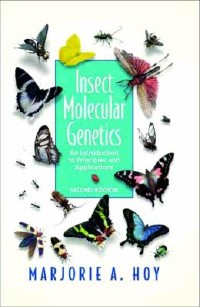
Insect molecular genetics : an introduction to principles and applications / 2nd ed.
副标题:无
作 者:Marjorie A. Hoy.
分类号:
ISBN:9780123570314
微信扫一扫,移动浏览光盘
简介
Insect Molecular Genetics, 2nd edition, is a succinct bookthat briefly introduces graduate and undergraduate students to molecular genetics and the techniques used in this well established and important discipline. The book is written for two converging audiences: those familiar with insects that need to learn about molecular genetics, and those that are familiar with molecular genetics but not familiar with insects. Thus, this book is intended to fill the gap between two audiences that share a common middle ground. * Up-to-date references to important reviewarticles, websites, and seminal citations in the disciplines * Well crafted and instructive illustrations integral to explaining the techniques of molecular genetics * Glossary of terms to help beginners learn the vocabulary of molecular biology.
目录
Front Cover 1
Insect Molecular Genetics 4
Copyright Page 5
CONTENTS 6
Preface to the Second Edition 18
Preface to the First Edition 20
Part I: Genes and Gemome Organization in Eukaryotes 24
Chapter 1. DNA, Gene Structure, and DNA Replication 26
1.1. Overview 27
1.2. Introduction to the Central Dogma 27
1.3. The \u201cRNA World\u201d Came First? 28
1.4. The Molecular Structure of DNA 29
1.5. The Molecular Structure of RNA 29
1.6. The Double Helix 30
1.7. Complementary Base Pairing Is Fundamental 31
1.8. DNA Exists in Several Forms 33
1.9. Genes 34
1.10. The Genetic Code Is a Triplet and Is Degenerate 35
1.11. Gene Organization 36
1.12. Efficient DNA Replication Is Essential 38
1.13. DNA Replication Is Semiconservative 38
1.14. Replication Begins at Replication Origins 39
1.15. Replication Occurs Only in the 5' to 3' Direction 40
1.16. Replication of DNA Requires an RNA Primer 41
1.17. Ligation of Replicated DNA Fragments 41
1.18. DNA Replication in Eukaryotes 42
1.19. Telomeres at the End: A Solution to the Loss of DNA during Replication 44
1.20. DNA Replication Fidelity and DNA Repair 45
1.21. Mutations in the Genome 45
1.22. Common Conventions in Genetic Terminology 47
1.23. Independent Assortment and Recombination During Sexual Reproduction 48
General References 49
References Cited 49
Chapter 2. Transcription, Translation, and Regulation of Eukaryotic DNA 51
2.1. Overview 52
2.2. Introduction 52
2.3. RNA Synthesis Is Gene Transcription 53
2.4. Transcription Involves Binding, Initiation, Elongation, and Termination 55
2.5. RNA Transcripts Are Longer Than the Protein-Coding Gene 56
2.6. RNA of Protein-Coding Genes Must Be Modified and Processed in Eukaryotes 56
2.7. Splicing Out the Introns 58
2.8. Translation Involves Protein Synthesis 58
2.9. mRNA Surveillance: Damage Control 62
2.10. Import and Export from the Nucleus 62
2.11. Transport of Proteins within the Cytoplasm 63
2.12. mRNA Stability 64
2.13. Chaperones and the Proteosome 64
2.14. RNA Silencing or Interference 65
2.15. Gene Regulation in Eukaryotes 65
2.16. Insulators and Boundaries 68
2.17. Chromosome or Gene Imprinting by Methylation in Insects? 69
2.18. Eukaryotic Genomes and Evolution 70
General References 70
References Cited 71
Chapter 3. Nuclear and Extranuclear DNA in Insects 73
3.1. Overview 73
3.2. Introduction 74
3.3. C Value Paradox 75
3.4. Repetitive DNA Is Common in Insects 76
3.5. Composition of Insect DNA 77
3.6. Chromosomes Are DNA plus Proteins 77
3.7. Packaging Long, Thin DNA Molecules into Tiny Spaces 78
3.8. Structure of the Nucleus 78
3.9. Euchromatin and Heterochromatin 80
3.10. Centromeres 81
3.11. Telomeres 82
3.12. Chromosomes during Mitosis and Meiosis 83
3.13. Chromosome Damage 88
3.14. Polyteny 89
3.15. Chromosomal Puffing 90
3.16. B Chromosomes 91
3.17. Sex Chromosomes 91
3.18. Extranuclear Inheritance in Mitochondrial Genes 92
3.19. Transposable Elements Are Ubiquitous Agents That Alter Genomes 95
References Cited 95
Chapter 4. Genetic Systems, Genome Evolution, and Genetic Control of Embryonic Development in Insects 99
4.1. Overview 100
4.2. Introduction 101
4.3. Genetic Systems in Insects 101
4.4. Endopolyploidy Is Common in Somatic Tissues of Arthropods 102
4.5. Genetics of Insects Other Than D. melanogaster 102
4.6. Dynamic Insect Genomes 103
4.7. B Chromosomes 104
4.8. Unique-Sequence DNA in the Nucleus 104
4.9. Middle-Repetitive DNA in the Nucleus 105
4.10. Highly Repetitive DNA 112
4.11. Producing Large Amounts of Protein in a Short Time: Gene Amplification and Gene Duplication 113
4.12. Multiple Genomes in Insects: What Is the \u201cBiological Individual?\u201d 116
4.13. Insect Development 126
4.14. Dissecting Development with D. melanogaster Mutants 130
4.15. Interactions during Development 136
4.16. Similarities and Differences in Development in Other Insects 137
4.17. Evo-Devo and the Revolution in Developmental Studies 137
References Cited 140
Some Relevant Web Sites 149
Part II: Molecular Genetic Techniques 150
Chapter 5. Some Basic Tools: How to Cut, Paste, Copy, Measure, and Visualize DNA 152
5.1. Overview 153
5.2. Introduction to a Simple Experiment 153
5.3. Extracting DNA 155
5.4. Precipitating Nucleic Acids 156
5.5. Shearing DNA 157
5.6. Cutting DNA with Restriction Endonucleases 157
5.7. Joining DNA Molecules 159
5.8. Growth, Maintenance, and Storage of E. coli 160
5.9. Plasmids for Cloning in E. coli 161
5.10. Transforming E. coli with Plasmids 164
5.11. Purifying Plasmid DNA from E. coli 165
5.12. Electrophoresis in Agarose and Acrylamide Gels 167
5.13. Detecting, Viewing, and Photographing Nucleic Acids in Gels 169
5.14. Identifying DNA by Southern Blot Analysis 169
5.15. Labeling DNA or RNA Probes 171
5.16. Removing DNA from Agarose Gels after Electrophoresis 172
5.17. Restriction Site Mapping 173
General References 174
References Cited 175
Some Relevant Web Sites 175
Chapter 6. Cloning and Expression Vectors, Libraries, and Their Screening 176
6.1. Overview 177
6.2. Introduction 177
6.3. The Perfect Genomic Library 179
6.4. cDNA Cloning 190
6.5. Enzymes Used in Cloning 191
6.6. Isolating a Specific Gene from a Library 193
6.7. Labeling Probes by a Variety of Methods 196
6.8. Baculovirus Vectors for Expressing Foreign Polypeptides in Insect Cells 198
General References 199
Some Relevant Web Sites 200
Chapter 7. DNA Sequencing and the Evolution of the \u201c-Omics\u201d 201
7.1. Overview 202
7.2. Introduction 202
7.3. The Dideoxy or Chain-Terminating Method 203
7.4. Variations on Dideoxy Sequencing Methods 206
7.5. DNA Sequences Can Be Analyzed on Polyacrylamide Gels 207
7.6. Sequencing Reactions Require a Primer 209
7.7. The Maxam and Gilbert Sequencing Method 209
7.8. Shotgun Strategies for Genomes 210
7.9. Sequencing DNA by the Polymerase Chain Reaction (PCR) 211
7.10. Automated DNA Sequencers 212
7.11. Analyzing DNA Sequence Data 212
7.12. DNA Sequence Data Banks 214
7.13. A Brief History of the Drosophila Genome Project 214
7.14. Bioinformatics 217
7.15. Genome Analyses of Other Arthropods 218
7.16. TEs as Agents of Genome Evolution 218
7.17. DNA Microarrays, Gene Chips, and a Laboratory-on-a-Chip 219
7.18. Proteomics: Another \u201c-Omic\u201d 221
7.19. Functional Genomics 222
7.20. Structural Genomics: Another New Horizon? 222
7.21. Comparative Genomics 223
7.22. The Post-Genomic Era: Reductionism Gives Way to Emergent Properties? 223
Reference Cited 224
Some Relevant Web Sites 228
Chapter 8. DNA Amplification by the Polymerase Chain Reaction: Molecular Biology Made Accessible 229
8.1. Overview 230
8.2. Introduction 231
8.3. The Basic Polymerase Chain Reaction (PCR) 232
8.4. Some Modifications of the PCR 246
8.5. Some Research Applications 258
8.6. Concluding Remarks 269
References Cited 269
Chapter 9. Transposable-Element Vectors to Transform Drosophila and Other Insects 277
9.1. Overview 278
9.2. Introduction 278
9.3. P Elements and Hybrid Dysgenesis 279
9.4. P-Element Structure Varies 280
9.5. Transposition Method of P Elements 281
9.6. Origin of P Elements in D. melanogaster 281
9.7. P Vectors and Germ-Line Transformation 283
9.8. Using P-Element Vectors 287
9.9. Transformation of Other Insects with P Vectors 289
9.10. Evolution of Resistance to P Elements 290
9.11. Using P to Drive Genes into Populations 291
9.12. Relationship of P to Other Transposable Elements 291
9.13. Other TEs Can Transform D. melanogaster 291
9.14. Improved Transformation Tools for Drosophila 292
9.15. TE Vectors to Transform Insects Other Than Drosophila 293
9.16. Cross Mobilization of TE Vectors 295
9.17. Conversion of Inactive TE Vectors to Activity 296
9.18. Suppression of Transgene Expression 296
9.19. Other Transformation Methods 296
General References 297
References Cited 297
Part III: Applications in Elntomology 304
Chapter 10. Sex Determination in Insects 306
10.1. Overview 307
10.2. Introduction 307
10.3. Costs and Benefits of Sexual Reproduction 308
10.4. Sex Determination Involves Soma and Germ-Line Tissues 309
10.5. Sex Determination in Drosophila melanogaster 310
10.6. Are Sex Determination Mechanisms Diverse? 316
10.7. A Single Model? 320
10.8. Meiotic Drive Can Distort Sex Ratios 322
10.9. Hybrid Sterility 323
10.10. Medea in Tribolium 323
10.11. Cytoplasmic Agents Distort Normal Sex Ratios 324
10.12. A Mite Consisting Only of Haploid Females 327
10.13. Paternal Sex Ratio Chromosomes and Cytoplasmic Incompatibility in Nasonia 327
10.14. Male Killing in Coccinellidae 328
10.15. Sex and the Sorted Insects 328
References Cited 331
Some Relevant Web Sites 337
Chapter 11. Molecular Genetics of Insect Behavior 338
11.1. Overview 338
11.2. Introduction 339
11.3. The Insect Nervous System 341
11.4. Traditional Genetic Analyses of Behavior 342
11.5. Molecular Genetic Analyses of Insect Behavior 348
11.6. Human Neurodegenerative Diseases and Addictions in Drosophila 364
References Cited 366
Chapter 12. Molecular Systematics and Evolution of Arthropods 373
12.1. Overview 374
12.2. Introduction 374
12.3. Controversies in Molecular Systematics and Evolution 376
12.4. Molecular Methods for Molecular Systematics and Evolution 380
12.5. Targets of DNA Analysis 386
12.6. Steps in Phylogenetic Analysis of DNA Sequence Data 392
12.7. The Universal Tree of Life 403
12.8. The Fossil Record of Arthropods 406
12.9. Molecular Analyses of Arthropod Phylogeny 408
12.10. Molecular Evolution and Speciation 411
Some Relevant Journals 415
Reference Cited 415
Some Relevant Web Sites 421
Chapter 13. Insect Population Ecology and Molecular Genetics 423
13.1. Overview 424
13.2. Introduction 424
13.3. What Is Molecular Ecology? 425
13.4. Collecting Arthropods in the Field for Analysis 426
13.5. Molecular Ecological Methods 426
13.6. Analysis of Molecular Data 437
13.7. Case Studies in Molecular Ecology and Population Biology 440
13.8. Transgenic Organisms and Evolutionary Ecology? 456
13.9. Applied Pest Management 457
13.10. Relevant Journals 457
References Cited 458
Some Relevant Web Sites 464
Chapter 14. Transgenic Pest and Beneficial Insects for Pest Management Programs 465
14.1. Overview 466
14.2. Introduction 467
14.3. Why Genetically Modify Insects? 467
14.4. Why Use Transgenic Methods? 468
14.5. What Is Involved in a Project Using Recombinant DNA Methods? 471
14.6. What Germ-Line Transformation Methods Are Available? 473
14.7. Current and Potential Methods to Deliver Foreign DNA into Arthropod Tissues 481
14.8. What Genes Are Available to Insert? 481
14.9. Why Are Regulatory Signals Important? 488
14.10. How Are Transformed Insects Identified? 489
14.11. How to Deploy Transgenic Pest and Beneficial Arthropods 490
14.12. Could Gene Silencing Reduce Program Effectiveness? 492
14.13. Potential Risks Associated with Releasing Transgenic Arthropods 492
14.14. Permanent Releases of Transgenic Arthropods into the Environment 496
14.15. Conclusions 497
References Cited 500
Some Relevant Web Sites 513
Glossary 514
Index 546
Insect Molecular Genetics 4
Copyright Page 5
CONTENTS 6
Preface to the Second Edition 18
Preface to the First Edition 20
Part I: Genes and Gemome Organization in Eukaryotes 24
Chapter 1. DNA, Gene Structure, and DNA Replication 26
1.1. Overview 27
1.2. Introduction to the Central Dogma 27
1.3. The \u201cRNA World\u201d Came First? 28
1.4. The Molecular Structure of DNA 29
1.5. The Molecular Structure of RNA 29
1.6. The Double Helix 30
1.7. Complementary Base Pairing Is Fundamental 31
1.8. DNA Exists in Several Forms 33
1.9. Genes 34
1.10. The Genetic Code Is a Triplet and Is Degenerate 35
1.11. Gene Organization 36
1.12. Efficient DNA Replication Is Essential 38
1.13. DNA Replication Is Semiconservative 38
1.14. Replication Begins at Replication Origins 39
1.15. Replication Occurs Only in the 5' to 3' Direction 40
1.16. Replication of DNA Requires an RNA Primer 41
1.17. Ligation of Replicated DNA Fragments 41
1.18. DNA Replication in Eukaryotes 42
1.19. Telomeres at the End: A Solution to the Loss of DNA during Replication 44
1.20. DNA Replication Fidelity and DNA Repair 45
1.21. Mutations in the Genome 45
1.22. Common Conventions in Genetic Terminology 47
1.23. Independent Assortment and Recombination During Sexual Reproduction 48
General References 49
References Cited 49
Chapter 2. Transcription, Translation, and Regulation of Eukaryotic DNA 51
2.1. Overview 52
2.2. Introduction 52
2.3. RNA Synthesis Is Gene Transcription 53
2.4. Transcription Involves Binding, Initiation, Elongation, and Termination 55
2.5. RNA Transcripts Are Longer Than the Protein-Coding Gene 56
2.6. RNA of Protein-Coding Genes Must Be Modified and Processed in Eukaryotes 56
2.7. Splicing Out the Introns 58
2.8. Translation Involves Protein Synthesis 58
2.9. mRNA Surveillance: Damage Control 62
2.10. Import and Export from the Nucleus 62
2.11. Transport of Proteins within the Cytoplasm 63
2.12. mRNA Stability 64
2.13. Chaperones and the Proteosome 64
2.14. RNA Silencing or Interference 65
2.15. Gene Regulation in Eukaryotes 65
2.16. Insulators and Boundaries 68
2.17. Chromosome or Gene Imprinting by Methylation in Insects? 69
2.18. Eukaryotic Genomes and Evolution 70
General References 70
References Cited 71
Chapter 3. Nuclear and Extranuclear DNA in Insects 73
3.1. Overview 73
3.2. Introduction 74
3.3. C Value Paradox 75
3.4. Repetitive DNA Is Common in Insects 76
3.5. Composition of Insect DNA 77
3.6. Chromosomes Are DNA plus Proteins 77
3.7. Packaging Long, Thin DNA Molecules into Tiny Spaces 78
3.8. Structure of the Nucleus 78
3.9. Euchromatin and Heterochromatin 80
3.10. Centromeres 81
3.11. Telomeres 82
3.12. Chromosomes during Mitosis and Meiosis 83
3.13. Chromosome Damage 88
3.14. Polyteny 89
3.15. Chromosomal Puffing 90
3.16. B Chromosomes 91
3.17. Sex Chromosomes 91
3.18. Extranuclear Inheritance in Mitochondrial Genes 92
3.19. Transposable Elements Are Ubiquitous Agents That Alter Genomes 95
References Cited 95
Chapter 4. Genetic Systems, Genome Evolution, and Genetic Control of Embryonic Development in Insects 99
4.1. Overview 100
4.2. Introduction 101
4.3. Genetic Systems in Insects 101
4.4. Endopolyploidy Is Common in Somatic Tissues of Arthropods 102
4.5. Genetics of Insects Other Than D. melanogaster 102
4.6. Dynamic Insect Genomes 103
4.7. B Chromosomes 104
4.8. Unique-Sequence DNA in the Nucleus 104
4.9. Middle-Repetitive DNA in the Nucleus 105
4.10. Highly Repetitive DNA 112
4.11. Producing Large Amounts of Protein in a Short Time: Gene Amplification and Gene Duplication 113
4.12. Multiple Genomes in Insects: What Is the \u201cBiological Individual?\u201d 116
4.13. Insect Development 126
4.14. Dissecting Development with D. melanogaster Mutants 130
4.15. Interactions during Development 136
4.16. Similarities and Differences in Development in Other Insects 137
4.17. Evo-Devo and the Revolution in Developmental Studies 137
References Cited 140
Some Relevant Web Sites 149
Part II: Molecular Genetic Techniques 150
Chapter 5. Some Basic Tools: How to Cut, Paste, Copy, Measure, and Visualize DNA 152
5.1. Overview 153
5.2. Introduction to a Simple Experiment 153
5.3. Extracting DNA 155
5.4. Precipitating Nucleic Acids 156
5.5. Shearing DNA 157
5.6. Cutting DNA with Restriction Endonucleases 157
5.7. Joining DNA Molecules 159
5.8. Growth, Maintenance, and Storage of E. coli 160
5.9. Plasmids for Cloning in E. coli 161
5.10. Transforming E. coli with Plasmids 164
5.11. Purifying Plasmid DNA from E. coli 165
5.12. Electrophoresis in Agarose and Acrylamide Gels 167
5.13. Detecting, Viewing, and Photographing Nucleic Acids in Gels 169
5.14. Identifying DNA by Southern Blot Analysis 169
5.15. Labeling DNA or RNA Probes 171
5.16. Removing DNA from Agarose Gels after Electrophoresis 172
5.17. Restriction Site Mapping 173
General References 174
References Cited 175
Some Relevant Web Sites 175
Chapter 6. Cloning and Expression Vectors, Libraries, and Their Screening 176
6.1. Overview 177
6.2. Introduction 177
6.3. The Perfect Genomic Library 179
6.4. cDNA Cloning 190
6.5. Enzymes Used in Cloning 191
6.6. Isolating a Specific Gene from a Library 193
6.7. Labeling Probes by a Variety of Methods 196
6.8. Baculovirus Vectors for Expressing Foreign Polypeptides in Insect Cells 198
General References 199
Some Relevant Web Sites 200
Chapter 7. DNA Sequencing and the Evolution of the \u201c-Omics\u201d 201
7.1. Overview 202
7.2. Introduction 202
7.3. The Dideoxy or Chain-Terminating Method 203
7.4. Variations on Dideoxy Sequencing Methods 206
7.5. DNA Sequences Can Be Analyzed on Polyacrylamide Gels 207
7.6. Sequencing Reactions Require a Primer 209
7.7. The Maxam and Gilbert Sequencing Method 209
7.8. Shotgun Strategies for Genomes 210
7.9. Sequencing DNA by the Polymerase Chain Reaction (PCR) 211
7.10. Automated DNA Sequencers 212
7.11. Analyzing DNA Sequence Data 212
7.12. DNA Sequence Data Banks 214
7.13. A Brief History of the Drosophila Genome Project 214
7.14. Bioinformatics 217
7.15. Genome Analyses of Other Arthropods 218
7.16. TEs as Agents of Genome Evolution 218
7.17. DNA Microarrays, Gene Chips, and a Laboratory-on-a-Chip 219
7.18. Proteomics: Another \u201c-Omic\u201d 221
7.19. Functional Genomics 222
7.20. Structural Genomics: Another New Horizon? 222
7.21. Comparative Genomics 223
7.22. The Post-Genomic Era: Reductionism Gives Way to Emergent Properties? 223
Reference Cited 224
Some Relevant Web Sites 228
Chapter 8. DNA Amplification by the Polymerase Chain Reaction: Molecular Biology Made Accessible 229
8.1. Overview 230
8.2. Introduction 231
8.3. The Basic Polymerase Chain Reaction (PCR) 232
8.4. Some Modifications of the PCR 246
8.5. Some Research Applications 258
8.6. Concluding Remarks 269
References Cited 269
Chapter 9. Transposable-Element Vectors to Transform Drosophila and Other Insects 277
9.1. Overview 278
9.2. Introduction 278
9.3. P Elements and Hybrid Dysgenesis 279
9.4. P-Element Structure Varies 280
9.5. Transposition Method of P Elements 281
9.6. Origin of P Elements in D. melanogaster 281
9.7. P Vectors and Germ-Line Transformation 283
9.8. Using P-Element Vectors 287
9.9. Transformation of Other Insects with P Vectors 289
9.10. Evolution of Resistance to P Elements 290
9.11. Using P to Drive Genes into Populations 291
9.12. Relationship of P to Other Transposable Elements 291
9.13. Other TEs Can Transform D. melanogaster 291
9.14. Improved Transformation Tools for Drosophila 292
9.15. TE Vectors to Transform Insects Other Than Drosophila 293
9.16. Cross Mobilization of TE Vectors 295
9.17. Conversion of Inactive TE Vectors to Activity 296
9.18. Suppression of Transgene Expression 296
9.19. Other Transformation Methods 296
General References 297
References Cited 297
Part III: Applications in Elntomology 304
Chapter 10. Sex Determination in Insects 306
10.1. Overview 307
10.2. Introduction 307
10.3. Costs and Benefits of Sexual Reproduction 308
10.4. Sex Determination Involves Soma and Germ-Line Tissues 309
10.5. Sex Determination in Drosophila melanogaster 310
10.6. Are Sex Determination Mechanisms Diverse? 316
10.7. A Single Model? 320
10.8. Meiotic Drive Can Distort Sex Ratios 322
10.9. Hybrid Sterility 323
10.10. Medea in Tribolium 323
10.11. Cytoplasmic Agents Distort Normal Sex Ratios 324
10.12. A Mite Consisting Only of Haploid Females 327
10.13. Paternal Sex Ratio Chromosomes and Cytoplasmic Incompatibility in Nasonia 327
10.14. Male Killing in Coccinellidae 328
10.15. Sex and the Sorted Insects 328
References Cited 331
Some Relevant Web Sites 337
Chapter 11. Molecular Genetics of Insect Behavior 338
11.1. Overview 338
11.2. Introduction 339
11.3. The Insect Nervous System 341
11.4. Traditional Genetic Analyses of Behavior 342
11.5. Molecular Genetic Analyses of Insect Behavior 348
11.6. Human Neurodegenerative Diseases and Addictions in Drosophila 364
References Cited 366
Chapter 12. Molecular Systematics and Evolution of Arthropods 373
12.1. Overview 374
12.2. Introduction 374
12.3. Controversies in Molecular Systematics and Evolution 376
12.4. Molecular Methods for Molecular Systematics and Evolution 380
12.5. Targets of DNA Analysis 386
12.6. Steps in Phylogenetic Analysis of DNA Sequence Data 392
12.7. The Universal Tree of Life 403
12.8. The Fossil Record of Arthropods 406
12.9. Molecular Analyses of Arthropod Phylogeny 408
12.10. Molecular Evolution and Speciation 411
Some Relevant Journals 415
Reference Cited 415
Some Relevant Web Sites 421
Chapter 13. Insect Population Ecology and Molecular Genetics 423
13.1. Overview 424
13.2. Introduction 424
13.3. What Is Molecular Ecology? 425
13.4. Collecting Arthropods in the Field for Analysis 426
13.5. Molecular Ecological Methods 426
13.6. Analysis of Molecular Data 437
13.7. Case Studies in Molecular Ecology and Population Biology 440
13.8. Transgenic Organisms and Evolutionary Ecology? 456
13.9. Applied Pest Management 457
13.10. Relevant Journals 457
References Cited 458
Some Relevant Web Sites 464
Chapter 14. Transgenic Pest and Beneficial Insects for Pest Management Programs 465
14.1. Overview 466
14.2. Introduction 467
14.3. Why Genetically Modify Insects? 467
14.4. Why Use Transgenic Methods? 468
14.5. What Is Involved in a Project Using Recombinant DNA Methods? 471
14.6. What Germ-Line Transformation Methods Are Available? 473
14.7. Current and Potential Methods to Deliver Foreign DNA into Arthropod Tissues 481
14.8. What Genes Are Available to Insert? 481
14.9. Why Are Regulatory Signals Important? 488
14.10. How Are Transformed Insects Identified? 489
14.11. How to Deploy Transgenic Pest and Beneficial Arthropods 490
14.12. Could Gene Silencing Reduce Program Effectiveness? 492
14.13. Potential Risks Associated with Releasing Transgenic Arthropods 492
14.14. Permanent Releases of Transgenic Arthropods into the Environment 496
14.15. Conclusions 497
References Cited 500
Some Relevant Web Sites 513
Glossary 514
Index 546
Insect molecular genetics : an introduction to principles and applications / 2nd ed.
- 名称
- 类型
- 大小
光盘服务联系方式: 020-38250260 客服QQ:4006604884
云图客服:
用户发送的提问,这种方式就需要有位在线客服来回答用户的问题,这种 就属于对话式的,问题是这种提问是否需要用户登录才能提问
Video Player
×
Audio Player
×
pdf Player
×
