

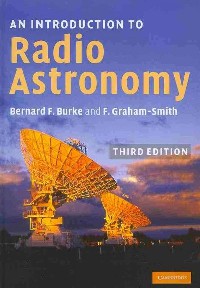
简介
"This third edition describes the applications of fundamental techniques to newly developing radio telescopes, including ATA, LOFAR, MWA, SKA, and ALMA, which all require an understanding of aspects specific to radio astronomy."--Back cover.
目录
Table Of Contents:
Preface xi
Introduction 1(6)
The role of radio observations in astronomy 1(2)
Thermal and non-thermal processes 3(2)
Radiation processes and radio observations 5(2)
The nature of the radio signal 7(17)
Flux density: the jansky 7(3)
Antenna temperature 10(5)
Electromagnetic waves 15(3)
Wave polarization 18(2)
Stokes parameters 20(2)
Radio polarimetry in practice 22(2)
Signals, noise, radiometers and spectrometers 24(20)
Gaussian random noise 24(2)
Band-limited noise 26(2)
Detection and integration 28(2)
Radiometer principles 30(3)
Low-noise amplifiers and mixers 33(1)
Radiometers in practice 34(4)
Digital techniques 38(1)
Spectrometry 39(3)
Cross-correlation radiometry: interferometry 42(2)
Single-aperture radio telescopes 44(29)
Fundamentals: dipoles and horns 44(6)
Arrays of radiating elements 50(3)
Frequency-independent antennas 53(1)
Aperture distributions and beam patterns 54(5)
Partially steerable telescopes 59(1)
Steerable telescopes 60(2)
Feed systems 62(1)
Focal-plane arrays 63(2)
Surface accuracy and efficiency 65(2)
Radio telescopes today 67(3)
Smoothing the response to a sky brightness distribution 70(3)
The two-element interferometer 73(23)
The basic two-element interferometer 74(4)
Interferometers with finite bandwidth 78(2)
Interferometers and finite source size 80(2)
Fourier transforms and the u-, v-plane 82(2)
Practical considerations 84(2)
Very-long-baseline interferometry (VLBI) 86(4)
Beam switching 90(1)
The interferometer in geodesy and astrometry 90(2)
Interferometry at millimetre wavelengths 92(1)
Optical interferometry 93(3)
Aperture synthesis 96(28)
Interferometer arrays 96(3)
Cross-power products in an array 99(10)
Calibration 109(1)
Reducing the data 109(2)
Producing a map 111(2)
Self-calibration 113(1)
Frequency diversity 114(1)
Wide fields and wide bandwidths 115(2)
Wide fields: mosaicing 117(1)
Signal-to-noise limitations and dynamic range 117(3)
VLBI arrays 120(1)
Space VLBI 121(1)
Aperture synthesis at millimetre wavelengths 122(2)
Radiation, propagation and absorption of radio waves 124(24)
Radiative transfer 125(2)
Synchrotron radiation 127(3)
A power-law energy distribution 130(3)
Synchrotron self-absorption 133(1)
Free-free radiation 133(3)
Radio spectral lines 136(2)
Masers 138(2)
Propagation through ionized gas 140(1)
Faraday rotation 141(2)
Scintillation 143(2)
Propagation in the Earth's atmosphere 145(3)
The local Universe 148(26)
Stars and galaxies 148(3)
Aspects of the Milky Way 151(2)
Measurement of sky brightness temperature 153(3)
The spectrum of the Galactic continuum 156(2)
Synchrotron radiation: emissivity 158(2)
The energy spectrum of cosmic rays 160(2)
Polarization 162(1)
Faraday rotation: the Galactic magnetic field 162(7)
Loops and spurs 169(2)
The Local Bubble 171(1)
Other galaxies 172(2)
The interstellar medium 174(27)
Atoms and molecules 174(7)
Kinetic, radiation and state temperatures 181(2)
The 21-cm spectral line of neutral hydrogen 183(4)
HII regions and supernova remnants 187(2)
Heating and cooling mechanisms 189(2)
Dense molecular clouds 191(1)
Interstellar scintillation 192(1)
Supernova remnants (SNRs) 193(8)
Galactic dynamics 201(23)
The circular approximation 202(4)
Spiral structure 206(5)
Non-circular motions 211(5)
The Galactic centre 216(5)
The scale of the Galaxy 221(1)
Atoms and molecules in other galaxies 221(3)
Stars 224(29)
Surface brightness 227(1)
The Sun 227(4)
The Planets 231(3)
Circumstellar envelopes 234(1)
Circumstellar masers 235(1)
The silicon oxide masers 235(1)
The water masers 236(1)
The hydroxyl masers 237(1)
Classical novae 238(5)
Recurrent novae 243(2)
Non-thermal radiation from binaries and flare stars 245(1)
X-ray binaries-Cyg X-3 and SS 433 246(2)
Superluminal motion 248(5)
Pulsars 253(34)
Neutron-star structure 254(2)
Rotational slowdown 256(1)
Rotational behaviour of the Crab and Vela pulsars 257(3)
Glitches in rotation rate 260(1)
Superfluid rotation 261(1)
Radio and optical emission from pulsars 262(7)
The radiation mechanism and refraction 269(1)
The population and evolution of pulsars 270(3)
Searches and surveys; the constraints 273(4)
Trigonometric distance and proper motion 277(1)
X-ray pulsars 277(1)
Binary radio pulsars 278(2)
Magnetic dipole moments 280(1)
Velocities 280(2)
Binary orbits and interactions 282(2)
Tests of general relativity 284(3)
Radio galaxies and quasars 287(30)
Radio emission from normal galaxies 288(2)
Spectra and dimensions 290(3)
Structures 293(4)
A simple model of active galactic nuclei 297(3)
The accretion disc 300(1)
The torus 300(2)
The core and the jets 302(2)
Spectra of quasars and other AGNs 304(1)
The radio brightness temperature of the core 305(2)
Superluminal motion 307(2)
The radio jets and lobes 309(2)
The kiloparsec-scale radio sources 311(2)
Repeating and quiescent quasars 313(4)
Cosmology fundamentals 317(23)
Cosmology transformed 318(3)
Observing the CMB 321(3)
Relativistic cosmology 324(5)
Connecting GR cosmology with observations 329(7)
The early Universe 336(2)
Isotropy, curvature and inflation 338(2)
The angular structure of the CMB 340(20)
The coordinate frame of the Universe 340(1)
COBE and WMAP: the Wilinson Microwave Anisotropy Mission 341(7)
Baryons and cold dark matter 348(3)
The geometry of the acoustic oscillations 351(3)
Physics of the acoustic oscillations 354(1)
Deriving the cosmological parameters 355(5)
Cosmology: discrete radio sources and gravitational lensing 360(23)
Evolution and the radio-source counts 360(6)
Angular diameter and expansion velocity 366(1)
Gravitational lensing 367(7)
Observations of lenses: rings, quads and others 374(4)
Time delay 378(2)
Weak gravitational imaging 380(1)
Microlensing 381(2)
The future of radio astronomy 383(14)
The Cosmic Century 383(1)
The cosmic microwave background 384(1)
The interstellar medium 385(1)
Angular resolution: stars and quasars 386(1)
Optical and infrared interferometry 387(1)
New large radio telescopes 388(5)
The protection of radio frequencies in astronomy 393(4)
Appendix 1 Fourier transforms 397(8)
Appendix 2 Celestial coordinates, distance and time 405(7)
Appendix 3 The origins of radio astronomy 412(9)
Appendix 4 Calibrating polarimeters 421(4)
References 425(12)
Index 437
Preface xi
Introduction 1(6)
The role of radio observations in astronomy 1(2)
Thermal and non-thermal processes 3(2)
Radiation processes and radio observations 5(2)
The nature of the radio signal 7(17)
Flux density: the jansky 7(3)
Antenna temperature 10(5)
Electromagnetic waves 15(3)
Wave polarization 18(2)
Stokes parameters 20(2)
Radio polarimetry in practice 22(2)
Signals, noise, radiometers and spectrometers 24(20)
Gaussian random noise 24(2)
Band-limited noise 26(2)
Detection and integration 28(2)
Radiometer principles 30(3)
Low-noise amplifiers and mixers 33(1)
Radiometers in practice 34(4)
Digital techniques 38(1)
Spectrometry 39(3)
Cross-correlation radiometry: interferometry 42(2)
Single-aperture radio telescopes 44(29)
Fundamentals: dipoles and horns 44(6)
Arrays of radiating elements 50(3)
Frequency-independent antennas 53(1)
Aperture distributions and beam patterns 54(5)
Partially steerable telescopes 59(1)
Steerable telescopes 60(2)
Feed systems 62(1)
Focal-plane arrays 63(2)
Surface accuracy and efficiency 65(2)
Radio telescopes today 67(3)
Smoothing the response to a sky brightness distribution 70(3)
The two-element interferometer 73(23)
The basic two-element interferometer 74(4)
Interferometers with finite bandwidth 78(2)
Interferometers and finite source size 80(2)
Fourier transforms and the u-, v-plane 82(2)
Practical considerations 84(2)
Very-long-baseline interferometry (VLBI) 86(4)
Beam switching 90(1)
The interferometer in geodesy and astrometry 90(2)
Interferometry at millimetre wavelengths 92(1)
Optical interferometry 93(3)
Aperture synthesis 96(28)
Interferometer arrays 96(3)
Cross-power products in an array 99(10)
Calibration 109(1)
Reducing the data 109(2)
Producing a map 111(2)
Self-calibration 113(1)
Frequency diversity 114(1)
Wide fields and wide bandwidths 115(2)
Wide fields: mosaicing 117(1)
Signal-to-noise limitations and dynamic range 117(3)
VLBI arrays 120(1)
Space VLBI 121(1)
Aperture synthesis at millimetre wavelengths 122(2)
Radiation, propagation and absorption of radio waves 124(24)
Radiative transfer 125(2)
Synchrotron radiation 127(3)
A power-law energy distribution 130(3)
Synchrotron self-absorption 133(1)
Free-free radiation 133(3)
Radio spectral lines 136(2)
Masers 138(2)
Propagation through ionized gas 140(1)
Faraday rotation 141(2)
Scintillation 143(2)
Propagation in the Earth's atmosphere 145(3)
The local Universe 148(26)
Stars and galaxies 148(3)
Aspects of the Milky Way 151(2)
Measurement of sky brightness temperature 153(3)
The spectrum of the Galactic continuum 156(2)
Synchrotron radiation: emissivity 158(2)
The energy spectrum of cosmic rays 160(2)
Polarization 162(1)
Faraday rotation: the Galactic magnetic field 162(7)
Loops and spurs 169(2)
The Local Bubble 171(1)
Other galaxies 172(2)
The interstellar medium 174(27)
Atoms and molecules 174(7)
Kinetic, radiation and state temperatures 181(2)
The 21-cm spectral line of neutral hydrogen 183(4)
HII regions and supernova remnants 187(2)
Heating and cooling mechanisms 189(2)
Dense molecular clouds 191(1)
Interstellar scintillation 192(1)
Supernova remnants (SNRs) 193(8)
Galactic dynamics 201(23)
The circular approximation 202(4)
Spiral structure 206(5)
Non-circular motions 211(5)
The Galactic centre 216(5)
The scale of the Galaxy 221(1)
Atoms and molecules in other galaxies 221(3)
Stars 224(29)
Surface brightness 227(1)
The Sun 227(4)
The Planets 231(3)
Circumstellar envelopes 234(1)
Circumstellar masers 235(1)
The silicon oxide masers 235(1)
The water masers 236(1)
The hydroxyl masers 237(1)
Classical novae 238(5)
Recurrent novae 243(2)
Non-thermal radiation from binaries and flare stars 245(1)
X-ray binaries-Cyg X-3 and SS 433 246(2)
Superluminal motion 248(5)
Pulsars 253(34)
Neutron-star structure 254(2)
Rotational slowdown 256(1)
Rotational behaviour of the Crab and Vela pulsars 257(3)
Glitches in rotation rate 260(1)
Superfluid rotation 261(1)
Radio and optical emission from pulsars 262(7)
The radiation mechanism and refraction 269(1)
The population and evolution of pulsars 270(3)
Searches and surveys; the constraints 273(4)
Trigonometric distance and proper motion 277(1)
X-ray pulsars 277(1)
Binary radio pulsars 278(2)
Magnetic dipole moments 280(1)
Velocities 280(2)
Binary orbits and interactions 282(2)
Tests of general relativity 284(3)
Radio galaxies and quasars 287(30)
Radio emission from normal galaxies 288(2)
Spectra and dimensions 290(3)
Structures 293(4)
A simple model of active galactic nuclei 297(3)
The accretion disc 300(1)
The torus 300(2)
The core and the jets 302(2)
Spectra of quasars and other AGNs 304(1)
The radio brightness temperature of the core 305(2)
Superluminal motion 307(2)
The radio jets and lobes 309(2)
The kiloparsec-scale radio sources 311(2)
Repeating and quiescent quasars 313(4)
Cosmology fundamentals 317(23)
Cosmology transformed 318(3)
Observing the CMB 321(3)
Relativistic cosmology 324(5)
Connecting GR cosmology with observations 329(7)
The early Universe 336(2)
Isotropy, curvature and inflation 338(2)
The angular structure of the CMB 340(20)
The coordinate frame of the Universe 340(1)
COBE and WMAP: the Wilinson Microwave Anisotropy Mission 341(7)
Baryons and cold dark matter 348(3)
The geometry of the acoustic oscillations 351(3)
Physics of the acoustic oscillations 354(1)
Deriving the cosmological parameters 355(5)
Cosmology: discrete radio sources and gravitational lensing 360(23)
Evolution and the radio-source counts 360(6)
Angular diameter and expansion velocity 366(1)
Gravitational lensing 367(7)
Observations of lenses: rings, quads and others 374(4)
Time delay 378(2)
Weak gravitational imaging 380(1)
Microlensing 381(2)
The future of radio astronomy 383(14)
The Cosmic Century 383(1)
The cosmic microwave background 384(1)
The interstellar medium 385(1)
Angular resolution: stars and quasars 386(1)
Optical and infrared interferometry 387(1)
New large radio telescopes 388(5)
The protection of radio frequencies in astronomy 393(4)
Appendix 1 Fourier transforms 397(8)
Appendix 2 Celestial coordinates, distance and time 405(7)
Appendix 3 The origins of radio astronomy 412(9)
Appendix 4 Calibrating polarimeters 421(4)
References 425(12)
Index 437
- 名称
- 类型
- 大小
光盘服务联系方式: 020-38250260 客服QQ:2410046007
云图客服:
用户发送的提问,这种方式就需要有位在线客服来回答用户的问题,这种 就属于对话式的,问题是这种提问是否需要用户登录才能提问
Video Player
×
Audio Player
×
pdf Player
×
