

简介
Summary:
Publisher Summary 1
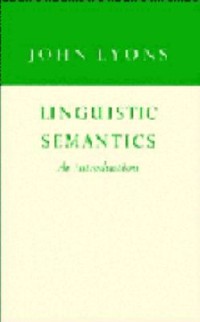
Linguistic Semantics: An Introduction is the successor to Sir John Lyons' important textbook Language, Meaning and Context (1981). While preserving the general structure of the earlier book, the author has substantially expanded its scope to introduce several topics that were not previously discussed, and to take account of new developments in linguistic semantics over the past decade. The resulting work is an invaluable guide to the subject, offering clarifications of its specialized terms and explaining its relationship to formal and philosophical and to contemporary semantics and pragmatics. With its clear and accessible style it will appeal to a wide student readership. Sir John Lyons is one of the most important and internationally renowned contributors to the study of linguistics. His many publications include his Introduction to Theoretical Linguistics (1968) and Semantics (1977).
Publisher Summary 2
This successor to Language, Meaning and Context provides an invaluable introduction to linguistic semantics.
目录
Table Of Contents:
Preface xi
List of symbols and typographical conventions xvii
Part 1 Setting the scene 1(45)
Metalinguistic preliminaries 1(45)
Introduction 1(2)
The meaning of 'meaning' 3(3)
The metalanguage of semantics 6(5)
Linguistic and non-linguistic semantics 11(5)
Language, speech and utterance; 'langue' and 'parole'; 'competence' and 'performance' 16(6)
Words: forms and meanings 22(10)
Sentences and utterances; text, conversation and discourse 32(8)
Theories of meaning and kinds of meaning 40(6)
Part 2 Lexical meaning 46(85)
Words as meaningful units 46(29)
Introduction 46(2)
Forms and expressions 48(6)
Homonymy and polysemy; lexical and grammatical ambiguity 54(6)
Synonymy 60(5)
Full and empty word-forms 65(6)
Lexical meaning and grammatical meaning 71(4)
Defining the meaning of words 75(27)
Introduction 75(2)
Denotation and sense 77(6)
Basic and non-basic expressions 83(6)
Natural (and cultural) kinds 89(7)
Semantic prototypes 96(6)
The structural approach 102(29)
Introduction 102(1)
Structural semantics 103(4)
Componential analysis 107(7)
The empirical basis for componential analysis 114(3)
Entailment and possible worlds 117(7)
Sense-relations and meaning-postulates 124(7)
Part 3 Sentence-meaning 131(103)
Meaningful and meaningless sentences 131(22)
Introduction 131(1)
Grammaticality, acceptability and meaningfulness 132(2)
The meaningfulness of sentences 134(4)
Corrigibility and translatability 138(2)
Verifiability and verificationism 140(1)
Propositions and propositional content 141(3)
Non-factual significance and emotivism 144(2)
Truth-conditions 146(3)
Tautologies and contradictions 149(4)
Sentence-meaning and propositional content 153(46)
Introduction 153(1)
Thematic meaning 154(3)
Simple and composite sentences 157(5)
Truth-functionality (1): conjunction and disjunction 162(5)
Truth-functionality (2): implication 167(2)
Truth-functionality (3): negation 169(7)
Sentence-type, clause-type and mood 176(6)
The meaning of interrogative and declarative sentences 182(11)
Other kinds of non-declaratives: imperatives, exclamatives, volitives, etc. 193(6)
The formalization of sentence-meaning 199(35)
Introduction 199(1)
Formal semantics and linguistic semantics 200(4)
Compositionality, grammatical and semantic isomorphism, and saving the appearances 204(5)
Deep structure and semantic representations 209(6)
Projection-rules and selection-restrictions 215(6)
Montague grammar 221(5)
Possible worlds 226(8)
Part 4 Utterance-meaning 234(109)
Speech acts and illocutionary force 234(24)
Introduction 234(1)
Utterances 235(5)
Locutionary acts 240(7)
Illocutionary force 247(6)
Statements, questions and directives 253(5)
Text and discourse; context and co-text 258(35)
Introduction 258(1)
Text-sentences 259(3)
What is a text? and what is text? 262(3)
Utterance-meaning and context 265(6)
Implication and conventional implicatures 271(6)
Conversational implicatures 277(13)
What is context? 290(3)
The subjectivity of utterance 293(50)
Introduction 293(1)
Reference 294(8)
Indexicality and deixis 302(10)
The grammatical category of tense 312(8)
The grammatical category of aspect 320(7)
Modality, modal expressions and mood 327(9)
Subjectivity and locutionary agency 336(7)
Suggestions for further reading 343(4)
Bibliography 347(13)
Index 360
Preface xi
List of symbols and typographical conventions xvii
Part 1 Setting the scene 1(45)
Metalinguistic preliminaries 1(45)
Introduction 1(2)
The meaning of 'meaning' 3(3)
The metalanguage of semantics 6(5)
Linguistic and non-linguistic semantics 11(5)
Language, speech and utterance; 'langue' and 'parole'; 'competence' and 'performance' 16(6)
Words: forms and meanings 22(10)
Sentences and utterances; text, conversation and discourse 32(8)
Theories of meaning and kinds of meaning 40(6)
Part 2 Lexical meaning 46(85)
Words as meaningful units 46(29)
Introduction 46(2)
Forms and expressions 48(6)
Homonymy and polysemy; lexical and grammatical ambiguity 54(6)
Synonymy 60(5)
Full and empty word-forms 65(6)
Lexical meaning and grammatical meaning 71(4)
Defining the meaning of words 75(27)
Introduction 75(2)
Denotation and sense 77(6)
Basic and non-basic expressions 83(6)
Natural (and cultural) kinds 89(7)
Semantic prototypes 96(6)
The structural approach 102(29)
Introduction 102(1)
Structural semantics 103(4)
Componential analysis 107(7)
The empirical basis for componential analysis 114(3)
Entailment and possible worlds 117(7)
Sense-relations and meaning-postulates 124(7)
Part 3 Sentence-meaning 131(103)
Meaningful and meaningless sentences 131(22)
Introduction 131(1)
Grammaticality, acceptability and meaningfulness 132(2)
The meaningfulness of sentences 134(4)
Corrigibility and translatability 138(2)
Verifiability and verificationism 140(1)
Propositions and propositional content 141(3)
Non-factual significance and emotivism 144(2)
Truth-conditions 146(3)
Tautologies and contradictions 149(4)
Sentence-meaning and propositional content 153(46)
Introduction 153(1)
Thematic meaning 154(3)
Simple and composite sentences 157(5)
Truth-functionality (1): conjunction and disjunction 162(5)
Truth-functionality (2): implication 167(2)
Truth-functionality (3): negation 169(7)
Sentence-type, clause-type and mood 176(6)
The meaning of interrogative and declarative sentences 182(11)
Other kinds of non-declaratives: imperatives, exclamatives, volitives, etc. 193(6)
The formalization of sentence-meaning 199(35)
Introduction 199(1)
Formal semantics and linguistic semantics 200(4)
Compositionality, grammatical and semantic isomorphism, and saving the appearances 204(5)
Deep structure and semantic representations 209(6)
Projection-rules and selection-restrictions 215(6)
Montague grammar 221(5)
Possible worlds 226(8)
Part 4 Utterance-meaning 234(109)
Speech acts and illocutionary force 234(24)
Introduction 234(1)
Utterances 235(5)
Locutionary acts 240(7)
Illocutionary force 247(6)
Statements, questions and directives 253(5)
Text and discourse; context and co-text 258(35)
Introduction 258(1)
Text-sentences 259(3)
What is a text? and what is text? 262(3)
Utterance-meaning and context 265(6)
Implication and conventional implicatures 271(6)
Conversational implicatures 277(13)
What is context? 290(3)
The subjectivity of utterance 293(50)
Introduction 293(1)
Reference 294(8)
Indexicality and deixis 302(10)
The grammatical category of tense 312(8)
The grammatical category of aspect 320(7)
Modality, modal expressions and mood 327(9)
Subjectivity and locutionary agency 336(7)
Suggestions for further reading 343(4)
Bibliography 347(13)
Index 360
- 名称
- 类型
- 大小
光盘服务联系方式: 020-38250260 客服QQ:4006604884
云图客服:
用户发送的提问,这种方式就需要有位在线客服来回答用户的问题,这种 就属于对话式的,问题是这种提问是否需要用户登录才能提问
Video Player
×
Audio Player
×
pdf Player
×
