

简介
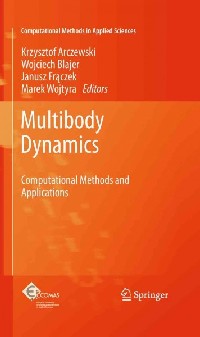
The ECCOMAS Thematic Conference 鈥淢ultibody Dynamics 2009鈥?was held in Warsaw, representing the fourth edition of a series which began in Lisbon (2003), and was then continued in Madrid (2005) and Milan (2007), held under the auspices of the European Community on Computational Methods in Applied Sciences (ECCOMAS). The conference provided a forum for exchanging ideas and results of several topics related to computational methods and applications in multibody dynamics, through the participation of 219 scientists from 27 countries, mostly from Europe but also from America and Asia. This book contains the revised and extended versions of invited conference papers, reporting on the state-of-the-art in the advances of computational multibody models, from the theoretical developments to practical engineering applications. By providing a helpful overview of the most active areas and the recent efforts of many prominent research groups in the field of multibody dynamics, this book can be highly valuable for both experienced researches who want to keep updated with the latest developments in this field and researches approaching the field for the first time.
目录
Preface 5
Contents 7
A Flexible Multibody Pantograph Model for the Analysis of the Catenary\u2013Pantograph Contact 9
1 Introduction 9
2 Flexible Multibody Systems 12
2.1 Flexible Body Equations of Motion 12
2.2 Kinematic Joints with Virtual Bodies 15
3 Co-simulation of Multibody and Finite Element Codes 17
3.1 Integration of the Finite Elements Equations of Motion 18
3.2 Integration of the Multibody Equations of Motion 19
3.3 Co-simulation Using Different Codes 19
4 Analysis of the Pantograph\u2013Catenary Contact Problem 22
4.1 Pantograph Multibody Models 22
4.2 Catenary Finite Element Model 29
4.3 Simulation Scenario and Results 30
5 Conclusions 32
References 33
Maneuvering Multibody Dynamics: New Developments for Models with Fast Solution Scales and Pilot-in-the-Loop Effects 36
1 Introduction 36
2 Coupled Pilot-Vehicle Model 40
3 Formulation of Maneuvers as Optimal Control Problems 41
4 Direct Solution of Maneuver Optimal Control Problems 43
4.1 Direct Transcription 43
4.2 Direct Multiple and Hybrid Single\u2013Multiple Shooting 44
5 Applications and Results 46
5.1 Lateral Reposition MTE 46
5.2 Category-A Fly-Away 49
6 Concluding Remarks 52
References 53
Optimization of Multibody Systems and Their Structural Components 56
1 Introduction 56
2 Optimization of Flexible Multibody Systems 59
2.1 Equations of Motion 59
2.2 Formulation of the Optimization Problem 60
2.3 Time Integration Method 60
2.4 Evaluation of the Objective Function and of the Design Constraints 61
2.5 Sensitivity Analysis 62
2.6 Optimization Algorithms 64
3 Topology Optimization Techniques 66
3.1 Application to the Design of Static Trusses 67
3.2 Topology Optimization of Multibody Systems 68
4 Example 70
4.1 Problem Description 70
4.2 Optimization 71
5 Conclusions 73
References 73
Real-Time Aeroservoelastic Analysis of Wind-Turbines by Free Multibody Software 76
1 Introduction 76
2 Approach 77
3 Wind-Turbine Description 79
4 Baseline Controller 80
5 Multibody Model 82
5.1 Unconstrained Dynamics 82
5.2 Constrained Dynamics 83
5.3 Structural Flexibility 84
5.4 Numerical Integration 84
5.5 CART Wind Turbine Multibody Model 85
6 Real-Time Simulation 87
7 Conclusions 90
8 Additional Material 91
References 91
Comparison of Planar Structural Elements for Multibody Systems with Large Deformations 94
1 Introduction 95
2 Floating Frame of Reference Formulation 96
3 Absolute Nodal Coordinate Formulation 102
4 Numerical Examples 105
4.1 Static Example Problem 105
4.2 Dynamic Example Problems 107
5 Conclusions 111
References 111
Modeling and Analysis of Rigid Multibody Systems with Translational Clearance Joints Based on the Nonsmooth Dynamics Approach 113
1 Introduction 113
2 Basic Set-Valued Elements 115
3 Set-Valued Force Laws for Frictional Unilateral Contacts 117
4 Dynamics of Nonsmooth Rigid Multibody Systems 119
5 Moreau's Time-Stepping Method 122
4 Demonstrative Application to a Slider-Crank Mechanism 127
5 Conclusions 134
References 135
Application of General Multibody Methods to Robotics 137
1 Introduction 137
2 Absolute Coordinates Approach to Robot Kinematic Analysis and Singular Configuration Detection 138
2.1 Theoretical Background 139
2.2 Robotic Example 142
3 Simulation Study of Stewart Platform with Model-Based Control 144
3.1 Methods 144
3.1.1 Manipulator Kinematics 145
3.1.2 Manipulator Dynamics 147
3.1.3 Friction in Actuators 148
3.1.4 DC Motor 148
3.1.5 Control System 149
3.2 Results 150
4 Dynamic Analysis of a Flexible Power Transmission Mechanism 151
4.1 An Outline of Dynamic Analysis of Flexible MBS 152
4.2 Power Transmission Mechanism of POLYCRANK Robot 153
4.3 Dynamic Analysis of Power Transmission Mechanism 155
5 Conclusions 157
References 158
Energy Considerations for the Stabilization of Constrained Mechanical Systems with Velocity Projection 159
1 Introduction 159
2 Constrained Dynamics Formulation 160
3 Coordinate Projection 161
4 Total Energy Balance 163
5 Projection Energy Balance 166
5.1 Some Preliminary Results 166
5.2 Conditions for Energy Dissipation 167
6 Numerical Experiments 168
6.1 Two Particle System 168
6.2 Five-Bar Pendulum 172
7 Conclusions 175
References 176
A General Purpose Algorithm for Optimal Trajectory Planning of Closed Loop Multibody Systems 178
1 Introduction 178
2 Optimal Trajectory Planning Problem of Multibody Systems 180
2.1 Problem Formulation 1: Minimal Form of Equation of Motion 180
2.2 Problem Formulation 2: Augmented Equations 181
2.3 Solution Procedure for Optimal Trajectory Planning Problems 182
3 Optimal Trajectory Planning Algorithm Using Coordinate Partitioning and Embedding Techniques 184
4 Optimal Trajectory Planning Algorithm Based on an Augmented Formulation 187
5 Numerical Examples 190
5.1 Non-redundant Actuation System 190
5.2 Redundant Actuation System 193
6 Conclusions 196
References 197
Real-Time Simulation of Extended Vehicle Drivetrain Dynamics 199
1 Introduction 199
1.1 Notations 203
2 Powertrain System and Vehicle Dynamics 203
2.1 Multibody System 204
2.2 Control Units 206
2.3 Electrical System 206
2.4 Coupled System 207
2.5 Analysis Tasks 207
3 Time Integration 209
3.1 Office Simulation 209
3.2 Realtime Office 209
3.3 Realtime 210
4 Application 211
4.1 Model 212
4.2 Simulation Results 212
4.2.1 Realtime Calculations 213
4.2.2 Comparison Implicit and Explicit Solution 214
4.2.3 Comparison Realtime and Office 214
4.2.4 Comparison with Respect to System Evaluation 215
5 Conclusion 216
References 216
Assessment of Antagonistic Muscle Forces During Forearm Flexion/Extension 219
1 Introduction 220
1.1 Redundancy Problem Formulation 220
1.2 Classification of Solving Methods 221
1.3 Objective of this Study 222
2 Material and Methods 223
2.1 Principle 223
2.1.1 Protocol Step 1: Force Calibration 223
2.1.2 Protocol Step 2: Force Quantification 223
2.2 Experimental Set-up 224
2.3 Model and Hypotheses 225
2.4 Process of Muscle Force Quantification 227
2.4.1 Muscle Force Calibration 227
2.4.2 Muscle Force Quantification 231
3 Results 234
3.1 Joint Kinematics and Dynamics 234
3.2 Muscle Forces 235
3.2.1 Muscle Force Assessment 235
3.2.2 Statistical Validation 236
4 Discussion 237
4.1 Joint Kinematics and Dynamics 237
4.2 Muscle Force Quantification 238
4.2.1 EMG Processing and Parameter Choice 238
4.2.2 Comparison to Existing Methods 238
4.3 Prospects 239
References 240
Computing Time Reduction Possibilities in Multibody Dynamics 243
1 Introduction 243
2 Determination of a Suitable Initial Value 245
2.1 Kinematics 245
2.2 Kinetics 246
2.2.1 Geometry of the Excitation 246
2.2.2 Relationship of Tangential and Radial Belt Velocity 247
2.2.3 Tangential Balance of Forces 248
2.2.4 Radial Balance of Forces 249
2.2.5 Axial Balance of Forces 249
2.2.6 Change of the Running Radius 250
2.2.7 Summary of the Stationary Belt Model and Environment Interaction 250
2.2.8 Reduction of the Final Equations 252
3 Computational Effort During Integration 253
3.1 Stabilising Equations of Motion 254
3.1.1 Coordinate Settings 254
3.1.2 Equations of Motion 257
3.1.3 Analysis of Instability 258
3.2 Parallel Computing Architectures 260
4 Conclusion 261
References 262
Optimization-Based Design of Minimum Phase Underactuated Multibody Systems 264
1 Introduction 264
2 Trajectory Tracking Control 265
2.1 Input\u2013Output Normal-Form 266
2.2 Analysis of the Internal Dynamics 267
2.3 Feedback Linearization 268
2.4 Feed-forward Control Design 269
3 Design of Stable Zero-Dynamics 271
3.1 Identification of Possible Design Parameters 271
3.2 Optimization Criteria 273
3.3 Particle Swarm Optimization 275
4 Application Examples 276
4.1 Manipulator with One Passive Joint 276
4.1.1 System Without Disturbances and Uncertainties 278
4.1.2 System Under Disturbances and Uncertainties 280
4.2 Manipulator with Two Passive Joints 280
5 Conclusions 284
References 285
GPU-Based Parallel Computing for the Simulation of Complex Multibody Systems with Unilateral and Bilateral Constraints: An Overview 286
1 Introduction 286
2 Review of Computing on the Graphics Processing Unit 288
3 Large Scale Multibody Dynamics on the GPU 295
3.1 The Formulation of the Equations of Motion 295
3.2 The Time Stepping Solver 298
3.3 The GPU Formulation of the CCP Solver 301
4 Numerical Experiments 305
5 Conclusions and Directions of Future Work 308
References 309
Investigation of Gears Using an Elastic Multibody Model with Contact 311
1 Introduction 312
2 Classical Models 312
2.1 Finite Element Model 313
2.2 Rigid Body Model 313
2.3 Comparison 314
3 Elastic Multibody Model 316
3.1 Contact Algorithm 317
3.1.1 Coarse Collision Detection 317
3.1.2 Fine Collision Detection 318
3.2 Integration 319
4 Simulation Results 321
4.1 Spur Gears 321
4.2 Numerical Efficiency 322
4.3 Helical Gears 323
5 Experimental Results 325
6 Conclusions 327
References 328
Contents 7
A Flexible Multibody Pantograph Model for the Analysis of the Catenary\u2013Pantograph Contact 9
1 Introduction 9
2 Flexible Multibody Systems 12
2.1 Flexible Body Equations of Motion 12
2.2 Kinematic Joints with Virtual Bodies 15
3 Co-simulation of Multibody and Finite Element Codes 17
3.1 Integration of the Finite Elements Equations of Motion 18
3.2 Integration of the Multibody Equations of Motion 19
3.3 Co-simulation Using Different Codes 19
4 Analysis of the Pantograph\u2013Catenary Contact Problem 22
4.1 Pantograph Multibody Models 22
4.2 Catenary Finite Element Model 29
4.3 Simulation Scenario and Results 30
5 Conclusions 32
References 33
Maneuvering Multibody Dynamics: New Developments for Models with Fast Solution Scales and Pilot-in-the-Loop Effects 36
1 Introduction 36
2 Coupled Pilot-Vehicle Model 40
3 Formulation of Maneuvers as Optimal Control Problems 41
4 Direct Solution of Maneuver Optimal Control Problems 43
4.1 Direct Transcription 43
4.2 Direct Multiple and Hybrid Single\u2013Multiple Shooting 44
5 Applications and Results 46
5.1 Lateral Reposition MTE 46
5.2 Category-A Fly-Away 49
6 Concluding Remarks 52
References 53
Optimization of Multibody Systems and Their Structural Components 56
1 Introduction 56
2 Optimization of Flexible Multibody Systems 59
2.1 Equations of Motion 59
2.2 Formulation of the Optimization Problem 60
2.3 Time Integration Method 60
2.4 Evaluation of the Objective Function and of the Design Constraints 61
2.5 Sensitivity Analysis 62
2.6 Optimization Algorithms 64
3 Topology Optimization Techniques 66
3.1 Application to the Design of Static Trusses 67
3.2 Topology Optimization of Multibody Systems 68
4 Example 70
4.1 Problem Description 70
4.2 Optimization 71
5 Conclusions 73
References 73
Real-Time Aeroservoelastic Analysis of Wind-Turbines by Free Multibody Software 76
1 Introduction 76
2 Approach 77
3 Wind-Turbine Description 79
4 Baseline Controller 80
5 Multibody Model 82
5.1 Unconstrained Dynamics 82
5.2 Constrained Dynamics 83
5.3 Structural Flexibility 84
5.4 Numerical Integration 84
5.5 CART Wind Turbine Multibody Model 85
6 Real-Time Simulation 87
7 Conclusions 90
8 Additional Material 91
References 91
Comparison of Planar Structural Elements for Multibody Systems with Large Deformations 94
1 Introduction 95
2 Floating Frame of Reference Formulation 96
3 Absolute Nodal Coordinate Formulation 102
4 Numerical Examples 105
4.1 Static Example Problem 105
4.2 Dynamic Example Problems 107
5 Conclusions 111
References 111
Modeling and Analysis of Rigid Multibody Systems with Translational Clearance Joints Based on the Nonsmooth Dynamics Approach 113
1 Introduction 113
2 Basic Set-Valued Elements 115
3 Set-Valued Force Laws for Frictional Unilateral Contacts 117
4 Dynamics of Nonsmooth Rigid Multibody Systems 119
5 Moreau's Time-Stepping Method 122
4 Demonstrative Application to a Slider-Crank Mechanism 127
5 Conclusions 134
References 135
Application of General Multibody Methods to Robotics 137
1 Introduction 137
2 Absolute Coordinates Approach to Robot Kinematic Analysis and Singular Configuration Detection 138
2.1 Theoretical Background 139
2.2 Robotic Example 142
3 Simulation Study of Stewart Platform with Model-Based Control 144
3.1 Methods 144
3.1.1 Manipulator Kinematics 145
3.1.2 Manipulator Dynamics 147
3.1.3 Friction in Actuators 148
3.1.4 DC Motor 148
3.1.5 Control System 149
3.2 Results 150
4 Dynamic Analysis of a Flexible Power Transmission Mechanism 151
4.1 An Outline of Dynamic Analysis of Flexible MBS 152
4.2 Power Transmission Mechanism of POLYCRANK Robot 153
4.3 Dynamic Analysis of Power Transmission Mechanism 155
5 Conclusions 157
References 158
Energy Considerations for the Stabilization of Constrained Mechanical Systems with Velocity Projection 159
1 Introduction 159
2 Constrained Dynamics Formulation 160
3 Coordinate Projection 161
4 Total Energy Balance 163
5 Projection Energy Balance 166
5.1 Some Preliminary Results 166
5.2 Conditions for Energy Dissipation 167
6 Numerical Experiments 168
6.1 Two Particle System 168
6.2 Five-Bar Pendulum 172
7 Conclusions 175
References 176
A General Purpose Algorithm for Optimal Trajectory Planning of Closed Loop Multibody Systems 178
1 Introduction 178
2 Optimal Trajectory Planning Problem of Multibody Systems 180
2.1 Problem Formulation 1: Minimal Form of Equation of Motion 180
2.2 Problem Formulation 2: Augmented Equations 181
2.3 Solution Procedure for Optimal Trajectory Planning Problems 182
3 Optimal Trajectory Planning Algorithm Using Coordinate Partitioning and Embedding Techniques 184
4 Optimal Trajectory Planning Algorithm Based on an Augmented Formulation 187
5 Numerical Examples 190
5.1 Non-redundant Actuation System 190
5.2 Redundant Actuation System 193
6 Conclusions 196
References 197
Real-Time Simulation of Extended Vehicle Drivetrain Dynamics 199
1 Introduction 199
1.1 Notations 203
2 Powertrain System and Vehicle Dynamics 203
2.1 Multibody System 204
2.2 Control Units 206
2.3 Electrical System 206
2.4 Coupled System 207
2.5 Analysis Tasks 207
3 Time Integration 209
3.1 Office Simulation 209
3.2 Realtime Office 209
3.3 Realtime 210
4 Application 211
4.1 Model 212
4.2 Simulation Results 212
4.2.1 Realtime Calculations 213
4.2.2 Comparison Implicit and Explicit Solution 214
4.2.3 Comparison Realtime and Office 214
4.2.4 Comparison with Respect to System Evaluation 215
5 Conclusion 216
References 216
Assessment of Antagonistic Muscle Forces During Forearm Flexion/Extension 219
1 Introduction 220
1.1 Redundancy Problem Formulation 220
1.2 Classification of Solving Methods 221
1.3 Objective of this Study 222
2 Material and Methods 223
2.1 Principle 223
2.1.1 Protocol Step 1: Force Calibration 223
2.1.2 Protocol Step 2: Force Quantification 223
2.2 Experimental Set-up 224
2.3 Model and Hypotheses 225
2.4 Process of Muscle Force Quantification 227
2.4.1 Muscle Force Calibration 227
2.4.2 Muscle Force Quantification 231
3 Results 234
3.1 Joint Kinematics and Dynamics 234
3.2 Muscle Forces 235
3.2.1 Muscle Force Assessment 235
3.2.2 Statistical Validation 236
4 Discussion 237
4.1 Joint Kinematics and Dynamics 237
4.2 Muscle Force Quantification 238
4.2.1 EMG Processing and Parameter Choice 238
4.2.2 Comparison to Existing Methods 238
4.3 Prospects 239
References 240
Computing Time Reduction Possibilities in Multibody Dynamics 243
1 Introduction 243
2 Determination of a Suitable Initial Value 245
2.1 Kinematics 245
2.2 Kinetics 246
2.2.1 Geometry of the Excitation 246
2.2.2 Relationship of Tangential and Radial Belt Velocity 247
2.2.3 Tangential Balance of Forces 248
2.2.4 Radial Balance of Forces 249
2.2.5 Axial Balance of Forces 249
2.2.6 Change of the Running Radius 250
2.2.7 Summary of the Stationary Belt Model and Environment Interaction 250
2.2.8 Reduction of the Final Equations 252
3 Computational Effort During Integration 253
3.1 Stabilising Equations of Motion 254
3.1.1 Coordinate Settings 254
3.1.2 Equations of Motion 257
3.1.3 Analysis of Instability 258
3.2 Parallel Computing Architectures 260
4 Conclusion 261
References 262
Optimization-Based Design of Minimum Phase Underactuated Multibody Systems 264
1 Introduction 264
2 Trajectory Tracking Control 265
2.1 Input\u2013Output Normal-Form 266
2.2 Analysis of the Internal Dynamics 267
2.3 Feedback Linearization 268
2.4 Feed-forward Control Design 269
3 Design of Stable Zero-Dynamics 271
3.1 Identification of Possible Design Parameters 271
3.2 Optimization Criteria 273
3.3 Particle Swarm Optimization 275
4 Application Examples 276
4.1 Manipulator with One Passive Joint 276
4.1.1 System Without Disturbances and Uncertainties 278
4.1.2 System Under Disturbances and Uncertainties 280
4.2 Manipulator with Two Passive Joints 280
5 Conclusions 284
References 285
GPU-Based Parallel Computing for the Simulation of Complex Multibody Systems with Unilateral and Bilateral Constraints: An Overview 286
1 Introduction 286
2 Review of Computing on the Graphics Processing Unit 288
3 Large Scale Multibody Dynamics on the GPU 295
3.1 The Formulation of the Equations of Motion 295
3.2 The Time Stepping Solver 298
3.3 The GPU Formulation of the CCP Solver 301
4 Numerical Experiments 305
5 Conclusions and Directions of Future Work 308
References 309
Investigation of Gears Using an Elastic Multibody Model with Contact 311
1 Introduction 312
2 Classical Models 312
2.1 Finite Element Model 313
2.2 Rigid Body Model 313
2.3 Comparison 314
3 Elastic Multibody Model 316
3.1 Contact Algorithm 317
3.1.1 Coarse Collision Detection 317
3.1.2 Fine Collision Detection 318
3.2 Integration 319
4 Simulation Results 321
4.1 Spur Gears 321
4.2 Numerical Efficiency 322
4.3 Helical Gears 323
5 Experimental Results 325
6 Conclusions 327
References 328
- 名称
- 类型
- 大小
光盘服务联系方式: 020-38250260 客服QQ:4006604884
云图客服:
用户发送的提问,这种方式就需要有位在线客服来回答用户的问题,这种 就属于对话式的,问题是这种提问是否需要用户登录才能提问
Video Player
×
Audio Player
×
pdf Player
×
