

简介
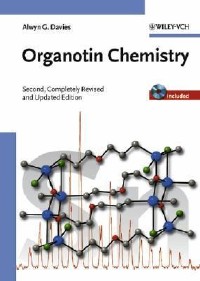
At long last: The second, completely revised edition of this comprehensive standard reference. Alwyn G. Davies has updated the contents of his book to reflect the current state of research into organotin chemistry. He covers all aspects in detail, such as its synthesis, characterization, structures and applications, while also devoting space to such hot topics as environmental issues. This new edition also includes a CD-ROM with more than 5,000 references, making this database an invaluable tool for everyone working in the field. "The text is well written, extremely accessible and very comprehensive: particularly impressive is the inclusion of up-to-the-minute references in these areas...." - Advanced Materials , 13 (1998) "The standard of production is very good, with well-structured tables and an abundance of clear formula schemas, which enable the reader to quickly grasp the essence of the text." - Angewandte Chemie 16 , 1997
目录
Preface 7
Contents 9
1 Introduction 15
1.1 History 15
1.2 Nomenclature 17
1.3 Overview of Synthesis 18
1.4 Overview of Structures 20
1.5 Bibliography 22
2 Physical Methods and Physical Data 27
2.1 Physical Methods 27
2.1.1 Infrared and Raman Spectroscopy 27
2.1.2 M枚ssbauer Spectroscopy 28
2.1.3 Mass Spectrometry 30
2.1.4 NMR Spectroscopy 32
2.1.5 Photoelectron Spectroscopy 39
2.2 Physical Data 40
3 The Stannyl Group as a Substituent 45
3.1 Tin as a Hydrogen Equivalent 45
3.1.1 Chemical Reactions 45
3.1.2 C\u2013Sn Hyperconjugation 49
3.1.2.1 Carbon Radicals 50
3.1.2.2 Carbon Cations: the 尾-Tin Effect 50
3.1.2.3 Filled 蟺-Systems 53
3.1.2.4 Carbon Cations: the 纬-, 未-, 蔚-Effects 55
3.2 Stannyl Substituent Constants 55
3.2.1 Electronic Effects 55
3.2.2 Steric Effects 56
4 Formation of the Carbon-Tin Bond 59
4.1 Reaction of Organometallic Reagents with Tin Compounds 59
4.2 Reaction of Stannylmetallic Compounds with Organic Electrophiles 63
4.3 Reaction of Tin or Tin(II) Compounds with Alkyl Halides 65
4.4 Hydrostannation of Alkenes and Alkynes 68
4.5 Metallostannation of Alkenes and Alkynes 73
4.6 The Reaction of Acidic Hydrocarbons with Sn\u2013O and Sn\u2013N Bonded Compounds 74
4.7 Carbonyl-forming Eliminations 75
5 Alkylstannanes 81
5.1 Structures and Properties 81
5.2 Mechanisms of Cleavage 84
5.3 Reactions 86
5.3.1 With Protic Acids 86
5.3.2 With Halogens 87
5.3.3 With Lewis Acids 88
5.3.4 With Sulfur Dioxide 89
5.3.5 Tin/Lithium Transmetallation 89
5.3.6 With Free Radicals 89
5.3.7 By Electron Transfer 90
5.3.8 With Peroxides 92
5.4 Fluorous Alkylstannanes 92
6 Functionally-substituted Alkylstannanes 96
6.1 伪-Halogenoalkylstannanes 96
6.2 Other 伪-Substituted Alkylstannanes 98
6.3 尾-Functional Alkylstannanes 106
6.4 纬-Functional Alkylstannanes 108
7 Aryl- and Heteroaryl-stannanes 114
7.1 Arylstannanes 114
7.2 The Stannylium Ion and the Wheland Intermediate 119
7.3 Heteroarylstannanes 121
8 Alkenyl- and Alkynyl-stannanes, and Stannacyclopentadienes 128
8.1 Alkenylstannanes 128
8.1.1 Formation 128
8.1.2 Reactions 135
8.2 Alkynylstannanes 137
8.2.1 Formation 137
8.2.2 Reactions 139
8.3 Stannacyclopentadienes 142
9 Allyl-, Allenyl-, Propargyl-, and Cyclopentadienyl-stannanes 147
9.1 Allylstannanes 147
9.1.1 Formation 147
9.1.2 Properties 149
9.1.3 Reactions 150
9.1.3.1 Transmetallations 150
9.1.3.2 Reaction with Electrophiles 151
9.1.3.3 Reactions with Radicals 153
9.1.3.4 Ene Reactions 154
9.2 Allenyl- and Propargyl-stannanes 156
9.2.1 Preparation 156
9.2.2 Reactions 157
9.3 Cyclopentadienylstannanes 158
9.3.1 Formation 158
9.3.2 Properties 159
9.3.3 Reactions 161
9.3.4 Stannylmetallocenes 162
10 Stannacycloalkanes 170
10.1 Monostannacycloalkanes, R(2)Sn(CH(2))(n) 170
10.2 Stannacyclopentadienes 173
10.3 Oligostannacycloalkanes, [R(2)Sn(CH(2))(n)](m) 174
10.3.1 Formation 174
10.3.2 Structures and Properties 176
11 Organotin Halides 180
11.1 Preparation 180
11.1.1 The Reaction of RM with SnX(4) 180
11.1.2 The Kocheshkov Reaction 181
11.1.3 Preparation from Organotin Oxides or Hydroxides 182
11.1.4 Exchange of Anionic Groups at Tin 183
11.1.5 The Reactions of Halogens with Sn-Sn Bonded Compounds 184
11.2 Physical Properties and Structures 185
11.3 Coordination Complexes 188
11.4 Reactions 189
12 Organotin Hydroxides and Oxides 193
12.1 Triorganotin Hydroxides and Oxides 193
12.1.1 Preparation and Properties 193
12.1.2 Reactions 196
12.2 Diorganotin Hydroxides and Oxides 199
12.3 Monoorganotin Hydroxides and Oxides 207
12.4 Stannametalloxanes 209
13 Organotin Carboxylates and Other Oxyesters. Stannylium Ions 217
13.1 Organotin Carboxylates 217
13.1.1 Preparation 217
13.1.2 Structures 219
13.1.3 Properties 221
13.2 Carbonates and Carbamates 222
13.3 Derivatives of Phosphorus Acids 222
13.4 Derivatives of Other Oxyacids and of Thioacids 224
14 Organotin Alkoxides, Phenoxides, and Peroxides 228
14.1 Acyclic Alkoxides and Phenoxides 228
14.1.1 Preparation 228
14.1.2 Structures and Properties 232
14.1.3 Reactions 233
14.2 1,3,2-Dioxastannacycloalkanes 237
14.2.1 Formation 237
14.2.2 Structures and Properties 238
14.3 Acyclic Organotin Enolates 242
14.3.1 Preparation 243
14.3.2 Reactions 244
14.4 1,3,2-Dioxastannolenes 247
14.5 Organotin Peroxides 248
15 Organotin Hydrides 258
15.1 Preparation 258
15.1.1 Reductions with Metal Hydrides 258
15.1.2 Decarboxylation of Stannyl Formates 260
15.1.3 Hydrolysis of Stannylmetallic Compounds 261
15.1.4 Alkylation of R(2)SnHM 261
15.1.5 Special Hydrides 262
15.2 Properties 263
15.3 Reactions 265
15.3.1 Reactions with Protic Acids and Carbenium Ions. 266
15.3.2 Reactions with Metal Halides 267
15.3.3 Reactions with Strong Bases 267
15.3.4 Reactions Leading to the Formation of Sn\u2013Sn Bonds 267
15.3.5 Radical Reactions 269
15.3.5.1 Reactions of Radicals with Tin Hydrides 270
15.3.5.2 Reduction of Halides 271
15.3.5.3 Reduction of Thiocarbonyl Compounds 273
15.3.5.4 Reduction of Other Substrates 273
16 Compounds with Sn\u2013N Bonds 280
16.1 Aminostannanes 280
16.1.1 Preparation 280
16.1.1.1 Transmetallation 280
16.1.1.2 Transamination 281
16.1.1.3 Addition to Multiple Bonds to Nitrogen 282
16.1.1.4 Ene Reactions 282
16.1.1.5 Miscellaneous Methods 283
16.1.2 Structures 283
16.1.3 Reactions 284
16.1.3.1 With Protic Acids 284
16.1.3.2 With Metal Derivatives 285
16.1.3.3 With Other Singly-bonded Electrophiles 286
16.1.3.4 With Doubly-bonded Electrophiles 287
16.2 Stannyl Porphyrins and Corroles 288
16.3 Amidostannanes 289
16.4 Sulfonamidostannanes 290
16.5 Stannaimines, R(2)Sn=NR麓 291
16.6 Compounds with Sn\u2013P Bonds 292
17 Compounds with Sn\u2013S Bonds 297
17.1 Organotin Sulfides 297
17.1.1 Preparation 297
17.1.2 Structures 299
17.1.3 Reactions 300
17.2 Stannathiones R(2)Sn=S 301
17.3 Organotin Thiolates R(n)Sn(SR麓)(4\u2013n) 301
18 Compounds with SnSn Bonds 306
18.1 Introduction 306
18.2 Acyclic Distannanes 306
18.2.1 Formation 306
18.2.1.1 From a Stannylmetallic Compound and a Halide R(n)SnX(4\u2013n) 306
18.2.1.2 From an Organotin Compound R(n)SnX(4\u2013n) and a Metal 307
18.2.1.3 From an Organotin Hydride R(n)SnH(4\u2013n) and a compound R(n)SnX(4\u2013n) 308
18.2.1.4 By Elimination of Dihydrogen from an Organotin Hydride 309
18.2.1.5 By Insertion of a Stannylene R(2)Sn: into an SnM Bond 310
18.2.1.6 By Abstraction of a Hydrogen Atom from R(3)SnH 310
18.2.1.7 By Cathodic Reduction of R(3)SnX 310
18.2.2 Structures 311
18.2.3 Properties 311
18.3 Linear Oligostannanes 315
18.4 Cyclic Oligostannanes 317
19 Compounds with Tin-metal Bonds 325
19.1 Alkali Metals 325
19.1.1 Formation 325
19.1.2 Properties 327
19.1.3 Structures 327
19.1.4 Reactions 328
19.1.5 Pentaorganostannates R(5)Sn(\u2013)Li(+) 329
19.2 Magnesium 330
19.3 Calcium, Strontium, and Barium 331
19.4 Boron and Aluminium 331
19.5 Silicon, Germanium, and Lead 333
19.6 Copper 335
19.7 Zinc, Cadmium, and Mercury 336
19.8 Platinum and Palladium 337
19.9 Other Transition Metals 341
20 Organotin Radicals and Radical Ions 347
20.1 Organotin Radicals R(3)Sn\u2022 347
20.1.1 Generation 347
20.1.2 ESR Spectra 352
20.1.3 Reactions 353
20.2 Stannylalkyl Radicals R(3)SnC(n)(\u2022) 357
20.3 Radical Cations R(n)SnX(4\u2013n)(\u2022+) 358
20.4 Radical Anions R(n)SnX(4\u2013n)(\u2022\u2013) and R(2)Sn(\u2022\u2013) 360
21 Stannylenes, Distannenes, and Stannenes 365
21.1 蟽-Bonded Stannylenes 365
21.1.1 Transient Stannylenes 365
21.1.2 Persistent Stannylenes 367
21.2 Distannenes R(2)Sn=SnR(2) 373
21.3 Distannynes RSn=SnR 374
21.4 Stannenes and Heterostannenes R(2)Sn(IV)=CR麓(2) and R(2)Sn(IV)=X 375
21.5 蟺-Bonded Stannylenes 377
22 Organic Synthesis: Tin/lithium Transmetallation, the Stille Reaction, and the Removal of Tin Residues 387
22.1 Tin/lithium Transmetallation 387
22.2 Stille Coupling Reactions 389
22.3 The Removal of Tin Residues 392
23 Applications, Environmental Issues, and Analysis 397
23.1 Applications 397
23.2 Environmental Issues 401
23.3 Analysis 402
Author Index 405
Subject Index 435
Contents 9
1 Introduction 15
1.1 History 15
1.2 Nomenclature 17
1.3 Overview of Synthesis 18
1.4 Overview of Structures 20
1.5 Bibliography 22
2 Physical Methods and Physical Data 27
2.1 Physical Methods 27
2.1.1 Infrared and Raman Spectroscopy 27
2.1.2 M枚ssbauer Spectroscopy 28
2.1.3 Mass Spectrometry 30
2.1.4 NMR Spectroscopy 32
2.1.5 Photoelectron Spectroscopy 39
2.2 Physical Data 40
3 The Stannyl Group as a Substituent 45
3.1 Tin as a Hydrogen Equivalent 45
3.1.1 Chemical Reactions 45
3.1.2 C\u2013Sn Hyperconjugation 49
3.1.2.1 Carbon Radicals 50
3.1.2.2 Carbon Cations: the 尾-Tin Effect 50
3.1.2.3 Filled 蟺-Systems 53
3.1.2.4 Carbon Cations: the 纬-, 未-, 蔚-Effects 55
3.2 Stannyl Substituent Constants 55
3.2.1 Electronic Effects 55
3.2.2 Steric Effects 56
4 Formation of the Carbon-Tin Bond 59
4.1 Reaction of Organometallic Reagents with Tin Compounds 59
4.2 Reaction of Stannylmetallic Compounds with Organic Electrophiles 63
4.3 Reaction of Tin or Tin(II) Compounds with Alkyl Halides 65
4.4 Hydrostannation of Alkenes and Alkynes 68
4.5 Metallostannation of Alkenes and Alkynes 73
4.6 The Reaction of Acidic Hydrocarbons with Sn\u2013O and Sn\u2013N Bonded Compounds 74
4.7 Carbonyl-forming Eliminations 75
5 Alkylstannanes 81
5.1 Structures and Properties 81
5.2 Mechanisms of Cleavage 84
5.3 Reactions 86
5.3.1 With Protic Acids 86
5.3.2 With Halogens 87
5.3.3 With Lewis Acids 88
5.3.4 With Sulfur Dioxide 89
5.3.5 Tin/Lithium Transmetallation 89
5.3.6 With Free Radicals 89
5.3.7 By Electron Transfer 90
5.3.8 With Peroxides 92
5.4 Fluorous Alkylstannanes 92
6 Functionally-substituted Alkylstannanes 96
6.1 伪-Halogenoalkylstannanes 96
6.2 Other 伪-Substituted Alkylstannanes 98
6.3 尾-Functional Alkylstannanes 106
6.4 纬-Functional Alkylstannanes 108
7 Aryl- and Heteroaryl-stannanes 114
7.1 Arylstannanes 114
7.2 The Stannylium Ion and the Wheland Intermediate 119
7.3 Heteroarylstannanes 121
8 Alkenyl- and Alkynyl-stannanes, and Stannacyclopentadienes 128
8.1 Alkenylstannanes 128
8.1.1 Formation 128
8.1.2 Reactions 135
8.2 Alkynylstannanes 137
8.2.1 Formation 137
8.2.2 Reactions 139
8.3 Stannacyclopentadienes 142
9 Allyl-, Allenyl-, Propargyl-, and Cyclopentadienyl-stannanes 147
9.1 Allylstannanes 147
9.1.1 Formation 147
9.1.2 Properties 149
9.1.3 Reactions 150
9.1.3.1 Transmetallations 150
9.1.3.2 Reaction with Electrophiles 151
9.1.3.3 Reactions with Radicals 153
9.1.3.4 Ene Reactions 154
9.2 Allenyl- and Propargyl-stannanes 156
9.2.1 Preparation 156
9.2.2 Reactions 157
9.3 Cyclopentadienylstannanes 158
9.3.1 Formation 158
9.3.2 Properties 159
9.3.3 Reactions 161
9.3.4 Stannylmetallocenes 162
10 Stannacycloalkanes 170
10.1 Monostannacycloalkanes, R(2)Sn(CH(2))(n) 170
10.2 Stannacyclopentadienes 173
10.3 Oligostannacycloalkanes, [R(2)Sn(CH(2))(n)](m) 174
10.3.1 Formation 174
10.3.2 Structures and Properties 176
11 Organotin Halides 180
11.1 Preparation 180
11.1.1 The Reaction of RM with SnX(4) 180
11.1.2 The Kocheshkov Reaction 181
11.1.3 Preparation from Organotin Oxides or Hydroxides 182
11.1.4 Exchange of Anionic Groups at Tin 183
11.1.5 The Reactions of Halogens with Sn-Sn Bonded Compounds 184
11.2 Physical Properties and Structures 185
11.3 Coordination Complexes 188
11.4 Reactions 189
12 Organotin Hydroxides and Oxides 193
12.1 Triorganotin Hydroxides and Oxides 193
12.1.1 Preparation and Properties 193
12.1.2 Reactions 196
12.2 Diorganotin Hydroxides and Oxides 199
12.3 Monoorganotin Hydroxides and Oxides 207
12.4 Stannametalloxanes 209
13 Organotin Carboxylates and Other Oxyesters. Stannylium Ions 217
13.1 Organotin Carboxylates 217
13.1.1 Preparation 217
13.1.2 Structures 219
13.1.3 Properties 221
13.2 Carbonates and Carbamates 222
13.3 Derivatives of Phosphorus Acids 222
13.4 Derivatives of Other Oxyacids and of Thioacids 224
14 Organotin Alkoxides, Phenoxides, and Peroxides 228
14.1 Acyclic Alkoxides and Phenoxides 228
14.1.1 Preparation 228
14.1.2 Structures and Properties 232
14.1.3 Reactions 233
14.2 1,3,2-Dioxastannacycloalkanes 237
14.2.1 Formation 237
14.2.2 Structures and Properties 238
14.3 Acyclic Organotin Enolates 242
14.3.1 Preparation 243
14.3.2 Reactions 244
14.4 1,3,2-Dioxastannolenes 247
14.5 Organotin Peroxides 248
15 Organotin Hydrides 258
15.1 Preparation 258
15.1.1 Reductions with Metal Hydrides 258
15.1.2 Decarboxylation of Stannyl Formates 260
15.1.3 Hydrolysis of Stannylmetallic Compounds 261
15.1.4 Alkylation of R(2)SnHM 261
15.1.5 Special Hydrides 262
15.2 Properties 263
15.3 Reactions 265
15.3.1 Reactions with Protic Acids and Carbenium Ions. 266
15.3.2 Reactions with Metal Halides 267
15.3.3 Reactions with Strong Bases 267
15.3.4 Reactions Leading to the Formation of Sn\u2013Sn Bonds 267
15.3.5 Radical Reactions 269
15.3.5.1 Reactions of Radicals with Tin Hydrides 270
15.3.5.2 Reduction of Halides 271
15.3.5.3 Reduction of Thiocarbonyl Compounds 273
15.3.5.4 Reduction of Other Substrates 273
16 Compounds with Sn\u2013N Bonds 280
16.1 Aminostannanes 280
16.1.1 Preparation 280
16.1.1.1 Transmetallation 280
16.1.1.2 Transamination 281
16.1.1.3 Addition to Multiple Bonds to Nitrogen 282
16.1.1.4 Ene Reactions 282
16.1.1.5 Miscellaneous Methods 283
16.1.2 Structures 283
16.1.3 Reactions 284
16.1.3.1 With Protic Acids 284
16.1.3.2 With Metal Derivatives 285
16.1.3.3 With Other Singly-bonded Electrophiles 286
16.1.3.4 With Doubly-bonded Electrophiles 287
16.2 Stannyl Porphyrins and Corroles 288
16.3 Amidostannanes 289
16.4 Sulfonamidostannanes 290
16.5 Stannaimines, R(2)Sn=NR麓 291
16.6 Compounds with Sn\u2013P Bonds 292
17 Compounds with Sn\u2013S Bonds 297
17.1 Organotin Sulfides 297
17.1.1 Preparation 297
17.1.2 Structures 299
17.1.3 Reactions 300
17.2 Stannathiones R(2)Sn=S 301
17.3 Organotin Thiolates R(n)Sn(SR麓)(4\u2013n) 301
18 Compounds with SnSn Bonds 306
18.1 Introduction 306
18.2 Acyclic Distannanes 306
18.2.1 Formation 306
18.2.1.1 From a Stannylmetallic Compound and a Halide R(n)SnX(4\u2013n) 306
18.2.1.2 From an Organotin Compound R(n)SnX(4\u2013n) and a Metal 307
18.2.1.3 From an Organotin Hydride R(n)SnH(4\u2013n) and a compound R(n)SnX(4\u2013n) 308
18.2.1.4 By Elimination of Dihydrogen from an Organotin Hydride 309
18.2.1.5 By Insertion of a Stannylene R(2)Sn: into an SnM Bond 310
18.2.1.6 By Abstraction of a Hydrogen Atom from R(3)SnH 310
18.2.1.7 By Cathodic Reduction of R(3)SnX 310
18.2.2 Structures 311
18.2.3 Properties 311
18.3 Linear Oligostannanes 315
18.4 Cyclic Oligostannanes 317
19 Compounds with Tin-metal Bonds 325
19.1 Alkali Metals 325
19.1.1 Formation 325
19.1.2 Properties 327
19.1.3 Structures 327
19.1.4 Reactions 328
19.1.5 Pentaorganostannates R(5)Sn(\u2013)Li(+) 329
19.2 Magnesium 330
19.3 Calcium, Strontium, and Barium 331
19.4 Boron and Aluminium 331
19.5 Silicon, Germanium, and Lead 333
19.6 Copper 335
19.7 Zinc, Cadmium, and Mercury 336
19.8 Platinum and Palladium 337
19.9 Other Transition Metals 341
20 Organotin Radicals and Radical Ions 347
20.1 Organotin Radicals R(3)Sn\u2022 347
20.1.1 Generation 347
20.1.2 ESR Spectra 352
20.1.3 Reactions 353
20.2 Stannylalkyl Radicals R(3)SnC(n)(\u2022) 357
20.3 Radical Cations R(n)SnX(4\u2013n)(\u2022+) 358
20.4 Radical Anions R(n)SnX(4\u2013n)(\u2022\u2013) and R(2)Sn(\u2022\u2013) 360
21 Stannylenes, Distannenes, and Stannenes 365
21.1 蟽-Bonded Stannylenes 365
21.1.1 Transient Stannylenes 365
21.1.2 Persistent Stannylenes 367
21.2 Distannenes R(2)Sn=SnR(2) 373
21.3 Distannynes RSn=SnR 374
21.4 Stannenes and Heterostannenes R(2)Sn(IV)=CR麓(2) and R(2)Sn(IV)=X 375
21.5 蟺-Bonded Stannylenes 377
22 Organic Synthesis: Tin/lithium Transmetallation, the Stille Reaction, and the Removal of Tin Residues 387
22.1 Tin/lithium Transmetallation 387
22.2 Stille Coupling Reactions 389
22.3 The Removal of Tin Residues 392
23 Applications, Environmental Issues, and Analysis 397
23.1 Applications 397
23.2 Environmental Issues 401
23.3 Analysis 402
Author Index 405
Subject Index 435
- 名称
- 类型
- 大小
光盘服务联系方式: 020-38250260 客服QQ:4006604884
云图客服:
用户发送的提问,这种方式就需要有位在线客服来回答用户的问题,这种 就属于对话式的,问题是这种提问是否需要用户登录才能提问
Video Player
×
Audio Player
×
pdf Player
×
亲爱的云图用户,
光盘内的文件都可以直接点击浏览哦
无需下载,在线查阅资料!
