

简介
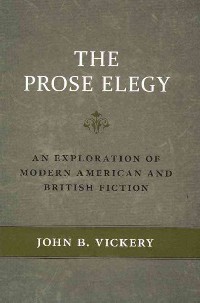
Traditional English poetic elegists offer both writers and readers hope. After lamenting an individual's death and confronting the mortality of all living things, these poets seek consolation from religion, philosophy, or culture for the inevitability of death. The modern prose elegy, however, follows a different path-- one that determinedly questions all possible resolutions. In The Prose Elegy,John B. Vickery continues the work he began in The Modern Elegiac Temper,which examined the form in British and American poetry. He now considers the works of American and British fiction writers from Henry James to Joan Didion and reveals how the elegy expanded into prose and why it evolved so as to deal not only with death but also with other forms of loss.
Focusing on individual works, Vickery explores both the forms the elegy takes throughout the twentieth century and the skeptical and uncertain attitudes of writers struggling to confront the trauma of loss. He offers detailed interpretations of the elegiac components in the works of novelists James Joyce, William Faulkner, Virginia Woolf, and Ernest Hemingway, each of whom forged a distinctive style, as well as chroniclers of a pervasive stoicism, such as Malcolm Lowry and Joan Didion, and writers as nuanced as Sherwood Anderson, F. Scott Fitzgerald, James Agee, and Ford Madox Ford.
For these writers, Vickery shows, sorrow intrudes upon the personal, intellectual, and cultural aspects of daily living. By exploring how loss touches each of these areas, their books probe intellectual boundaries and discover new elegiac themes. Truman Capote and John Updike, for example, view memory--which can disappear quickly--as inherently sad. They therefore elegize memory. What consoles writers of the modern elegy changes too. In place of Milton's religion or Shelley's philosophy, twentieth-century writers also seek comfort from what also saddens them: family, marriage, and ideas of the self.
In The Prose Elegy,Vickery convincingly demonstrates that the elegy remains a dominant mode throughout British and American literature--with perhaps greater pertinence to our lives than ever before.
目录
Introduction: Major Elegiac Changes p. 1
Elegies of Family and Love
Loss of the Ideal: James Agee's A Death in the Family p. 11
Failure as a Loss: John Updike's The Centaur p. 34
Generational Critiques: Virginia Woolf's The Years and William Faulkner's Sartoris p. 41
Familial Disintegration: James Joyce's Dubliners and F. Scott Fitzgerald's "Babylon Revisited" p. 58
The Loss of Romantic Love: Ernest Hemingway's The Sun Also Rises and James Baldwin's Giovanni's Room p. 65
Marriage as Cultural Change: Henry James's The Portrait of a Lady and Ernest Hemingway's A Farewell to Arms p. 85
Marriage as the End of Love: F. Scott Fitzgerald's Tender Is the Night and John Updike's Too Far to Go p. 106
Cultural and Philosophical Elegies
Modernism on Culture and History: William Faulkner's Absalom, Absalom! Ford Madox Ford's Parade's End, and Others p. 129
Bifocal Time: Virginia Woolf's The Years and To the Lighthouse p. 137
Perspectives on the Self: Malcolm Lowry's Under the Volcano, Truman Capote's Breakfast at Tiffany's, and Joan Didion's Play It as It Lays p. 152
A Coda: Continuity and Innovation p. 163
Notes p. 169
Works Cited p. 181
Index p. 187
Elegies of Family and Love
Loss of the Ideal: James Agee's A Death in the Family p. 11
Failure as a Loss: John Updike's The Centaur p. 34
Generational Critiques: Virginia Woolf's The Years and William Faulkner's Sartoris p. 41
Familial Disintegration: James Joyce's Dubliners and F. Scott Fitzgerald's "Babylon Revisited" p. 58
The Loss of Romantic Love: Ernest Hemingway's The Sun Also Rises and James Baldwin's Giovanni's Room p. 65
Marriage as Cultural Change: Henry James's The Portrait of a Lady and Ernest Hemingway's A Farewell to Arms p. 85
Marriage as the End of Love: F. Scott Fitzgerald's Tender Is the Night and John Updike's Too Far to Go p. 106
Cultural and Philosophical Elegies
Modernism on Culture and History: William Faulkner's Absalom, Absalom! Ford Madox Ford's Parade's End, and Others p. 129
Bifocal Time: Virginia Woolf's The Years and To the Lighthouse p. 137
Perspectives on the Self: Malcolm Lowry's Under the Volcano, Truman Capote's Breakfast at Tiffany's, and Joan Didion's Play It as It Lays p. 152
A Coda: Continuity and Innovation p. 163
Notes p. 169
Works Cited p. 181
Index p. 187
- 名称
- 类型
- 大小
光盘服务联系方式: 020-38250260 客服QQ:4006604884
云图客服:
用户发送的提问,这种方式就需要有位在线客服来回答用户的问题,这种 就属于对话式的,问题是这种提问是否需要用户登录才能提问
Video Player
×
Audio Player
×
pdf Player
×
