

简介
Summary:
Publisher Summary 1
The Ming dynasty (1368-1644) is often considered the high point of autocracy in Chinese history, says Schneewind (history, U. of California-San Diego), and in order to show the nature of that autocracy in relation to society, she examines one centrally mandated local institution. She explains how the community school was neither an independent local institution, nor merely an instrument of imperial control, but was sponsored, debated, and manipulated by emperors, central and local officials, and gentry and commoners all over the empire. Annotation 漏2006 Book News, Inc., Portland, OR (booknews.com)
Publisher Summary 2
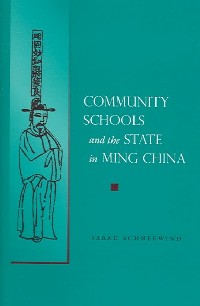
According to imperial edict in pre-modern China, an elementary school was to be established in every village in the empire for any boy to attend. This book looks at how the schools worked, how they changed over time, and who promoted them and why. Over the course of the Ming period (1368-1644), schools were sponsored first by the emperor, then by the central bureaucracy, then by local officials, and finally by the people themselves. The changing uses of schools helps us to understand how the Ming state related to society over the course of nearly 300 years, and what they can show us about community and political debates then and now.
Publisher Summary 3
Through a case study of one imperial institution, the community school, this book examines the primary sources we use to study it, the role it has played in debates over history and politics, and the nature of the Ming state.
目录
TABLE OF CONTENTS
Table of Ming Reign Periods
One: Introduction
Two: Shaky Foundations: the Early Ming
The Myth of the Ming Founder
Invention?
Abolition?
Obeying the Law?
Preserving the Laws?
The Early Ming in the Historiography of Community Schools
Three: Borders and Bureaucrats: the Middle Ming
Memorials
The Civilizing Mission
Revising the Founder's Vision
Testing the Impact of Edicts
Four: Heros of the High Ming
Whose Responsibility?
The Rhetoric of Commemorative Records
Wo Pan, 1481: A Gazetteer Records Adaption of Hongwu Institutions
Zhang Bi, 1478: Idols Consigned to Water and Fire
The Attack on Improper Shrines
Intolerance and Syncretism
Explaining Heroism
Xu Jie, 1533: Exploiting Heroism
Two poems on community schools.
Five: Philosophy and Politics in Community School Curricula
The Basic Curriculum
Wang Yangming: Moral Development
Gui E: The Separate Hall System
Wei Jiao: The Compound System
No Family Left Behind
The Unity of Knowledge and Practice
Education and Autocracy
Six: Community Schools in Ming Society
Pupils
Teachers
Funding
Buildings
A Mixed Blessing
Seven: The Locality Fights Back: the Late Ming
Localizing Gazetteers
Reviving Temples
Taking Charge
The Complex of Local Institutions
Local History and Ming State Institutions
Eight: Conclusion
Community Schools and Ming Autocracy
The Ming State
Appendices
Eight books included in Great Instruction
Records analyzed in chapter four, in chronological order
Translations of three commemorative records
Tables
Glossary
Bibliographies
Gazetteers
Other works cited
Gazetteers consulted by Wang Lanyin
Index
- 名称
- 类型
- 大小
光盘服务联系方式: 020-38250260 客服QQ:4006604884
云图客服:
用户发送的提问,这种方式就需要有位在线客服来回答用户的问题,这种 就属于对话式的,问题是这种提问是否需要用户登录才能提问
Video Player
×
Audio Player
×
pdf Player
×
